Introduction
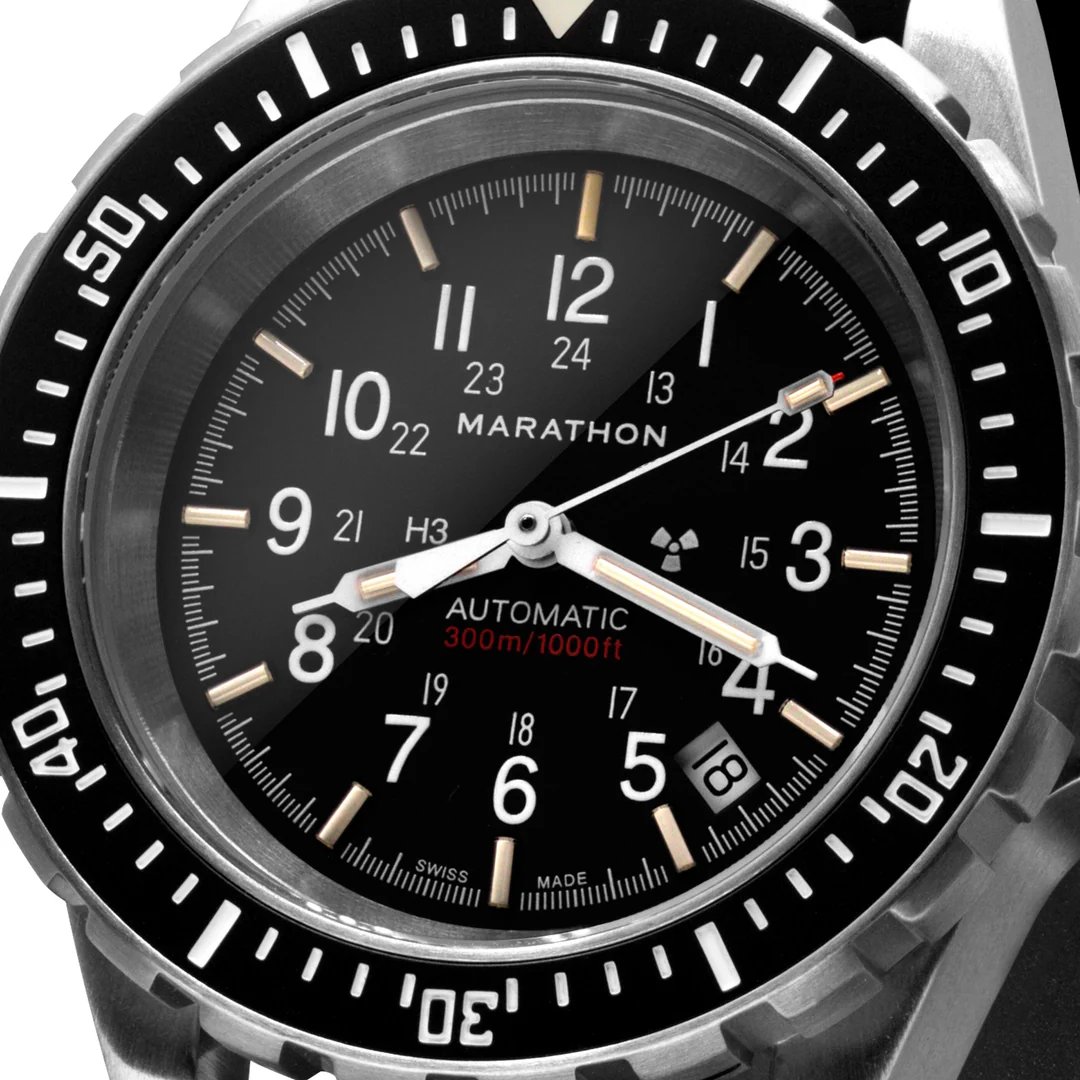
The Marathon GSAR (General Service Automatic) is a watch that doesn’t care about your Instagram feed. It cares about being read in the dark, surviving a drop onto concrete, and keeping time when the battery dies. As a daily-wear reviewer at Vivir, I’ve strapped this 41mm steel diver to my wrist for two weeks of commuting, hiking, and late-night cooking. The verdict? It’s a tool watch in the truest sense—uncompromising, heavy, and utterly legible.
Marathon has been supplying the Canadian and U.S. militaries for decades, and the GSAR is the civilian version of their General Service watch. The reference WW194006 is the standard black-dial automatic variant, powered by a Sellita SW200-1 movement. It’s not fancy, but it’s built to be serviced anywhere. The real star is the tritium gas tubes: no need to charge with light, they glow for years. This review focuses on how the GSAR actually wears, day in and day out, for a collector who values function over fashion.
Manufacture History
Marathon Watch Company was founded in 1939 in Canada, originally producing military-issue timepieces. The brand is best known for its tritium-illuminated tool watches, including the General Service series used by Canadian and U.S. armed forces. The GSAR is a modern automatic evolution of that legacy, retaining the same no-nonsense ethos.
Movement
The GSAR is powered by the Sellita SW200-1, a reliable automatic caliber based on the ETA 2824-2. It beats at 28,800 vph, has 26 jewels, and offers a 38-hour power reserve. While not COSC-certified, my test unit ran consistently at +6 seconds per day. The movement is not decorated, but it’s robust and easy to service by any watchmaker. The date window at 3 o’clock is crisp and easy to read.
Specifications
- Case diameter: 41mm
- Case thickness: 14.5mm
- Lug-to-lug: 48mm
- Case material: 316L stainless steel
- Crystal: Sapphire with anti-reflective coating
- Water resistance: 200 meters (660 feet)
- Lume: Tritium gas tubes (Marathon’s own)
- Bracelet/Strap: Stainless steel bracelet with folding clasp, or rubber strap
- Clasp: Folding clasp with safety lock (no micro-adjust)
Wrist Feel
The GSAR is a heavy watch. At 41mm wide and 14.5mm thick, with a 48mm lug-to-lug, it sits like a brick on the wrist. The weight is substantial—around 190 grams on the steel bracelet—and you feel it with every movement. That said, the case is well-balanced; the lugs curve downward to hug smaller wrists, and the bracelet tapers from 20mm to 18mm at the clasp, which helps distribute the mass. On my 6.75-inch wrist, the watch wears large but not comically so. The crown is signed and easy to grip, though it does dig into the hand during push-ups.
The rubber strap option (sold separately) lightens the feel considerably and is more comfortable for all-day wear. The bracelet’s clasp lacks micro-adjustment, which is a frustration in hot weather when your wrist swells. Overall, the GSAR is a watch you know you’re wearing—it’s not a featherweight dress piece, but it’s built to take abuse.
Accuracy
Over two weeks of daily wear, my GSAR averaged +6 seconds per day, well within Sellita’s spec. The movement is not COSC-certified, but it’s consistent. Expect +5 to +10 seconds per day in normal use. The tritium lume is always visible, though the tubes on the hands are slightly dimmer than the hour markers after a few years—still legible in total darkness.
Occasions
The GSAR is a dedicated tool watch. It’s perfect for outdoor activities, travel, and daily wear where you need a tough, legible timepiece. It’s not a dress watch—too thick and heavy for a suit—but it works with casual and sporty attire.
Wrist Presence
4/5 – The GSAR commands attention with its thick case, bold markers, and continuous glow. It’s not subtle, but it’s purposeful. On a NATO strap, it looks like a piece of military equipment; on the bracelet, it’s a serious diver.
Reference Variants
The WW194006 is the standard black-dial model on a steel bracelet. Marathon also offers orange (WW194006/OR) and green (WW194006/G) dials, as well as a rubber strap version (WW194006/BR). All share the same case, movement, and 200m water resistance.
Family References
The GSAR is part of Marathon’s General Service family, which includes the quartz TSAR (WW194001) and the mechanical Navigator. Other Marathon models include the Arctic field watch and the JDD diver.
Other Notable Models by Marathon
Marathon’s lineup includes the Navigator (mechanical field watch), Arctic (quartz field watch), Medium Quartz (compact diver), and General Purpose (GP) series.
Similar Watches
If you like the GSAR’s tool-watch ethos, consider the Rolex Submariner (much pricier, no tritium), Tudor Black Bay 58 (slimmer, Super-LumiNova), or Seiko Prospex SPB143 (affordable, great lume).
Homages
Budget alternatives include the Vaer D5 Automatic ($600, Super-LumiNova) and Bertucci A-2T ($200, quartz with tritium). Neither matches the GSAR’s build quality or heritage.
Investment Value
The GSAR retails for $1,250 and holds steady on the pre-owned market ($800–$1,100). It’s not an investment piece, but it won’t depreciate sharply. Buy it to wear it.
Service Interval
Marathon recommends service every 5 years. A full service costs around $350 and can be done by any watchmaker familiar with Sellita movements. Authorized service is available in Canada and the U.S.
Pros and Cons
- Pros: Tritium lume, 200m WR, high legibility, robust movement, military heritage.
- Cons: Thick and heavy, no micro-adjust clasp, plain movement, hand lume dims over time, pricey vs. Seiko.
Final Verdict
The Marathon GSAR is a purpose-built tool watch that excels in legibility and durability. Its tritium tubes provide 24/7 lume without needing a charge, making it ideal for low-light environments. While the case is thick and the bracelet basic, it’s a reliable daily wearer with genuine military provenance. If you value function over fashion and want a watch that will outlast your phone’s battery, the GSAR is a solid choice.