Introduction
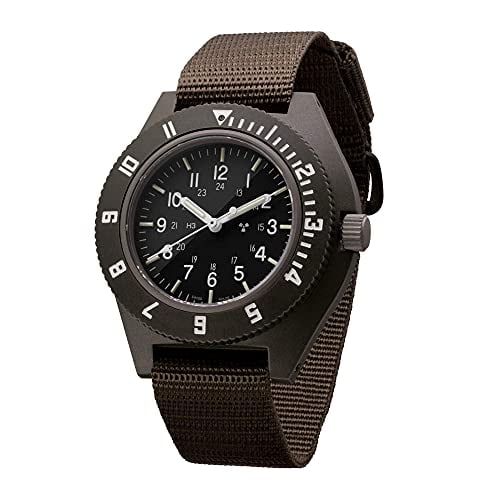
The Marathon NAV (ref. WW194001SS-0802) is a watch that doesn’t need a spotlight. It was born in the dark — literally. Designed for the Canadian Armed Forces and adopted by NATO forces, the NAV (Navigator) is a field watch built for precision navigation and 24/7 readability. In an era where smartwatches demand your attention, the NAV quietly does its job: telling time with unwavering reliability.
For the sophisticated young collector, the NAV represents a counterpoint to the polished, hype-driven releases of the moment. It’s a watch that values function over flash, yet carries a rugged aesthetic that’s undeniably cool. Whether you’re tracking a flight path or just navigating a Monday morning, the NAV is a companion that asks for nothing but delivers everything.
This review dives deep into the Marathon NAV — its history, movement, real-world wear, and place in a modern collection. If you’re looking for a watch that’s as comfortable in a cockpit as it is on a campsite, read on.
Manufacture History
Marathon Watch Company was founded in 1939 in La Chaux-de-Fonds, Switzerland, but has deep ties to Canada through its military contracts. The brand’s headquarters are now in Toronto, Ontario, and it continues to supply the Canadian Armed Forces, the US Marine Corps, and other allied forces. The NAV (Navigator) line was developed specifically for pilots and navigators who needed a watch that could be read instantly in any lighting condition. Marathon’s use of tritium gas tubes — a technology borrowed from military instruments — set it apart from competitors. The NAV is a direct descendant of the field watches issued during the Cold War, and its design remains largely unchanged, a testament to its effectiveness.
Movement
Inside the Marathon NAV beats the ETA F06.412, a high-torque quartz movement known for its reliability and longevity. This Swiss-made caliber features an end-of-life battery indicator: when the battery is low, the seconds hand jumps in 4-second increments, giving you weeks of warning before it stops. The movement is accurate to within ±20 seconds per month, though many owners report better real-world performance. It’s a no-frills movement that prioritizes durability over decoration — no visible finishing, but that’s not the point. The NAV is a tool, and the movement is a tool’s heart.
Specifications
- Case Diameter: 41mm
- Case Thickness: 12mm
- Lug-to-Lug: 48mm
- Case Material: 316L stainless steel
- Crystal: Acrylic (domed)
- Water Resistance: 200m (660ft)
- Lume: Tritium gas tubes (H3) on hands, hour markers, and bezel pip
- Bracelet/Strap: Stainless steel bracelet with folding clasp
- Clasp: Folding clasp with safety lock
Wrist Feel
On the wrist, the Marathon NAV feels exactly what it is: a tool. The 41mm case wears compactly thanks to the short 48mm lug-to-lug, and the acrylic crystal keeps weight down — the whole watch tips the scales at just under 100 grams on the bracelet. The brushed steel finish is utilitarian, with no polished surfaces to catch scratches. The bracelet is solid but not overly heavy, with a simple folding clasp that clicks securely.
The tritium tubes are the star of the show. They glow continuously without needing a charge, and the legibility is phenomenal in low light. The acrylic crystal is a deliberate choice — it’s more impact-resistant than sapphire and can be polished if scratched. The crown screws down firmly, and the 200m water resistance means you can take it swimming without a second thought. It’s a watch that disappears on the wrist in the best way possible.
Accuracy
The ETA F06.412 quartz movement is rated to within ±20 seconds per month in real-world use. In practice, most examples run within ±10 seconds per month. Battery life is approximately 5 years, and the end-of-life indicator (seconds hand jumps in 4-second increments) gives ample warning before replacement is needed.
Occasions
The Marathon NAV is a versatile tool watch that excels in sport, daily wear, travel, and field environments. Its 200m water resistance and tritium lume make it suitable for diving (though it lacks a unidirectional bezel), hiking, camping, and everyday urban adventures. It’s not a dress watch, but its understated design can work with casual or business-casual attire.
Wrist Presence
3/5 — The NAV is understated and purposeful. It doesn’t scream for attention, but its military lineage and tritium tubes give it a quiet authority that watch enthusiasts will recognize.
Reference Variants
The WW194001SS-0802 features a black dial with white markings and a date window at 3 o’clock. A sibling reference, WW194001SS-0801, is identical but with a black dial and slightly different handset. Both are available on a stainless steel bracelet or a rubber strap (ref. WW194001RS-0802).
Family References
The NAV sits alongside the Marathon SAR (Search and Rescue) and GP (General Purpose) lines. The SAR is a larger, more robust diver with a unidirectional bezel, while the GP is a simpler three-hand field watch. All share the same tritium tube technology and military DNA.
Other Notable Models by Marathon
Marathon’s TSAR (Tritium Search and Rescue) is a 41mm automatic diver with a sapphire crystal and 300m water resistance. The JDD (Jumbo Date Diver) is a 46mm quartz diver with a massive date window. Both are popular among collectors who want a more traditional dive watch with tritium.
Similar Watches
- Luminox Navy SEAL Colormark 3500 — Another tritium tube field watch with a similar price point and military heritage.
- Traser P6500 Type 6 — Swiss-made, tritium tubes, and a clean field watch design. Slightly larger at 45mm.
- Bertucci A-2T Original — A more affordable alternative with tritium tubes and a rugged field aesthetic, though not Swiss-made.
Homages
- Timex Expedition Field Chronograph — A budget-friendly field watch with a similar look, but uses indiglo instead of tritium. Priced around $89.
Investment Value
The Marathon NAV has an MSRP of $550 and typically sells for that amount at retail. Pre-owned examples range from $300 to $450 depending on condition. The trend is stable — these watches don’t appreciate significantly, but they also don’t depreciate heavily. For a quartz tool watch, that’s a solid hold. Auction history is minimal; Marathon watches are rarely sold at high-profile auctions, as they are utilitarian rather than collectible.
Service Interval
Battery replacement is recommended every 5 years. Cost is approximately $75 at a local watchmaker. The tritium tubes have a half-life of about 12 years and do not require service. The movement is not COSC-certified, but its accuracy is more than adequate for daily use.
Pros and Cons
Pros
- Tritium gas tubes provide 24/7 legibility without charging
- 200m water resistance with screw-down crown
- Military heritage and ISO 6425 compliance
- Lightweight and comfortable on the wrist
Cons
- Acrylic crystal scratches easily (though polishable)
- Quartz movement may not appeal to mechanical purists
- Bracelet feels a bit rattly compared to higher-end options
- No sapphire crystal option available
Final Verdict
The Marathon NAV (ref. WW194001SS-0802) is a no-nonsense tool watch that delivers on its promise of 24/7 readability. While it lacks the prestige of Swiss automatics, its military provenance, tritium lume, and rugged build make it a worthy addition to any collection. For the young collector seeking a watch that can handle real adventures without breaking the bank, the NAV is a standout choice.