Marathon Navigator SSNAV Review: The Military Quartz Icon
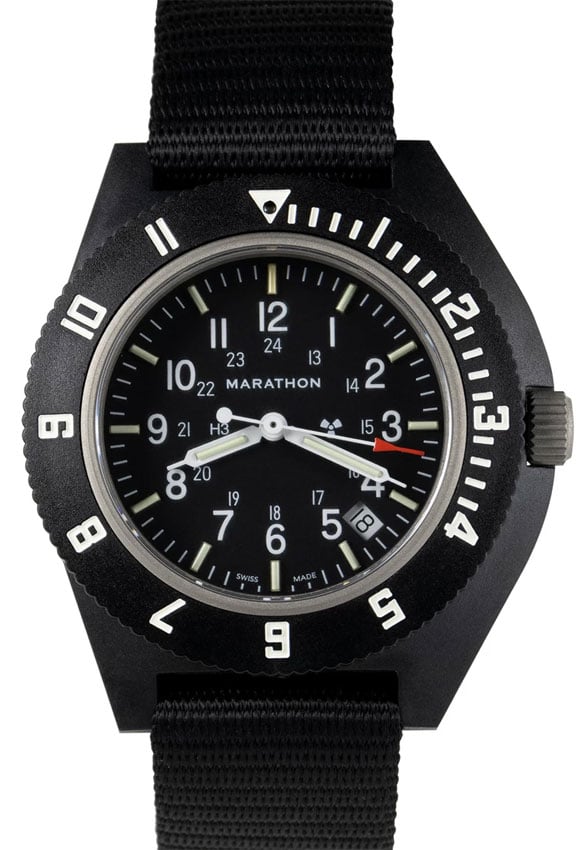
The Marathon Navigator (ref. SSNAV) is not a watch that courts Instagram likes or auction records. It’s a tool, born from a 1980s Canadian government contract for military pilots, and it wears that heritage like a badge of honor. In an era where luxury watch brands chase complications and finishing, Marathon doubled down on legibility, reliability, and ruggedness — and the Navigator is the result. It’s the watch you strap on when you’re actually navigating, not just posing for a wrist roll.
For the sophisticated young collector, the Navigator represents a counterpoint to the polished divers and dress watches that dominate the conversation. It’s a piece of functional horology that has been issued to NATO forces, worn by search-and-rescue teams, and adopted by a generation of watch enthusiasts who value provenance over polish. The SSNAV is the quartz alternative to the mechanical field watch — accurate, low-maintenance, and built to survive a deployment.
This review dives into the Navigator’s history, its movement, its real-world wearability, and its place in the current market. Whether you’re a first-time buyer looking for a rugged daily or a seasoned collector adding a military-issue piece to your box, the SSNAV deserves a close look.
Manufacture History
Marathon Watch Company was founded in 1939 in La Chaux-de-Fonds, Switzerland, but moved its headquarters to Canada in the 1970s. The brand is best known for producing rugged, military-spec watches for the Canadian Armed Forces, US Department of Defense, and other allied nations. The Navigator (SSNAV) was developed in the 1980s as a pilot’s watch with tritium illumination, and it remains a core model in Marathon’s lineup.
Movement
The Navigator uses a Swiss-made ETA F06.412 quartz movement (or equivalent high-torque caliber). It’s a workhorse movement with 7 jewels, a battery life of 4-5 years, and an end-of-life indicator that makes the seconds hand jump in 4-second increments when the battery is low. The movement is not decorated, but it’s reliable and easy to service. Accuracy is rated to ±20 seconds per year, though real-world performance is often better.
Specifications
- Case diameter: 41mm
- Case thickness: 12mm
- Lug-to-lug: 48mm
- Case material: Stainless steel
- Crystal: Acrylic (shatter-resistant, polishable)
- Water resistance: 100m
- Lume: Tritium gas tubes (GTLS) – constant glow for 25+ years
- Strap: Rubber (standard) or NATO
- Clasp: Pin buckle
Wrist Feel
The Navigator wears surprisingly compact for a 41mm case. The short 48mm lug-to-lug keeps it from overhanging on smaller wrists, and the 12mm thickness slides under a jacket cuff without protest. The rubber strap is supple and comfortable, though some may swap it for a NATO for a more secure fit. At around 80g on the rubber, it’s light enough to forget you’re wearing it — until you glance at the dial and see those glowing tritium tubes. The acrylic crystal is a deliberate choice: it’s shatter-resistant and can be polished if scratched, but it does attract fingerprints. Overall, it’s a balanced, no-nonsense wear that feels like a tool, not a jewel.
Accuracy
Quartz accuracy is typically within ±10 seconds per month, though Marathon’s high-torque movements are rated to ±20 seconds per year under ideal conditions. In real-world use, expect to adjust the time only when changing the battery every few years. The end-of-life indicator gives you a month’s warning before the battery dies — a thoughtful touch for a field watch.
Occasions
The Navigator is best suited for sport, daily wear, and travel. It’s not a dress watch, but its clean dial and military heritage make it acceptable in casual office settings. It excels outdoors, in low-light conditions, and anywhere reliability matters more than flash.
Wrist Presence: 3/5
The Navigator is understated and purposeful. It doesn’t scream for attention, but the tritium tubes and military dial give it a quiet authority. On a NATO strap, it looks ready for action; on the rubber, it’s a sleek tool watch.
Reference Variants
- SSNAV-001 – Black dial, rubber strap. Standard issue.
- SSNAV-002 – White dial, rubber strap. Less common, higher contrast.
- SSNAV-003 – Black dial with 24-hour markings, NATO strap. Pilot-specific version.
Family References
Other Marathon models include the General Purpose (GP), Arctic (AR), and Search & Rescue (SAR). All share the same military DNA and tritium illumination.
Other Notable Marathon Models
- Marathon General Purpose Quartz
- Marathon Arctic Diver
- Marathon JSAR (Jumbo Search & Rescue)
Similar Watches
- Luminox Navy SEAL Colormark 3500 – Also uses tritium tubes, sportier case.
- Traser P6508 Type 6 – Another tritium field watch with similar ethos.
- CWC G10 Quartz – British military-issue quartz with clean dial and acrylic crystal.
Homages
- Bertucci A-2T Classic ($150) – Affordable field watch with Super-LumiNova, similar styling.
- Vaer S3 Field Quartz ($200) – American microbrand with sapphire crystal and Swiss quartz.
Investment Value
MSRP: $550. Pre-owned range: $300-$450. The Navigator is stable in value, not an investment piece, but holds its worth due to steady demand. No major auction history.
Service Interval
Battery replacement every 4-5 years, cost ~$50. Can be done by any watchmaker; Marathon recommends pressure testing after service.
Price Range
$300-$550. Excellent value for a genuine military-issue watch with tritium. A trust-fund-baby buyer would appreciate the authenticity.
Pros and Cons
Pros: Tritium tubes glow 24/7, military provenance, lightweight, quartz accuracy.
Cons: Acrylic crystal scratches easily, no sapphire option, quartz may lack soul for purists, limited water resistance.
Final Verdict
The Marathon Navigator SSNAV is a no-compromise field watch that prioritizes function over fashion. Its tritium illumination, military heritage, and robust quartz movement make it a reliable daily companion for anyone who values utility. While it won’t win any beauty contests, it earns its place in any collection as a true tool watch — and that’s exactly the point.