What the 1975 Master Skeleton is
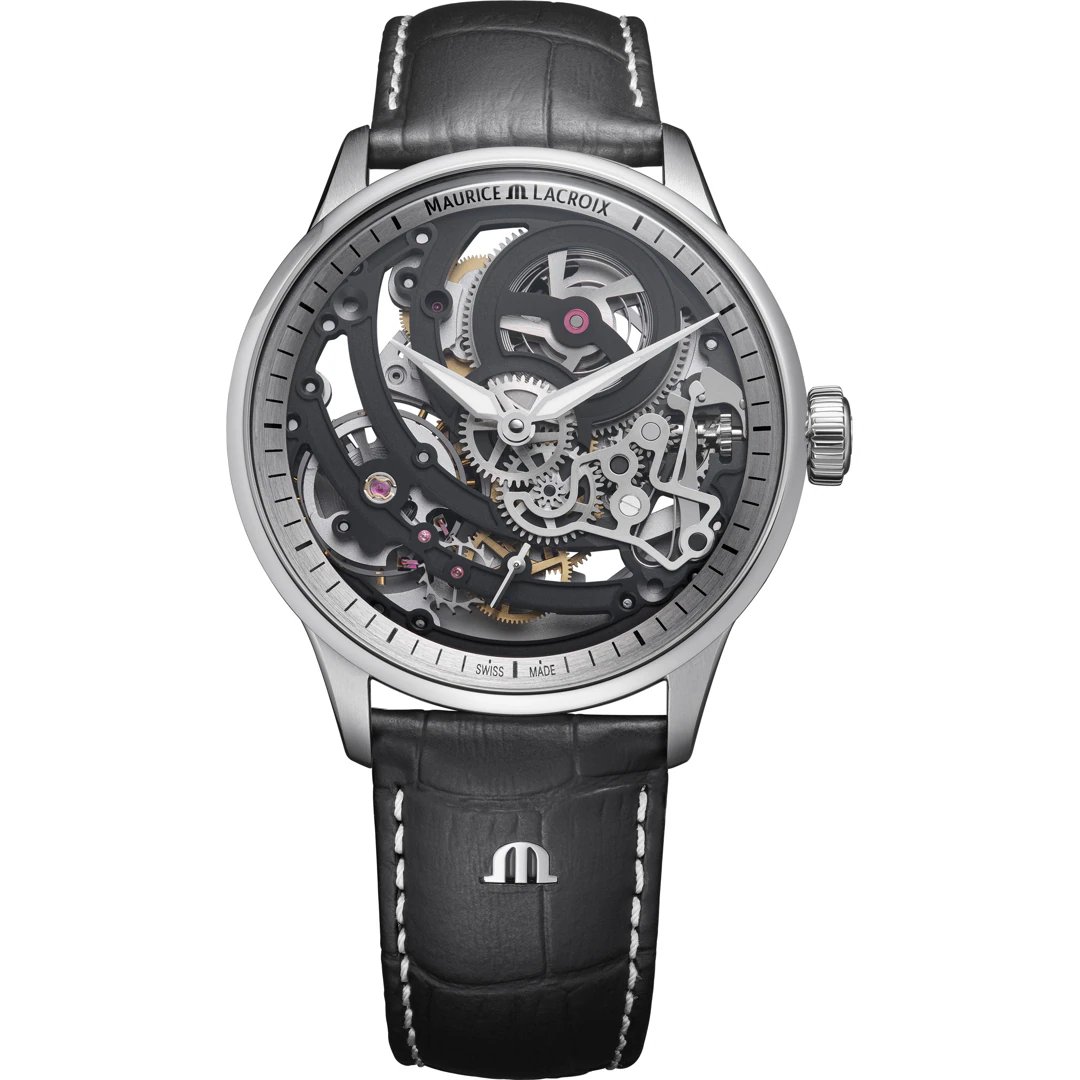
The 1975 Master Skeleton is Maurice Lacroix's openworked take on the everyday steel watch. It takes the idea of a skeletonized movement and puts it in a case and bracelet that feel more urban than museum. The design is not trying to be a dress watch with a skeleton dial, nor is it a sports watch with a window into the movement. It sits in the middle: a smart-casual watch for people who like mechanics but do not want to baby their wristwear.
The first thing you notice is the dial. It is not a plain openworked plate with a few cut-outs. The movement is the dial. Bridges, wheels, and the mainplate are visible across most of the surface. The hands are the anchor: polished, faceted, and easy to find in daylight. The lack of lume is the biggest daily compromise, because this is a watch that looks best in a restaurant or an office, not on a night hike. That is fine if you accept it for what it is.
Brand context
Maurice Lacroix was founded in 1975 in Saignelégier, Switzerland. The brand built its reputation on accessible luxury with a design-led edge, and it is best known today for the Aikon, Pontos, Eliros, and Masterpiece families. The 1975 collection is a nod to the founding year, and the Master Skeleton is its openworked flagship. It sits between the more classical Masterpiece Skeleton and the sportier Aikon Automatic Skeleton in the brand's line-up.
That positioning matters. Maurice Lacroix is not selling a handmade haute horlogerie calibre here. It is selling a well-finished, visually dramatic watch at a price that undercuts the obvious Swiss skeleton competition. The 1975 Master Skeleton is aimed at the collector who wants an openworked watch for daily wear, not a safe-queen for special occasions. That is a sensible brief, and the watch mostly delivers on it.
Movement and finishing
Public materials for this reference are thin on caliber detail, so I will not invent an ML number. What can be said is that the movement is openworked for visual depth, with visible bridges and a skeletonized mainplate. The finishing is clean and modern rather than haute horlogerie: edges are crisp, surfaces are brushed and polished in alternating zones, and the view is legible enough to read as a mechanism rather than a blur. It is not as intricate as a Zenith Defy Skyline Skeleton, but it also does not cost like one.
There is no chronometer certification. That is not a scandal at this price, but it sets expectations. Skeletonized movements are often regulated to a looser spec than closed chronometer calibres, and the visual drama is the point. If you want a watch that can be used as a reference timer, look elsewhere. If you want a watch that makes you smile when you check the time, this is the right trade.
Specs that matter on the wrist
The case is stainless steel, the crystal is sapphire, and the watch comes on a stainless steel bracelet with a deployant clasp. There is no lume. Maurice Lacroix does not publish every dimension for this reference on its consumer materials, so I will not quote case diameter, thickness, lug-to-lug, or water resistance as if they were confirmed. Those numbers matter, but invented numbers matter more. Check with an authorized dealer if you need exact figures.
What I can tell you is how the materials behave. Stainless steel and sapphire are the right choices for a daily wearer. The bracelet is the highlight: it articulates cleanly, tapers sensibly, and keeps the case centred. The deployant clasp is low-profile enough that it does not dig into a desk edge. The crystal is flush enough that it does not catch on a cuff. These are the details that separate a watch you wear once a month from one you wear for a week straight.
How it wears
On a 17cm wrist, the 1975 Master Skeleton feels balanced and easy. The case does not feel top-heavy, and the bracelet does most of the work in keeping it stable. It slips under a suit cuff, works with a jumper, and does not look absurd with jeans. The openworked dial is busy, but the hands are polished and faceted enough to catch light and separate from the movement. In daylight, legibility is genuinely good for a skeleton watch. In low light, it becomes a silhouette with flashes of bridge work.
The bracelet is the reason this watch works. It is not a flimsy folded-link affair. The links have enough articulation to sit close to the wrist, and the clasp does not create a hot spot. In summer, steel is the right material: it does not get soggy like leather, and it does not feel as precious as gold. The watch has presence without being loud. It is the kind of thing you can wear to a meeting, to dinner, and to the pub without feeling overdressed or underdressed.
The trade-off is low-light use. There is no lume, so this is a daylight and indoor watch. If you are the kind of person who checks the time in a dark cinema or on a night walk, you will miss it. If you are the kind of person who checks the time at a desk, in a restaurant, or on a train, you will not. The skeletonized dial also means the time is not instantly readable at a glance in the way a plain dial is. You need a fraction of a second longer. That is the price of the spectacle.
Accuracy and daily ownership
Without chronometer certification, do not expect quartz consistency. A skeletonized automatic at this price should be treated as a mechanical object first and a timing instrument second. I would expect something in the region of a few seconds per day either way, with variance depending on position and wear. If you need a reference clock, buy a chronometer-certified watch. If you want a comfortable daily wearer with visible mechanics, the accuracy is secondary.
The brand does not publish a power reserve for this reference, so check with an authorized dealer if that matters to you. In practice, an automatic skeleton is happiest when worn regularly. If you rotate watches, put it on a winder or accept that you will need to set it. The lack of a date also means there is less to adjust, which is a small daily pleasure. This is a watch you set and go, not a watch you fiddle with.
Occasions and presence
The 1975 Master Skeleton works with a suit, with jeans, and with a dinner jacket. It is not a sport watch, and it is not a travel watch. The lack of lume and the unknown water resistance mean you should not treat it as a beach or hiking companion. It is a city watch, an office watch, a dinner watch. That is a narrower brief than a dive watch, but it is a brief that many collectors actually live in.
On the wrist, presence is about 3/5. It is not a Rolex. It is an insider's watch. The openwork catches light and invites a second look, but it reads as a steel watch with a dark mechanical centre rather than a statement piece. People who know watches will notice the skeletonized movement. Everyone else will see a nicely finished steel watch. That is a good balance for a daily wearer, because you do not want a watch that shouts across a room.
Variants, family, and alternatives
Maurice Lacroix lists the 1975 Master Skeleton in steel-bracelet and leather-strap configurations. The steel bracelet is the one to get if you want a daily wearer. The leather strap makes it dressier, but it also makes it less versatile. Within the family, the obvious siblings are the Masterpiece Skeleton and the Aikon Automatic Skeleton. The Masterpiece is more classical, the Aikon is sportier, and the 1975 sits in the middle. Other Maurice Lacroix models worth a look are the Aikon Automatic, the Pontos S Diver, and the Eliros Date.
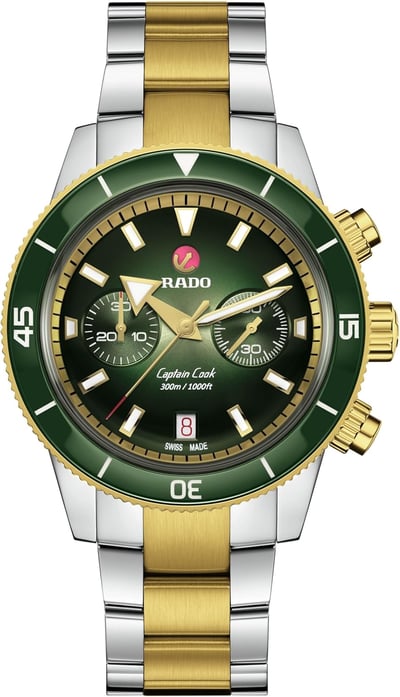
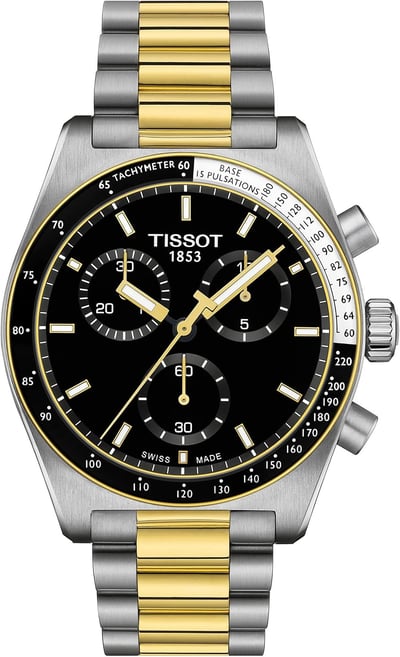
If you are shopping around, the Zenith Defy Skyline Skeleton is the openworked, integrated-bracelet benchmark at a higher price. The Bell & Ross BR 05 Skeleton is more architectural and more urban. The Rado Captain Cook High-Tech Ceramic Skeleton is sportier and uses ceramic case technology. None of them are direct substitutes, but they help frame what the Maurice Lacroix is trying to do. On the affordable side, the Tissot PRX Powermatic 80 Skeleton is not a direct homage, but it is the most accessible way to get the integrated-bracelet skeleton look.
Value and investment
The 1975 Master Skeleton is not an investment. Maurice Lacroix is a brand that makes well-designed watches at accessible prices, and those watches tend to depreciate from boutique pricing. A recent pre-owned example should land well below retail, and that is the smarter way to buy if value matters. There is no major auction history for this reference because it is a recent production model. If you are buying it as a collectible, you are buying the wrong watch.
The value case is stronger pre-owned. At retail, you are paying for the openworked look, the bracelet comfort, and the brand's design language. At pre-owned prices, you are paying for the same things with less of the boutique premium. Buy it to wear, not to flip. If you want a skeleton watch that holds value, look at a different brand and a different price bracket. If you want a skeleton watch that works as a daily wearer, the Maurice Lacroix makes a sensible case.
Service
Skeletonized movements are best serviced by Maurice Lacroix or a specialist. Do not hand this one to a generalist. The openworked architecture means there is less room for error, and the visual finishing is easy to damage if someone who does not know the movement opens it up. The brand does not publish a fixed service interval for this reference, so follow its guidance and avoid waiting for a problem. Service cost is not publicly confirmed, but expect it to be higher than a simple three-hand watch.
Pros and cons
- Pros: The openworked dial is legible enough for daily wear. The bracelet and clasp make it a genuine all-day watch. Steel and sapphire are sensible daily materials.
- Cons: There is no chronometer certification, so accuracy expectations should be modest. No lume limits low-light use. It depreciates from boutique pricing.
Final verdict
The 1975 Master Skeleton is one of the few skeleton watches that works as a daily wearer rather than a special-occasion toy. It is not an investment, and it is not a night watch, but it is a comfortable, legible, and genuinely wearable piece of mechanical theatre. If you want an openworked watch that you can wear for a week straight, it deserves a place on your shortlist. If you want a safe-queen or a night-time tool, keep looking.