Maurice Lacroix AIKON Manual: Investment Horizon & Market Analysis
In the dynamic landscape of luxury horology, certain models transcend mere timekeeping to become cultural touchstones. Maurice Lacroix's AIKON series has, without question, cemented its place as a formidable contender in the integrated bracelet sports watch segment, often lauded for delivering exceptional value and distinctive design. While the AIKON line is primarily celebrated for its robust automatic and precise quartz movements, the concept of a manual-wind AIKON introduces a fascinating new dimension.
This review delves into the theoretical and practical implications of a Maurice Lacroix AIKON Manual. For the sophisticated young collector, understanding the nuances of such a release – its mechanical purity, design integrity, and crucially, its potential market performance – is paramount. We will dissect what this watch represents for the brand, for the collector, and what its advent could signal for the broader integrated bracelet market.
Brand Heritage & The AIKON Legacy
Maurice Lacroix, founded in 1975 in Saignelegier, Switzerland, carved out its niche by focusing on high-quality, Swiss-made watches with a strong emphasis on design and value. Unlike some of its centuries-old counterparts, Maurice Lacroix built its reputation in a relatively short span, often challenging established norms. The brand quickly gained recognition, particularly with its Masterpiece collection, which showcased intricate complications and impressive finishing at competitive price points.
The AIKON collection, a modern reinterpretation of the brand's popular Calypso line from the 1990s, was launched in 2016 and quickly became a phenomenon. Its distinctive integrated bracelet, hexagonal bezel, and Clous de Paris dial texture struck a chord with collectors seeking the aesthetic of high-end luxury sports watches without the prohibitive price tag. The AIKON offered a compelling alternative to icons like the Royal Oak or Nautilus, democratizing a highly sought-after design language. Its success is a testament to Maurice Lacroix's strategic vision: identifying market demand and delivering a product that resonates deeply with contemporary tastes.
The introduction of an AIKON Manual would represent a deliberate and intriguing strategic pivot for Maurice Lacroix. While the AIKON line has traditionally prioritized convenience with automatic and quartz movements, a manual-wind variant would signal a deeper commitment to traditional watchmaking artistry and cater to a segment of collectors who value mechanical purity and the intimate ritual of winding their timepiece. This move would not only diversify the AIKON offering but also potentially elevate its perception among connoisseurs, aligning it more closely with the brand's Masterpiece collection ethos.
The AIKON Manual: A New Mechanical Heart
The heart of any watch, particularly a mechanical one, is its movement. For a hypothetical Maurice Lacroix AIKON Manual, the choice of caliber would be critical, defining its character and collector appeal. While Maurice Lacroix has demonstrated in-house capabilities with its Masterpiece line, an AIKON Manual would likely feature a highly optimized and decorated base caliber, reflecting a blend of reliability and aesthetic refinement. We would anticipate a movement designed for robustness and consistent performance.
Such a movement would likely offer a power reserve in the range of 60 hours, providing ample autonomy for daily wear without the need for constant winding. A frequency of 28,800 vibrations per hour (4 Hz) would ensure smooth sweep of the seconds hand and contribute to its accuracy. While not necessarily COSC-certified – as this would add a layer of cost and is not a typical hallmark of the standard AIKON line – the movement would be meticulously regulated to perform within respectable parameters, likely achieving real-world accuracy within -5 to +10 seconds per day. This level of precision is more than adequate for practical use and aligns with the quality expected from Swiss mechanical watches in this segment.
From an aesthetic standpoint, the movement would be a visual treat, particularly if showcased through a sapphire case back. Expect to see classic Swiss finishing techniques: côtes de Genève (Geneva stripes) adorning the bridges, perlage (circular graining) on the mainplate, and thermally blued screws. These details, though often hidden, are hallmarks of quality watchmaking and contribute significantly to the perceived value and horological appeal. For collectors, the intimate act of winding the watch daily, feeling the gears engage, and observing the meticulously finished movement through the case back creates a profound connection to the craftsmanship, an experience often lost with automatic movements.
The choice of a manual-wind movement also brings practical advantages. Manual movements are typically thinner than their automatic counterparts, as they forego the oscillating weight and associated mechanisms. This reduction in thickness allows for a more svelte case profile, enhancing comfort and wearability. For a watch like the AIKON, celebrated for its integrated design, a thinner case would be a significant ergonomic improvement, allowing it to sit more elegantly on the wrist and slide under cuffs with greater ease. This mechanical purity, combined with potential design refinements, would undoubtedly resonate with a discerning segment of collectors.
Design & Aesthetics: AIKON's Signature Refined
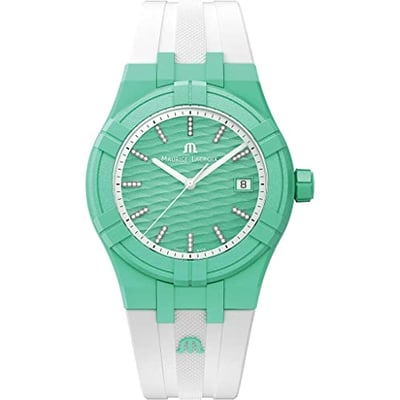
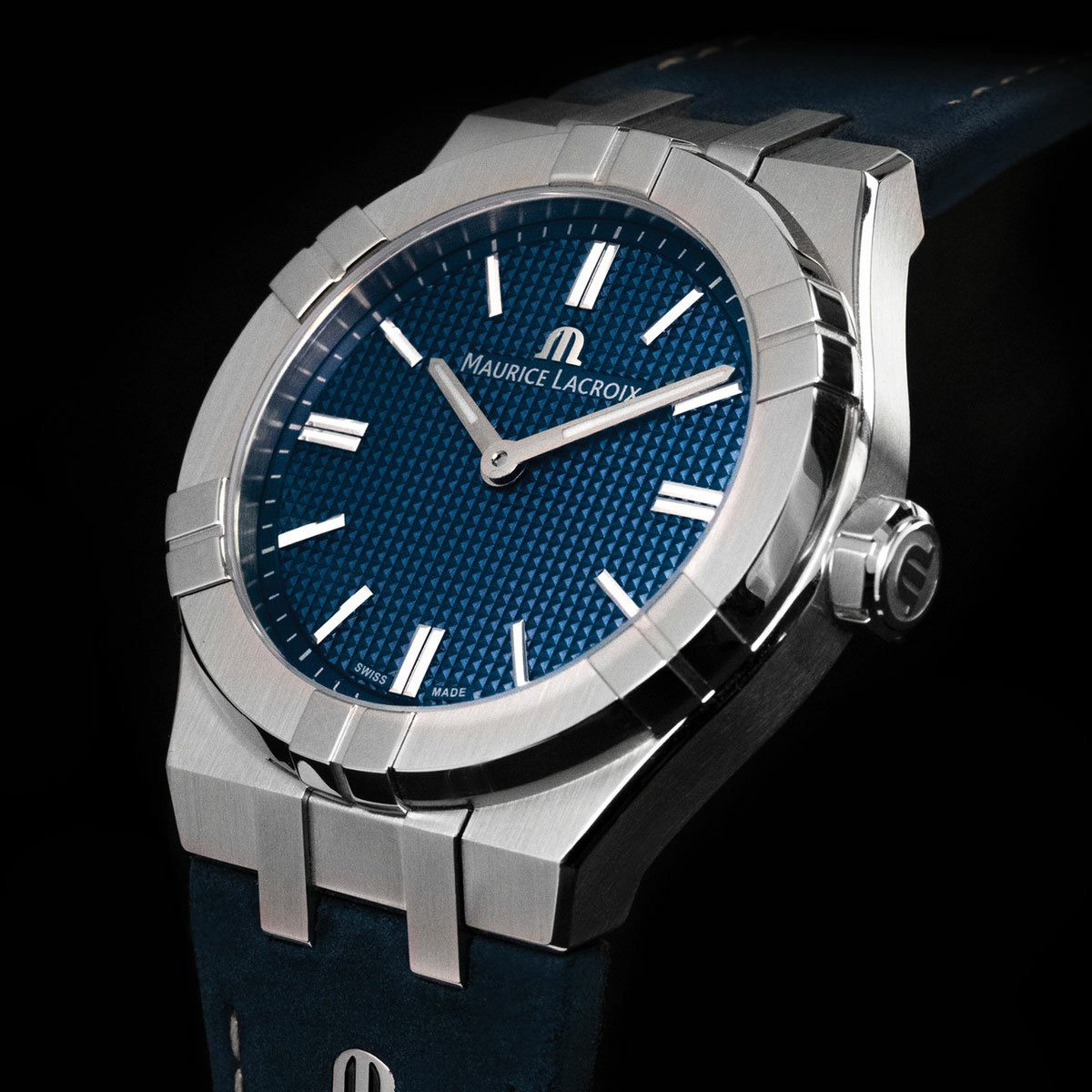
The Maurice Lacroix AIKON's design language is its strongest suit, a bold and instantly recognizable aesthetic that has propelled it to prominence. An AIKON Manual would naturally retain these core design elements while subtly adapting them to its hand-wound nature. The robust stainless steel case would maintain its angular, architectural lines, characterized by polished and brushed surfaces that play with light, giving the watch a dynamic and luxurious appearance. The signature six-arm bezel, with its polished riders, would frame the dial, providing both visual interest and continuity with the AIKON family.
The dial, a canvas of intricate detail, would likely feature the brand's distinctive Clous de Paris pattern, creating a rich texture that shifts under varying light conditions. The applied hour markers, often faceted and lumed, would contribute to legibility and depth, while the baton-style hands, also lumed, would offer clear time-telling. A small seconds sub-dial, a common feature on manual-wind movements, would be a welcome addition, providing an elegant, traditional touch and balancing the dial composition. Dial colors would range from classic blue and silver to contemporary green, catering to diverse aesthetic preferences.
The integrated stainless steel bracelet is perhaps the most defining feature of the AIKON, and it would remain central to the manual variant. Known for its exceptional comfort and fluid articulation, the bracelet's alternating polished and brushed links create a sophisticated visual rhythm. Its quick-change system, a practical innovation, allows for effortless swapping between the bracelet and a leather or rubber strap, enhancing the watch's versatility. The butterfly deployant clasp would ensure a secure and comfortable fit, maintaining the seamless flow of the bracelet's design.
The potential for a thinner case profile, enabled by the manual movement, would be a key design differentiator. This reduction in thickness would not only improve ergonomics but also lend the AIKON Manual a more refined and understated presence, appealing to collectors who appreciate subtlety alongside robustness. The overall impression would be one of sophisticated sportiness, a watch equally at home in a casual setting or a more formal environment. The combination of the AIKON's established design prowess with the mechanical purity of a manual movement would create a truly compelling and distinctive timepiece.
Wearability & Daily Performance
The wearability of the Maurice Lacroix AIKON Manual would be a significant draw for collectors. The AIKON series is already known for its comfortable integrated bracelet and well-proportioned case. With the inherent thinness of a manual-wind movement, this new variant would likely offer an even more refined on-wrist experience. The watch would sit closer to the wrist, reducing any top-heaviness and enhancing overall balance. This improved ergonomic profile means it would easily slip under shirt cuffs, making it a highly versatile choice for both casual and more formal attire.
The integrated stainless steel bracelet, a hallmark of the AIKON, plays a crucial role in its comfort. Its meticulously articulated links conform effortlessly to the wrist, distributing the watch's weight evenly and preventing any pinching or pulling. The quality of the brushing and polishing on the bracelet ensures a smooth tactile experience, further contributing to its all-day wearability. The quick-change system adds a practical dimension, allowing the wearer to effortlessly switch to a leather or rubber strap, transforming the watch's character to suit different occasions or moods.
In terms of daily performance, a well-regulated Maurice Lacroix manual movement would deliver reliable and consistent timekeeping. While the daily ritual of winding might be a novel experience for some, many collectors cherish this tactile engagement with their timepiece. It fosters a deeper connection to the mechanical art within, transforming the watch from a mere instrument into an interactive companion. The 60-hour power reserve would provide ample autonomy, meaning winding every other day would suffice for continuous operation. The Super-LumiNova X1 on the hands and markers would ensure excellent legibility in low-light conditions, maintaining its functionality around the clock.
The AIKON Manual's robust construction, including its sapphire crystal and solid case, would make it resilient enough for daily wear and light water exposure, ensuring it can withstand the rigors of an active lifestyle. Its versatility means it could seamlessly transition from a business meeting to a weekend adventure, embodying the spirit of a true luxury sports watch. This blend of comfort, reliability, and adaptable style positions the AIKON Manual as an excellent candidate for a daily wearer, especially for those who appreciate the unique charm of a hand-wound watch.
Market Position & Investment Outlook
Analyzing the investment value of a hypothetical Maurice Lacroix AIKON Manual requires a nuanced understanding of current market trends, brand positioning, and collector sentiment. The estimated MSRP for such a timepiece would likely fall in the $3,000-$3,500 range, placing it strategically within the accessible luxury segment, slightly above the entry-level AIKON Automatics but well below high-end integrated bracelet offerings.
Upon initial release, new models, especially from brands that are not hyper-allocated, tend to experience some depreciation on the secondary market. We would anticipate a pre-owned range of approximately $2,000-$2,800 shortly after its retail introduction. The trend for this specific reference would likely be stable in the short to medium term, with a potential for niche appreciation over the long haul. This is not a watch that would see immediate flips at inflated prices; rather, its value proposition lies in its unique mechanical offering within the AIKON line.
For the sophisticated young collector, a hold recommendation is appropriate for the AIKON Manual. This watch represents a calculated risk, but one with potentially rewarding long-term prospects. Its appeal stems from its distinctiveness: a manual-wind movement in a line dominated by automatics. This mechanical purity speaks to a segment of collectors who prioritize traditional horology and the intimate ritual of winding. If Maurice Lacroix effectively markets this unique selling proposition and continues to build the AIKON's overall brand equity, the manual variant could carve out a special place, potentially appreciating as a cult classic over a 5-10 year horizon.
The service interval for a high-quality manual movement would typically be every 5-7 years, ensuring its longevity and performance. While Maurice Lacroix offers authorized service, which guarantees genuine parts and manufacturer-specific expertise, many independent watchmakers are also capable of servicing these movements. This provides collectors with flexibility and potentially more cost-effective options, with approximate service costs for a standard manual movement ranging from $300-$500, depending on the extent of work required.
In terms of auction history, this hypothetical reference would have no major auction records, as it would be a new or niche offering. Its value would primarily be determined by direct pre-owned market transactions. The investment thesis for the AIKON Manual rests on its ability to attract collectors who appreciate its mechanical purity, its slimmer profile, and its unique position within the AIKON family. As the market continues to diversify and collectors seek more distinctive pieces, a well-executed AIKON Manual could prove to be a shrewd acquisition for those playing the long game.
Variants & Collection Context
To maximize its appeal, a Maurice Lacroix AIKON Manual would likely be introduced with a curated selection of dial variants, building upon the success of existing AIKON Automatic models. We can envision a standard release featuring the iconic blue Clous de Paris dial (Reference: AIK.MNL.001.SSB), which has become synonymous with the AIKON's contemporary elegance. This would be the flagship, offering immediate familiarity and broad appeal.
To cater to evolving tastes, a vibrant green Clous de Paris dial (Reference: AIK.MNL.002.SSG) would be a strategic introduction. Green dials have seen a significant surge in popularity, and this variant would position the AIKON Manual as a fashion-forward choice, appealing to collectors seeking a modern aesthetic. Finally, a classic silver Clous de Paris dial (Reference: AIK.MNL.003.SSH) would offer a more traditional and versatile option, providing understated elegance that seamlessly integrates into any wardrobe.
These hypothetical variants would all be presented on the integrated stainless steel bracelet, emphasizing the AIKON's core identity. However, Maurice Lacroix's quick-change system would allow for easy customization with optional leather or rubber straps, further enhancing their versatility. The AIKON Manual would sit within the broader AIKON family, complementing the existing AIKON Automatic, AIKON Chronograph, and AIKON Venturer models. It would differentiate itself by offering a purist mechanical experience, appealing to a segment of collectors who might find the automatics too common or the chronographs too complex.
Within Maurice Lacroix's wider portfolio, the AIKON Manual would draw parallels with the brand's Masterpiece collection, particularly its hand-wound offerings like the Masterpiece Gravity or Masterpiece Square Wheel. While positioned at a different price point and with a distinct design language, the AIKON Manual would share the Masterpiece's commitment to showcasing mechanical artistry. Other notable models by the brand, such as the Pontos S Diver, demonstrate Maurice Lacroix's capability in producing robust, purpose-built timepieces, reinforcing the brand's diverse horological expertise.
The Competitive Landscape: Alternatives & Homages
The integrated bracelet sports watch segment is one of the most competitive and dynamic in luxury horology, making the positioning of a Maurice Lacroix AIKON Manual crucial. While the AIKON has carved out its own niche as an accessible luxury option, it inevitably faces comparisons to both higher-end alternatives and more budget-friendly interpretations.
At the higher end, watches like the Chopard Alpine Eagle offer a similar integrated bracelet aesthetic with robust construction and a distinct dial texture, albeit at a significantly higher price point. For collectors considering an AIKON Manual, the Alpine Eagle represents a benchmark for luxury sports watches with a strong individual identity. Similarly, the Zenith Defy Classic, with its modern, angular integrated bracelet design and open-worked dial options, provides a comparison in contemporary luxury sports watches, showcasing a different facet of Swiss innovation, though primarily with automatic movements.
Perhaps the most intriguing comparison for a manual-wind integrated bracelet watch comes from independent watchmaking, specifically the Czapek Antarctique. While vastly more expensive and exclusive, the Antarctique offers manual-wind options and an exceptional integrated bracelet design, demonstrating the potential for a high-horology, hand-wound integrated sports watch. This comparison highlights the aspirational trajectory and the mechanical purity that an AIKON Manual aims to embody, albeit at a more attainable level.
On the more accessible side of the spectrum, the Tissot PRX Powermatic 80 often serves as a direct competitor to the AIKON Automatic, sharing a similar integrated bracelet design and value proposition. While the PRX is automatic, its market presence underscores the demand for this aesthetic at various price points. However, a manual AIKON would differentiate itself from the PRX by offering a different mechanical experience.
The integrated bracelet trend has also inspired numerous homages and budget-friendly alternatives. Brands like Cadisen with their C8203 and Addiesdive with their AD2030 directly mimic the integrated bracelet and textured dial aesthetics popularized by models like the AIKON and PRX. These offerings, typically priced between $100-$200, provide ultra-accessible entry points into the style. While they lack the Swiss craftsmanship, mechanical sophistication, and brand heritage of a Maurice Lacroix, they demonstrate the widespread appeal of the integrated bracelet design and the competitive pressure at the lower end of the market.
For the AIKON Manual, its challenge and opportunity lie in differentiating itself through its unique mechanical offering. It would appeal to collectors who appreciate the integrated bracelet aesthetic but also seek the traditional charm and intimate connection of a hand-wound movement, positioning it as a distinct and compelling option in a crowded market.
Pros & Cons
- Pros: Mechanical purity and engagement of manual winding; Potentially slimmer case profile for enhanced wearability; Distinctive offering within the popular AIKON line; Strong AIKON design language and integrated bracelet comfort; Attractive price point for Swiss mechanical quality.
- Cons: Lack of widespread recognition for a manual AIKON variant; Potential for initial depreciation in a market favoring automatics; Niche appeal may limit broad market liquidity; Requires daily winding, which some collectors may find inconvenient.
Final Verdict
The Maurice Lacroix AIKON Manual, while a departure from the line's typical automatic offerings, represents a compelling proposition for the discerning collector. Its mechanical purity, combined with the AIKON's celebrated design and integrated bracelet, positions it as a unique blend of heritage and contemporary appeal. For those who prioritize the intimate connection of a hand-wound movement and seek a distinctive piece within a popular collection, this watch offers substantial aesthetic and horological value, with a stable long-term investment outlook for patient enthusiasts. It is a strategic acquisition for those who value unique mechanical propositions over broad market appeal, promising a rewarding ownership experience.