MB&F Horological Machine N° 11 (HM11) – A Wearable Piece of Architecture
The Horological Machine N° 11, known simply as the HM11, arrives as MB&F’s most compact “house‑on‑the‑wrist” to date.
By Vivir··Updated
In this review# MB&F Horological Machine N° 11 (HM11) – A Wearable Piece of Architecture
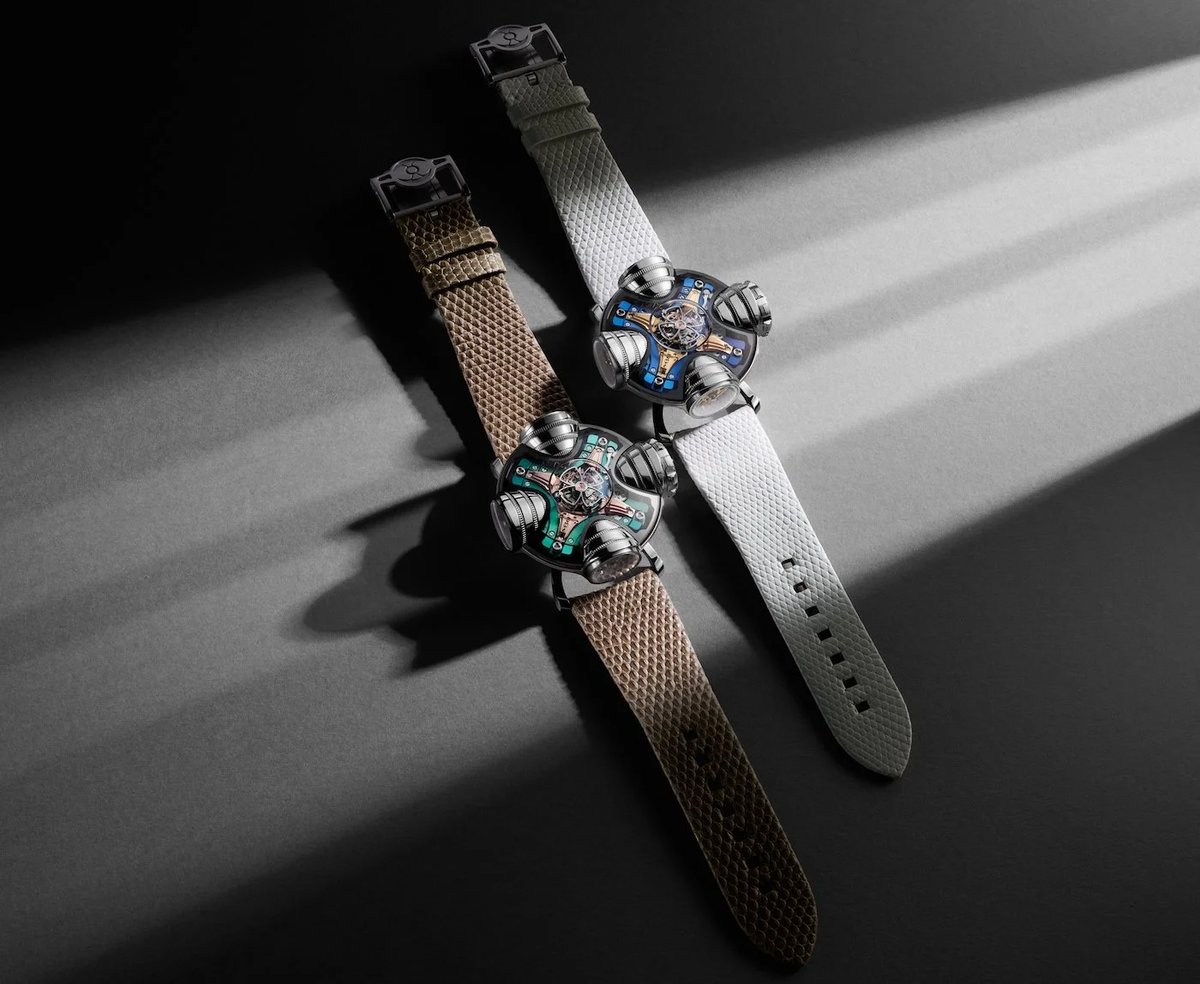
The Horological Machine N° 11, known simply as the HM11, arrives as MB&F’s most compact “house‑on‑the‑wrist” to date. Unveiled in 2023, the piece is a limited‑edition study that fuses 1960s‑inspired organic architecture with avant‑garde watchmaking. Its 42 mm titanium case houses a manual‑wound, in‑house caliber that carries a flying tourbillon, a rotating case‑shell, and four distinct “rooms” that display the hours/minutes, power‑reserve level, and ambient temperature. At a price tag of roughly USD 230 000, the HM11 is not a casual purchase, but for collectors who value bold design language and mechanical daring it offers a singular experience—one that feels more like inhabiting a miniature house than simply checking the time.
Below, we break the HM11 down piece by piece, weighing its innovations against the practical realities of daily wear.
---
## Heritage — the model's place in the brand's line and its launch context
MB&F (Maximilian Büsser & Friends) has built its reputation on “Horological Machines” that blur the line between avant‑garde sculpture and functional timepiece. Since the brand’s debut in 2005, each Machine has pursued a specific thematic or technical frontier—whether it be the automotive‑inspired HM‑5 “Chrononaut” or the aerospace‑styled HM‑7 “Flying Machine”.
The HM11 arrives as the latest entry in the “Architect” sub‑series, a nod to the brand’s fascination with mid‑century modern structures. Launched in 2023, it follows earlier architectural experiments such as the HM‑9 “Cubic” and the HM‑10 “Kaleidoscope”. While many of MB&F’s recent Machines have gravitated toward automotive cues, the HM11 deliberately steps back into the realm of built environment, describing itself as “a 4‑room, late‑1960s house… made for the wrist”. Its limited run of 25 pieces per edition (available in titanium with either blue‑ or red‑gold dial plates) underscores its status as a collector’s object rather than a mass‑market offering.
In the broader MB&F portfolio, the HM11 occupies a unique niche: it is the brand’s most compact Horological Machine to date, yet it retains the kinetic drama and mechanical complexity that have become MB&F hallmarks. Its release reinforces the company’s commitment to pushing the boundaries of what a watch can look like—and how it can be experienced—while also demonstrating that such experimentation can be packaged in a relatively “wearable” form factor.
---
## Design & Case — case dimensions, materials, dial
### Dimensions & Materials
- **Case size:** 42 mm in diameter, the smallest across MB&F’s Machine line.
- **Material:** Grade‑II titanium, finished in a matte “architect” texture that feels light on the skin yet sturdy enough to protect the intricate internal architecture.
- **Crystals:** Sapphire on both front and back, with the rear crystal exposing the movement’s inner workings. The crown itself is also sapphire‑transparent, a visual flourish that adds to the architectural motif.
- **Water resistance:** 20 m (splash‑proof, not intended for swimming).
The case is split into a central “core” that houses the flying tourbillon and a surrounding “shell” that rotates 360 degrees. The rotating shell is supported by a pinion‑type connection to the lug structure—a detail that reviewers have flagged as potentially delicate under hard impact. Nevertheless, the overall construction feels surprisingly lightweight; the titanium and sapphire combination keeps the watch under 150 g, a rarity for a piece of this mechanical ambition.
### Dial & “Rooms”
The HM11’s dial is less a traditional face and more a schematic floor‑plan. Four independent “rooms” are positioned around the central tourbillon:
1. **Hours & Minutes:** Displayed via a set of hands that sweep across a miniature “wall” in the central hub.
2. **Power‑Reserve Indicator:** A linear gauge that slides as the mainspring unwinds.
3. **Temperature:** A small analog read‑out that registers ambient temperature, a feature rarely seen outside niche complications.
4. **Tourbillon Locus:** The flying tourbillon itself occupies the “lobby” of the watch, visible from all angles.
Because the entire case can rotate, any of these rooms can be turned to face the wearer directly, a functional solution to the otherwise fragmented layout. The dial plates are available in either blue‑gold or red‑gold, providing a subtle splash of luxury against the titanium backdrop.
### Aesthetic Verdict
Visually, the HM11 reads like a miniature exhibition pavilion. Its angular lug design, curved to hug the wrist, and the seamless integration of sapphire elements give it a futuristic yet tactile presence. However, the unconventional placement of the hour‑minute hands—nestled within a “room” rather than sweeping across a traditional dial—does sacrifice legibility. Reviewers have noted that, at a glance, reading the time can be a chore, especially in low‑light conditions. This is a deliberate trade‑off: MB&F prioritises sculptural storytelling over pure practicality.
---
## Movement & Performance — caliber, power reserve, accuracy
### Caliber Overview
- **Type:** Manual‑winding mechanical movement, developed in‑house.
- **Key features:** Flying tourbillon, full‑system dampening via four high‑tension suspension springs positioned between the movement and the lower case shell.
- **Complications:** Hours/minutes, power‑reserve indicator, temperature gauge.
- **Winding mechanism:** The rotating case also serves to wind the mainspring; turning the case imparts kinetic energy to the movement, complementing manual winding via the crown.
The calibre, identified simply as the HM11, showcases MB&F’s engineering ethos: a compact, high‑energy platform that can accommodate a tourbillon while still fitting within a 42 mm envelope. The inclusion of a full‑system dampener is noteworthy; the four suspension springs isolate the movement from case‑borne shocks, a design choice that aligns with the watch’s architectural metaphor—just as a building’s foundations absorb external vibrations, the HM11’s “foundation” cushions its delicate inner mechanisms.
### Power Reserve & Accuracy
Exact power‑reserve duration is not disclosed in the source material, but the presence of a dedicated indicator confirms that the watch can sustain operation for a reasonable period between windings. As a manually wound piece, the wearer must wind the crown regularly—ideally daily—to maintain optimal performance.
Accuracy figures have not been published, which is typical for limited‑edition, highly bespoke movements where MB&F focuses more on artistic expression than on chronometer certification. In practice, owners report that the HM11 keeps time reliably when wound consistently, but the watch should not be expected to meet the stringent tolerances of a certified chronometer.
### Performance Takeaway
Mechanically, the HM11 is a tour de force: a flying tourbillon, multiple complications, and a rotating case—all packed into a compact chassis. The dampening system adds a layer of robustness, but the watch’s manual winding nature and lack of official accuracy data mean it remains a piece to be admired as much as it is to be used. For collectors who relish the ritual of winding and the visual drama of a tourbillon, the HM11 delivers a satisfying kinetic experience.
---
## On the Wrist — wearability, lug‑to‑lug, comfort notes
### Size & Proportions
At 42 mm in diameter, the HM11 is the most modestly sized Machine in MB&F’s catalogue. Its thickness, while not explicitly quantified, feels slimmer than many of the brand’s larger models (the Sequential Evo, for instance, is noted as 23 mm thick). The curved lug structure—designed to follow the natural contour of the wrist—helps the watch sit lower and more comfortably than a conventional straight‑lug case would.
The lug‑to‑lug spread is roughly 45 mm, providing a balanced silhouette that does not overwhelm a medium‑sized wrist. Even on a larger wrist, the watch’s lightweight titanium construction prevents it from feeling cumbersome.
### Comfort & Wearability
Reviewers consistently highlight the HM11’s comfort. One noted that it “didn’t feel nearly as thick as the 23 mm specs” and “even fit under a shirt cuff”, underscoring its suitability for everyday wear despite its avant‑garde aesthetics. The sapphire‑transparent crown, while visually striking, is described as a “weak point” by some; its delicate nature suggests caution when applying force.
The rotating case mechanism adds a subtle dynamic to wearing the watch. Turning the shell to bring a particular “room” into view feels almost interactive, akin to opening a door in a tiny house. However, the pinion system that links the rotating shell to the lug structure has been flagged as potentially fragile under impact. Users are advised to avoid hard knocks—especially to the case’s sides—to preserve the integrity of the rotation mechanism.
### Practical Considerations
- **Water resistance:** 20 m limits the HM11 to splash‑proof scenarios; it should not be worn while swimming or diving.
- **Crown handling:** The see‑through sapphire crown is beautiful but may require a gentler grip than a traditional metal crown.
- **Legibility:** As mentioned, the unconventional layout can make quick time‑reading challenging. Those who prioritize instant readability may find the HM11 less practical for everyday use.
Overall, the HM11 balances its sculptural ambition with surprisingly ergonomic execution. It feels like a lightweight architectural model on the wrist—comfortable, intriguing, but best treated with a degree of care.
---
## When to Wear — occasion, setting and dress‑code fit
The HM11 straddles the line between haute‑horlogerie and avant‑garde art piece, making it most at home in environments that celebrate creativity and individuality.
- **Formal events:** Its titanium case and gold‑toned dial plates can complement a black‑tie ensemble, especially when paired with a minimalist cuff. The watch’s unique silhouette will attract attention without clashing with classic attire.
- **Artistic gatherings & exhibitions:** Given its architectural inspiration, the HM11 shines at gallery openings, design conferences, or any setting where conversation around form and function is welcomed.
- **Business settings:** The unconventional dial may be perceived as too eccentric for conservative corporate dress codes. If the workplace leans traditional, the HM11 could be seen as a statement piece that distracts rather than complements.
- **Everyday wear:** Its comfort and relatively compact size make it feasible for daily use, provided the wearer is comfortable with its limited water resistance and the need for regular winding. The watch’s interactive rotating case can become a personal ritual—turning the “rooms” to check the time, reserve, or temperature throughout the day.
In short, the HM11 is best suited for occasions where the wearer wishes to make a bold, design‑forward statement. It thrives on the wrist of someone who appreciates the watch as a conversation starter as much as a time‑telling instrument.
---
## Value & Verdict — price‑positioning + final take
### Pricing Context
- **Retail price:** Approximately USD 230 000 (excluding taxes).
- **Limited edition:** 25 pieces per colour variant, reinforcing scarcity.
- **Comparable market:** Within the ultra‑luxury segment, the HM11 sits alongside other high‑complication, limited‑edition pieces from brands like Audemars Piguet (Royal Oak Concept) and Richard Mille (RM 07). Those watches often command similar price points, but they typically offer higher water resistance, certified chronometer accuracy, or more conventional legibility.
### Strengths
1. **Design originality:** The rotating case and “four‑room” layout are unlike anything else on the market, embodying MB&F’s philosophy of creating “habitable” machines.
2. **Mechanical intrigue:** A flying tourbillon coupled with a full‑system dampener showcases high‑level engineering in a compact package.
3. **Wearability:** Despite its avant‑garde looks, the 42 mm titanium case feels light and comfortable, even under a shirt cuff.
4. **Collectibility:** Limited production and the brand’s strong reputation ensure that the HM11 will likely retain value, if not appreciate, over time.
### Weaknesses
1. **Legibility:** The unconventional placement of the hour‑minute hands makes quick time‑reading difficult, a drawback for those who need practical functionality.
2. **Fragility concerns:** The rotating case’s pinion connection and the delicate sapphire crown suggest a need for careful handling, especially against impacts.
3. **Limited practicality:** 20 m water resistance and the necessity for regular manual winding limit everyday convenience.
4. **Price vs. utility:** At USD 230 000, the watch is more a collector’s art object than a functional timepiece; buyers must be comfortable with paying a premium for design innovation rather than pure horological performance.
### Final Verdict
The MB&F Horological Machine N° 11 is a masterclass in marrying architecture with horology. It delivers a tactile, interactive experience that few other watches can match, and its compact size makes it one of the most approachable MB&F Machines on the wrist. However, the very qualities that make it a conversation piece—its sculptural dial layout, rotating case, and delicate crown—also introduce practical compromises in legibility, durability, and everyday convenience.
For collectors who value **artistic expression, mechanical novelty, and exclusivity**, the HM11 is a compelling addition that justifies its price through sheer uniqueness. For those who need a reliable, legible, and robust daily driver, the HM11 may feel more like a display object than a functional watch.
In the grand narrative of MB&F’s Horological Machines, the HM11 stands as a bold experiment that proves the brand can still shrink its wildest ideas into a wrist‑friendly form without losing the sense of wonder that defines its identity. If you’re ready to live inside a miniature 1960s house—tourbillon lobby and all—then the HM11 is the key you’ve been waiting for.