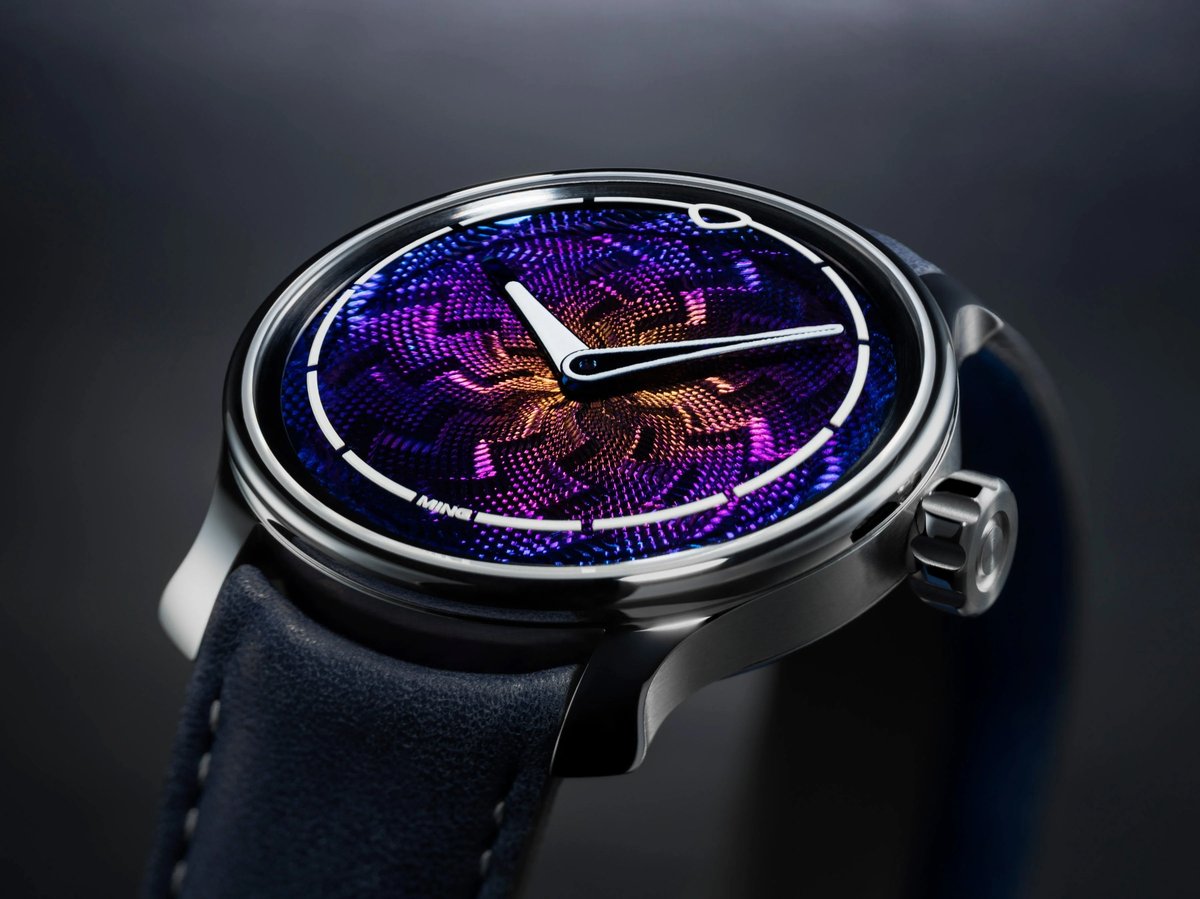
Ming is no longer a curiosity for young collectors. The brand has spent the past few years turning a design-first, direct-to-collector model into a genuine secondary-market conversation, and the 37.06 is one of the cleanest expressions of that arc. It is not a legacy reference, it is not a spec-sheet hero, and it is not trying to be a one-watch collection. It is a tightly produced automatic with a strong visual signature, a proven Swiss movement, and a collector base that watches every drop.
That combination matters because the 37.06 sits in an awkward but interesting price zone. It is expensive enough to demand real consideration, yet far below the blue-chip names that dominate investment talk. For sophisticated young collectors, the appeal is obvious: character, limited availability, and a design that does not look like everything else in the safe. The risk is equally obvious: Ming is still a niche brand, and niche demand can cool faster than a Rolex waitlist.
This review treats the 37.06 as both a watch to wear and a piece to hold. The conclusion is not complicated. If you want a compact, design-led automatic with a distinctive dial and a real collectors’ conversation around it, the 37.06 makes sense. If you are looking for liquid appreciation, look elsewhere.
Brand Context: Why Ming Matters
Ming Watches was founded in 2017 by Ming Thein, and the brand’s rise has been unusually fast for a small independent. Its formula is direct: limited production, strong graphic design, Swiss movements, and a release model that rewards attention. Ming does not rely on dealer networks or mass advertising. It builds desire through tight availability and a recognizable aesthetic, then lets the secondary market argue about value.
The 37.06 belongs to the compact 37-series family, which is important because this is where Ming’s design language becomes most wearable. The brand’s larger or more complicated pieces can feel like statements. The 37-series is more about proportion, legibility, and everyday comfort. That makes the 37.06 a useful entry point for collectors who want the Ming look without the bulk or the complication premium.
Ming’s production model also shapes the ownership experience. These are not watches you can walk into a boutique and handle on a whim. You buy on release, you wait, and you live with the decision. That creates a different kind of collector psychology: the watch feels earned, but it also means the secondary market is thinner and more emotionally driven than the market for established luxury brands.
Movement and Architecture
The 37.06 runs on a Sellita SW200-1 automatic. This is a workhorse caliber, not a showpiece. It offers a 38-hour power reserve and a 28,800 vph beat rate, and it is not COSC-certified in this application. That is entirely appropriate for the price and positioning. Ming is selling design and wearability here, not chronometric superiority.
The SW200-1 has real advantages for owners. It is widely known, widely serviced, and supported by a broad parts network. A local watchmaker can regulate it, and independent service is not a closed door. The trade-off is that the movement does not deliver the kind of finishing that collectors obsess over under a loupe. You will not find the hand-finished bridges or dramatic architecture of a high-end in-house caliber. What you get is reliability, easy ownership, and a movement that does not distract from the dial.
That is the right call for this watch. The 37.06 is not trying to compete with a Grand Seiko or a haute-horlogerie piece on movement decoration. It is trying to deliver a specific design experience at a accessible price. The Sellita keeps the cost and service story sensible, which matters more for a daily wearer than a beautiful but fragile movement ever would.
Case, Dial, and Wearing Experience
Ming’s case language is one of the brand’s strongest assets, and the 37.06 benefits from it. The stainless steel case is paired with a sapphire crystal, Super-LumiNova accents, and a leather strap with a pin buckle. The overall impression is refined rather than rugged. This is not a dive watch, and it does not pretend to be. It is a dress-casual automatic that happens to have enough luminosity and legibility for daily use.
The dial is the reason to pay attention. Ming has built its reputation on graphic, layered dials that look simple from a distance and more complex up close. The 37.06 continues that philosophy. It does not rely on loud branding or busy sub-dials. Instead, it uses proportion, contrast, and a few carefully judged details to create a watch that rewards a second look. For collectors who are tired of oversized cases and aggressive sports-watch styling, this is a welcome alternative.
On the wrist, the 37.06 is the anti-big-watch. It sits close, avoids overhang on smaller wrists, and keeps the center of gravity tidy. The case and strap combination feels light enough for all-day wear, and the short, curved geometry that Ming favors makes it easy to tuck under a cuff. It is not a heavy statement piece; it is a watch you forget you are wearing until someone asks about the dial.
Compared with thicker sports watches, the 37.06 trades wrist presence for elegance. Collectors with larger wrists may find it discreet to a fault, while smaller-wristed buyers will appreciate that Ming did not inflate the case to satisfy the market’s appetite for bulk. It wears best as a daily dress-casual watch, not as a rugged do-everything piece.
Accuracy and Daily Ownership
The SW200-1 is not COSC-certified here, so do not expect laboratory-grade timekeeping. Real-world examples generally run within a broad Swiss automatic window. A reasonable expectation is roughly -10 to +15 seconds per day depending on position and state of wind. That is normal for this class of movement and should not be a deal-breaker for anyone buying a design-led watch.
If you are the kind of collector who checks a timegrapher every week, you can have the movement regulated. A competent watchmaker can tighten the rate, but I would not buy a Ming for chronometric obsession. The 37.06 is about how it looks and wears. The movement is there to be reliable and serviceable, not to win competitions.
Daily ownership is otherwise straightforward. The leather strap is comfortable and keeps the watch firmly in dress-casual territory. The pin buckle is simple and period-appropriate. The sapphire crystal is a practical choice for a watch at this price. The lack of a bracelet option may frustrate collectors who want a more sporty setup, but it also keeps the 37.06 focused on its intended role.
When to Wear It
The 37.06 is at its best with smart casual clothing. It works with a shirt and trousers, a knit polo, or a simple jacket. It can handle a formal setting if you prefer a discreet watch to a dress watch with a precious-metal case. It is not the first choice for the beach, the gym, or serious outdoor use. Ming’s design language is elegant, and the leather strap reinforces that.
For collectors who want one watch to cover most of life, the 37.06 can work as a daily wearer if your life is more office than adventure. It is comfortable, legible, and understated. But it is not a travel watch in the utility sense. There is no GMT, no chronograph, and no tool-watch bravado. It is a watch for people who value design discipline over feature count.
Wrist Presence
I would rate the wrist presence at 3/5. It is refined, legible, and clearly not a generic microbrand design, but it does not announce itself across a room. The 37.06 is for collectors who prefer a dial that rewards a closer look rather than a wrist billboard. That is not a criticism; it is a positioning statement. If you want a watch that starts conversations from across the table, this is not it. If you want a watch that quietly signals taste to the person sitting next to you, it is exactly right.
Variants and Family
The 37.06 is best understood as a single-reference release within Ming’s compact family rather than a broad catalog model. The core identity is the blue gradient dial, leather strap, and the brand’s signature case language. Production was limited, and availability depended on Ming’s drop system, which means condition and completeness matter more than a long list of factory variants.
Within the family, the 37.05 Moonphase adds complication and a more romantic dial. The 37.07 Mosaic and 37.08 Sand push the design language in more decorative directions. The 37.09 Bluefin takes the compact case concept into dive-watch territory. The 37.06 sits in the middle as the clean, everyday automatic. It is not the most complicated or the most collectible Ming, but it may be one of the easiest to wear.
Comparables and Alternatives
The obvious comparison is Grand Seiko’s SBGW231. It is a different watch in almost every way, but it occupies a similar mental space for collectors who want a compact, elegant, design-forward piece with strong finishing. The Grand Seiko has the better movement finishing and the stronger long-term resale story. The Ming has the more unusual design and the more accessible entry price.
The Nomos Tangente 38 is another natural alternative. It offers a minimalist German design, an in-house movement, and a similar dress-casual brief. The Nomos is more established and easier to service in many markets. The Ming is more limited and more visually distinctive. For collectors who want something less common, the Ming wins on character. For collectors who want a safer long-term hold, the Nomos is the more conventional choice.
At a lower price point, the Christopher Ward C63 Sealander 36 is a practical alternative. It is a compact everyday automatic with a broader service network and a lower entry cost. It does not have the same design credibility as the Ming, but it is easier to recommend as a first serious watch. The Ming is for collectors who already know what they like and are willing to accept a narrower ownership ecosystem.
There is no direct homage worth chasing. The closest affordable alternatives are minimalist small-brand automatics like the Sternglas Naos Automatik and the Nodus Sector Sport. They capture the understated everyday brief, but they do not replicate Ming’s dial architecture or case design. If you want the Ming look, save for the Ming. If you want the general vibe, those watches are sensible budget options.
Investment Case
Original retail for the 37.06 was around $1,650. The pre-owned market generally sits in the $1,600 to $2,400 range depending on condition, completeness, and timing. That is a stable but thin market. Ming does not have the auction history of Rolex, Patek Philippe, or Audemars Piguet, and it probably never will. The brand’s secondary market is driven by collector enthusiasm, drop scarcity, and design appeal, not by institutional liquidity.
That makes the 37.06 a hold for wearers, not a trade for speculators. If you bought at retail and enjoy the watch, there is no urgent reason to sell. The design has a durable niche following, and limited production supports demand. But premiums can evaporate if the brand releases a similar variant or if collector attention moves on. I would not chase above retail unless the exact dial variant is a must-have for your collection.
There is no major auction history to report. Ming trades mainly through brand drops and private secondary channels. That means you need to do more diligence than you would with a mainstream brand. Check the seller, check the paperwork, and check the condition of the strap and case. The watch itself is robust, but the market around it is not as liquid as the price might suggest.
Service and Ownership
The Sellita SW200-1 is serviceable by many independent watchmakers, which is a real advantage for long-term ownership. Ming recommends authorized service for parts and case integrity, but you are not locked into a single service center. There is no fixed service interval that applies to every owner. Wear patterns, humidity, and accuracy will determine when a service is needed. The cost will vary by provider and location, so budget for it as part of ownership rather than treating it as a surprise.
Ownership is otherwise straightforward. The leather strap will wear over time, so factor in replacement. The sapphire crystal is durable. The case is stainless steel, which is easy to refinish if needed. The main practical limitation is that the 37.06 is not a sports watch. Treat it accordingly and it will age gracefully.
Pros and Cons
The pros are clear. The 37.06 has a distinctive Ming design language that stands apart from generic microbrand offerings. It is comfortable and compact on the wrist, with a case that works well for smaller wrists and dress-casual wear. The Sellita movement is proven and broadly serviceable. Limited production supports niche demand and gives the watch a collectors’ conversation.
The cons are equally clear. Secondary liquidity is thin compared with established luxury brands. The movement is not COSC-certified and does not offer high-end finishing. The watch is not designed for water sports or rugged use. And the drop-model availability can inflate entry prices if you are not patient. None of these are fatal flaws, but they matter if you are buying with resale value in mind.
Final Verdict
The Ming 37.06 is a collector’s watch in the purest sense: design-first, comfortable, limited, and best bought by people who will actually wear it. It has enough secondary-market heat to avoid being a disposable microbrand purchase, but not enough liquidity to treat as a speculative asset. Buy at or near retail, wear it often, and hold only if the design still speaks to you after the honeymoon.
For young collectors building a thoughtful collection, the 37.06 is a strong character piece. It is not the foundation of a portfolio, and it is not a substitute for a blue-chip watch. It is the kind of piece that makes a collection feel personal. That is worth paying for, as long as you do not confuse affection with investment.