The Weight of Innovation: Why Less is More
For decades, the luxury watch industry operated on a simple, almost primitive logic: heavier is better. A heavy watch felt 'substantial.' It felt like value. If you were spending thirty thousand dollars, you wanted to feel the gold or platinum dragging on your wrist as a constant reminder of your success. But we are witnessing a generational shift. The new guard of collectors—the founders, the venture capitalists, the digital nomads—don't want to be weighed down. They want performance. They want the horological equivalent of a Formula 1 car: stripped back, hyper-efficient, and technically superior.
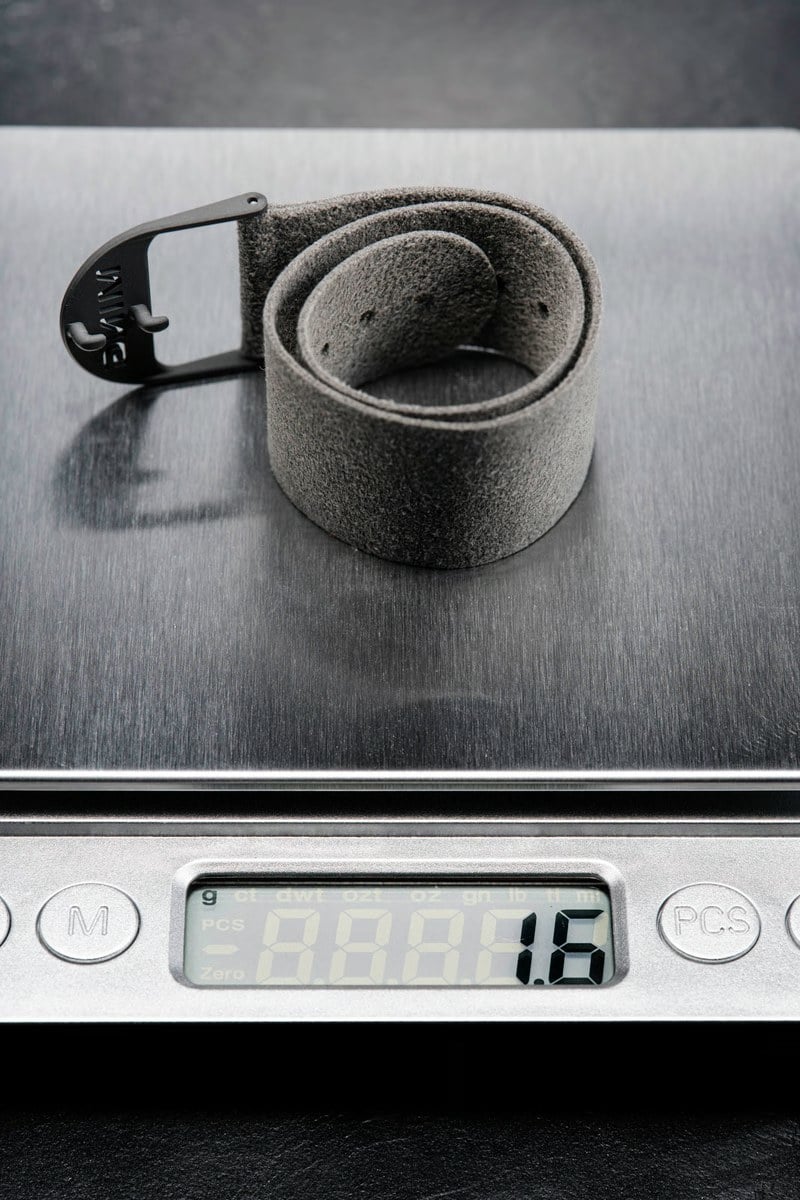
The Ming LW.01 Manual is the definitive answer to this demand. Weighing in at just 8.8 grams for the manual-wind version, it is the lightest mechanical watch ever produced. To put that in perspective, a standard AA battery weighs about 23 grams. You are wearing something that is roughly one-third the weight of a battery on your wrist. This isn't just a watch; it’s a laboratory experiment that you can wear to a board meeting.
Metallurgy and Magic: The AZ31 Magnesium-Lithium Case
Achieving this weight wasn't a matter of simply drilling holes in a steel case. Ming had to rethink the entire material stack. They landed on AZ31 Magnesium-Lithium alloy. Magnesium is already significantly lighter than aluminum, but when alloyed with lithium, it becomes one of the lightest structural metals on the planet. However, magnesium is notoriously difficult to work with—it’s prone to corrosion and is highly flammable during the machining process.
To combat this, Ming utilized a Plasma Electrolytic Oxidation (PEO) treatment. This creates a ceramic-like oxide layer on the surface, providing corrosion resistance and a unique, tactile finish that feels more like a warm stone than a cold metal. The choice of Gorilla Glass instead of sapphire was another calculated move. While sapphire is harder, Gorilla Glass is significantly lighter and offers more than enough durability for a piece that is clearly not intended for rock climbing or deep-sea diving.
The Movement: A Lesson in Reduction
Inside the LW.01 beats a heavily modified ETA 2000.M1, prepared by the experts at Schwarz-Etienne. In a typical watch, the movement is a separate entity held inside the case by spacers and screws. In the LW.01, the movement and the dial are essentially a single structural unit. By integrating the movement into the case architecture, Ming eliminated the need for a traditional dial and multiple mounting components.
Every bridge has been skeletonized. Every screw has been evaluated for its weight. The result is a movement that provides 36 hours of power reserve—plenty for a daily wear—while contributing almost nothing to the overall mass. Critics might point out that using an ETA base in a $20,000 watch is a 'cheat,' but they miss the point. The value here isn't in the caliber's rarity, but in the extreme engineering required to make it live within such a restrictive weight budget.
The Market Perspective: Hold, Flip, or Daily?
From an investment standpoint, the Ming LW.01 is a fascinating case study. Ming’s secondary market history has been a rollercoaster. The early 17.01 and 17.06 models saw massive hype and subsequent cooling. However, the 'Special Projects' and 'Lightweight' series occupy a different tier. With only 200 units total (including the automatic version), the scarcity is real.
We are currently seeing these trade at a healthy premium on the secondary market. Unlike the more common Ming references, the LW.01 is a 'halo' piece. It is the watch that people will talk about ten years from now when they discuss the independent watchmaking boom of the 2020s. This is a 'Strong Hold.' It’s the kind of piece that gets you invited to the right dinners and gains you entry into the most exclusive 'allocation-only' lists for future releases.
The Wrist Experience: The Ghost on Your Arm
The first time you strap on the LW.01, you will laugh. It’s an involuntary reaction to the cognitive dissonance of seeing a high-end watch but feeling nothing. The 38mm diameter is the 'Goldilocks' size—large enough to have presence, but small enough to maintain the minimalist aesthetic. The 6.5mm thickness means it slides under even the tightest bespoke shirt cuff without a hint of resistance.
The dial is a masterclass in Ming’s signature style: a gradient of greys with crisp, white markings that seem to float. There is no lume, which some might find annoying, but in the context of a lightweight record-breaker, lume is just unnecessary mass. This is a watch for the daytime, for the light, for the visible world.
The Vivir Verdict
Is the Ming LW.01 Manual a 'value' proposition? At $21,500 MSRP, absolutely not in the traditional sense. You could buy a steel Rolex Daytona or a Vacheron Constantin Overseas for similar money. But you wouldn't be buying a world record. You wouldn't be buying a piece of metallurgical history. The LW.01 is for the collector who already has the 'standard' icons and is looking for something that pushes the boundaries of what a watch can be.
In the high-speed world of luxury horology, the LW.01 is a reminder that sometimes, the most powerful statement you can make is the one that weighs the least. It is a technical marvel, a market darling, and a permanent fixture in the hall of fame for independent watchmaking. If you have the means and the allocation, do not hesitate. This is the future of the wrist.