What the NH TYPE 2C-2 is
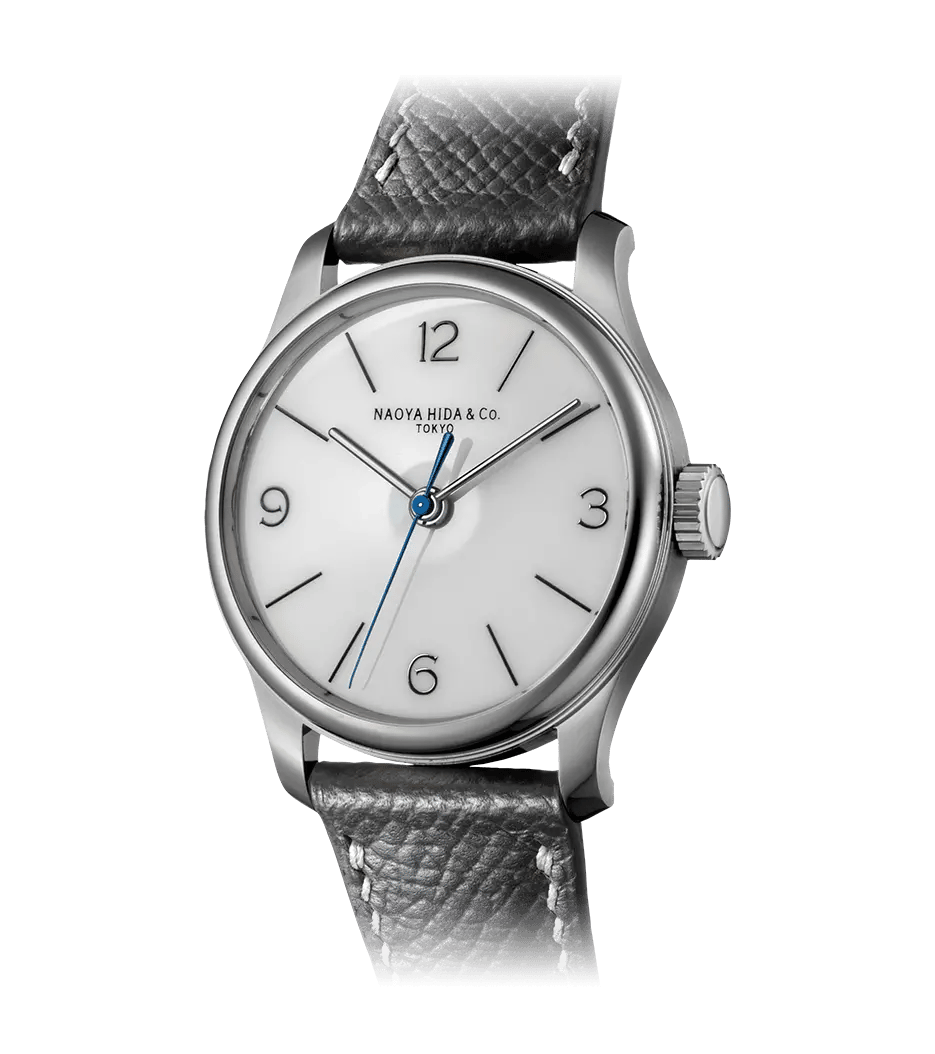
The 2C-2 is a dress-leaning independent watch with a vintage-inspired dial, a stainless-steel case, sapphire crystal, leather strap, and no lume. It is not trying to be a sports watch, a travel watch, or a daily beater in the modern sense. It is trying to be the watch you put on when you want something quieter than a Submariner and more personal than a Calatrava. That is a crowded emotional space, but Naoya Hida occupies it with a specific Japanese interpretation of mid-century Swiss design.
The reference naming matters. Naoya Hida's Type 1 and Type 2 families are not mass-market collections with dozens of SKUs. They are small-batch series, often with dial and hand variations that collectors track closely. The 2C-2 is best understood as a second iteration within the 2C line rather than a completely new model. That matters for buyers because the family code, dial variant, and production batch can affect desirability and resale. In this tier, provenance and completeness are not afterthoughts; they are part of the asset.
Brand context: why Naoya Hida matters
Naoya Hida and Co. is a Tokyo-based independent founded in 2019. The brand's output is small, its distribution is selective, and its design language is deliberately retro. Naoya Hida is not chasing vertical integration or in-house movement bragging rights. Instead, the brand uses Swiss-based mechanical movements finished and regulated to its brief, then wraps them in cases and dials that feel drawn from the 1940s and 1950s. That approach places it closer to the independent atelier tradition than to the industrial luxury mainstream.
For collectors, this is both the appeal and the risk. The appeal is authorship: a small team, a clear eye, and a product that does not look like a committee decision. The risk is infrastructure: fewer service points, less public documentation, and a secondary market that is dealer and collector driven rather than auction driven. The 2C-2 is not a watch you buy because it is convenient. You buy it because you want a specific design and you accept the ownership logistics that come with a micro-scale independent.
The brand's growing visibility matters. Naoya Hida has moved from insider curiosity to a name that serious collectors recognize in conversation. That does not make every reference a blue chip, but it does support demand for clean, complete examples. In the independent space, recognition is liquidity. The 2C-2 benefits from that slowly compounding recognition.
Case, dial, and the vintage-soul brief
The 2C-2's case is stainless steel, and the crystal is sapphire. The strap is leather, and the clasp is a pin buckle. Lume is absent. These are the right choices for the brief. A vintage-inspired dress watch does not need a ceramic bezel, a screw-down crown, or a bracelet that weighs down the wrist. It needs proportions that disappear under a cuff and a dial that rewards a second look.
Naoya Hida's design language tends toward restrained dials, fine hands, and a sense of air. The 2C-2 follows that path. It is not a maximalist independent watch with a skeletonized movement or a domed sapphire the size of a coin. It is conservative in the best sense: the kind of watch that looks simple at arm's length and more considered up close. The lack of lume is consistent with the vintage brief. If you need a watch that glows, this is not it.
I have deliberately not quoted case diameter, thickness, or lug-to-lug because public data for this exact reference is not consistently stated. That is not a dodge; it is a warning. In this tier, you should confirm dimensions with the dealer or brand before buying, especially if you have a strong preference for small or large watches. The 2C-2 is designed as a dress-leaning piece, so the visual impression is compact and balanced rather than oversized. But collectors should not assume a number just because a sibling reference used it.
Movement and architecture
The 2C-2 is understood to use an automatic movement from Naoya Hida's Swiss-based family, often referred to as the NH02 line. The brand does not publish a full public technical sheet for every batch, so I have not filled in power reserve, frequency, or jewel count as if those numbers were confirmed for this exact reference. What matters for the buyer is the architecture: a reliable Swiss ébauche, finished and regulated for Naoya Hida, with the brand's emphasis on visual finishing and stable timekeeping rather than in-house novelty.
This is a sensible choice. Naoya Hida is not a movement manufacture, and pretending otherwise would add cost without adding collector value at this price point. The independent watch world is full of small brands that promise in-house movements and then struggle with service and parts. Naoya Hida's approach is more honest: use a proven base, finish it to a high standard, and put the design effort where the owner actually looks. The movement is not COSC-certified, and it is not in-house. It is a means to an end, not the headline.
The practical implication is that service should be straightforward for a competent watchmaker, but the brand's small scale means you should still confirm authorized service routes. The 2C-2 is not a watch you want to hand to an unknown local shop without references. The finishing and case construction may be simple, but the ownership experience is still independent-tier.
On the wrist
The 2C-2 wears like a watch designed for a cuff, not a camera. The stainless-steel case, sapphire crystal, and leather strap keep the package comfortable and unobtrusive. The pin buckle is traditional and light, and the lack of lume keeps the dial clean. On the wrist, the watch should feel balanced rather than heavy. It is not a piece that announces itself across the room. It is a piece that looks correct when you are wearing a jacket and someone notices it only because they were already looking.
Comfort will depend heavily on the strap. Naoya Hida's leather choices tend to suit the vintage brief, but leather is a wear item. If you plan to wear the 2C-2 regularly, budget for a replacement strap and consider a custom maker who can match the lug width and keep the look consistent. The pin buckle is easy to live with, but it does not offer the micro-adjustment of a modern clasp. That is fine for a dress watch; it is less fine if you expect daily-wear convenience in humid weather.
Wrist presence is moderate. I would rate it 4/5 for the collector who values understatement. It has enough character to feel special, but it does not dominate a collection the way a large sports watch does. If you want a watch that makes a statement from across the table, this is not the tool. If you want a watch that rewards the person sitting next to you, it is.
Accuracy and daily ownership
There is no official chronometer certification for this reference, and public accuracy data is thin. The realistic expectation for a well-regulated Swiss-based automatic in a small independent watch is a few seconds per day in normal wear, with variation depending on position, temperature, and activity. That is not a guarantee; it is a reasonable ownership expectation. Buyers should ask for a timegrapher reading or a recent service record when buying pre-owned.
Daily ownership is more about habit than spec. The 2C-2 is not a watch you wear to the gym or to a beach. It is not lume-equipped, and it is not marketed as a sports watch. It is a dress-leaning independent that wants a reasonable amount of care. That does not mean fragile; it means appropriate. Wear it to the office, to dinner, to a gallery, to a meeting. Do not wear it to change a tire.
The dial is not a complication showcase. It is a time-only design statement, and that is why it works. The lack of clutter keeps the vintage brief intact. If you want a date, a chronograph, or a GMT, look elsewhere. The 2C-2 is about restraint.
Where it fits in a collection
The 2C-2 fits best as a dress watch in a collection that already has a sports watch and a daily beater. It is not a one-watch collection. It is the watch you wear when you want to signal taste rather than status. It pairs well with tailoring, knitwear, and a leather jacket. It does not pair well with a wetsuit or a high-vis vest. That sounds obvious, but collectors often buy independent dress watches and then complain that they do not get enough wrist time. The 2C-2 is not a utility tool; it is a mood.
For young collectors, the appeal is that it sits outside the usual luxury ladder. You are not buying it because it is the next step after a Datejust. You are buying it because you want a Japanese independent with a vintage eye and a small production run. That is a more personal purchase, and it should be. The 2C-2 is not a flex watch. It is a knowledge watch. The people who recognize it will be the people who read about watches beyond the mall.
Variants, family, and alternatives
The 2C-2 sits within Naoya Hida's Type 2 family, alongside earlier 2C iterations and the broader Type 1 and Type 3 lines. Exact dial and batch details can vary, so collectors should confirm the specific variant with the brand or a trusted dealer. The family references include the NH TYPE 1A, 1B, 1C, 2A, 2B, and 3A. These are not mass-market siblings; they are small-batch expressions of the same design philosophy.
If you like the 2C-2 but want something more available, the Grand Seiko SBGW231 offers a Japanese dress-watch experience with a manual-wind movement and a broader service network. The Kurono Tokyo 34mm is another independent Japanese design piece with limited production and a vintage-inspired dial. The Habring2 Erwin is a more expensive independent alternative with a different technical story. None of these are substitutes for the 2C-2, but they help frame the market. The 2C-2's closest competitors are not big-brand dress watches; they are other small independents with a point of view.
For buyers who want the look at a lower price, the Orient Bambino 38 is a sensible homage in spirit. It captures the vintage dress-watch silhouette without the independent-brand premium. It is not the same watch, and it does not pretend to be. That is fine. The 2C-2 is for collectors who want the real thing, not a placeholder.
Market view: price, resale, and hold-versus-sell
Naoya Hida does not publish a single global MSRP that applies cleanly to every market and allocation. The 2C-2 trades in the low-to-mid five figures on the secondary market, with clean, complete examples commanding the stronger end of the range. That is a wide band, and it is intentional. Independent watches are not commodities. Condition, dial variant, production batch, box and papers, and the seller's reputation all matter.
The trend is stable rather than explosive. Naoya Hida has a growing collector base, but the brand does not have the auction liquidity of the biggest independents. That means you should not buy the 2C-2 as a short-term flip. The bid-ask spread can be wide, and finding the right buyer may take time. If you buy at a fair price and hold for several years, the watch should hold value reasonably well. If you pay a hype premium, you may wait a long time to get it back.
My hold recommendation is straightforward: hold if you acquired the watch at or near allocation, or if you bought a clean example at a fair secondary price. The 2C-2 is a niche collector piece with limited supply and a clear design identity. Sell only if you need liquidity, if the watch does not get wrist time, or if you are rotating into a more liquid asset. This is not a watch to trade for a quick profit. It is a watch to own because you like the object.
There is no major auction history for this reference. The secondary market is dealer and private-sale driven. That means you should do more diligence than you would for a mainstream luxury watch. Ask for service records, confirm the reference and batch, and buy the seller as much as the watch.
Service and long-term ownership
Service should be handled through Naoya Hida or an authorized agent. The brand's small scale means there is no global network of service centers, and independent watchmakers may not have easy access to parts. The interval and cost are not publicly fixed for this exact reference, so I have left those numbers blank rather than guessing. Before purchase, ask the brand or dealer for the recommended service route and expected turnaround. That is basic diligence in the independent space.
Long-term ownership is about more than movement service. Leather straps wear out, sapphire can be scratched or replaced, and case finishing can be touched up by a skilled watchmaker. The 2C-2 is not a watch that needs to be babied, but it does need to be maintained by someone who understands independent watches. Keep the box and papers. They matter at resale. Keep the service records. They matter more.
Final verdict
The Naoya Hida NH TYPE 2C-2 is a confident, small-batch Japanese independent with a vintage-soul brief and a sensible Swiss-based mechanical heart. It is not the most practical watch in the world, and it is not the most liquid. But it is distinctive, wearable, and backed by a brand that collectors are increasingly paying attention to. For the right buyer, that is enough.
Buy it if you want a dress watch with authorship, scarcity, and a quiet design voice. Hold it if you already own it and it fits your rotation. Do not buy it as a short-term trade. In the independent market, patience is the real complication.