Naoya Hida NH TYPE 3B-4 Review: The Quiet Independent
There is a particular kind of collector who does not need the watch on their wrist to announce itself from across the room. That collector buys for design, scarcity, and the private pleasure of ownership. The Naoya Hida NH TYPE 3B-4 is aimed squarely at that buyer. It is a Japanese independent dress watch with a small-production footprint, a traditional manual-wind heart, and a market that lives more in conversations than in public price lists.
This is not a watch to underwrite like a steel sports Rolex. It does not have the same daily liquidity, and it should not be bought with the expectation that you can exit in a week. Instead, the Type 3B-4 sits in the long-hold independent category: desirable to the right collector, difficult to price without context, and deeply reliant on documentation and provenance.
That makes the review less about chasing a headline number and more about judging the object. What is it like to wear? What should a buyer verify? Where does it sit against Grand Seiko, Nomos, and Kurono Tokyo? And most importantly, does the current market treatment of Naoya Hida justify the attention?
Brand Context: Naoya Hida and Co.
Naoya Hida and Co. was founded in 2018 in Japan, and the brand has built its reputation on small-production dress watches with a vintage-informed design language. The founder came from the Japanese watch industry, and the brand carries that background in its preference for restrained cases, thoughtful dials, and a feeling of private atelier production rather than mass luxury.
That context matters for the Type 3B-4. This is not a watch that tries to compete with a Datejust on versatility or a Speedmaster on legend. It competes on taste, scarcity, and the sense that the owner is part of a small group rather than a global customer base. In the independent space, that is a real asset, but it also means the buyer must accept a thinner resale market.
Design and Case
The Type 3B-4 follows the Naoya Hida philosophy of visual restraint. The case is stainless steel, the crystal is sapphire, and the watch is paired with a leather strap and a pin buckle. There is no lume, which is correct for a dress watch of this intent. This is not a watch for the beach, the gym, or a weekend of rough wear. It is a watch for a jacket, a desk, and the kind of evening where the dial is seen by the people seated close to you.
I have deliberately not stated case diameter, thickness, or lug-to-lug measurements here because public materials for this reference are not consistent enough to treat as absolute. Collectors should verify those figures on the specific example or with Naoya Hida directly. What can be said is that the design language is traditional and cuff-friendly. The watch is meant to sit close to the wrist rather than dominate it.
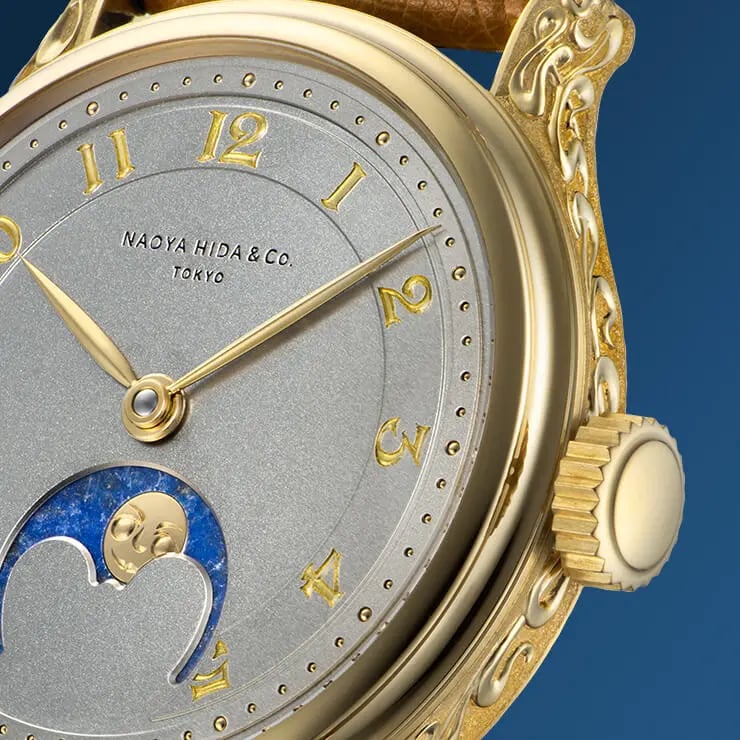
The dial is the emotional center of the watch. Naoya Hida is known for drawing on vintage dial grammar without making a watch feel like a costume. The Type 3B-4 should be judged in person, because the quality of the dial work is not always captured in compressed online images. Look for the proportions of the markers, the finish of the hands, and the way the dial changes under different light. Those are the details that separate a small independent from a catalog dress watch.
Movement and Accuracy
The Type 3B-4 is a manual-wind watch, and that is part of its appeal. Winding a watch every day creates a relationship that an automatic does not. It also keeps the watch thinner and more traditional in feel. The movement is manufacturer-modified, but public caliber naming for this reference is not consistently published, so buyers should verify the exact designation in the paperwork. Do not rely on forum shorthand for a watch at this level.
There is no COSC certification, and that should not be a deal-breaker. Independent watchmaking is often about regulation and finishing rather than certification badges. Real-world accuracy will depend on the individual watch, how it has been worn, and whether it has been serviced. Ask for timegrapher data if you are buying pre-owned. A well-regulated example should be entirely usable as a daily dress watch, but do not expect quartz stability or assume that low production automatically means perfect timekeeping.
The movement should be judged on feel as much as numbers. Is the winding smooth? Does the crown engage cleanly? Is the watch quiet and consistent in wear? Those are the questions that matter more than a single day of timing variance.
Wrist Feel
The Type 3B-4 is designed to wear like a dress watch, not a sports watch. It should feel light, balanced, and unobtrusive under a cuff. The leather strap and pin buckle support that intent. If you are used to heavy steel bracelets, the first reaction may be that the watch feels almost too polite. That is the point. It is a watch that disappears into the outfit and then rewards a closer look.
Strap choice will change the character more than you might expect. A thin, dark leather strap keeps it formal and vintage-leaning. A slightly thicker strap can make it feel more casual and everyday. The pin buckle is the right choice for this kind of object. It keeps the package traditional and avoids the visual weight of a deployant clasp.
Because exact dimensions are not consistently published for this reference, wrist feel should be assessed on the actual watch. Collectors with smaller wrists should not assume that a Japanese dress watch is automatically tiny, and collectors with larger wrists should not assume it will feel too delicate. The balance of the case and dial is what matters.
Market and Investment Case
The Naoya Hida market is not a public auction market in the way that vintage Rolex or Patek Philippe is. It is a private collector market. That means pricing is less transparent, liquidity is thinner, and the buyer's relationship with the seller matters more. The Type 3B-4 should be treated as an appreciating independent rather than a day-trade asset. Scarcity supports values, but scarcity also means you may wait for the right buyer when you decide to sell.
MSRP and current retail are best described as price on request rather than a fixed public number. That is not a dodge; it is the reality of allocation-driven independent watchmaking. If you are buying, ask for the original invoice, warranty paperwork, and service history. If you are selling, present the watch as a complete set with clear provenance. In this segment, a complete package can matter more than a small difference in condition.
The hold-versus-sell judgment is straightforward. If you own a Type 3B-4 and you still enjoy wearing it, hold. The watch is scarce, the brand has a dedicated following, and the downside of flipping is that you may not be able to replace it easily. If you are buying purely for liquidity, look elsewhere. This is a collector's watch, not a hedge fund instrument.
There is no major auction history for this reference, and that is normal for a small independent. Private transactions dominate. Treat any asking price as a starting point and compare it against the few credible comps you can find. Do not overpay for a watch with missing paperwork just because the dial is attractive.
Service and Ownership
Service should be arranged through Naoya Hida and Co. or an authorized partner. Independent watchmakers may be able to assist, but parts access can be limited. There is no universally published service interval for this reference in the public materials I would trust, so owners should follow the brand's guidance and the watch's actual performance. If the watch is running well and winding smoothly, do not service it just because a calendar says so. If it is erratic or the winding feels rough, get it checked.
Ownership of a small independent is a relationship as much as a transaction. Keep the paperwork. Keep the original strap and buckle. Photograph the watch before sending it for service. Those habits protect value when you eventually sell or pass it on.
Alternatives and Homages
The closest alternative in spirit is the Grand Seiko SBGW231, a Japanese manual-wind dress watch with superb finishing and a similarly serious collector intent. The Nomos Orion 38 offers a cleaner, more minimal German take on the dress watch, with in-house manual winding and a strong value story. The Kurono Tokyo Mori is another independent Japanese design-led watch with limited availability and a dedicated following. None of these are direct substitutes, but they help frame the Type 3B-4 in the market.
For buyers who want the look without the independent price, the Orient Bambino 38 and Timex Marlin Hand-Wound offer vintage dress-watch language at entry level. They are not homages in the strict sense, but they capture some of the same mood. A Seiko 5 SNXS79 is a low-cost Japanese daily with a simple, vintage-inspired dial. These watches are not investments, but they are useful reminders that taste does not always require a five-figure budget.
Pros and Cons
The pros are clear: scarce independent production, distinctive Japanese design, and strong collector demand relative to supply. The watch has a point of view, and it does not look like everything else in the safe. The cons are equally clear: limited public specification and service data, thin liquidity outside collector circles, and the need for careful authentication. This is not a watch for a buyer who wants to click, pay, and forget.
Final Verdict
The Naoya Hida NH TYPE 3B-4 is a connoisseur's dress watch rather than a market weapon. It rewards buyers who value scarcity, Japanese independent design, and the ritual of a manual-wind object over easy liquidity. Hold it if you own it, buy it only after verifying the individual example, and do not confuse quiet with cheap.