First impressions: the pilot watch that does not shout
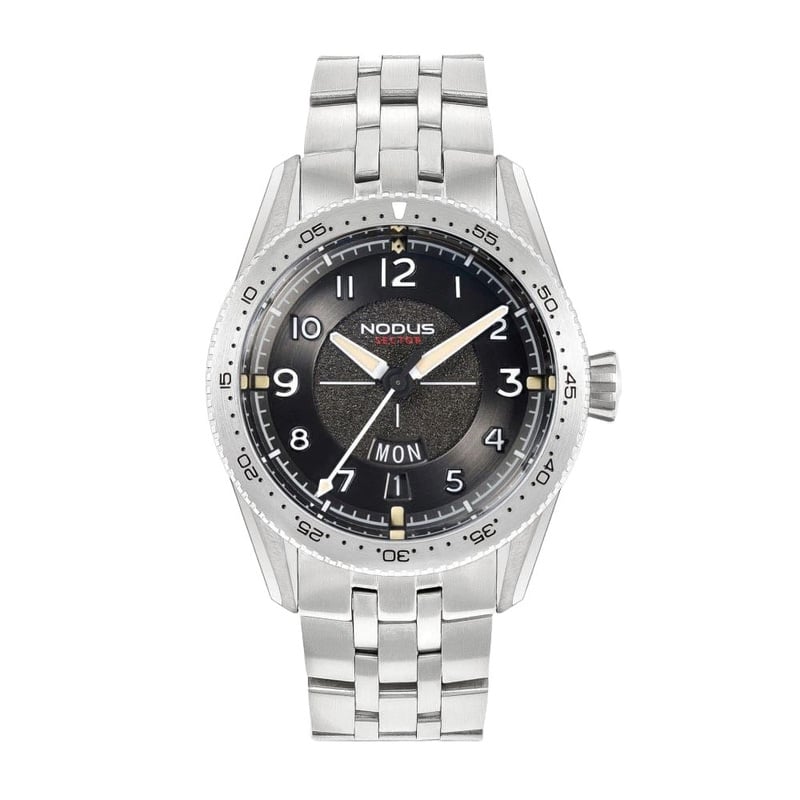
Most pilot watches are cosplay. They arrive with oversized cases, cathedral hands and a leather flight jacket in the press kit, then spend their lives in a drawer because nobody wants to bang a dinner plate into a doorframe. The Nodus Sector Pilot goes the other way: a small-batch, Los Angeles-designed reading of the flieger idea, built around a case that stays out of the way and a dial you can read in the two seconds you actually look at it.
I wore one for a week — desk, school run, a rainy weekend, one short flight — and the thing I keep coming back to is how little I thought about it. That is not faint praise. A daily wearer earns its place by disappearing, and this one disappears in the way a good pair of boots does: present, supportive, unremarkable in the best sense.
It is not perfect. The movement is a workhorse rather than a showpiece, and the sub-$600 tool-watch field is brutally crowded. But if you want a pilot's watch that behaves like equipment rather than costume, the Sector Pilot deserves a serious look.
Nodus in context
Nodus was founded in Los Angeles in 2017 by Cullen Chen and Wes Kwok, two enthusiasts who built the brand around small-batch design, Japanese movements and direct-to-consumer pricing. That model explains almost everything about the Sector Pilot, from the sensible spec sheet to the batch-production habits that make certain dial colours appear and vanish.
The Sector family — field, dive, sport and pilot — is the backbone of the catalogue, sharing a common case language and a common movement philosophy. The Sector Pilot applies that platform to a traditional flieger brief: high contrast, big legible numerals, and a dial meant to be read at arm's length on a moving wrist.
Because Nodus works in runs rather than continuous production, the Sector Pilot was never a mass-market object. That has two consequences for a buyer. On the positive side, you are unlikely to see another one at the next table. On the negative side, if you fall for a particular dial colour, you may have to wait for one to surface used.
The movement: Seiko NH35A
Inside is Seiko's NH35A, an automatic with hacking, hand-winding and about 41 hours of power reserve, beating at 21,600 vibrations per hour. Seiko rates the family at roughly −20/+40 seconds per day; in practice, a healthy example settles well inside that. Nodus keeps the caseback closed, so there is no movement finishing to admire. That is the correct decision at this price: money spent decorating a movement is money not spent on the dial, the crystal or quality control.
What you get instead is availability. Any competent watchmaker can service an NH35A, and replacing the whole movement often costs less than overhauling a Swiss calibre. For a watch that is meant to be worn hard, that is not a compromise — it is the sensible engineering choice.
Case, crystal, dial and legibility
The case is stainless steel, with a mix of brushing and polishing that reads as restrained rather than flashy. It is deliberately modest — the sort of watch that slides under a shirt cuff without negotiation. The lugs curve down early, which is what makes the watch sit flat rather than perch. A sapphire crystal protects the dial, which is the right answer at this price and one that fewer competitors offer than you would expect.
The dial is the point of a pilot watch, and this one gets the fundamentals right. Matte finishing kills reflections. The contrast between the dial surface and the lume-filled markers is strong enough to read in flat indoor light, in a car at dusk, and in the one moment that actually matters — half-awake, in the dark, when you need to know whether it is worth getting up. Super-LumiNova on the markers and hands charges quickly under a phone torch and stays useful for the hours you would realistically need it. The seconds hand carries a touch of colour that makes it findable without cluttering the layout.
Water resistance is rated for the sort of water a pilot actually meets — rain, a washroom sink, a spilled coffee — rather than for reef diving. If you want a swim watch, Nodus makes one of those too.
On the wrist: a week of real wear
This is the Sector Pilot's strongest card. On a medium wrist the head sits centred and flat, with no tendency to roll. On a smaller wrist it still reads as a watch rather than a paperweight, because the case does not overhang the wrist bone and the lugs drop away rather than jutting out. The leather strap that comes with it is soft from the first wear, and the pin buckle is light enough that you forget it is there by mid-morning.
Weight is balanced rather than inert. You are aware of it when you put it on and unaware of it two minutes later, which is exactly the brief for a daily wearer. Under a shirt cuff it clears the fabric without snagging; over a jumper sleeve it does not catch. The crown sits proud enough to operate without a fingernail, and there is nothing on the case profile that grabs at a jacket liner.
The one caveat is heat. A leather strap on a warm day is a leather strap on a warm day, and swapping to a NATO or a steel bracelet turns this into a genuinely three-season watch. That swap is easy, which is part of the point: the Sector Pilot is designed to be a platform, not a fixed configuration.
Accuracy in daily use
Expect roughly +5 to +15 seconds a day once the movement has settled, with noticeable positional variation — mine ran slower dial-up overnight and faster on the wrist. That is entirely normal for an NH35A and well inside what most owners will tolerate. If you need quartz-level consistency, this is not the watch; if you are content to reset once a week, you will never think about it.
Magnetism is the real risk in this price bracket. Keep it away from laptop speakers, magnetic phone mounts and the sort of bag clasps that have quietly magnetised half the watches in your drawer. If it starts running wildly fast, demagnetising is a two-minute fix at any watchmaker and costs almost nothing.
Where it fits: occasions
The Sector Pilot is a daily watch first. It reads as a tool on a leather strap and passes without comment at a desk, which is exactly what most of us need. With a change to a slim leather strap it slips under a cuff for dinner; on a NATO it becomes a weekend and travel watch without complaint. It is not a dress watch and does not pretend to be one, but it is far more versatile than the flieger genre usually allows, because the case is restrained and the dial is not trying to be a cockpit instrument panel.
Travel is where it earns quiet credit: the high-contrast dial means it is readable on a night flight with the cabin lights down, and the push-pull crown is easy to operate without taking it off. It is not a GMT and does not solve the time-zone problem, but it does the one thing a travel watch must do — tell you the time at 3 a.m. in a strange room without a fumble for your phone.
The range: variants and siblings
The core Sector Pilot is the matte-dialled configuration most buyers will encounter, offered on a leather strap with a steel bracelet available separately. Because Nodus produces in batches, alternate dial colours have appeared in limited runs and sell through quickly; if you are hunting a specific colour on the secondary market, patience is the operative virtue.
Within the wider Sector family, the Field, Dive and Sport variants share the same underlying platform but chase different briefs. The Field is the most direct alternative if you want a quieter dial, the Dive adds proper water capability, and the Sport splits the difference. If you like how the Sector Pilot wears but want a different job done, the family has an answer.
Elsewhere in the catalogue, the Retrospect covers the dive-watch brief and the Contrail handles the travel-watch remit with a GMT complication. A Nodus collection built around a Sector Pilot plus one of those two covers almost every realistic daily scenario.
Rivals and alternatives
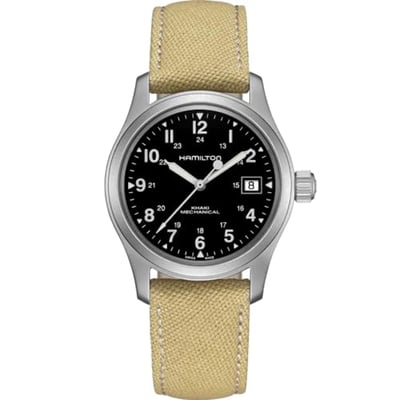
Hamilton's Khaki Aviation Pilot is the closest mainstream analogue: the same brief, more brand recognition and a visibly higher price. Laco's Augsburg offers genuine flieger heritage at a comparable figure, with a more austere dial and less everyday comfort. Sinn's 556 is the German tool-watch benchmark and a better-finished object in every measurable way — and it costs several times as much. Oris's Big Crown ProPilot brings Swiss mechanics and pilot cues at a much higher sticker.
If the budget is tighter, the Seiko 5 Sports field range offers an in-house automatic for less, and Timex's Expedition North delivers quartz simplicity with a similar legible look. Bertucci's A-2T is the disposable-tool version of the same idea. None of them wear as well as the Nodus, and none of them offer sapphire at the price, but they are honest alternatives rather than compromises.
Ownership: service, parts and resale
Servicing is the Sector Pilot's quiet advantage. The NH35A is serviceable by any competent independent watchmaker, and a full movement replacement is often cheaper than an overhaul. You will not need to ship it back to California or wait months for a slot.
Resale is stable but unspectacular. Microbrand pilots tend to trade close to their original price, with limited colourways commanding a small premium and standard configurations selling in the high-hundreds on the used market. Buy it to wear. If you want an appreciating asset, this is not that conversation.
Pros and cons
Pros: genuinely comfortable, unobtrusive case; excellent legibility and strong lume; sapphire crystal at a price where many rivals still use mineral; a proven, cheap-to-service movement; small-batch design with real thought behind the dial layout.
Cons: NH35A accuracy and positional variation are merely adequate; no meaningful antimagnetic protection; the leather strap limits it in hot weather until you swap it; and because the model is batch-produced and now discontinued, specific colours can be hard to find.
Final verdict
The Sector Pilot is the rare pilot watch that behaves like a daily wearer first and a genre piece second. It is comfortable enough to forget, legible enough to trust and inexpensive enough that a scuff is an inconvenience rather than a tragedy. It will not impress anyone at a dinner party, and it is not trying to. What it will do is tell you the time, every day, for years, without asking for anything in return.
If you want a flieger-adjacent tool watch you will actually wear on a Tuesday, this is one of the smarter answers at the price.