Brand history and why this model matters
Nomos Glashütte was founded in 1990, shortly after German reunification, and built its reputation on precisely finished, industrially produced movements and clean Glashütte design. The brand is not a heritage house in the way Lange or Glashütte Original is. It is a modern manufacturer that earned credibility by making its own escapements and movements at a price point where most competitors still rely on outsourced calibers. That matters for the Club 38 because the watch is not just a pretty dial with a generic automatic inside. The movement is the product.
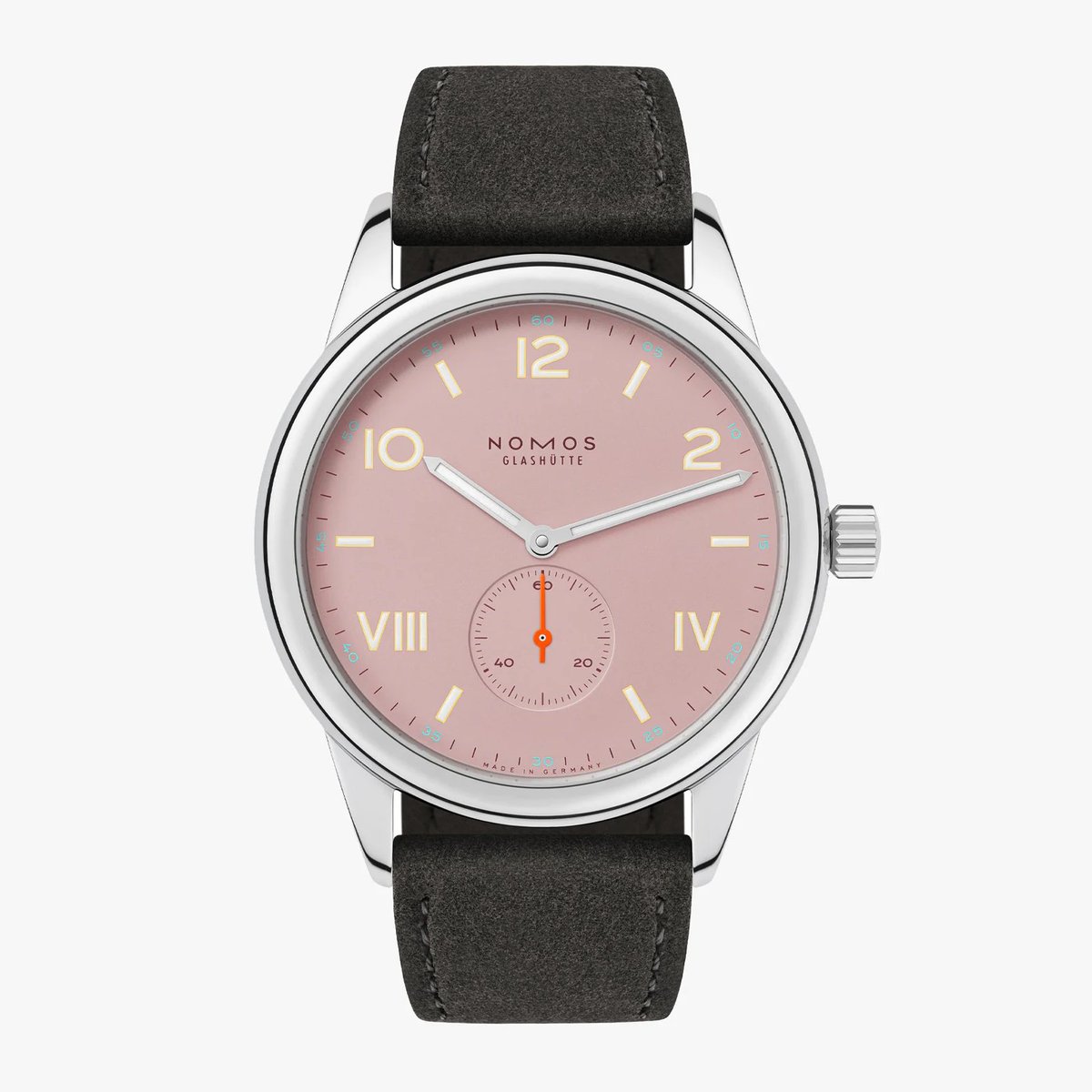
The Club line itself is Nomos’s answer to the everyday sports watch. It takes the brand’s Bauhaus-adjacent language and adds Arabic numerals, luminous hands and markers, and a more robust case. The Club 38 ref. 776 is the no-date standard model: white silver-plated dial, small seconds at six, automatic movement, leather strap. It is the purist’s choice in the family, and it is the version that best shows what Nomos can do when it is not trying to be a dress watch.
Movement: DUW 3001 automatic
The Club 38 uses the Nomos DUW 3001 automatic caliber. It is an in-house movement with a 42-hour power reserve, a frequency of 21,600 vph and 27 jewels. It is not COSC-certified, and Nomos does not market it as a chronometer. What it does offer is the Nomos swing system, the brand’s own escapement, which is a meaningful piece of vertical integration at this price. The finishing is industrial in the best sense: clean, consistent and designed for production rather than hand-engraved spectacle. You will not get the hand-finished bridges of a Lange, but you are not paying for them.
The 42-hour reserve is adequate rather than generous. If you rotate watches, you will need to wind it or use a winder. The automatic winding is efficient enough for daily wear, and the small seconds display gives the dial a calm, traditional feel. The lack of a date on ref. 776 is a deliberate choice. It keeps the dial symmetrical and removes a potential service point. For collectors who already own a date watch, the no-date Club 38 is the more satisfying object.
Case, dial and specifications
The Club 38 is a 38.5mm stainless steel watch, 9.9mm thick, with a 47.5mm lug-to-lug measurement. That is a very wearable package for a wide range of wrists. The case is water-resistant to 200m, which is far more than most owners will ever need, and it is fitted with a sapphire crystal. The dial is white silver-plated with Arabic numerals and a small seconds subdial at six. The hands and markers carry Super-LumiNova, so it is legible in low light. The standard ref. 776 comes on a leather strap with a pin buckle. The leather strap is the weakest part of the package for a watch with 200m water resistance, but it is also the easiest thing to change.
The case finishing is a mix of polished and brushed surfaces, with a thin bezel that keeps the dial large relative to the case. The lugs are curved enough to sit close to the wrist, and the crown is easy to operate without being oversized. The Club 38 does not have the tank-like presence of a dive watch, but it does not feel fragile either. It is a sports watch in the European sense: understated, comfortable and capable.
On the wrist
The Club 38 wears like a watch designed by people who actually wear watches. The 38.5mm diameter is large enough to have presence on a 6.5-inch wrist and small enough to avoid the dinner-plate effect on a 7.25-inch wrist. The 47.5mm lug-to-lug is the key number. It keeps the watch from overhanging the wrist, and the curved lugs help the case settle into the hollows of the wrist. The 9.9mm thickness means it slips under a shirt cuff without drama. It is not an ultra-thin dress watch, but it is thin enough to be a true daily wearer.
The weight is moderate. Stainless steel is stainless steel, but the Club 38 does not feel top-heavy. The leather strap is comfortable from the start, though it will show wear quickly if you wear the watch in water or sweat. The pin buckle is simple and secure, but a deployant clasp would be a worthwhile upgrade for daily use. The small seconds subdial gives the dial a bit of visual texture without making it busy. The overall impression is of a watch that is easy to read, easy to wear and easy to forget in the best way.
Accuracy and real-world performance
The DUW 3001 is not a certified chronometer, so you should not expect quartz-like accuracy. In real-world use, most examples run within a few seconds per day, often in the range of -5 to +10 seconds per day depending on position and temperature. That is normal for a well-regulated automatic at this price. If you are the kind of collector who checks a watch against a time server every morning, you may want to have it regulated by a watchmaker. If you wear it as a daily watch and reset it once a week, it will be more than accurate enough.
The 42-hour power reserve means the watch will stop if you leave it off for a weekend. The automatic winding is smooth and the crown action is precise. The lack of a date means there is less to set when you pick it up after a few days off. That is a small but real ownership benefit.
Occasions and wrist presence
The Club 38 is a true daily watch. It works with a t-shirt and jeans, a sweater, a casual jacket and even a suit if you keep the leather strap in good condition. It is not a formal dress watch, but it is clean enough for most business casual settings. It is also a good travel watch because it is legible, robust and not flashy. The 200m water resistance means you do not have to worry about rain, swimming or washing your hands. The leather strap is the limiting factor, so if you plan to swim, change to a rubber or textile strap.
Wrist presence is about 3 out of 5. The Club 38 is not a watch that announces itself across a room. It is a watch that rewards the person wearing it and the person sitting close enough to notice the finishing. The white dial and blue accents give it a crisp, intelligent look. It is the opposite of a chunky luxury sports watch. If you want a watch that makes a statement, this is not it. If you want a watch that looks right in almost every situation, it is hard to beat.
Reference variants and family
The standard Club 38 is ref. 776 with a white silver-plated dial and leather strap. The Club 38 Datum ref. 777 adds a date at three while keeping the same case and overall design language. The date version is more practical for some owners, but it loses the symmetry of the no-date dial. Other Club family references include the Club Campus 38, which is a more affordable manual-wind model with a California dial, the Club 39, the Club 40 and the Club Sport Neomatik 42 Date. The Club Sport is the more overtly sporty branch, with a steel bracelet and higher water resistance. The Club 38 sits in the middle: more robust than the Campus, more elegant than the Sport.
Within the broader Nomos lineup, the Club 38 competes with the Tangente 38, Orion 38, Metro 38, Ludwig 38 and Ahoi 40. The Tangente is the design icon, the Orion is the dress watch, the Metro is the modern urban option and the Ahoi is the sportier alternative. The Club 38 is the one that balances all of those briefs. It is not the most famous Nomos, but it may be the most useful.
Similar watches and alternatives
If you are shopping the Club 38, you should also look at the Omega Aqua Terra 38, the Tudor Black Bay 36, the Grand Seiko SBGX261 and the Sinn 556 I. The Aqua Terra is the closest thing to a luxury everyday watch in this size, with better brand liquidity and a higher price. The Black Bay 36 has a stronger tool-watch stance and better resale, but it is thicker and less dressy. The Grand Seiko offers quartz precision and extraordinary finishing, but it is a different ownership proposition. The Sinn 556 I is the German tool-watch alternative, with similar dimensions and a lower price. Each of these watches does something better than the Club 38, but none of them combines in-house automatic movement, 200m water resistance and this level of finishing at the same price.
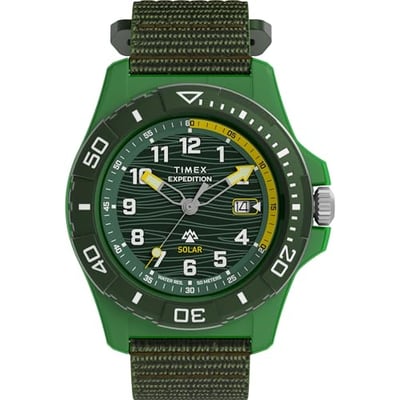
For buyers who want the Club 38 look at a lower price, there are affordable alternatives. The Seiko 5 Sports SRPE55 is not a direct homage, but it captures the same daily-wear field-watch intent for around $275. The Timex Expedition North Field Post is another budget option at around $200, with comparable legibility and a more outdoorsy character. These are not substitutes for the Nomos, but they are useful if you want to test the style before committing to a four-figure purchase.
Investment value and resale
The Club 38 ref. 776 had an MSRP of around $3,180, and current retail is around $3,380. Pre-owned examples typically trade between $2,000 and $2,700 depending on condition, age and whether the original strap and box are included. The trend is stable rather than appreciating. Nomos does not have the secondary-market liquidity of Rolex, Patek Philippe or Audemars Piguet, and it is not an auction watch. There is no major auction history for the Club 38. That is not a criticism; it is simply the reality of the brand. If you buy a Club 38, buy it because you want to wear it. If you want an investment, buy a different watch.
The hold recommendation is straightforward. If you already own a Club 38, there is no compelling reason to sell unless you need the cash or have fallen out of love with it. The secondary market is soft enough that selling a used example rarely makes sense if you still wear it. If you are buying, the pre-owned market is the smarter entry point. A clean example with box and papers at $2,300 to $2,500 is a good deal. At full retail, you are paying for the experience of buying new and having the warranty. That is a legitimate choice, but it is not the value play.
Service and ownership
Nomos recommends servicing the Club 38 every five years or so, and the approximate cost is around $450 depending on what needs to be done. The watch can be serviced by Nomos or an authorized partner. Independent watchmakers can work on the DUW 3001, but factory parts and warranty considerations favor authorized channels. The good news is that the movement is robust and parts are available. The bad news is that service costs are not trivial relative to the pre-owned value of the watch. If you buy a used Club 38, factor in a service if there is no recent service history. A watch that has been worn daily for five years will likely need attention.
Pros and cons
The pros are clear. You get an in-house automatic movement with the Nomos swing system, a versatile 38.5mm case, 200m water resistance, strong legibility and excellent finishing for the price. The Club 38 is comfortable, understated and easy to wear. The cons are equally clear. Nomos resale is soft compared with Swiss peers, the leather strap is not ideal for a 200m watch, the standard ref. 776 has no date, and brand recognition outside enthusiast circles is limited. None of these are deal-breakers if you understand what you are buying.
Final verdict
The Nomos Glashütte Club 38 is one of the best value propositions in modern watchmaking for a collector who wants a real in-house movement and a genuinely wearable case. It is not a status symbol, and it is not an investment. It is a watch for people who care about design, engineering and daily usability. Buy it pre-owned, wear it often, and do not expect it to fund your next purchase. If you can accept that, the Club 38 will reward you every time you look at your wrist.