Introduction
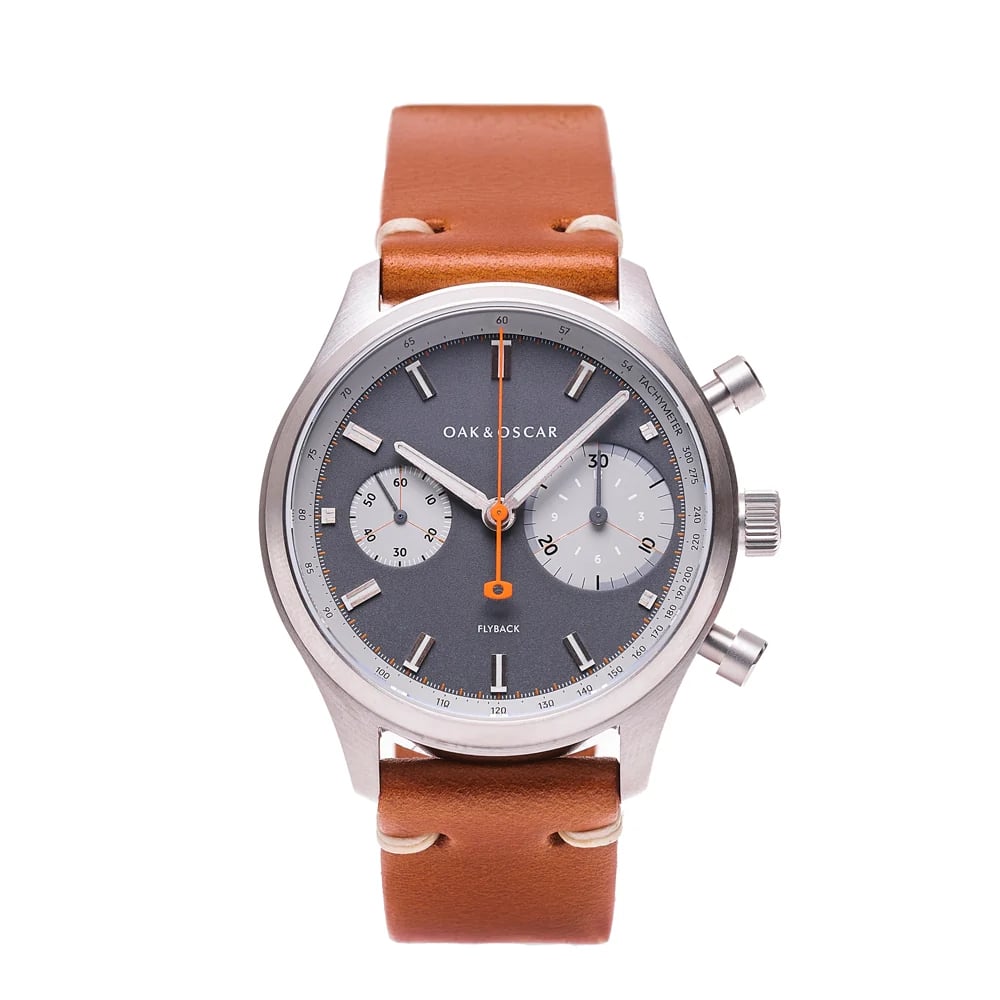
The Oak & Oscar Jackson Big Eye is the kind of watch that makes trust-fund babies and microbrand collectors alike pause mid-scroll. Launched in 2017 as a limited edition, it quickly became the brand’s most talked-about model — a 40mm manual-wind chronograph with a prominent 45-minute subdial at 9 o’clock that screams vintage Heuer Autavia. But in a market flooded with microbrand chronographs, does the Jackson Big Eye hold its value, or is it just another hyped release destined for the pre-owned bargain bin?
As a watch investment analyst at Vivir.com, I’ve tracked this piece from its initial drop to the current secondary market. The Jackson Big Eye is not a Rolex Daytona — it won’t appreciate 20% year over year. But for the savvy collector who understands scarcity, community, and the emotional premium of a well-executed microbrand, this watch offers a compelling hold proposition. Let’s dive into the data.
Brand History
Oak & Oscar was founded in 2015 by Chase Fancher in Chicago, Illinois. The brand quickly gained a reputation for clean, thoughtful designs and a strong community focus — they even include a handwritten note with every purchase. The Jackson line, named after Fancher’s grandfather, debuted in 2016 as an automatic chronograph. The Big Eye variant followed in 2017, limited to 300 pieces, and became the brand’s flagship.
Movement
Inside the Jackson Big Eye beats the Sellita SW510 M b, a manual-wind chronograph movement based on the Valjoux 7750 architecture but without the automatic rotor. It offers 48 hours of power reserve, 27 jewels, and a frequency of 28,800 vph. The movement is not COSC-certified, but it’s reliable and easy to service. Finishing is industrial — perlage on the plates, blued screws, and a custom rotor (though it’s manual wind, so no rotor). The chronograph is cam-actuated, not column wheel, which is typical at this price point.
Specifications
- Case: 40mm stainless steel, 13.5mm thick, 48mm lug-to-lug
- Crystal: Domed sapphire with AR coating
- Water resistance: 100m
- Lume: Super-LumiNova BGW9 (blue glow)
- Strap: Horween leather with pin buckle
Wrist Feel
On the wrist, the Jackson Big Eye wears surprisingly compact for a 40mm chronograph. The 48mm lug-to-lug keeps it from overhanging on average wrists, and the 13.5mm thickness — while not slim — is well-distributed thanks to the domed sapphire crystal and stepped case design. The leather strap breaks in quickly and the pin buckle is understated. The crown and pushers are easy to operate, though the manual-wind action is a bit stiff out of the box.
Weight is moderate — around 90g on strap — so it disappears under a cuff but still feels substantial. The big eye subdial at 9 o’clock is the star: it’s deep, recessed, and incredibly legible. The 45-minute counter is a nod to vintage racing chronographs, and the red-tipped chronograph hand adds a pop of color. Overall, it’s a comfortable daily wearer for those who don’t mind winding their watch every morning.
Accuracy
The Sellita SW510 typically runs within -10 to +20 seconds per day out of the box, but many owners report regulation to within +5 to +10 seconds after a few weeks of wear. In real-world use, expect around +8 seconds per day. It’s not COSC-certified, but for a microbrand chronograph at this price, it’s acceptable. The manual-wind nature means you’ll reset it daily anyway, so accuracy drift is less of a concern.
Occasions and Wrist Presence
The Jackson Big Eye works for daily wear, casual sport, travel, and even dressier settings if you swap the strap. It’s not a dive watch, but 100m water resistance means you can swim with it. Wrist presence is a 3.5/5 — the big eye subdial draws attention, but the 40mm case and restrained design keep it from being a wrist monster. It’s a conversation starter for watch nerds, not a bling piece.
Reference Variants
Two main variants exist: the original black dial (JAC-01-BE) and a later blue dial (JAC-01-BE-BL). Both are limited to 300 pieces each. The black dial is more versatile and commands slightly higher prices on the secondary market. The blue dial is rarer but less sought after. Both come on Horween leather straps.
Similar Watches
If you like the Jackson Big Eye, consider the Sinn 103 St (similar manual-wind chronograph, German tool-watch aesthetic), the Hamilton Khaki Aviation Pilot Day Date (automatic, more affordable), or the Longines Heritage Classic Chronograph (higher-end, column wheel, double the price). For a budget homage, the Pagani Design PD-1701 offers a similar big subdial layout for under $150.
Investment Value
MSRP is $1,950. Current retail is the same (if you can find one new). Pre-owned prices range from $1,500 to $1,800, depending on condition and box/papers. The trend is stable — not appreciating, but not crashing either. The limited production (300 pieces) and strong brand loyalty keep prices from tanking. However, don’t expect a flip profit. Buy pre-owned to save $200-400. Auction history is minimal; a few sold on eBay for around $1,600-$1,700 in 2023.
Service and Maintenance
Service interval is every 5 years. Cost is around $600 for a full service at an independent watchmaker. Oak & Oscar offers service directly, but third-party options are cheaper. The Sellita SW510 is a common movement, so parts are readily available.
Pros and Cons
Pros: Excellent legibility with the big eye subdial, manual-wind movement adds engagement and vintage feel, strong community and brand support, good lume and 100m water resistance.
Cons: No date complication, thick at 13.5mm for a manual wind, not COSC-certified, limited availability means you might pay a premium on secondary market.
Final Verdict
The Oak & Oscar Jackson Big Eye is a niche darling that delivers on design and wearability. It won't make you money, but it will make you smile. For the trust-fund-baby collector who values storytelling and microbrand authenticity over resale flips, this is a solid hold. Just don't expect to flip it for a profit — buy it because you love the big eye.