The Strategic Appeal of the Chicago Independent
In the current landscape of horology, the term 'microbrand' has been somewhat diluted by an influx of Kickstarter projects and drop-shipped components. However, Oak & Oscar exists in a different echelon entirely. Founded in 2014, the brand has spent a decade cultivating a reputation for what I call 'Design Integrity.' The Ashland, a variant of their Olmsted field watch, is the culmination of this effort. For the collector who values the 'trust-fund-baby' aesthetic—understated, high-quality, and slightly contrarian—the Ashland is a strategic addition to a portfolio.
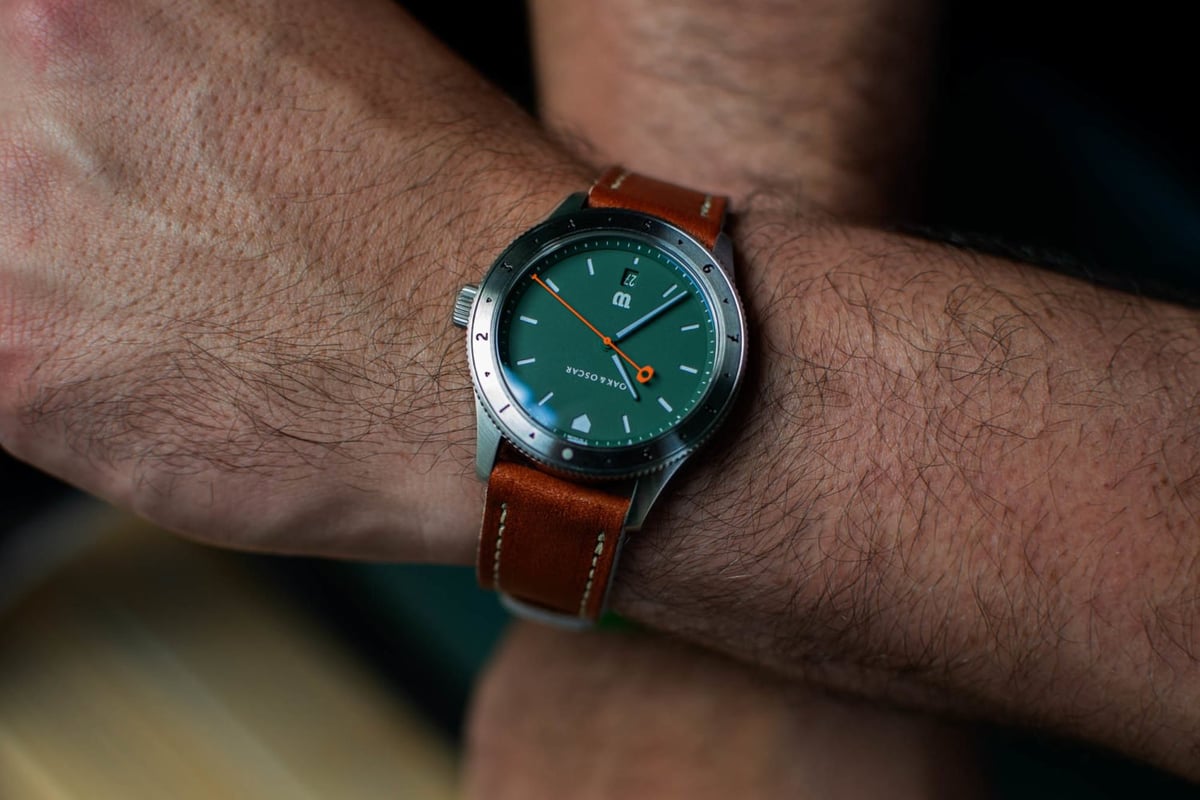
Market-wise, we are seeing a shift away from the 'loud' luxury of the late 2010s. The 'Quiet Luxury' trend has permeated watchmaking, leading collectors toward pieces that don't immediately scream their price tag. The Ashland fits this trend perfectly. Its matte green dial, while distinctive, doesn't possess the reflective flash of a ceramic bezel. It is a watch for the man who is comfortable in a Barbour jacket and a pair of bespoke loafers, looking for a timepiece that matches that 'old money' utility.
The Technical Edge: Why the SW300-1 Matters
From an investment standpoint, the movement choice is critical. Many brands in this price bracket ($1,500 - $2,000) opt for the Sellita SW200 or the Seiko NH35. While reliable, these movements are thick and lack the 'prestige' of higher-end calibers. Oak & Oscar’s choice of the Sellita SW300-1 is a deliberate move to elevate the watch. It is a thinner, more refined movement that allows the case to stay under 11mm. This thinness is a hallmark of high-end watchmaking and significantly impacts the 'wrist feel'—a metric that often dictates long-term owner satisfaction and, consequently, resale value.
The movement also features a custom-designed rotor with the Oak & Oscar barrel logo. While it may seem like a small detail, these are the 'value-adds' that collectors look for when the watch eventually hits the secondary market on platforms like Chrono24 or specialized forums. It shows a level of care that goes beyond simply casing an off-the-shelf movement.
Design Language: The Sandwich Dial and the Ashland Green
The Ashland's most striking feature is its dial. The 'sandwich' construction—where the top layer has cutouts for the hour markers, revealing a luminescent layer beneath—adds a three-dimensional depth that a printed dial simply cannot match. This technique is famously used by Panerai, but Oak & Oscar has adapted it into a much more wearable, 38mm package.
The 'Ashland Green' is a specific shade that took months to perfect. It isn't the bright 'Hulk' green of Rolex, nor is it the olive drab of a standard military watch. It’s a sophisticated, muted forest green that changes character depending on the light. In the boardroom, it looks nearly black; in the sunlight, it pops with a rich, organic hue. This versatility increases the watch's utility, making it a viable 'one-watch collection' candidate for the young professional.
Market Analysis: Liquidity and Resale
Let's talk numbers. The Ashland retails for approximately $1,675 on a bracelet. On the secondary market, well-maintained examples consistently trade in the $1,300 to $1,500 range. That is an incredibly low depreciation rate for a microbrand. In contrast, many entry-level luxury brands lose 40-50% of their value the moment you leave the boutique.
Why the stability? It comes down to scarcity and community. Oak & Oscar doesn't overproduce. They release watches in batches, and once a specific colorway or model is gone, it’s gone. This creates a 'fear of missing out' (FOMO) that sustains demand. Furthermore, the 'Oak & Oscar Owners Group' is one of the most active and loyal communities in the watch world. If you decide to flip your Ashland to fund a Royal Oak, you will find a ready and willing buyer within hours. In my world, liquidity is king, and the Ashland is as liquid as it gets for an independent brand.
The Bracelet: A Mandatory Upgrade
While the Ashland is available on a high-quality Horween leather strap, the stainless steel bracelet is where the real value lies. It features a proprietary design with fully articulated links that drape over the wrist like silk. The taper from 20mm at the lugs to 16mm at the clasp is a vintage-inspired touch that adds to the sophisticated silhouette. If you are buying this as a 'hold' or a long-term daily, the bracelet is a non-negotiable upgrade. It elevates the watch from a 'nice field watch' to a 'luxury sports watch.'
Final Verdict: The Vivir Perspective
The Oak & Oscar Ashland is not a 'hype' watch that will double in price overnight. If you're looking for that, go gamble on a crypto-backed NFT. However, if you are looking for a piece of contemporary American design that offers Swiss-level performance and a rock-solid value floor, this is it. It’s a watch for the collector who doesn't need to prove anything to anyone—and that is the ultimate luxury.
For the trust-fund-baby or the self-made entrepreneur alike, the Ashland represents a 'smart' buy. It signals that you value craftsmanship over marketing budgets. It says you know your history, but you aren't stuck in it. Buy it, wear it, and rest easy knowing your capital is safe on your wrist.