The Architecture of Intent: Reviewing the Oak & Oscar Atwood Wind
In the realm of horology, the chronograph remains one of the most beloved yet technically demanding complications. For the sophisticated collector, the appeal lies not just in the ability to measure elapsed time, but in the mechanical theater of the actuation. The Oak & Oscar Atwood Wind is a testament to this fascination. By opting for a manual-wind caliber with a flyback complication, Oak & Oscar has moved beyond the 'microbrand' label into the territory of serious independent watchmaking.
The Case: A Study in Proportions
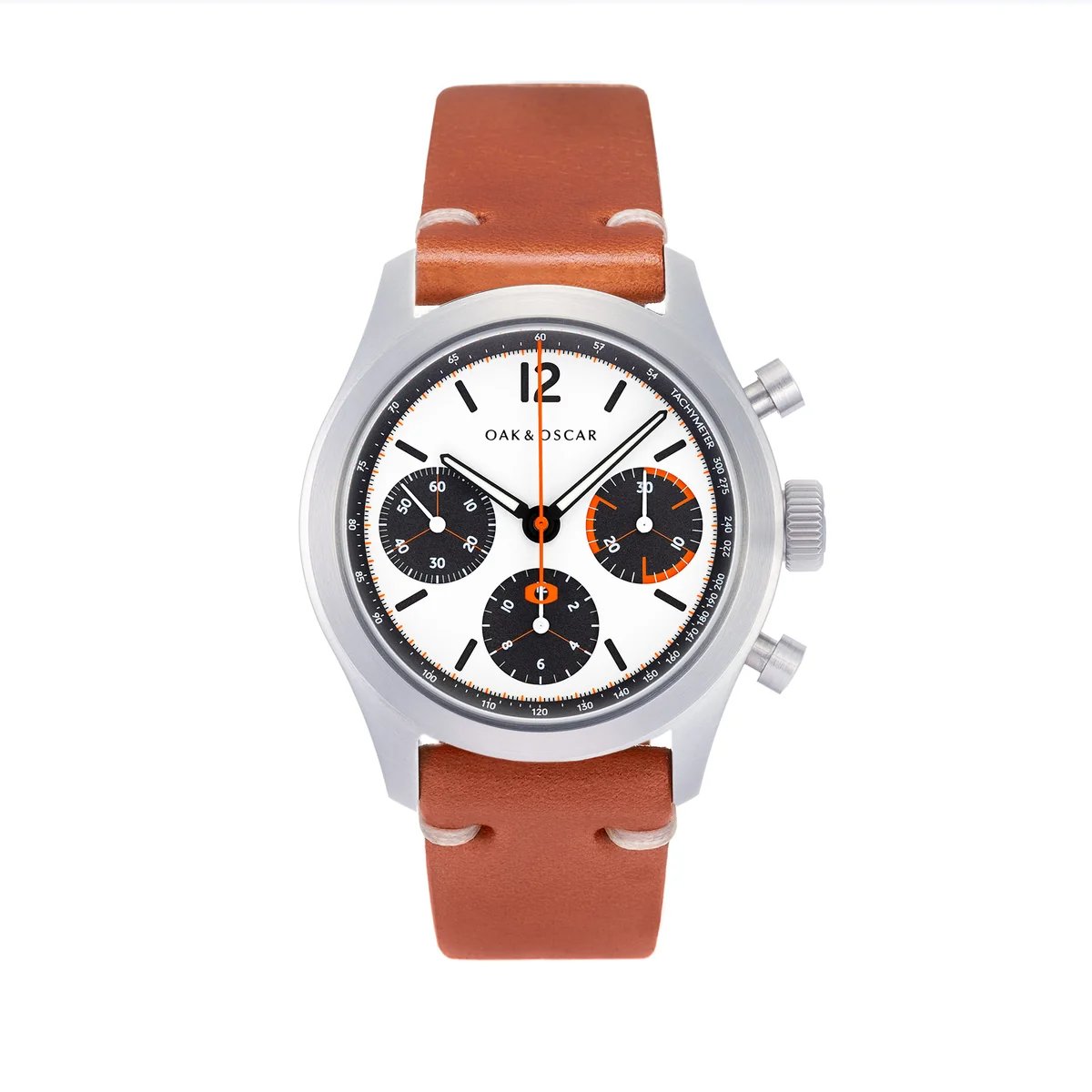
The Atwood Wind measures a precise 39mm in diameter. In an era where chronographs often bloat to 42mm or 44mm to accommodate automatic winding rotors and date wheels, the Atwood feels refreshingly restrained. The 12.9mm thickness, which includes the boxed sapphire crystal, allows the watch to maintain a sleek profile. The lug-to-lug distance of 46.8mm is perhaps the most critical dimension here; it ensures that the watch sits centered on the wrist, with the lugs following the natural curvature of the arm.
The finishing of the 316L stainless steel case is a mix of brushed surfaces and polished chamfers. The brushing is deep and directional, suggesting a tool-watch heritage, while the polished edges on the lugs provide a hint of refinement that catches the light during movement. The crown is oversized and knurled, a necessary feature for a manual-wind watch, providing ample grip for the daily winding ritual.
The Movement: The Sellita AMT5100 Flyback
At the heart of the Atwood Wind is the Sellita AMT5100. It is important to distinguish this from the standard SW500 series. The AMT division is Sellita's high-end skunkworks, tasked with creating bespoke modifications and higher-tier executions for demanding clients. The AMT5100 is a manual-wind, flyback chronograph movement. The 'flyback' function allows the wearer to reset and restart the chronograph with a single press of the bottom pusher, rather than the traditional stop-reset-start sequence.
Mechanically, the movement is a joy to observe through the sapphire caseback. Without a rotor to block the view, the architecture of the bridges and the interaction of the chronograph levers are fully visible. The movement features perlage on the baseplate and a custom-designed bridge with snailed finishing and blued screws. While it utilizes a cam-actuated system rather than a column wheel, the tactile click of the pushers has been tuned to provide a crisp, definitive engagement that rivals many column-wheel counterparts.
The Dial: Depth and Legibility
Oak & Oscar is famous for its sandwich dials, and the Atwood Wind continues this tradition. The dial consists of two layers: a bottom layer coated in Super-LumiNova X1 and a top layer with precision-cut indices. This construction creates a sense of three-dimensional depth that a standard printed dial cannot replicate. The charcoal grey variant, in particular, offers a sophisticated matte texture that absorbs light, making the recessed, luminous indices pop in low-light conditions.
The sub-dials are slightly recessed with a concentric circular graining (azurage), providing a subtle contrast to the main dial plate. The signature orange accents—found on the chronograph seconds hand and the sub-dial pointers—are not merely aesthetic. They serve as a functional shorthand, separating the time-telling functions from the elapsed-time measurements. The lack of a date window is a deliberate choice that preserves the symmetry of the dial, a detail that will be appreciated by purists.
Wrist Experience and Ergonomics
Wearing the Atwood Wind is an exercise in ergonomic excellence. The stainless steel bracelet features a significant taper from 20mm at the lugs to 16mm at the clasp. This reduction in width, combined with the fully articulated links, allows the bracelet to wrap around the wrist like a second skin. The clasp itself features a tool-less micro-adjustment system, allowing the wearer to expand or contract the fit as the wrist swells throughout the day.
On the wrist, the watch feels balanced. The weight is substantial enough to feel high-quality but lacks the cumbersome heft of a chunky automatic diver. Whether paired with a tailored blazer or a casual knit, the Atwood Wind adapts to its surroundings. It is a watch that doesn't shout for attention but commands it upon closer inspection.
Investment and Market Position
At a retail price of approximately $2,650, the Atwood Wind sits in a competitive bracket. However, when one considers the inclusion of a flyback complication and a manual-wind AMT caliber, the value proposition becomes clear. Most Swiss-made flyback chronographs from major houses retail for double or triple this amount. While Oak & Oscar watches are not 'investments' in the sense of speculative flipping, they have shown remarkable price stability on the secondary market. This is a result of the brand's disciplined production volumes and the genuine community that has formed around the 'Founder’s Club'.
Final Thoughts
The Oak & Oscar Atwood Wind is more than just a timekeeping instrument; it is a celebration of mechanical engagement. It rewards the collector who takes the time to wind the crown every morning and who appreciates the technical nuance of a flyback reset. In an industry often obsessed with heritage and 'in-house' marketing, Oak & Oscar focuses on what actually matters: build quality, thoughtful design, and a movement that offers something genuinely different. For the sophisticated young collector, the Atwood Wind is an essential addition to a curated horological journey.