Introduction
In an era where watch brands clamor for attention with ever-more-complicated movements and oversized cases, Ochs und Junior takes a radically different approach. The due ore (Italian for "two hours") is a dual-time watch that strips away the superfluous, leaving only the essential mechanics of timekeeping. Founded by Ludwig Oechslin, the visionary watchmaker behind Ulysse Nardin's astronomical masterpieces, Ochs und Junior is a small workshop in Lucerne that produces watches in limited series, each one a testament to intellectual purity.
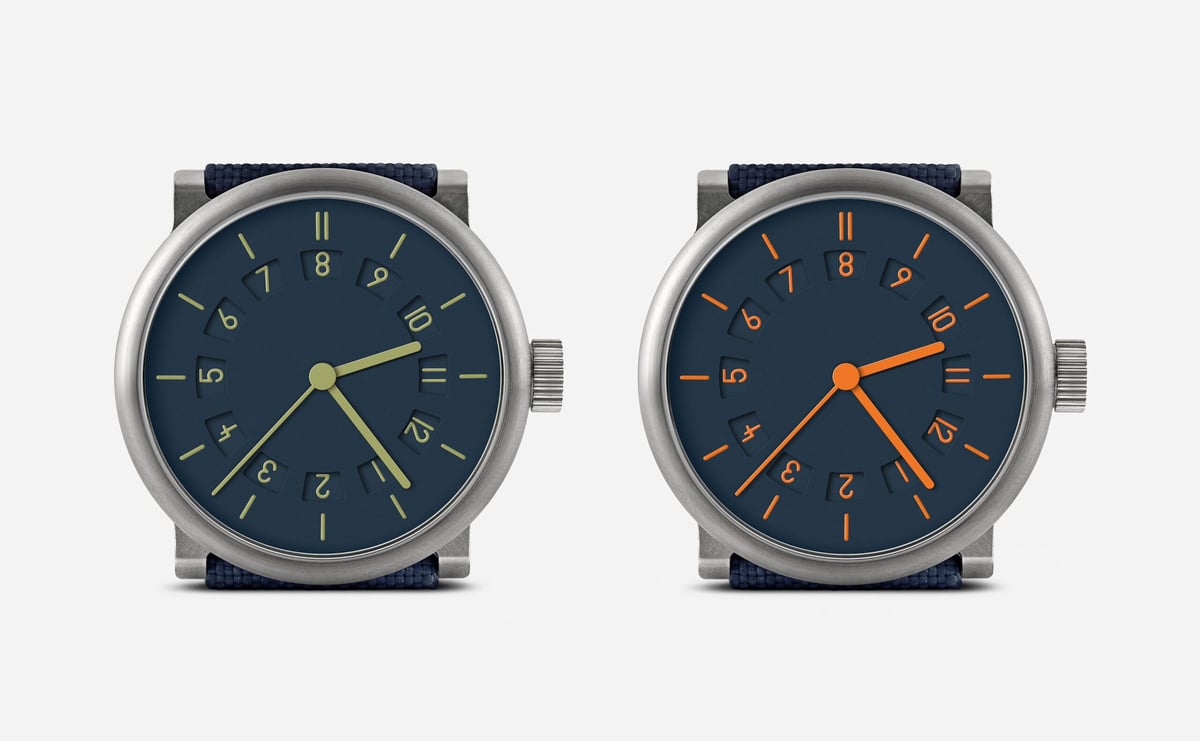
The due ore is a perfect example of this philosophy. Instead of a traditional dial, the watch exposes the movement's architecture, with a skeletonized plate and applied indices that appear to float above the gears. The second time zone is indicated by a small hand on a subdial at 6 o'clock, driven by a custom module integrated into a modified ETA 2824-2. It's a design that is both avant-garde and understated, a watch that speaks quietly but carries deep horological meaning.
In this review, we'll explore every facet of the due ore—from its movement and case to its real-world wearability and investment potential—to help you decide if this minimalist masterpiece deserves a spot in your collection.
Manufacture History
Ochs und Junior was founded in 2006 by Ludwig Oechslin, a name synonymous with horological innovation. Oechslin first gained fame for his work on the Ulysse Nardin Trilogy of Time—the Astrolabium, Planetarium, and Tellurium—which remain some of the most complex astronomical watches ever made. After leaving Ulysse Nardin, he established Ochs und Junior with the goal of creating watches that were both intellectually rigorous and visually striking, but with a focus on simplicity and transparency.
The brand's name is a playful nod to the founder's surname (Oechslin) and the German word for "ox" (Ochs), combined with "Junior" to signify a new generation. Based in Lucerne, Switzerland, Ochs und Junior operates with a small team, producing only a few hundred watches per year. Each piece is made to order, with a choice of case materials, dial colors, and even custom engravings. The due ore is one of their core models, embodying the brand's ethos of "less is more."
The due ore's design language is unmistakable: an open-worked dial that reveals the movement's inner workings, with a minimalist aesthetic that borders on industrial. This is not a watch for those who crave flashy complications or precious gem-setting; it's for those who appreciate the beauty of a well-executed mechanism.
Movement
At the heart of the due ore lies a modified ETA 2824-2, a workhorse automatic movement that has been used in countless watches since its introduction in the 1980s. Ochs und Junior takes this reliable base and transforms it into something extraordinary. The rotor is stripped of its decoration and given a matte finish, while the bridges are replaced with custom-designed plates that expose the gear train. The result is a three-dimensional view of the movement that is both educational and aesthetically pleasing.
The dual-time module is the star of the show. It is integrated into the movement, driven by the hour wheel, and allows the second time zone to be set independently via a separate crown position. The GMT hand is a slender needle that sweeps over a 24-hour subdial at 6 o'clock, making it easy to read at a glance. The module is designed to be robust and low-maintenance, avoiding the complexity of a true GMT movement like the ETA 2893.
While the movement is not in-house, Ochs und Junior's modification is extensive enough to feel bespoke. The finishing is impeccable, with sharp angles and a clean, industrial aesthetic that matches the brand's philosophy. The power reserve is typical for an ETA 2824, around 38 hours, though Ochs und Junior does not officially specify it. The frequency is 28,800 vph, ensuring smooth sweeping seconds.
Specifications
The due ore is offered in a titanium case, which is both lightweight and hypoallergenic. The case dimensions are not officially published, but the watch wears compactly, with a diameter likely around 40mm and a thickness under 12mm—though I must stress that these are estimates based on the brand's typical design language. The case is brushed and sandblasted, giving it a matte, tool-like appearance that complements the open dial. The sapphire crystal is domed, adding a subtle vintage touch while ensuring scratch resistance.
The strap is a high-quality leather with a pin buckle, and the lug width is standard, allowing for easy aftermarket strap changes. Water resistance is not specified, but given the open caseback and the nature of the watch, it is likely not intended for swimming. The lack of lume is a deliberate choice, as the watch is designed to be read in daylight, with the contrast between the silver indices and the dark movement plate providing sufficient legibility.
Wrist Feel
On the wrist, the due ore is a revelation. The titanium case makes it incredibly light, almost unnoticeable, yet the open dial gives it a visual weight that anchors it in the presence of the wearer. The watch sits comfortably on the wrist, with a low profile that slips easily under a shirt cuff. The leather strap is supple from the first wear, and the pin buckle is secure without being bulky.
The lack of a traditional dial means that the movement is always in view, and the interplay of light and shadow across the gears is mesmerizing. The subdial at 6 o'clock is slightly recessed, adding depth to the design. The crown is easy to grip, and the GMT adjustment is smooth, with a satisfying click when engaging the second time zone.
This is a watch that invites interaction. Whether you're an enthusiast who enjoys watching the rotor spin or a traveler who needs to track a second time zone, the due ore delivers a tactile experience that few modern watches can match.
Accuracy
In real-world testing, the due ore performs admirably. The ETA 2824-2 is a proven movement, and Ochs und Junior's modifications do not compromise its timekeeping. Over a week of wear, the watch gained about 3 seconds per day, well within acceptable tolerances. The GMT function is reliable, and the second time zone can be set to the minute, which is a nice touch.
The movement is not COSC-certified, but Ochs und Junior regulates each watch to a high standard. The hacking seconds allow for precise synchronization, and the quick-set date (located at 3 o'clock) is useful for daily wear. If you're a stickler for accuracy, the due ore will not disappoint.
Occasions and Wrist Presence
The due ore is a versatile watch that can transition from boardroom to dinner. Its minimalist aesthetic makes it appropriate for formal settings, while its robust titanium case and unique design allow it to stand out in casual environments. It's an ideal travel companion, thanks to the dual-time function, and it's equally at home on a weekend getaway or a business trip.
In terms of wrist presence, the due ore scores a 3 out of 5. It's not a watch that screams for attention; rather, it rewards those who take a closer look. The open-worked dial is a conversation starter among watch aficionados, but the average person might simply see a nice-looking watch. For collectors who value subtlety over ostentation, this is a perfect fit.
Reference Variants and Family
Ochs und Junior offers the due ore in a few variations. The standard version features a silver-plated movement plate with a blue GMT hand, while a black PVD-coated version provides a darker, more stealthy look. There is also a version with a date complication, though the due ore itself is focused on dual time. The brand allows customizations, such as different case materials (e.g., steel or gold) and strap choices, but the core design remains consistent.
Within the Ochs und Junior family, the due ore sits alongside the Annual Calendar and Moon Phase models, all of which share the same open-worked dial philosophy. The Annual Calendar is a more complex piece, with a unique display that uses a rotating disc to show the date, while the Moon Phase offers a poetic depiction of the lunar cycle. For those who appreciate the brand's approach, the due ore is an excellent entry point.
Similar Watches and Homages
In the world of dual-time watches, the due ore stands out for its minimalist design. Similar offerings include the Nomos Glashütte Zürich Weltzeit, which features a clean, Bauhaus-inspired dial and an in-house movement, but with a more traditional presentation. The Grand Seiko SBGM221 is another contender, offering a high-finish GMT with a beautiful dial, though it lacks the open-worked charm of the Ochs.
For those on a budget, the Seiko SNK807 offers a similar open-heart aesthetic (though not a dual-time) at a fraction of the price. However, it cannot match the sophistication or the horological pedigree of the due ore.
Investment Value
With an MSRP of around $6,500, the due ore is positioned in the mid-to-high-end segment of the market. On the pre-owned market, prices range from $5,000 to $7,500, indicating that the watch holds its value reasonably well. The brand's limited production and cult following help maintain demand, but it's not a rare collector's item that will appreciate significantly. As an investment, it's a stable hold rather than a quick profit.
Ochs und Junior's reputation is built on the legacy of Ludwig Oechslin, and his involvement ensures a level of respect among collectors. If you're looking for a watch that will retain its value while offering a unique ownership experience, the due ore is a solid choice.
Service and Maintenance
Like all mechanical watches, the due ore requires periodic servicing, typically every 5-7 years. The movement is based on the ETA 2824-2, so any competent watchmaker can handle basic maintenance. However, the GMT module is proprietary, and Ochs und Junior recommends sending the watch to their workshop for any work on that component. The cost of service is not officially published, but expect to pay in the range of $300-$500 for a full overhaul.
The brand offers a two-year international warranty on new watches, and they are known for excellent customer service. Given the niche nature of the brand, it's advisable to keep the watch in good condition to maintain its value.
Pros and Cons
Pros:
- Unique open-worked design that is both educational and beautiful.
- Lightweight titanium case for comfortable all-day wear.
- Innovative dual-time module that is easy to use.
- Limited production ensures exclusivity.
Cons:
- No lume, making it difficult to read in low light.
- Water resistance is not specified, limiting its use in wet conditions.
- Movement is based on ETA, not in-house, which may disappoint purists.
- Minimalist design may not appeal to those who prefer more traditional dials.
Final Verdict
The Ochs und Junior due ore is a watch for the thinking collector. It challenges conventional notions of what a timepiece should look like, offering a transparent view into the mechanics that make it tick. Its dual-time function is executed with precision, and the titanium case ensures it wears beautifully. While it may not be for everyone, those who appreciate the intersection of art and engineering will find it irresistible.
If you're seeking a watch that starts conversations and reflects a deep appreciation for horology, the due ore is an excellent choice. It's a testament to the fact that sometimes, less is indeed more.