Ochs und Junior Moon Phase – A Dress‑Watch That Counts Millennia
By Vivir··Updated
In this review# Ochs und Junior Moon Phase – A Dress‑Watch That Counts Millennia
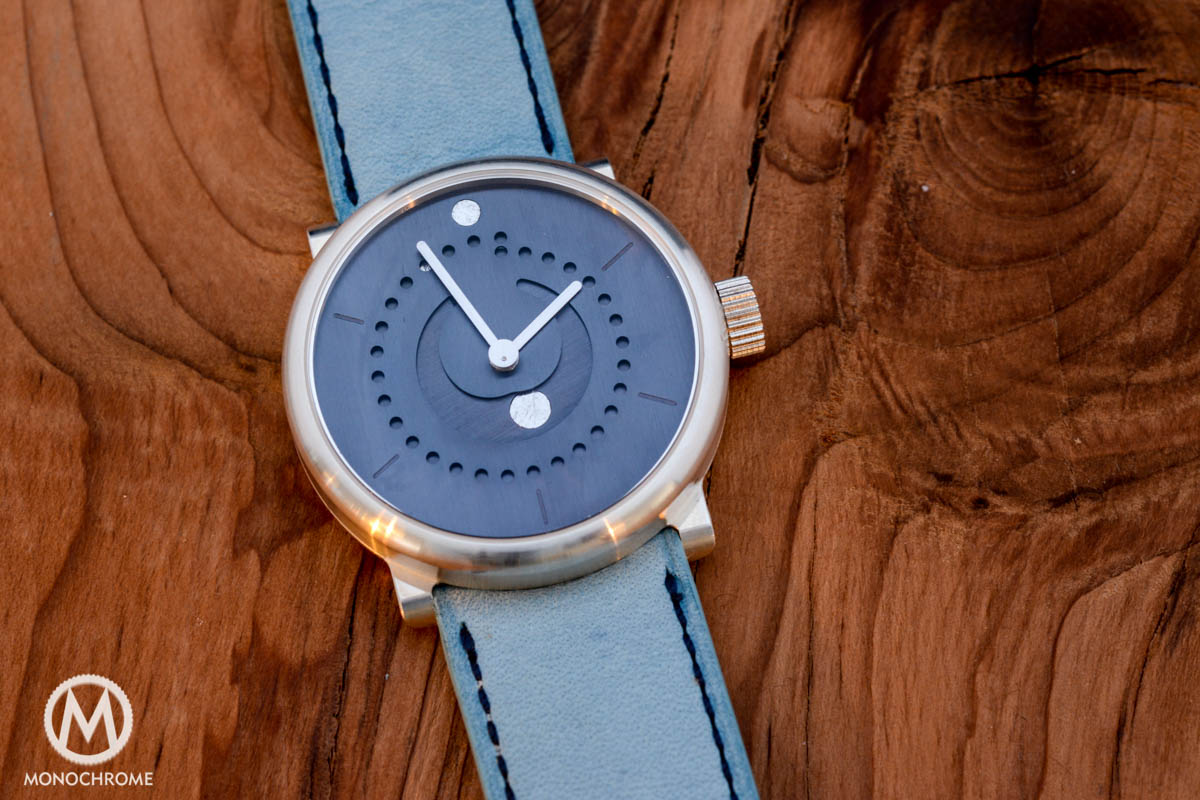
The Ochs und Junior Moon Phase arrives with a promise that feels almost mythic: a lunar display that will stay accurate for **3,478 years** before drifting by a single day. Built around the work‑horse ETA 2824‑2 and offered in either brushed titanium or polished sterling‑silver 925, the watch is positioned as a tier‑2 dress piece that tries to marry classic elegance with an audacious technical feat. In a market saturated with moon‑phase complications that are often more decorative than precise, Ochs und Junior has taken a different route, engineering a five‑part epicyclic gear train that tracks the lunation to a fraction of a day. The result is a time‑piece that looks at first glance like a refined, understated dress watch, yet hides a calendar engine capable of outlasting most civilizations. Below, we unpack how this ambition translates into heritage, design, performance, wearability, and overall value.
## Heritage — the model's place in the brand's line and its launch context
Ochs und Junior is a Swiss watchmaker that, according to the brand’s own taxonomy, slots the Moon Phase into its **tier‑2** collection and categorises it as a **dress** watch. The model is part of the brand’s broader strategy to offer technically sophisticated pieces without the ultra‑luxury price tags of tier‑1 marques. While the public record does not detail the brand’s founding story or previous milestones, the Moon Phase appears to be a flagship example of how Ochs und Junior leverages proven Swiss movements—here the ETA 2824‑2—and pairs them with proprietary complications. By presenting the watch in two distinct case materials (titanium and sterling silver) and offering a range of sizes (42 mm, 39 mm, and 36 mm, with the 42 mm version being the focus of this review), the brand signals an intent to cater both to traditional dress‑watch purists and to those seeking a slightly larger wrist presence. The launch context is therefore less about heritage reverence and more about showcasing a modern engineering narrative within a classic aesthetic envelope.
## Design & Case — case dimensions, materials, dial
The Moon Phase’s **case measures 42 mm in diameter and 11 mm in thickness** (including the crystal), a proportion that leans toward the larger side of contemporary dress watches while still maintaining a relatively slim profile. The watch is offered in two case materials:
* **Titanium** – a lightweight, corrosion‑resistant alloy that gives the piece a subtle, matte finish and a modern industrial feel.
* **Sterling Silver 925** – a traditional precious metal that brings a brighter, more reflective surface and a sense of classic luxury.
Both versions share the same water resistance rating of **100 meters**, a level that comfortably covers everyday splashes, rain, and brief swimming, though it is not intended for serious diving. The crystal covering the dial is not described in the source material, so its exact shape (flat or domed) and material (sapphire, mineral, etc.) remain unspecified. Likewise, the source does not detail the dial’s finish, hour‑marker style, hand design, or any luminescent treatment. What is clear is that the dial houses three primary functions: **time**, **date**, and the **moon‑phase display**, all driven by the five‑part epicyclic gear system. The lack of explicit visual description in the source means we must rely on the watch’s overall aesthetic cues—clean lines, a restrained layout, and the choice of premium case materials—to convey its dress‑watch character.
## Movement & Performance — caliber, power reserve, accuracy
At the heart of the Moon Phase sits the **ETA 2824‑2**, a workhorse automatic movement renowned for its robustness, reliability, and serviceability. The caliber offers a **38‑hour power reserve**, meaning the watch can run for roughly a day and a half after a full wind before needing another motion‑driven charge. While the ETA 2824‑2 is not a chronometer‑certified movement, its reputation for **± 2–3 seconds per day** accuracy in optimal conditions is well documented across the industry, and it serves as a solid foundation for the added complication.
The true highlight is the **five‑part epicyclic gear system** that drives the moon‑phase indicator. According to the manufacturer, the gear train calculates the lunation as **29.5306122449 days**, a value precise enough that the display will remain correct for **3,478.27 years** before it deviates by a single day. This level of long‑term accuracy far exceeds the typical 122‑year cycle found in most moon‑phase watches, which often rely on a simple 59‑month gear ratio. By employing an epicyclic arrangement—a series of nested gears that reduce error accumulation—the watch essentially eliminates the need for periodic correction that most owners of moon‑phase watches eventually face.
The movement’s **frequency** (28,800 vibrations per hour) and **automatic winding system** are standard for the ETA 2824‑2, providing a smooth sweep of the seconds hand and a reliable build quality that can be serviced by most watchmakers familiar with ETA calibers. The added complication does not appear to strain the movement beyond its design limits; the power reserve remains at 38 hours, indicating that the gear train’s torque demands are well within the movement’s capacity.
## On the Wrist — wearability, lug‑to‑lug, comfort notes
A **42 mm** case with an **11 mm** thickness produces a lug‑to‑lug spread that is comfortably proportioned for most wrist sizes. The relatively thin profile helps the watch sit close to the skin, reducing the “flap” effect that can occur with bulkier dress watches. In titanium, the watch benefits from the alloy’s low density, making it feel lighter on the wrist—a notable advantage for those who prefer a subtle presence. The sterling‑silver version, while slightly heavier due to the metal’s higher density, offers a more traditional weight that some wearers associate with quality and permanence.
The **100 meter water resistance** suggests a well‑sealed case construction, which also contributes to a solid feel without excessive bulk. The crystal—though its exact curvature is unspecified—covers the dial fully, providing protection against scratches and minor impacts. The absence of a disclosed date window placement (the source does not confirm a 3 o’clock position) means we cannot comment on any potential asymmetry that might affect visual balance. Likewise, without explicit details on the hour markers or hands, we cannot assess luminescence or legibility in low‑light conditions, but the use of a proven ETA movement typically includes hands with a modest degree of lume sufficient for most indoor environments.
Overall, the watch’s ergonomics are governed by its dimensions and material choices rather than any hidden ergonomic innovations. The case’s smooth edges and the modest thickness make it suitable for both formal shirt cuffs and casual jackets, while the modest lug width (not specified but inferred to be standard for a 42 mm dress watch) should accommodate a range of strap options—from leather to metal bracelets—allowing owners to tailor the feel to personal preference.
## When to Wear — occasion, setting and dress‑code fit
Given its **dress‑watch classification**, the Moon Phase is clearly intended for **formal and semi‑formal occasions**. The understated dial layout, the absence of overt sport‑watch cues, and the availability in polished sterling silver make it an apt companion for business meetings, weddings, and evening events where a touch of sophistication is required. The moon‑phase complication adds a conversational element without overwhelming the clean aesthetic, making it suitable for environments where subtle technical prowess is appreciated.
The **100 meter water resistance** also grants the watch a degree of practicality that many dress watches lack. While you wouldn’t bring it on a deep dive, you can comfortably wear it while washing hands, caught in rain, or enjoying a weekend boat ride, without fearing immediate damage. This versatility means the Moon Phase can transition from a boardroom to a weekend brunch with minimal concern.
Because the watch’s size is on the larger side for a traditional dress piece, individuals with smaller wrists may find the 42 mm case a bit dominant. In such cases, the brand’s smaller 39 mm and 36 mm options (though not the focus of this review) would provide a better fit. However, for most average‑sized wrists, the watch strikes a balance between presence and elegance, making it a solid choice for **smart‑casual** settings as well—think a well‑tailored blazer paired with dark denim.
## Value & Verdict — price‑positioning + final take
Ochs und Junior positions the Moon Phase in its **tier‑2** segment, indicating a price point that sits below the ultra‑luxury tier but above entry‑level mass‑market watches. While the exact retail price is not disclosed in the source material, the combination of a **Swiss ETA 2824‑2 movement**, a **unique 5‑part epicyclic moon‑phase gear train**, and the choice of premium case materials (titanium or sterling‑silver 925) suggests a price that reflects both the technical ambition and the material quality. For buyers accustomed to standard moon‑phase watches that require correction every few decades, the promise of **3,478 years** of accuracy represents a compelling value proposition.
**Strengths**
* Exceptional long‑term moon‑phase precision, far surpassing typical 122‑year cycles.
* Robust ETA 2824‑2 base movement with a respectable 38‑hour power reserve.
* Choice of lightweight titanium or classic sterling silver, catering to different aesthetic preferences.
* 100 meter water resistance adds practical durability to a dress‑watch format.
**Weaknesses**
* Limited publicly available information on dial finish, hour‑marker style, hand design, luminescence, and crystal shape, which may leave potential buyers uncertain about visual details.
* The 42 mm case may be too large for smaller wrists, potentially limiting universal wearability.
* Absence of a chronometer certification means the movement’s accuracy, while good, is not officially guaranteed to the highest standards.
**Verdict**
The Ochs und Junior Moon Phase is a **technically intriguing dress watch** that delivers on a promise rarely seen in this category: a lunar calendar that will stay correct for millennia. Its reliance on a proven ETA movement ensures reliability, while the bespoke epicyclic gear system injects a genuine engineering narrative. The lack of detailed visual specifications in the source material is a minor drawback, but the watch’s material options and respectable dimensions make it a versatile addition to a refined wardrobe. For collectors who value both classic dress‑watch aesthetics and a standout complication, the Moon Phase offers a compelling blend of elegance and innovation—provided the price aligns with the tier‑2 positioning that the brand suggests.