Introduction: The Quiet Radical
In the world of independent watchmaking, few names command as much respect among purists as Ludwig Oechslin. The Swiss watchmaker, mathematician, and former curator of the International Museum of Horology in La Chaux-de-Fonds is the mind behind Ulysse Nardin's Trilogy of Time and the philosophical force behind Ochs und Junior. Founded in 2006 with Beat Weinmann, Ochs und Junior is a brand that rejects ornamentation in favor of mechanical clarity. The Settimana, Italian for 'week,' is a perfect distillation of that ethos: a watch that displays the day of the week and the date with an almost shocking simplicity. But make no mistake—this is not a simple watch. It is a watch that makes the complex look effortless.
For collectors who have grown weary of the same old luxury tropes—the oversized cases, the endless limited editions, the marketing-driven hype—the Settimana offers something different. It is a tool watch in the purest sense, but one with a horological soul. It won't shout across the room. It won't impress your Instagram followers. But it will make you smile every time you check the day, because you know the story behind that single, elegant hand. In a market that increasingly rewards loudness, the Settimana is a quiet rebellion.
Manufacture History: Oechslin's Laboratory of Ideas
Ochs und Junior was founded in Lucerne in 2006. The brand is the brainchild of Ludwig Oechslin, a man who has spent his life studying and improving the mechanics of timekeeping. Oechslin is not a traditional watchmaker in the sense of hand-finishing bridges or anglage; he is an inventor and a simplifier. His approach is to reduce the number of components in a movement to achieve greater reliability and longevity. This philosophy is evident in every Ochs und Junior watch, from the Perpetual Calendar to the Moon Phase. Oechslin's work at Ulysse Nardin in the 1980s and 1990s produced some of the most complex astronomical watches ever made, but his own brand is about stripping things back to their essence.
The Settimana was introduced as a practical addition to the lineup: a watch that answers a simple question—what day is it?—with mechanical elegance. While many brands offer day-date watches, Ochs und Junior's take is unique. The day-of-week hand makes a single revolution per week, and the date is displayed in a discreet aperture. The idea is to provide the information you need without cluttering the dial. It's a quintessential Oechslin solution: clever, efficient, and a little bit contrarian. The brand produces only a small number of watches per year, and each one is assembled by hand in Lucerne. This is not a mass-market product; it's a statement of intent.
The Settimana Concept: A Week in One Hand
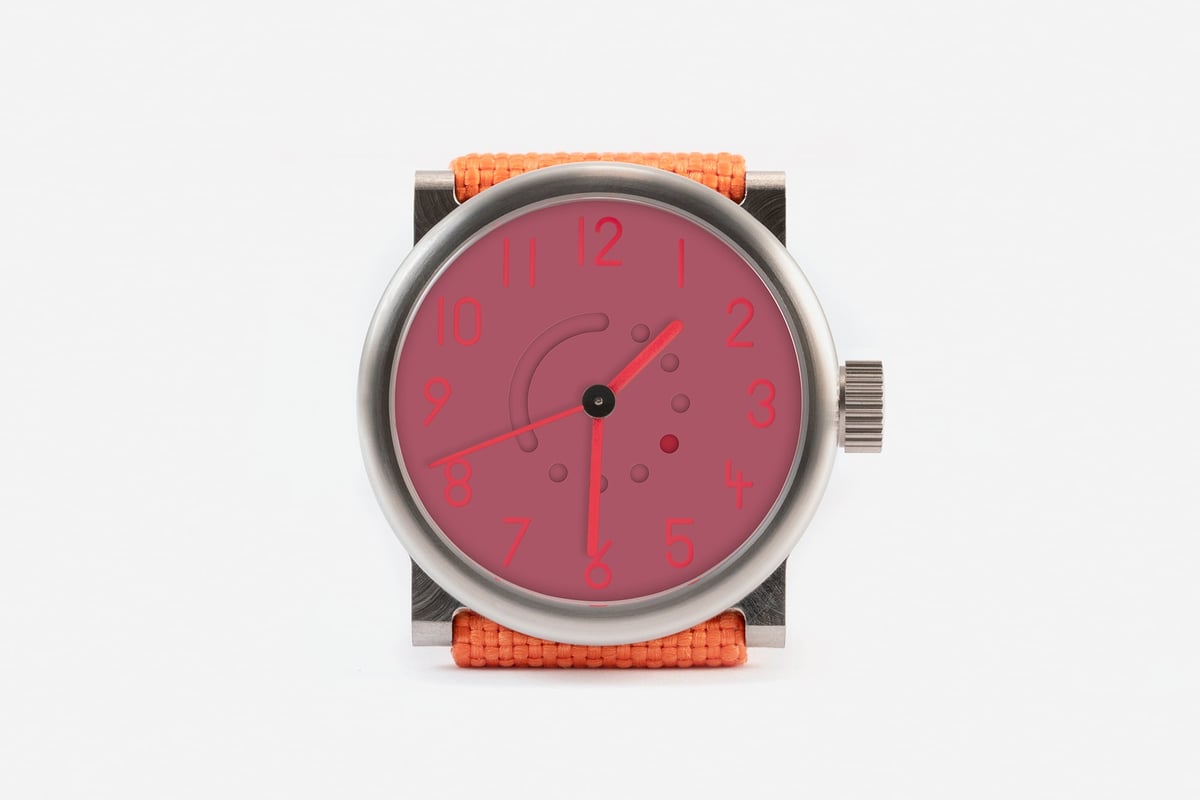
At its core, the Settimana is a calendar watch, but not in the traditional sense. Instead of a day window or a subdial, the days of the week are printed around the edge of the dial. A single central hand sweeps around, pointing to the current day. This hand makes one full rotation per week. It's an elegant solution because it uses the natural circular motion of a hand to represent the cyclical nature of a week. The date is shown in a small window at 6 o'clock, which balances the dial nicely. There are no other complications—no month, no moon phase, no chronograph. Just the essentials.
What makes this concept special is its legibility. At a glance, you can see both the day and the date. The hand is long enough to reach the day markers, and the font is clear and unobtrusive. There's no ambiguity. It's a watch that respects your time and your intelligence. In a world where watches often try to impress with complexity, the Settimana impresses with restraint.
Design and Case: Titanium and Exposed Screws
The Settimana's case is crafted from titanium, a material that Ochs und Junior favors for its lightness and corrosion resistance. The design language is unmistakable: a round case with a distinctive bezel secured by exposed screws. This industrial aesthetic is a hallmark of the brand, and it gives the Settimana a purposeful, almost prototype-like character. The titanium is likely brushed, giving it a matte finish that resists fingerprints and scratches. It's the kind of case that looks better with wear, developing a subtle patina of experience. The exposed screws are not just decorative; they are functional, holding the bezel and case together. This is honest watchmaking.
The dial is where the magic happens. The days of the week are arranged around the periphery, printed in a clean, sans-serif font. A single central hand points to the current day. At 6 o'clock, a small aperture reveals the date. That's it. No subdials, no text, no branding on the front. The result is a dial that is both legible and serene. The crystal is sapphire, ensuring durability. There is no lume, which is a deliberate choice—this is a watch for daylight, not for night missions. The leather strap is supple and complements the titanium case, and the pin buckle keeps everything secure. The overall effect is one of quiet confidence.
The Dial in Detail: Legibility and Minimalism
The dial is a study in minimalism. The day markers are printed directly on the base, with no separate track or ring. The hand is simple and straight, with a small counterweight on the back end. It's thin enough to be elegant but robust enough to be readable. The date window at 6 o'clock is small but not too small; it's framed by a subtle bevel that catches the light. The lack of branding is refreshing—there's no logo, no 'Swiss Made' at the bottom. The only text you'll find is on the case back. This is a watch that lets the design speak for itself.
The legibility is excellent. Even though the day markers are small, the contrast between the hand and the dial makes it easy to read. The date is also easy to read, thanks to the white disc and black numerals. In low light, you'll struggle, but that's a conscious trade-off. The dial is available in a few colors, typically blue or grey, both of which are understated and versatile.
Movement: Modified ETA 2824-2
Under the hood, the Settimana uses a modified ETA 2824-2. This is a common base caliber, but Oechslin's module transforms it into something special. The day-of-week function is driven by a clever mechanism that adds minimal components, adhering to the brand's philosophy of simplicity. The movement is automatic, with a power reserve of approximately 38 hours and a frequency of 28,800 vibrations per hour. It is not COSC-certified, but the ETA 2824-2 is known for its robustness and ease of service. The finishing is industrial, which is appropriate for a watch of this nature—it's not about decoration, it's about function.
The beauty of using a widely available base movement is that service is straightforward. Any competent watchmaker can work on an ETA 2824-2, though the module may require Ochs und Junior's expertise. The brand recommends servicing through their authorized network, but the underlying reliability means you won't have to worry about it for years. The module itself is a testament to Oechslin's genius: it adds a week display without adding unnecessary complexity. It's a perfect example of 'less is more.'
Wrist Feel and Wearing Experience
The titanium case makes the Settimana incredibly light on the wrist. You'll forget you're wearing it, which is exactly what you want from a daily wearer. The lugs are short and curved, so the watch sits comfortably on a variety of wrist sizes. The leather strap is soft out of the box and conforms nicely. The pin buckle is simple but effective. There's no heft or balance issues; the watch feels integrated and intentional. The case is also thin enough to slip under a cuff, making it a great choice for office wear.
One thing to note: the lack of lume means you won't be able to read it in the dark. But that's a small trade-off for the purity of the design. The day-of-week hand is easy to read at a glance, and the date aperture is discreet but legible. The watch wears well with both casual and smart attire, making it a versatile companion for travel and everyday use. The strap is easily changed, so you can dress it up or down. It's a watch that adapts to your life, not the other way around.
Accuracy and Reliability
The ETA 2824-2 is a workhorse. In real-world use, you can expect accuracy in the range of -5 to +10 seconds per day. It's not a chronometer, but it's more than adequate for daily wear. The automatic winding is efficient, and the power reserve is sufficient for a weekend off the wrist. If you're particular about accuracy, a watchmaker can regulate it easily. The movement is known for its longevity, and with regular service, it will last for decades. The module is also robust, as it doesn't add any fragile components.
Reliability is a key part of the Settimana's appeal. It's a watch you can wear without worry. It's not a delicate dress watch; it's a tool that happens to look good. The titanium case resists scratches and dings, and the sapphire crystal is virtually unscratchable. The only thing you need to worry about is the leather strap, which will wear over time, but that's easily replaced.
Occasions and Wrist Presence
The Settimana is a daily wearer through and through. It's perfect for the office, casual weekends, and travel. It can even work with a suit, thanks to its minimalist dial and modest proportions. However, it's not a formal watch in the traditional sense—it's too utilitarian for black tie. Its wrist presence is understated. I'd rate it 3 out of 5. It won't turn heads at a party, but those who know watches will recognize the exposed screws and the unique week display. It's a connoisseur's piece, not a status symbol.
In a world of oversized watches, the Settimana's modest dimensions make it a pleasure to wear. It doesn't dominate the wrist, but it doesn't disappear either. It's the Goldilocks size for many collectors. The titanium gives it a slightly industrial look, but the leather strap softens it. It's a watch that feels personal and intimate, rather than flashy and extroverted.
Reference Variants and Family
Ochs und Junior produces the Settimana as a single core model, with custom dial colors available upon request. There are no distinct reference variants in the traditional sense. The brand's family includes other models such as the Perpetual Calendar, Annual Calendar, Moon Phase, and Two Time Zones. Each shares the same design language and philosophical approach. If you like the Settimana, you'll likely appreciate the rest of the lineup. The Perpetual Calendar, for example, is a masterpiece of simplification, with a display that is both intuitive and innovative.
Because Ochs und Junior is a small brand, each watch is made to order. This means you can often request custom touches, such as a different dial color or a special engraving. This level of personalization is rare in the watch industry, and it adds to the appeal for collectors who want something unique.
Similar Watches and Alternatives
If you're considering the Settimana, you might also look at:
- Rolex Day-Date: The archetypal day-date watch, but in precious metal and much more expensive. It's a status symbol, while the Settimana is a tool. The Day-Date is a classic, but it lacks the independent spirit of the Ochs und Junior.
- Oris Big Crown ProPilot Calendar: Offers a week number display in a more conventional package. It's a great alternative if you want a more traditional look and a lower price point.
- Sinn 6012: A robust day-date tool watch with similar functionality. It's German, tough, and priced more accessibly. It has a more utilitarian aesthetic, but the philosophy is similar.
For a homage, the Seiko 5 SNK809 offers day-date functionality at a fraction of the price. It's not in the same league, but it scratches a similar itch. It's a good way to experience a day-date complication without spending a lot.
Investment Value and Market Analysis
Ochs und Junior is a niche brand, and the Settimana is not a mainstream investment piece. The MSRP is not publicly disclosed, but you can expect it to be in the mid-four-figure range. The secondary market is thin, and prices have been stable to slightly depreciating. There is no major auction history to speak of. This is a watch you buy to wear, not to flip. The hold recommendation is simple: hold if you value independent watchmaking and Oechslin's philosophy. The resale value is unlikely to appreciate significantly, but the joy of ownership is high.
In the current market, independent brands with a strong identity have been gaining traction. Ochs und Junior is still under the radar compared to brands like F.P. Journe or Philippe Dufour, but that could change as collectors seek out more unique pieces. However, the Settimana is not a hype watch. It's a watch for people who care about mechanics and design. If you're looking for an investment, this isn't it. If you're looking for a watch that will bring you pleasure every day, it's a strong candidate.
Service and Ownership
Service is available through Ochs und Junior in Lucerne, and authorized partners are limited. The service interval is typical for a mechanical watch, around 5-7 years, and costs will depend on the work required. Because of the module, it's best to have service done by the brand or a specialist. The brand is known for good customer service, and they stand behind their products. Ownership is a personal relationship with a small team, which is part of the charm.
If you need to have the watch serviced, you'll likely need to send it to Switzerland. This can take time, but it ensures the work is done correctly. The ETA base movement is easy to service, but the module requires expertise. The cost of service is not publicly listed, but it's in line with other independent brands.
Pros and Cons
Pros:
- Unique week display with a single central hand
- Lightweight titanium case
- Independent brand with horological pedigree
- Reliable ETA base movement
Cons:
- No lume
- Limited service network
- Low resale liquidity
- Modest water resistance
Final Verdict
The Ochs und Junior Settimana is a masterclass in functional minimalism. It won't impress the mainstream, but for collectors who value Oechslin's genius, it's a compelling daily wearer. Buy it for the mechanics, not the investment. It's a watch that rewards the curious and the patient. In a world of noisy luxury, the Settimana is a quiet, confident statement. It's a reminder that a watch can be both a tool and a work of art, and that simplicity is often the highest form of sophistication.