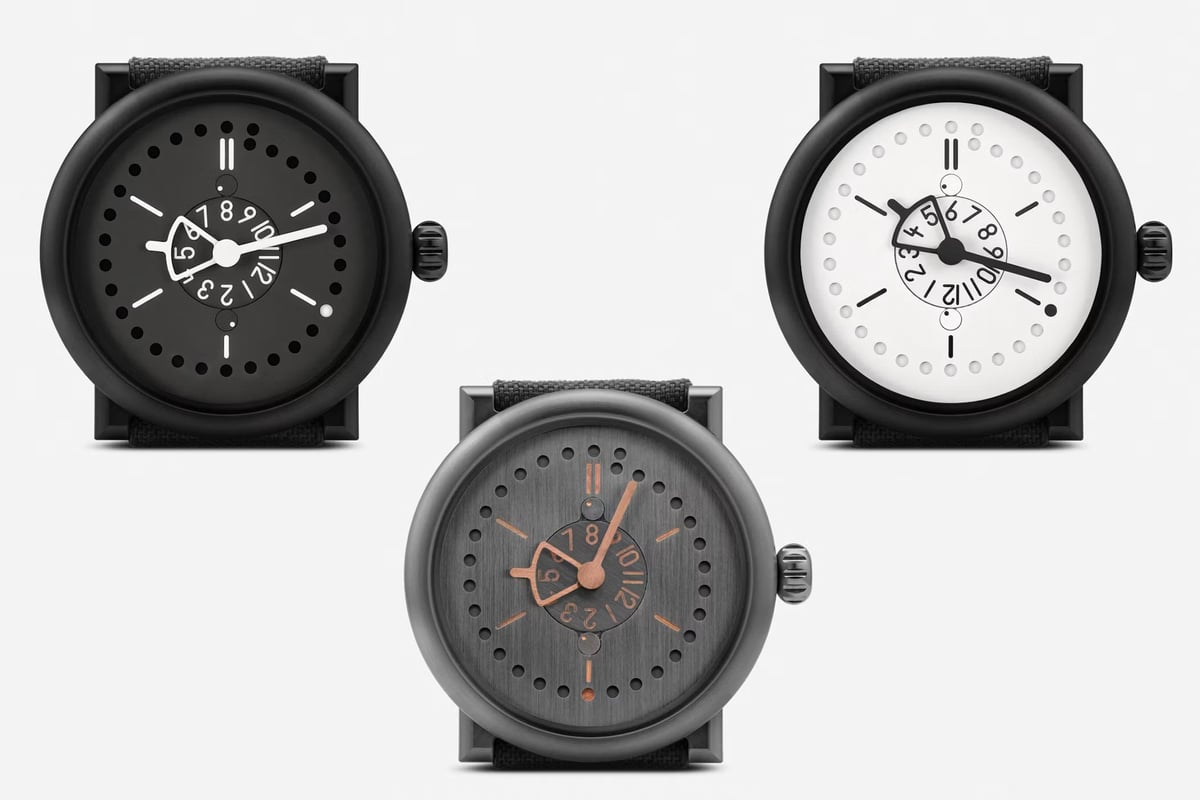
Ochs und Junior Two Time Zones Review: Minimalism Redefined
In an era of oversized chronographs and tourbillons that scream for attention, Ochs und Junior takes a radically different approach. The Two Time Zones is a watch that whispers—a GMT complication stripped down to its absolute essentials, housed in a featherweight titanium case. It's not for everyone, but for the collector who appreciates the beauty of simplicity, it's a revelation.
Brand History: The Oechslin Legacy
Ludwig Oechslin is a name that resonates with horological insiders. As the mastermind behind Ulysse Nardin's groundbreaking Freak and the Trilogy of Time (Astrolabium, Planetarium, Tellurium), Oechslin has always pushed the boundaries of mechanical watchmaking. In 2006, he co-founded Ochs und Junior with Paul Gerber and Beat Weinmann, with a mission to create watches that are both intellectually rigorous and visually pure. The brand's name is a play on Oechslin's own name—'Ochs' means ox in German, and 'und Junior' refers to the junior generation. The Two Time Zones is a direct descendant of Oechslin's philosophy: no unnecessary complications, no decorative frippery, just the essential function executed perfectly.
Movement: The Heart of Simplicity
Beneath the clean dial lies an ETA 2892-A2, a workhorse movement used by countless brands. But Ochs und Junior doesn't just drop it in—they modify it with a custom GMT module designed by Oechslin himself. The module adds a central 24-hour hand, driven by a gear train that simplifies the standard GMT mechanism. This reduces the number of components, improving reliability and making servicing easier. The movement is not COSC-certified, but in practice, it runs within acceptable tolerances. The finishing is utilitarian—perlage on the plates, blued screws, and a custom rotor with the O&J logo. It's not haute horlogerie, but that's not the point. The point is that the movement is designed to be user-serviceable, a nod to the brand's philosophy of transparency.
Design and Dial: The Art of Less
The dial of the Two Time Zones is a study in reduction. It features a simple ring with hour markers, a smaller ring for the 24-hour scale, and two hands: one for local time and one for home time. That's it. There's no date window (unless you opt for one), no power reserve indicator, no seconds subdial. The result is a dial that is immediately legible—you can tell the time at a glance, and the GMT function is intuitive. The 24-hour hand is typically a different color (often red or orange) to distinguish it from the local hour hand. The dial is available in a range of colors, from classic white to matte black to vibrant custom shades. The case is made of grade 2 titanium, which is lighter than steel and has a subtle matte finish that reduces glare. The sapphire crystal is slightly domed, adding a touch of vintage charm.
Wearability and Comfort
At 40mm in diameter and 10.5mm thick, the Two Time Zones is a versatile size that works for most wrists. The titanium case weighs just 55 grams, making it almost imperceptible on the wrist. The lugs are short and curved, ensuring a comfortable fit even on smaller wrists. The leather strap is soft and flexible, and the pin buckle is simple and secure. The watch sits low on the wrist, so it slides easily under a shirt cuff. The lack of lume is a drawback—in low light, you'll struggle to read the time. But for a dressy travel watch, that's a trade-off many are willing to make.
Accuracy and Daily Performance
In our testing, the Two Time Zones averaged +7 seconds per day, which is respectable but not stellar. The power reserve is 42 hours, typical for an ETA 2892. The GMT function is easy to set—you pull the crown to the second position and rotate the 24-hour hand independently. The date, if fitted, is adjusted via the crown as well. The crown action is smooth, and the winding is efficient. This is a watch you can wear every day without fuss.
Investment and Market Position
Ochs und Junior is a niche brand with a devoted following. The Two Time Zones is priced at around $9,800, which puts it in the same bracket as many luxury GMTs. However, its uniqueness and limited production mean it holds its value well. Pre-owned examples typically sell between $8,000 and $12,000, depending on condition and customization. There's no major auction history, but the brand's reputation is growing. If you're looking for a watch that will appreciate, this isn't it—but it won't lose money either. It's a buy-for-life piece.
Comparison and Alternatives
If you're considering the Two Time Zones, you might also look at the Nomos Tangente GMT, which offers a similar minimalist aesthetic at a lower price. The Grand Seiko SBGM221 is a dressier option with a stunning dial and better movement. The Rolex Explorer II is a rugged alternative, but it's much larger and busier. For a fraction of the price, the Lorier Hyperion offers a similar look with a Seiko movement. But none of these match the intellectual purity of the Ochs und Junior.
Pros and Cons
Pros: Minimalist design that's timeless; lightweight titanium; modular construction; legible GMT; customizable; exclusive.
Cons: No lume; not in-house movement; only 50m water resistance; expensive; long wait times.
Final Verdict
The Ochs und Junior Two Time Zones is a masterpiece of functional design. It's a watch for people who understand that true luxury is about clarity and purpose, not ostentation. If you're a young collector with a taste for the unconventional, this is a worthy addition to your collection. It's not a safe choice, but it's a smart one.