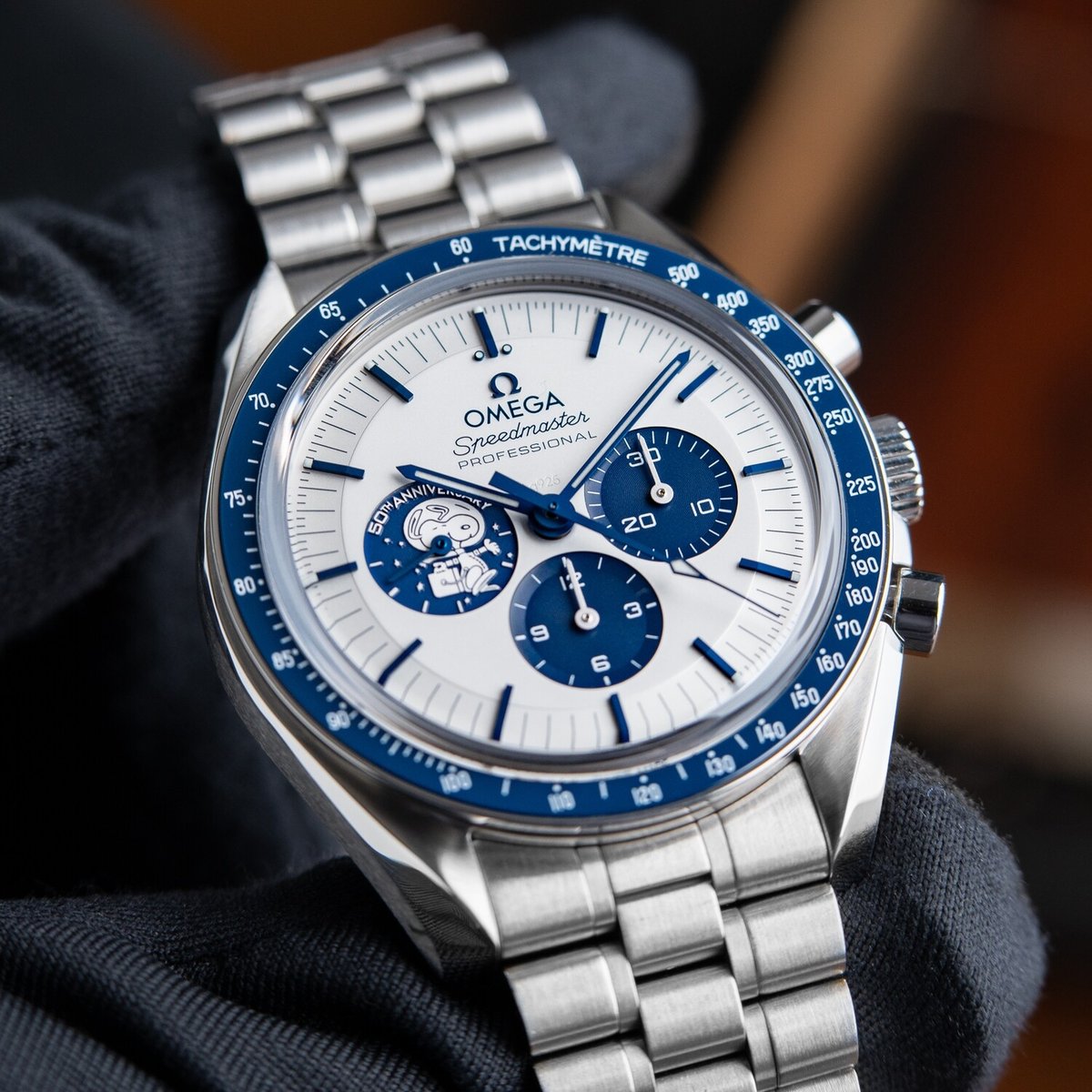
The Day the Watch World Stood Still
March 26, 2022, will be remembered as the day the luxury watch industry finally looked at the kids in the street and said, 'We see you.' Before the MoonSwatch, the Omega Speedmaster was a $7,000 rite of passage—a serious tool watch for serious men with serious collections. Then, in a move that felt like a heist, Swatch and Omega stripped away the steel, the mechanical movement, and the exclusivity, replacing them with Bioceramic, quartz, and a price tag of $260. The result was pure chaos. From Tokyo to New York, boutiques were swamped. For the first time in decades, people were queuing for a swatch. As a trend spotter at Vivir, I see this as the definitive 'High-Low' moment in horology, mirroring the way Virgil Abloh blended couture with the concrete.
Bioceramic: More Than Just Plastic?
The marketing term 'Bioceramic' sounds like something developed for a Mars colony, but the reality is a bit more grounded. It’s a proprietary blend of two-thirds ceramic and one-third bio-sourced plastic derived from castor oil. Critics were quick to call it 'just a plastic watch,' but that misses the point. The material allows for colors that would be impossible or prohibitively expensive in traditional ceramic. The 'Mission to Uranus' pale blue or the 'Mission to Mars' fire-engine red are vibrant in a way that steel can never be. It’s lightweight, matte, and has a unique tactile quality that feels modern. However, collectors should be aware: this is not a rugged G-Shock. It’s prone to scratches, and the acrylic crystal—faithful to the original Hesalite of the Moonwatch—will pick up scuffs if you so much as look at it the wrong way. A tube of Polywatch is a mandatory accessory for any MoonSwatch owner.
The 'Mission' Concept: Gamifying the Collection
What Swatch did brilliantly was turn a single watch into a 'set.' By releasing 11 different 'Missions'—each named after a celestial body in our solar system—they tapped into the completionist urge of the modern collector. You don’t just want a MoonSwatch; you want the 'Mission to Mercury' for your monochrome fits and the 'Mission to the Sun' for your summer trips to Ibiza. Each model features subtle nods to its namesake: the 'Mission to Saturn' has the planet’s rings on the 6 o'clock subdial, while the 'Mission to Mars' uses the unique 'rocket ship' hands from Omega’s prototype Alaska Project. This gamification is what keeps the secondary market buzzing and the 'heads' coming back for more.
The Wrist Experience: A Lightweight Icon
Wearing the MoonSwatch is an exercise in cognitive dissonance. Your eyes see the legendary 42mm Speedmaster case—the twisted lugs, the asymmetrical crown guards, the tachymeter scale—but your brain expects the weight of steel. Instead, it’s light enough to forget you’re wearing it. This makes it an incredible travel watch. It doesn't scream 'rob me' in a crowded metro, yet it earns a nod from the guy wearing a Daytona in the airport lounge. The Velcro strap is perhaps the weakest link; it’s modeled after the NASA-spec straps used by astronauts, but the execution here is a bit stiff. Most enthusiasts immediately swap it for a high-quality rubber strap or a color-matched NATO, which elevates the look significantly.
The Cultural Legacy and the 'New Luxury'
The MoonSwatch proved that luxury is no longer just about scarcity and price; it’s about access and story. By democratizing the Speedmaster design, Omega didn't hurt their brand—they built a pipeline. The 22-year-old wearing a 'Mission to the Moon' today is the 30-year-old buying a Calibre 321 'Ed White' tomorrow. It’s a gateway drug into the world of horology. At Vivir, we track how watches move through culture, and the MoonSwatch is everywhere: on the wrists of F1 drivers in the paddock, influencers at fashion week, and college students in the library. It has transcended its price point to become a legitimate style icon.
Investment and Value: The Collector's Perspective
Let’s be real: if you’re a wealthy collector, the $260 price tag is less than a dinner at Carbone. But the value isn't in the resale—it's in the 'vibe.' While early speculators made a killing flipping these on StockX, the market has cooled as Swatch has increased supply. The exceptions are the 'Mission to Neptune'—which had a lower production run initially—and the new 'Mission to the Moonphase' (the Snoopy editions), which still command a premium. Our advice? Don’t buy this as an investment. Buy it because it’s a piece of history you can actually wear without insurance. It’s the ultimate 'beater' for someone who knows their history but doesn't take themselves too seriously.
Final Verdict
The Omega x Swatch MoonSwatch is the most important watch of the decade so far. Not because of its movement (which is a basic quartz) or its materials (which are essentially high-end plastic), but because of what it represents. It represents the breaking of the fourth wall in luxury. It’s fun, it’s flawed, and it’s fabulous. If you can get past the 'it’s not a real Omega' snobbery, you’ll find a watch that captures the joy of collecting better than almost anything else on the market today. It’s a love letter to the Moonwatch, written in bright, Bioceramic ink.