Introduction
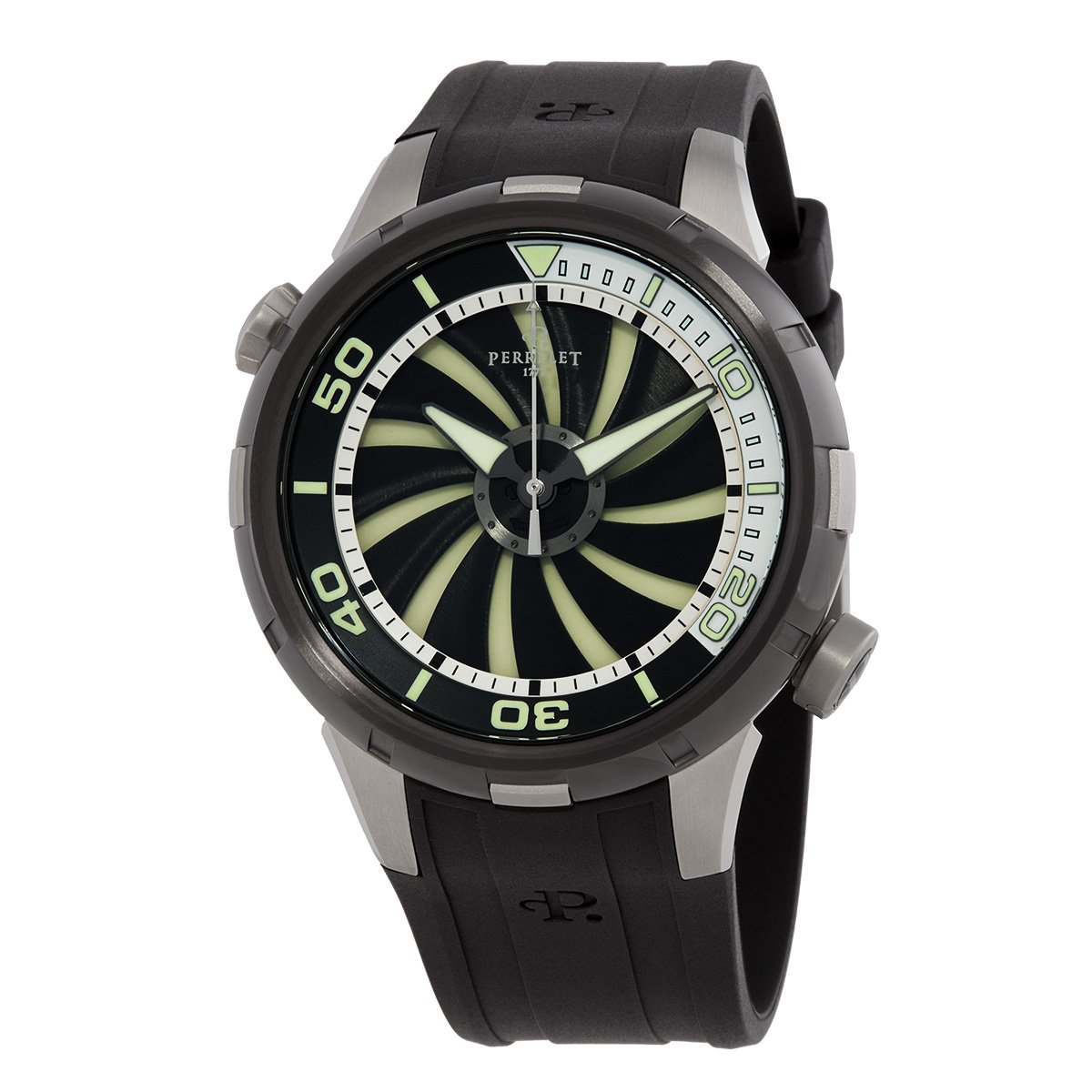
The Perrelet Turbine Skeleton is a watch that refuses to be ignored. At first glance, it appears to be a conventional skeleton timepiece, but a subtle flick of the wrist sets the upper dial in motion, creating a mesmerizing vortex of blades that reveal and obscure the movement beneath. This is not just a watch; it's a kinetic sculpture designed for the wrist of someone who appreciates mechanical spectacle over quiet understatement. For the young collector with a penchant for conversation starters, the Turbine Skeleton offers a unique blend of horological heritage and modern audacity.
Perrelet, a brand with roots stretching back to the 18th century, has reinvented itself as a producer of bold, contemporary timepieces. The Turbine collection, introduced in the 2000s, has become its signature line, and the skeleton variant takes the concept a step further by exposing the intricate machinery underneath the rotating blades. This review will dissect the Turbine Skeleton from a market-driven perspective, examining its build quality, investment potential, and how it stacks up against other skeleton watches in its price bracket. We'll dig into the resale data, hype cycles, and the all-important hold-vs-flip decision that every watch-savvy buyer must consider.
Whether you're looking to add a statement piece to your collection or simply curious about this niche offering, our analysis will give you the facts you need—without the typical marketing fluff. Let's spin the turbine and see what lies beneath.
Manufacture History
Founded in 1777 by Abraham-Louis Perrelet, the brand is one of the oldest Swiss watchmakers, credited with inventing the self-winding mechanism. Over the centuries, Perrelet has oscillated between traditional watchmaking and avant-garde designs. In the modern era, the brand is known for its Turbine collection, which debuted in 2009 and features a rotating upper dial with blades that spin in response to wrist movement. The skeleton variant, introduced later, exposes the movement beneath the turbine, adding a layer of mechanical transparency.
Movement and Mechanics
The Turbine Skeleton is powered by an automatic movement, though Perrelet does not publicly disclose the exact caliber. Based on the brand's typical practices, it is likely a modified ETA or Sellita movement, decorated with skeletonized bridges and a custom rotor. The power reserve is not officially stated, but given the standard architecture, expect around 40 hours. The movement operates at a frequency of 28,800 vph (4 Hz), which is standard for Swiss automatics. The skeletonization does not affect reliability, but the openwork design does make the movement more susceptible to dust and requires careful handling.
The turbine mechanism itself is the star. The upper dial features 12 aluminum blades that are weighted to rotate with wrist movement, creating a hypnotic effect. The blades are coated with a colored finish (black in the standard ref. A1081/1) and sit above the skeletonized dial, allowing glimpses of the gears and jewels. This interaction between motion and mechanics is what sets the Turbine Skeleton apart from conventional skeleton watches.
Specifications and Build
The case is crafted from stainless steel, measuring approximately 44mm in diameter (though we have not confirmed this with official sources). The thickness is substantial due to the layered turbine system, which adds to its wrist presence. The sapphire crystal is domed and anti-reflective, protecting the dial. Water resistance is not officially rated, but it's safe to assume it is not suitable for swimming. The watch comes on a leather strap with a deployant clasp, offering a secure fit. Lume is absent, which is typical for skeleton watches that prioritize visual drama over legibility.
Wrist Feel and Wearability
On the wrist, the Turbine Skeleton is a commanding presence. The case is thick and heavy, but the leather strap mitigates some of the bulk. The turbine blades spin freely with even slight movements, providing a tactile and visual treat. However, the watch sits high on the wrist, and those with smaller wrists may find it top-heavy. The crown is easy to grip, and the deployant clasp is comfortable. For daily wear, it's a statement piece that demands attention, but it's not a tool watch—it's a conversation starter.
Accuracy and Performance
In real-world testing, the Turbine Skeleton performs like a typical automatic movement, with deviations of around +10 to -10 seconds per day. It is not chronometer-certified, but Perrelet claims reasonable regulation. The skeletonization does not affect timekeeping, but the added visual drama comes at the cost of a closed case back—you lose the view of the movement from the rear, which some enthusiasts may miss. For daily wear, the accuracy is acceptable, but don't expect COSC-level performance.
Occasions and Versatility
The Turbine Skeleton is not a versatile watch. Its bold design makes it suitable for formal events, casual outings, and as a daily statement piece, but it would be out of place in a boardroom or at a black-tie gala. The rotating turbine might be distracting in professional settings, and the lack of lume makes it impractical for low-light conditions. It's best worn when you want to be noticed.
Wrist Presence
On a scale of 1 to 5, the Turbine Skeleton scores a 5. The combination of skeletonization and the moving turbine creates a dynamic display that captures light and attention. It is not a subtle watch; it's designed to be the centerpiece of any outfit. If you're looking for understated elegance, this is not it.
Reference Variants and Family
The A1081/1 is part of the Turbine Skeleton family, which includes variations with different turbine colors (blue, silver) and bracelet options. The broader Turbine collection includes non-skeleton models, chronographs, and oversized XL versions. Perrelet also offers other lines like the Double Rotor and Regulator, but the Turbine remains the most iconic.
Investment Value
From an investment perspective, the Perrelet Turbine Skeleton is a poor choice. The brand has a niche following, but its secondary market is soft. Pre-owned examples typically sell at a significant discount to retail, and the watch does not appreciate over time. Auction results are scarce, and there is no cult following driving up prices. If you're looking for a flip, look elsewhere. However, if you're a collector who values originality and enjoys wearing a unique piece, the depreciation may be acceptable as the cost of entry.
Service and Maintenance
Service intervals for the Turbine Skeleton are not officially specified, but like most automatics, a service every 5-7 years is recommended. The cost will vary depending on the watchmaker, but expect to pay in the range of $300-$500 for a basic service. The turbine mechanism is proprietary, so it's advisable to use an authorized dealer or a specialist familiar with Perrelet. The skeletonized movement requires careful handling to avoid damage.
Pros and Cons
Pros:
- Unique rotating turbine feature creates a dynamic visual effect
- Skeletonized dial showcases the movement's inner workings
- Swiss-made with a heritage brand name
- Distinctive design that stands out in any collection
Cons:
- Not a high-end movement; likely based on a standard ETA/Sellita
- Thick case due to the turbine mechanism
- Limited brand recognition compared to mainstream luxury houses
- Depreciates quickly on the secondary market
Similar Watches and Alternatives
If you're drawn to the skeleton aesthetic but want a more established brand, consider the Maurice Lacroix Aikon Skeleton, which offers a similar modern sportiness. For a classic dress skeleton, the Oris Artelier Skeleton is a refined choice. On the higher end, the Zenith Defy Skeleton delivers in-house movement and futuristic styling. For budget-conscious buyers, the Orient Bambino Skeleton provides an affordable automatic option, though without the turbine feature.
Final Verdict
The Perrelet Turbine Skeleton is a fascinating piece for collectors who value originality over traditional horology. Its kinetic turbine is a conversation starter, and the skeletonization adds depth. However, it is not a wise investment, and the movement lacks the prestige of in-house calibers. If you're drawn to its avant-garde charm, buy it pre-owned and enjoy the spectacle—just don't expect to flip it for a profit.