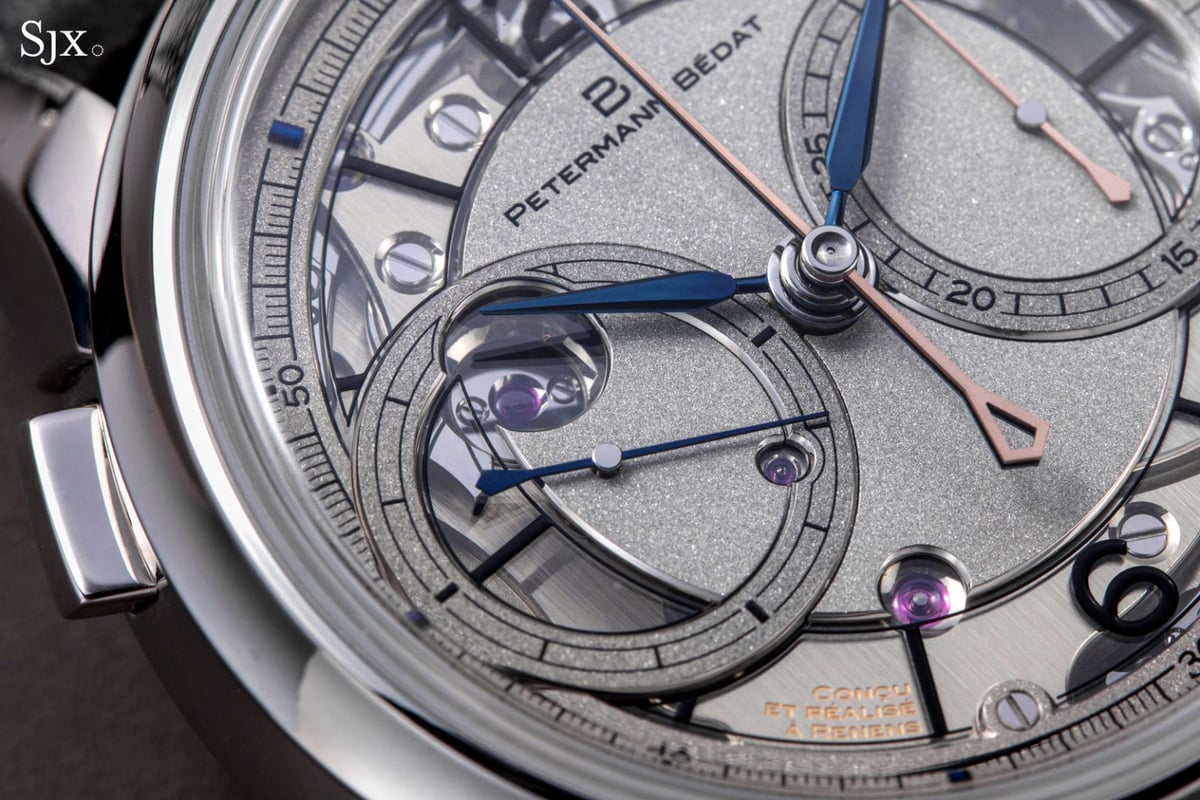
Petermann Bédat Chronographe Rattrapante Reference 2941 Review
The Petermann Bédat Chronographe Rattrapante Reference 2941 is not a watch that shouts. It is a split-seconds chronograph from a young Geneva house that has already earned the respect of collectors who care about movement architecture, hand finishing, and the quiet discipline of traditional watchmaking. When it won the Chronograph Prize at the 2023 Grand Prix d Horlogerie de Genève, it confirmed what many had suspected since the brand s debut: Petermann Bédat is not a novelty act. The Reference 2941 is a manual-wind, in-house split-seconds chronograph with a silver-toned dial, a stainless steel case, and a level of finishing that invites close inspection. It is a watch for someone who understands that a rattrapante is one of the most demanding complications to execute well, and who wants a modern expression of that craft without the baggage of a legacy maison.
In a market crowded with limited editions and nostalgic reissues, the Reference 2941 feels different. It does not rely on a famous name from the past. It does not hide behind a wall of marketing. Instead, it presents a movement that has been conceived, developed, and finished by two watchmakers who have spent years restoring and studying complicated watches. The result is a chronograph that feels both historically informed and entirely contemporary. The split-seconds function, often called a rattrapante, allows the wearer to measure two concurrent events. It is a complication that demands precision in both design and execution. Petermann Bédat has met that demand with a calibre that is as beautiful to observe as it is satisfying to operate.
This review examines the Reference 2941 in detail: its manufacture history, movement architecture, finishing, wrist presence, accuracy, occasions, investment potential, and service considerations. It is written for the sophisticated young collector who wants to understand not just what the watch is, but why it matters.
Manufacture History
Petermann Bédat was founded in 2018 in Geneva by Gaël Petermann and Florian Bédat. Both are trained watchmakers who met while working in the Swiss watch industry. Their backgrounds include restoration and complication work, which explains the classical sensibility that runs through their creations. The brand is independent, small-scale, and focused on in-house calibres. It does not chase trends. It builds watches that are meant to be studied, worn, and passed down.
The first Petermann Bédat watch, the Dead Beat Seconds reference 1967, won the Horological Revelation Prize at the 2020 Grand Prix d Horlogerie de Genève. That award brought the young brand to the attention of collectors worldwide. The Dead Beat Seconds demonstrated the founders ability to take a traditional complication and present it with a distinct, modern voice. It also established the brand s reputation for finishing that rivals much older houses.
The Chronographe Rattrapante reference 2941 followed and won the Chronograph Prize at the 2023 GPHG. This was a significant achievement. The chronograph category is one of the most competitive at the GPHG, and the Reference 2941 beat established names with far longer histories. The award confirmed that Petermann Bédat is not just a promising newcomer but a serious player in high horology. The brand remains independent, with production limited to a small number of pieces per year. That scarcity is part of its appeal, but it also means that the Reference 2941 is not a watch you can simply walk into a boutique and buy.
Movement Architecture
The heart of the Reference 2941 is the Calibre PB 2941, a hand-wound split-seconds chronograph developed in-house. This is not a modified ebauche. It is a purpose-built movement that reflects the founders deep understanding of classical chronograph design. The architecture is traditional, but the execution is modern in its precision and finishing.
The movement uses a horizontal clutch and two column wheels. One column wheel controls the chronograph, while the second controls the rattrapante. This is the correct way to build a split-seconds chronograph. It ensures that the split-seconds function operates smoothly and that the chronograph hands start, stop, and reset with crisp, positive action. The horizontal clutch is visible through the sapphire caseback, and its engagement is a pleasure to observe. The power reserve is 60 hours, which is generous for a manual-wind chronograph. The frequency is 21,600 vibrations per hour, a traditional beat rate that is well suited to a complicated movement. It provides a stable platform for the chronograph and allows the finishing to be appreciated without the distraction of a high-frequency escapement.
The finishing is exceptional. The bridges are hand-bevelled, with wide, polished chamfers that catch the light. The surfaces are decorated with Geneva stripes, circular graining, and perlage. The steel components are black-polished, a technique that requires patience and skill. The screws are polished and blued. The jewels are set in gold chatons, a detail that speaks to the movement s classical inspiration. The split-seconds mechanism is not hidden away. It is integrated into the movement in a way that is both functional and visually compelling. The sapphire caseback offers an unobstructed view of the column wheels, the clutch, and the levers that make the rattrapante work. It is a movement that rewards a loupe, but it is also beautiful to the naked eye.
The Calibre PB 2941 is a testament to the founders philosophy. They have not tried to reinvent the chronograph. They have taken a classic complication and executed it with modern precision and old-world finishing. The result is a movement that feels both familiar and fresh. It is the kind of calibre that reminds you why mechanical watches still matter in an age of smartwatches and quartz. It is not about accuracy alone. It is about craft, history, and the human hand.
Case, Dial, and Finishing
The Reference 2941 is housed in a stainless steel case. This is a deliberate choice. Stainless steel is not as precious as gold or platinum, but it is honest, durable, and understated. It also allows the watch to be worn more casually, which suits the chronograph genre. The case is round, with a thin bezel that maximizes the dial. The lugs are curved and carefully shaped, flowing into the caseband without interruption. The finishing is a mix of polished and brushed surfaces. The bezel is polished, while the caseband is brushed. The lugs are polished on their upper surfaces and brushed on the sides. This contrast creates a subtle play of light that is best appreciated in person.
The dial is silver-toned and finely grained. It has a vintage-inspired layout that is both legible and elegant. There are two subdials: a small seconds at 9 o clock and a 30-minute counter at 3 o clock. The central hands are blued steel, as is the split-seconds hand. The hour and minute hands are leaf-shaped, a classical design that suits the watch perfectly. The applied indices are polished and faceted, catching the light as the wrist moves. The minute track is precise, with a railway-style design that reinforces the chronograph s purpose. There is no date window, which keeps the dial symmetrical and uncluttered. The dial is protected by a sapphire crystal with an anti-reflective coating. There is no luminous material on the dial or hands. This is not a sports watch. It is a dress chronograph, and its legibility in normal light is excellent.
The overall finishing of the case and dial is of a very high order. The edges are crisp. The surfaces are even. The blued hands are a deep, uniform blue. The dial s graining is subtle but adds depth. The watch feels like a cohesive object, not a collection of parts. It is clear that every detail has been considered. The Reference 2941 does not need to shout to be noticed. Its quality speaks quietly but firmly.
On the Wrist
Without quoting dimensions, the Reference 2941 wears like a classical chronograph. The case is modestly sized by modern standards, which means it sits comfortably on a wide range of wrists. The curved lugs help it hug the wrist, and the thin bezel gives the dial a generous presence without making the watch feel bulky. The manual-wind movement keeps the profile reasonable, so it slides under a shirt cuff with ease. The watch is not top-heavy. The center of gravity sits close to the wrist, and the strap balances the case well.
The leather strap is supple and well-made. It is hand-stitched and has a subtle texture that complements the dial. The pin buckle is simple and secure. It does not have the convenience of a deployant clasp, but it is period-correct and keeps the watch s vintage character intact. The strap is comfortable from the first wear, and it does not require a long break-in period. The watch feels substantial but not heavy. It is the kind of watch you can wear all day without thinking about it, which is a high compliment for a complicated chronograph.
The split-seconds function is easy to operate. The pushers have a crisp, positive action. There is no mushiness or play. When you engage the rattrapante, the split-seconds hand stops while the chronograph continues to run. When you release it, the hand snaps back into sync with the chronograph. The mechanism is precise and reliable. It is a joy to use, and it reminds you of the mechanical ingenuity that makes high horology so fascinating. The crown is easy to grip and winds smoothly. The manual-wind action is satisfying, with just the right amount of resistance. You can feel the quality of the movement through the crown.
Accuracy and Daily Use
The Reference 2941 is not a COSC-certified chronometer. It is a hand-wound split-seconds chronograph, and its accuracy should be judged in that context. A well-regulated example will keep time within a few seconds per day. The exact rate will depend on how regularly you wind it, how often you use the chronograph, and how you wear it. The 60-hour power reserve means you can take it off for a weekend and still find it running on Monday. That is a practical benefit for a manual-wind watch.
Daily use is entirely possible, but it requires a certain mindset. You need to wind the watch every morning. You need to be careful with the chronograph. You need to accept that the movement is not designed for the same shock resistance as a sports watch. But if you are the kind of collector who enjoys interacting with a mechanical object, the Reference 2941 is deeply rewarding. It is not a watch you wear to the gym. It is a watch you wear to dinner, to the office, to a gallery opening, or to a quiet weekend in the city. It is a companion for moments when you want to appreciate the finer things.
The accuracy of the Calibre PB 2941 is aided by its traditional architecture. The horizontal clutch and column wheels are robust and reliable. The movement is designed to be serviced, not replaced. With proper care, it will run for generations. The split-seconds mechanism, in particular, is built to withstand regular use. You do not need to baby it, but you should respect it. Use the chronograph when you need it, and let it rest when you do not. The watch will reward you with stable, dependable timekeeping.
Occasions and Presence
The Reference 2941 is a versatile watch, but it is not a do-everything watch. It is best suited to formal and dress occasions, where its classical dial and refined finishing can be appreciated. It also works well for daily wear in an office environment. It is not a sports watch, and it is not intended for swimming or vigorous activity. The lack of luminous material and the leather strap reinforce its dressy character. For travel, it is a fine companion, provided you are not planning to swim or hike. It is a watch that looks at home with a suit, a sport coat, or even a well-chosen casual outfit.
On the wrist, the Reference 2941 has a presence that is confident but not loud. It does not have the instant recognizability of a Rolex or a Patek Philippe, but that is part of its appeal. It is a watch for people who know. The silver dial, the blued hands, and the visible split-seconds mechanism create a conversation piece for those who appreciate watchmaking. The watch has a 4 out of 5 presence. It is not a wallflower, but it is also not a show-off. It sits in a sweet spot between understatement and distinction.
Reference Variants and Family
The Reference 2941 is the primary reference for the Chronographe Rattrapante. At launch, it was offered in a single configuration: a stainless steel case, a silver-toned dial, and a hand-stitched leather strap. There may be unique pieces or future variants, but the Reference 2941 is the definitive expression of the model. It is not a limited edition in the traditional sense, but production is very small, so each piece is effectively rare. The watch is part of the Petermann Bédat family alongside the Dead Beat Seconds reference 1967. The Dead Beat Seconds is a different complication, but it shares the same design language and commitment to finishing. Collectors who appreciate one will likely appreciate the other.
In terms of family references, the Chronographe Rattrapante is a new line for the brand. It does not have a direct predecessor. It is a sibling to the Dead Beat Seconds, and together they represent the brand s two core models. The Reference 2941 is the more complicated of the two, and it is the one that won the GPHG Chronograph Prize. It is the flagship of the collection, at least for now.
Similar Watches
The market for split-seconds chronographs is small and exclusive. The Reference 2941 competes with some of the most respected watches in horology. Each has its own character and strengths.
- Patek Philippe 5370P: A manual-wind split-seconds chronograph with a grand feu enamel dial and a platinum case. It is the benchmark for classical rattrapantes. The Reference 2941 offers a more modern, independent alternative with a visible movement and a lower production volume.
- A. Lange & Söhne Double Split: A double rattrapante with a flyback function. It is a technical tour de force with German finishing. The Reference 2941 is simpler in function but more intimate in scale and finishing.
- Vacheron Constantin Traditionnelle Split-Seconds Chronograph: A classic Geneva split-seconds with a beautiful movement. It represents the old guard. The Reference 2941 represents the new guard, with a fresh perspective and a more accessible case material.
- F.P. Journe Chronographe Monopoussoir Rattrapante: A monopusher split-seconds from one of the most celebrated independents. It is a direct competitor in spirit. The Reference 2941 is more classical in design, while the Journe is more idiosyncratic.
Each of these watches is excellent. The choice comes down to personal taste, availability, and budget. The Reference 2941 stands out for its combination of traditional finishing, modern independent spirit, and award-winning execution. It is not the most famous name in the group, but it may be the most interesting.
Homages
There is no true homage to the Petermann Bédat Chronographe Rattrapante. A split-seconds chronograph is simply too complex and expensive to replicate at an affordable price. However, collectors who love the vintage chronograph aesthetic can find affordable alternatives that capture a similar spirit, even if they lack the rattrapante function.
- Seagull 1963: A vintage-inspired chronograph with a column-wheel movement and a military dial. It is not a split-seconds, but it offers a similar mechanical charm for a fraction of the price. Price: around $250.
- Sugess S419: A modern homage to vintage chronographs, using the Seagull ST19 movement. It has a similar dial layout and a satisfying manual-wind action. Price: around $300.
These watches are not substitutes for the Reference 2941. They are entry points into the world of mechanical chronographs. They can be enjoyed for what they are, but they do not compete with the finishing, history, or complication of the Petermann Bédat.
Investment Value
The Reference 2941 is a high-end independent watch with limited production. Its investment profile is different from that of a mass-produced luxury watch. It is unlikely to be a quick flip. It is more likely to be a long-term hold. The brand is young but highly respected. The GPHG award has raised its profile. The small production numbers mean that demand will always exceed supply. However, the secondary market for independent watches can be illiquid. There are fewer buyers, and transactions often happen privately or through specialist dealers.
Pricing for the Reference 2941 is available upon request from the brand. As a guide, similar split-seconds chronographs from independent makers often trade in the low to mid six figures in US dollars. The exact MSRP and current retail price are not publicly listed, so we have left those fields blank. Pre-owned examples are rare. When they appear, they tend to hold their value well, but there is not enough public auction data to establish a reliable range. The trend is stable to appreciating for the best examples. If you are buying, buy because you love the watch. If you are investing, understand that liquidity is limited. The hold recommendation is simple: this is a long-term collector s piece. It should be kept and enjoyed, not traded like a commodity. There is no major auction history for this reference at the time of writing.
Service
Service for the Reference 2941 should be handled by Petermann Bédat or an authorized partner. The movement is in-house and complicated. While an independent watchmaker with experience in split-seconds chronographs could theoretically service it, access to factory parts and documentation is important for long-term maintenance. The brand is based in Geneva, and service can be arranged through their network. The service interval is not publicly specified. As with most high-end manual-wind chronographs, a service every five to seven years is typical, but the exact interval depends on usage. The cost will vary depending on the work required. Authorized service is recommended to preserve the watch s value and ensure that the rattrapante mechanism is correctly adjusted. The brand is small, so service may take time, but the quality of work is worth the wait.
Pros and Cons
Pros:
- In-house split-seconds chronograph movement with two column wheels and a horizontal clutch.
- Exceptional hand finishing, including black-polished steel components and hand-bevelled bridges.
- GPHG 2023 Chronograph Prize winner, confirming its quality and significance.
- Independent brand with limited production and a strong collector following.
- Classical, legible dial with blued hands and a symmetrical layout.
- Comfortable on the wrist and suitable for formal and daily wear.
Cons:
- Price is available only on request, and it is likely to be high.
- Very limited availability; difficult to purchase at retail.
- Service network is small and centered in Geneva.
- No date, no luminous material, and no water resistance rating suitable for swimming.
- Secondary market is illiquid compared to more established brands.
Final Verdict
The Petermann Bédat Chronographe Rattrapante Reference 2941 is a triumph of independent watchmaking. It combines a traditionally constructed split-seconds chronograph with modern precision and extraordinary finishing. It is not a watch for everyone. It is for the collector who values craft over branding, who understands the difficulty of a rattrapante, and who wants a piece that will be admired by those who know. The GPHG award is well deserved. The Reference 2941 is a future classic from a brand that is only just getting started. If you can find one, buy it and wear it. It is a watch that will reward you every time you look at it.