The Petermann Bédat Ref. 1967 Is the Indie Watch That Keeps Collectors Up at Night
Independent watchmaking has its own gravity. In 2020, while the big houses were polishing their heritage lines, two young watchmakers—Gaël Petermann and Florian Bédat—quietly dropped a watch that made the collector crowd lean in. The Petermann Bédat Ref. 1967 took home the Horological Revelation prize at the Grand Prix d'Horlogerie de Genève, and suddenly everyone wanted to know: who are these guys? The Ref. 1967 is not a hype watch in the usual sense. It doesn't have a celebrity ambassador or a waiting list fueled by Instagram. It has a deadbeat seconds, a sector dial, and a movement finished like a miniature cathedral. It's the kind of watch that gets passed around at collector dinners, photographed under warm light, and discussed in hushed tones. And that's exactly why it matters.
For a certain kind of collector, the Ref. 1967 represents a fork in the road. You can buy a Submariner and never think about it again, or you can buy a Petermann Bédat and enter a smaller, more obsessive world. This is a watch for people who read movement finishing like poetry, who care about the difference between a hand-bevelled bridge and a machine-polished one, and who want something that flies under the radar but rewards a second look. It's not about status. It's about connoisseurship.
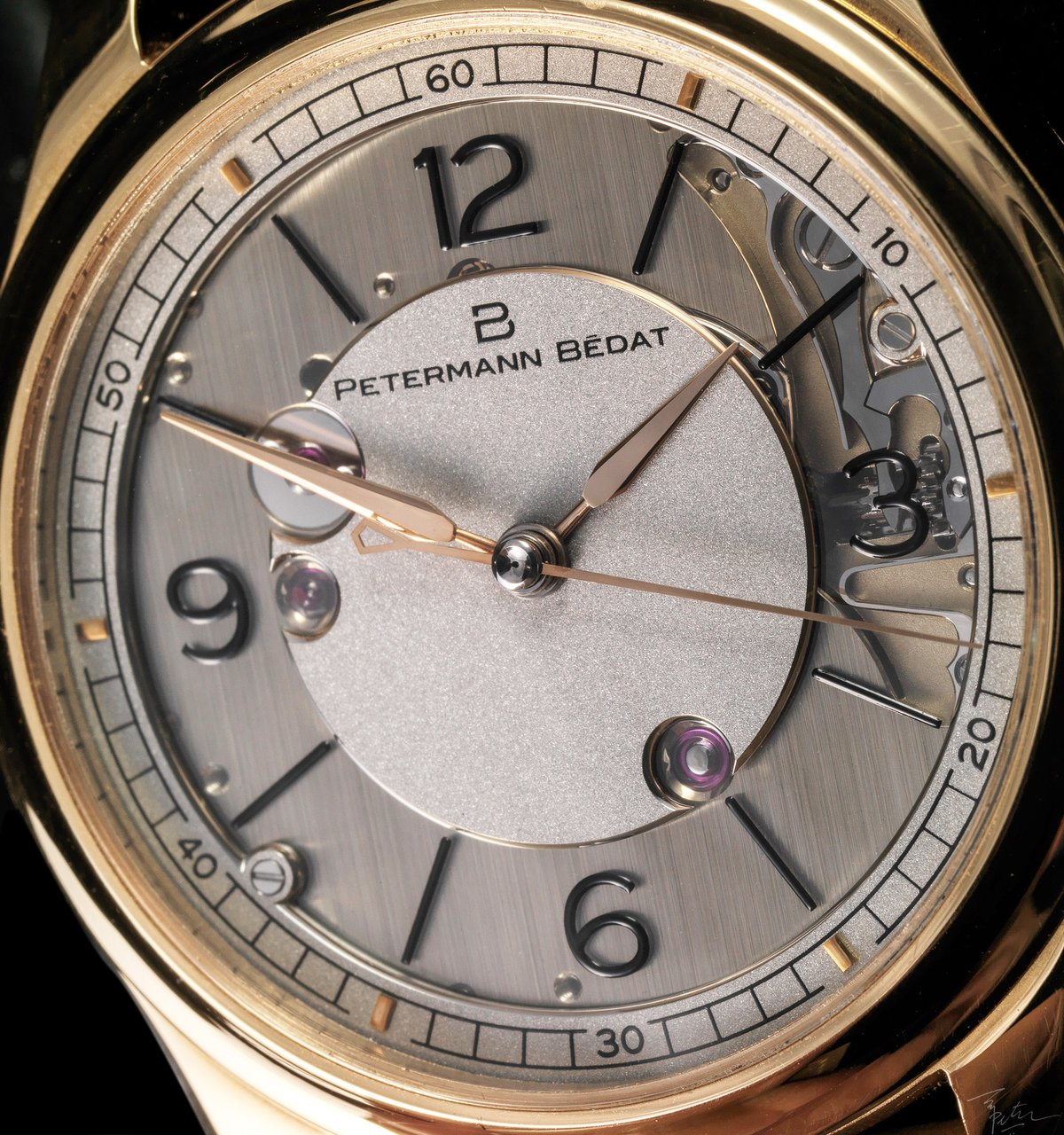
So what makes the Ref. 1967 so special? It starts with the deadbeat seconds—a complication that makes the seconds hand tick once per second instead of sweeping smoothly. It's a visual and mechanical treat, and it's rare to see it in an independent debut. Pair that with a sector dial that feels both vintage and modern, and you have a watch that's greater than the sum of its parts. In this review, we'll break down the movement, the design, the wrist feel, and whether this indie darling is worth your attention.
The Brand Behind the Watch
Petermann Bédat was founded in 2017 by Gaël Petermann and Florian Bédat, two watchmakers who cut their teeth at prestigious houses before striking out on their own. Based in Switzerland, the brand is small even by independent standards. The duo produces watches in very limited numbers, with a focus on traditional hand-finishing and inventive mechanics. The Ref. 1967 was their debut, and its GPHG award in 2020 put the brand on the map. Since then, the Ref. 1967 has become a calling card for collectors who want something off the beaten path.
What sets Petermann Bédat apart is their approach to watchmaking. They're not trying to reinvent the wheel; they're trying to perfect it. The Ref. 1967 is a classical watch with a twist—a deadbeat seconds that adds a layer of mechanical intrigue without shouting for attention. The brand's production is tiny, which means every watch that leaves the workshop is scrutinized. If you're lucky enough to own one, you're part of a very small club.
The Movement: Deadbeat Seconds and Hand-Finishing
The heart of the Ref. 1967 is the Calibre 1967, a manually wound in-house movement. It's a deadbeat seconds movement, which means the seconds hand advances in discrete one-second jumps rather than a continuous sweep. This is achieved through a complex mechanism that requires precise engineering and finishing. The movement has a power reserve of 45 hours and beats at 21,600 vph. It's not COSC-certified, but that's not the point. Independent watchmakers like Petermann Bédat regulate their movements by hand, and the Calibre 1967 is built to keep time within a few seconds a day.
What really sets the movement apart is the finishing. Bridges are hand-bevelled, decorated with Geneva stripes, and assembled with care. The deadbeat seconds mechanism is visible through the sapphire caseback, and it's a joy to watch in action. The caliber also features a power reserve indicator on the dial, which is a useful complication for a manually wound watch. It's a movement that rewards close inspection, and it's a testament to the duo's training at some of the best houses in the business.
The Ref. 1967 is not a watch for someone who wants a set-and-forget daily beater. It's a watch for someone who enjoys the ritual of winding, who appreciates the tactile feedback of a well-made crown, and who likes to see the mechanics at work through the back. The deadbeat seconds is a constant reminder that this is a machine, not a battery-powered appliance.
Specs and Design: A Sector Dial for the Ages
The Ref. 1967 is housed in a stainless steel case (a rose gold version is also available). The case is compact enough to slip under a cuff, yet it has enough presence to hold its own. The crystal is sapphire, and the watch is paired with a leather strap and a pin buckle. There's no lume, which is fine—this is a dress watch, not a tool watch. Water resistance is not a headline feature, so treat it accordingly.
The dial is where the Ref. 1967 really shines. It's a sector dial, with a silvered finish and a layout that's both vintage and modern. The power reserve indicator sits at 12 o'clock, while the deadbeat seconds subdial sits at 6 o'clock. The hour and minute hands are blued steel, and the markers are crisp and legible. The sector dial design is a nod to the 1930s and 1940s, but the execution is thoroughly contemporary. It's a dial that rewards different lighting conditions—sometimes it looks bright and silver, other times it takes on a warmer, more muted tone.
The case finishing is also worth mentioning. The lugs are polished, the case sides are brushed, and the overall effect is one of restrained elegance. It's not a flashy watch, but it's a watch that draws the eye of someone who knows what they're looking at. The sector dial and the deadbeat seconds are the kind of details that spark conversations with other collectors.
On the Wrist
On the wrist, the Ref. 1967 feels like a well-kept secret. The case is compact enough to slip under a cuff, yet it has enough presence to hold its own in a dinner conversation. The weight is balanced, the lugs curve gently, and the leather strap is supple from day one. The deadbeat seconds give the watch a pulse—a little visual rhythm that reminds you it's mechanical. It's not a sports watch; it's a desk-diver for the boardroom, a watch that feels at home with a suit or a cashmere sweater.
The strap is a high-quality leather number, and the pin buckle is simple and effective. The watch sits comfortably on the wrist for long periods, and it doesn't feel top-heavy or awkward. The deadbeat seconds hand is a constant source of delight—each tick is a clean, discrete jump that's oddly satisfying to watch. It's the kind of detail that makes you want to wear the watch even when you're just working from home.
Accuracy and Daily Wear
There's no COSC certification here, and that's fine. Independent watchmakers like Petermann Bédat regulate their movements by hand, and the Calibre 1967 is built to keep time within a few seconds a day. The deadbeat seconds makes it easy to check against a reference clock—each tick is a clean, discrete jump. In daily wear, expect reliable performance, though you'll want to treat it with the care any hand-finished mechanical watch deserves.
Because it's manually wound, you'll need to wind it every day or so. The power reserve indicator on the dial helps you keep track of how much juice is left. It's a nice touch that adds to the ritual of ownership. The watch is not water-resistant in any meaningful way, so don't wear it in the shower or while swimming. It's a dress watch, and it should be treated as such.
Variants and Family
The Ref. 1967 is available in a few variants. The original launch version was in stainless steel with a silver sector dial. There's also a rose gold version with the same dial layout. Both are limited in production, and both are highly sought after. The brand has not released a broad range of other models, so the Ref. 1967 is the core of the collection. It's the founding model, and it's likely to remain the most important watch in the brand's lineup for years to come.
If you're looking for a predecessor or a sibling, there isn't one. The Ref. 1967 is the beginning of the story. That's part of its appeal—it's a first chapter that collectors can be part of.
Similar Watches and Alternatives
If you're drawn to the Ref. 1967, you might also consider a few other independents. The F.P. Journe Chronomètre Souverain is a sector-dial-inspired watch with a similar collector appeal. The Kari Voutilainen Vingt-8 is another hand-finished independent with a distinctive dial. The De Bethune DB25s is a more futuristic take on independent watchmaking, but it shares the same obsession with finishing and mechanics. These are all watches that reward a connoisseur's eye.
If you're looking for a more affordable homage to the sector-dial aesthetic, the Longines Heritage Classic Sector Dial is a great option. It captures the vintage vibe at a fraction of the cost, though it lacks the deadbeat seconds and the hand-finishing. It's a good way to get a taste of the style without committing to a five-figure indie.
Investment and Service
Petermann Bédat does not publish prices publicly, so the Ref. 1967 is a price-on-request watch. That's typical for small independents. Limited production and a GPHG award give it strong collector appeal, and demand is steady. However, liquidity is thin, and there's no major auction history yet. If you're buying, expect to pay a premium for availability. If you already own one, hold—it's a long-term piece.
Service is through Petermann Bédat or a trusted independent watchmaker. The brand is small, so service lead times can be long. You'll want to factor that into ownership. It's not a watch you can drop off at any mall jeweler. It's a watch that requires a specialist's touch.
Pros and Cons
Pros: GPHG-awarded deadbeat seconds, beautiful hand-finished in-house movement, sector dial with excellent legibility, limited production and strong collector appeal.
Cons: Very limited availability, no official chronometer certification, service network is tiny, pre-owned data is thin.
Final Verdict
The Petermann Bédat Ref. 1967 is not for everyone. It's for the collector who values craft over clout, who wants a watch that whispers instead of shouts. With its deadbeat seconds, sector dial, and hand-finished movement, it's a future classic from two watchmakers who are just getting started. If you can find one, buy it. If you can't, keep an eye on the indie scene—Petermann Bédat is a name you'll be hearing more of.