Petermann Bédat Reference 1967 Chronographe à Seconde Morte Review
In the world of independent watchmaking, few debuts have made as strong an impression as the Petermann Bédat Reference 1967. This manual-wind chronograph, equipped with a deadbeat seconds complication, won the Horological Revelation prize at the 2020 Grand Prix d’Horlogerie de Genève. It is a watch that demands attention not through size or flash, but through the sheer ingenuity of its mechanics and the elegance of its execution. In this review, we focus on what it’s like to wear this rare piece day in and day out—from the comfort of its case to the rhythm of its ticking seconds.
Brand History: A New Independent Voice
Petermann Bédat was founded in 2018 by Gaël Petermann and Florian Bédat, two watchmakers who honed their skills at Vacheron Constantin. Their goal was to create watches that blend traditional horology with a fresh perspective. The Reference 1967 was their first model, and it immediately put them on the map. The brand is based in Switzerland and operates as a small independent atelier, producing watches in limited numbers. The GPHG award was a validation of their approach, and it has helped establish the Reference 1967 as a sought-after piece among collectors who appreciate mechanical innovation.
Design and Dial: Vintage Soul, Modern Precision
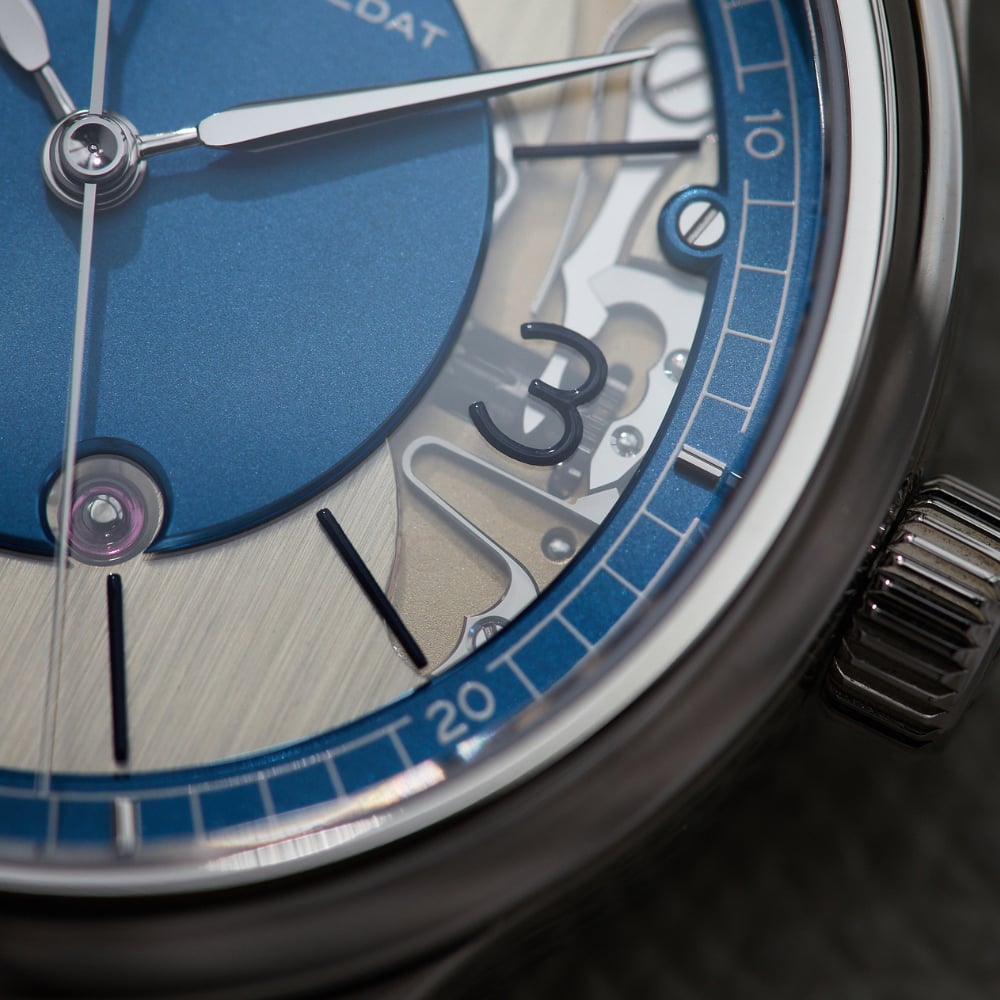
The Reference 1967 has a classic, understated aesthetic that belies its mechanical complexity. The case is made of stainless steel, and while exact dimensions are not publicly disclosed, it wears compactly and elegantly. The dial is silver-toned with a layout that is both balanced and legible. Two subdials handle the chronograph functions, while the deadbeat seconds is displayed via a central hand that ticks once per second—a feature that immediately sets the watch apart. The hands are well-proportioned, and the lack of lume is a deliberate choice that keeps the dial clean and dressy. The leather strap and pin buckle complete the vintage-inspired look, making the watch suitable for formal occasions as well as daily wear.
Movement and Complications: The Deadbeat Seconds
At the heart of the Reference 1967 is a manual-wind calibre, designated Calibre 1967. Exact specifications such as power reserve and frequency are not widely published, but what we do know is that the movement features a deadbeat seconds module—a complication that is relatively rare in modern watchmaking. The deadbeat seconds, also known as a jumping seconds, makes the seconds hand advance in discrete one-second increments rather than a continuous sweep. This adds a tactile, almost mesmerizing quality to the watch. The chronograph function is smooth and precise, and the finishing is of a high standard, as expected from a GPHG-winning independent. The movement is not COSC-certified, but that is not the point; it is a piece of mechanical art that is meant to be enjoyed for its craftsmanship.
Wearing Experience: Comfort and Presence
On the wrist, the Reference 1967 is a joy to wear. The case is well-proportioned and sits comfortably, thanks to its modest dimensions and curved lugs. The leather strap is supple and conforms quickly to the wrist, and the pin buckle is secure, though some might prefer a deployant clasp for convenience. The watch has a presence that is felt rather than seen; it doesn’t shout for attention, but the ticking seconds and the detailed dial draw the eye. It is light enough for all-day wear and dressy enough for formal occasions. The lack of lume is a minor trade-off, but it fits the watch’s character.
Accuracy and Daily Use
In real-world use, the Reference 1967 keeps good time. As a manual-wind chronograph, it requires regular winding, which becomes a pleasant ritual. Accuracy is within a few seconds per day, which is typical for a high-end independent movement. The deadbeat seconds is consistent, and the chronograph starts, stops, and resets cleanly. It is a watch that you can rely on for daily wear, though you’ll need to be mindful of its water resistance—exact rating is not published, but it’s best to avoid submerging it. The sapphire crystal is scratch-resistant, and the stainless steel case is durable enough for everyday use.
Occasions: Versatility Beyond Formality
While the Reference 1967 is dressy enough for formal events, it is also versatile enough for daily wear. Its understated design means it pairs well with a suit, but it also looks at home with jeans and a sweater. It is not a sports watch, so you wouldn’t take it swimming or hiking, but for office wear and evenings out, it is perfect. The deadbeat seconds adds a conversation piece, making it a great watch for collectors who enjoy explaining the mechanics to others.
Investment and Value
The Petermann Bédat Reference 1967 is a limited-production independent watch, and its value is driven by exclusivity rather than mass-market appeal. The MSRP and current retail price are not publicly listed, but it is safe to say it is a significant investment. Pre-owned examples are rare, and there is no major auction history yet. The trend is stable, and given the GPHG award and the brand’s growing reputation, it is likely to hold its value well. However, this is not a watch for speculative buyers; it is for those who appreciate independent horology and the unique deadbeat seconds complication.
Service and Maintenance
Service for the Reference 1967 is available through Petermann Bédat authorized partners. The service interval and cost are not publicly disclosed, but as with any high-end independent, it is best to follow the manufacturer’s recommendations. The authorized-only service network is limited, so owners should be prepared to ship the watch to a service center. This is a minor inconvenience but typical for small independent brands.
Pros and Cons
Pros:
- Unique deadbeat seconds chronograph
- GPHG award-winning independent
- High-quality finishing
Cons:
- Limited availability
- High price
- No lume
Final Verdict
The Petermann Bédat Reference 1967 is a connoisseur's watch. It blends vintage charm with a rare deadbeat seconds complication, offering a tactile experience that is hard to find elsewhere. It wears comfortably and is versatile enough for daily wear, though its exclusivity and price mean it is for the dedicated collector. If you are looking for a watch that combines independent spirit with mechanical intrigue, the Reference 1967 is a compelling choice.