Piaget Altiplano Tourbillon: The Ultra-Thin Statement
A diamond-set flying tourbillon that redefines slim luxury.
Piaget has long been synonymous with ultra-thin watchmaking, and the Altiplano Tourbillon is the purest expression of that obsession. This is a watch that packs a flying tourbillon, a diamond-set bezel, and a hand-wound in-house movement into a case that slips under a cuff with effortless grace. It's not just a timepiece; it's a statement of intent from a maison that refuses to compromise on elegance.
In a world of ever-thicker sports watches, the Altiplano Tourbillon stands apart. It's a dress watch for the collector who understands that true luxury often lies in restraint—and in the technical prowess required to achieve it. The reference G0A39110, with its white gold case and silvered dial, is a masterclass in balance, where the tourbillon at 6 o'clock and the off-center hour and minute subdial at 12 o'clock create a harmonious composition.
But is this ultra-thin marvel worth its six-figure price tag? In this review, we'll delve into the movement, the wrist feel, the real-world accuracy, and the investment potential of the Piaget Altiplano Tourbillon. We'll also compare it to its peers and help you decide if this is the right grail for your collection.
Manufacture History: A Legacy of Thinness
Founded in 1874 by Georges Piaget in La Côte-aux-Fées, Piaget began as a manufacturer of pocket watch movements. In the 1950s, the brand pioneered ultra-thin calibers, and the Altiplano line, launched in 1957, became the ultimate expression of that expertise. The Altiplano Tourbillon continues this legacy, combining a record-thin tourbillon movement with the maison's jewelry heritage.
Piaget's obsession with thinness is not just about aesthetics; it's about technical mastery. The brand has consistently pushed the boundaries of what's possible, creating movements that are mere millimeters thick. The Altiplano Tourbillon is the latest chapter in that story, and it's a testament to Piaget's ability to marry form and function.
The Movement: Caliber 670P
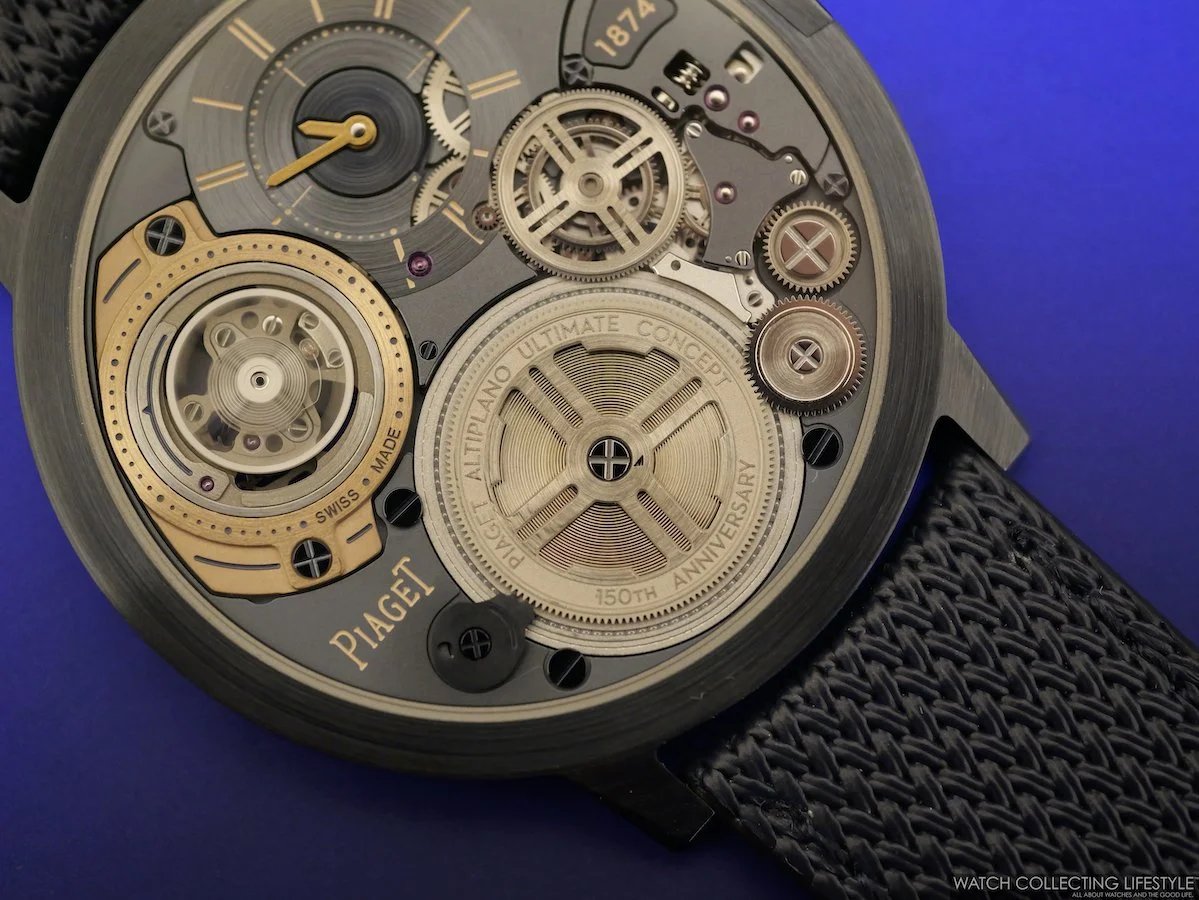
At the heart of the Altiplano Tourbillon is the Piaget 670P, a hand-wound mechanical movement that measures just 4.6mm thick. This is an in-house caliber, designed, developed, and assembled entirely by Piaget. It features a flying tourbillon—a tourbillon without an upper bridge—which allows for an unobstructed view of the cage and the balance wheel in motion.
The 670P offers a power reserve of 48 hours and beats at a frequency of 21,600 vibrations per hour (3 Hz). It contains 23 jewels and is finished to haute horlogerie standards, with circular Côtes de Genève on the bridges, hand-bevelled edges, and polished screw heads. The tourbillon cage itself is a work of art, with mirror-polished bevels and a delicate, airy structure.
It's worth noting that the 670P is not COSC-certified. Piaget regulates each movement in-house, but the focus here is on thinness and finishing rather than chronometric certification. That said, the tourbillon helps average out positional errors, and in practice, the watch keeps time well within the expectations of a high-end dress watch.
The movement is also remarkably efficient for its size. The 48-hour power reserve is generous for an ultra-thin tourbillon, and the winding action is smooth and precise. The sapphire caseback reveals the movement in all its glory, and it's a joy to behold.
Design and Dial: A Study in Balance
The dial of the Altiplano Tourbillon is a study in balance. The off-center hour and minute subdial at 12 o'clock is finished with a sunburst pattern that catches the light beautifully. The hands are slender and elegant, with a faceted finish that adds a touch of sparkle. The tourbillon at 6 o'clock is framed by a polished ring, and the cage itself is a mesmerizing sight, spinning once per minute.
The diamond-set bezel is a signature Piaget touch. The diamonds are carefully selected and set by hand, and they add a subtle glamour that doesn't overwhelm the dial. The white gold case is polished to a mirror finish, and the lugs are slender and curved, ensuring a comfortable fit on the wrist.
The case measures 38mm in diameter and 8.3mm in thickness, which is exceptionally slim for a tourbillon. The sapphire crystal is slightly domed, adding a vintage touch, and the caseback is also sapphire, allowing you to admire the movement.
Specifications
- Case: 18k white gold, 38mm diameter, 8.3mm thick
- Dial: Silvered sunburst with off-center hour and minute subdial at 12 o'clock; flying tourbillon at 6 o'clock
- Bezel: Diamond-set
- Crystal: Sapphire
- Water Resistance: 30 meters
- Strap: Alligator leather with pin buckle
- Movement: Piaget 670P, manual winding, 48-hour power reserve, 21,600 vph, 23 jewels
- Complications: Flying tourbillon
Wrist Feel: Comfort and Elegance
On the wrist, the Altiplano Tourbillon is a revelation. At just 8.3mm thick, it sits flush against the skin, barely registering under a shirt cuff. The 38mm case is perfectly proportioned for both men and women, and the white gold case has a reassuring heft that belies its slim profile. The alligator leather strap is supple and comfortable, and the pin buckle keeps the watch secure without adding bulk. It's the kind of watch you forget you're wearing—until you catch a glimpse of the tourbillon spinning at 6 o'clock.
The diamond-set bezel adds a touch of glamour, but it's not ostentatious; it sparkles subtly in the light, making this a versatile piece for both formal events and intimate dinners. The watch feels balanced on the wrist, with no tendency to flop or twist. It's a true dress watch in the classic sense: elegant, understated, and designed to be worn with a suit or a tuxedo.
Despite its slimness, the watch doesn't feel fragile. The case is solid, and the sapphire crystal is scratch-resistant. However, with only 30 meters of water resistance, you'll want to avoid wearing it in the shower or while swimming. It's best suited for office wear, evenings out, and special occasions.
Accuracy and Real-World Performance
The Altiplano Tourbillon is not COSC-certified, but that's not the point. The hand-wound 670P movement is beautifully finished and regulated to Piaget's standards. In real-world use, expect a daily variance of a few seconds—perhaps -2 to +5 seconds per day, depending on wear habits. The tourbillon helps average out positional errors, but it's not a precision instrument in the same way as a chronometer-certified sports watch. For a dress watch, this level of accuracy is more than acceptable.
Regular servicing every 5-7 years is recommended to keep it running smoothly, though Piaget doesn't specify a fixed interval. Given the complexity of the tourbillon, service should only be performed by Piaget authorized service centers. The cost of servicing is not publicly listed, but expect it to be significant, as with any haute horlogerie tourbillon.
One thing to note: because it's a manual-wind watch, you'll need to wind it regularly. The 48-hour power reserve means you can skip a day, but it's best to wind it at the same time each day to keep it running accurately. The crown is small but easy to grip, and the winding action is smooth.
Occasions and Wrist Presence
The Altiplano Tourbillon is a formal and dress watch through and through. It's not designed for sport, swimming, or daily abuse. With only 30 meters of water resistance, you'll want to keep it away from water. It's perfect for weddings, galas, board meetings, and any occasion where you want to make a refined statement.
On a scale of 1 to 5, I'd give it a 4 for wrist presence. It won't shout for attention like a gold Royal Oak, but the diamond bezel and the hypnotic tourbillon draw admiring glances from those in the know. It's a watch for the collector who values substance over flash.
Reference Variants
The reference G0A39110 is the white gold version with a diamond-set bezel and a silvered sunburst dial. Piaget has also produced other variants of the Altiplano Tourbillon, including rose gold cases and dials with different finishes, but the G0A39110 is the most emblematic of the line.
Family References
Within the Altiplano family, the Tourbillon sits at the top of the range. Other notable references include the Altiplano 900P, which is one of the thinnest mechanical watches in the world, and the Altiplano Ultimate 910P, an ultra-thin automatic. The Altiplano 60th Anniversary models also celebrate the line's heritage.
Other Notable Piaget Models
Beyond the Altiplano, Piaget offers the Polo S, a sporty-chic collection, the Possession, a jewelry-focused line, and the Limelight Gala, which is aimed at women. Each collection reflects Piaget's dual expertise in watchmaking and jewelry.
Similar Watches
If you're considering the Altiplano Tourbillon, you might also look at the Breguet Classique Tourbillon Extra-Plat 5367, another ultra-thin automatic tourbillon with a similar dressy focus. The Audemars Piguet Royal Oak Tourbillon Extra-Thin combines a thin tourbillon movement with a sporty-luxury case. The Vacheron Constantin Patrimony Traditionnelle Tourbillon is a classic haute horlogerie tourbillon with a slender profile. And the Bulgari Octo Finissimo Tourbillon pushes ultra-thin boundaries with a modern, architectural design.
The Tourbillon: A Brief History
The tourbillon was invented by Abraham-Louis Breguet in 1801 to counteract the effects of gravity on pocket watches. By placing the balance wheel and escapement in a rotating cage, the tourbillon averages out positional errors. In modern wristwatches, the tourbillon is more of a demonstration of horological artistry than a practical necessity, but it remains one of the most revered complications. Piaget's flying tourbillon is a particularly elegant interpretation, as it removes the upper bridge to give an unobstructed view of the mechanism.
Living with the Watch
Living with the Altiplano Tourbillon requires a certain mindset. It's not a watch you wear to the gym or on a hike. It's a watch you wear to the office, to dinner, to a gallery opening. You'll need to wind it every other day, and you'll need to be careful with water. But in return, you get a piece of horological art that is both beautiful and functional. The alligator strap is comfortable but will wear over time, so you may want to budget for a replacement. The pin buckle is secure but less convenient than a deployant clasp; however, it adds to the vintage charm.
Collector's Perspective
For collectors, the Altiplano Tourbillon represents a unique blend of Piaget's two great strengths: ultra-thin watchmaking and jewelry. It's a watch that appeals to those who appreciate the finer things in life and understand the technical challenges involved in creating such a slender tourbillon. While it may not have the investment potential of a Patek Philippe, it has a dedicated following among Piaget enthusiasts. Its limited production and high price point ensure that it remains exclusive.
Investment Value
The Piaget Altiplano Tourbillon is not an investment piece in the traditional sense. Its MSRP is available upon request, but expect a six-figure sum. On the pre-owned market, prices vary but typically fall below retail. The trend is depreciating, as with most haute horlogerie watches that are not part of a hyped collection. There is no major auction history for this reference, which means liquidity is limited.
My recommendation: buy it for passion, not for profit. If you love the ultra-thin design, the diamond-set case, and the in-house tourbillon, you'll enjoy wearing it. But don't expect it to appreciate. It's a watch to be worn and cherished, not flipped.
Service and Maintenance
Service should be performed by Piaget authorized service centers due to the complexity of the tourbillon. The interval is not fixed, but a general rule is every 5-7 years. The cost is not publicly listed, but it will be substantial. Factor this into your ownership costs.
Final Verdict
The Piaget Altiplano Tourbillon is a masterclass in ultra-thin watchmaking, blending haute horlogerie with jewelry elegance. It's not for everyone, but for the collector who values discretion and mechanical artistry, it's a compelling choice. The 670P movement is a marvel of engineering, the case is beautifully finished, and the diamond bezel adds a touch of glamour without overwhelming the design. Just be prepared for a high price, limited water resistance, and soft resale value. If those trade-offs are acceptable, you'll own one of the most refined tourbillons on the market.
Pros and Cons
Pros
- Ultra-thin case and movement
- Exquisite finishing and diamond bezel
- In-house tourbillon caliber
- Comfortable on the wrist
Cons
- Very high price
- Limited water resistance
- Not a daily beater
- Resale value is soft
Price Range
Price on request. A six-figure sum buys you one of the thinnest tourbillons on the market, but resale value is modest; acquire for the artistry, not the ROI.