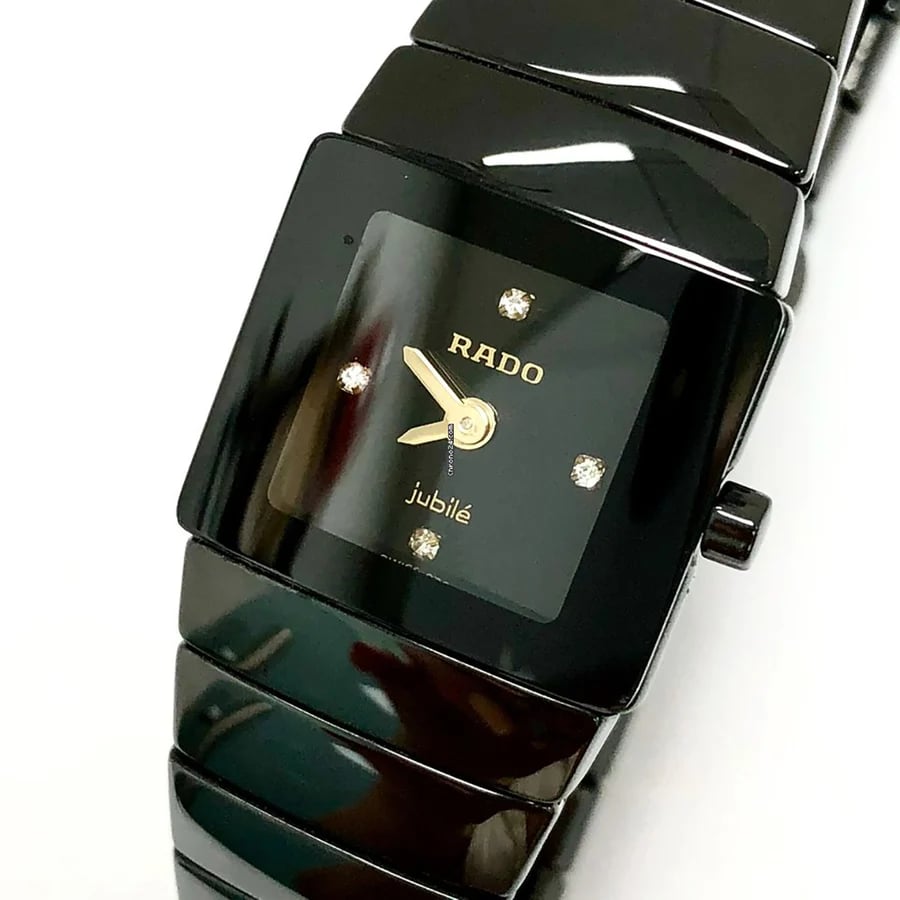
The Rado DiaStar Jubile ref. 153.0339.3 is not the watch you buy because a forum thread told you it will double in value. You buy it because the DiaStar is one of the few Swiss watches with a silhouette that could not be mistaken for anything else. Since 1962, Rado has sold the DiaStar as the scratch-resistant watch — a hardmetal, faceted, slightly futuristic object that looks as much like industrial design as traditional horology. The Jubile version adds a more formal, bracelet-led character, and for young collectors it represents an affordable way into that story.
But the 153.0339.3 also demands caution. Rado's older reference systems, batch variation, and inconsistent public documentation mean you should not assume every specification you see online applies to the exact watch in front of you. This review separates what is safe to say from what needs verification, and it frames the watch the way a collector should: as a design object with a movement inside, not as a speculative asset.
Brand context: why the DiaStar matters
Rado was founded in Switzerland in 1917 as Schlup & Co. and adopted the Rado name in the 1950s. The brand's modern identity was built on materials: scratch-resistant crystals, hardmetal cases, ceramic, and other durable surfaces. The DiaStar, launched in 1962, was a landmark in that strategy. It was marketed as one of the first scratch-resistant watches and became a long-running family rather than a single model.
That history matters because the DiaStar Jubile is not a generic dress watch with a Rado logo. Its shape, bezel treatment, and crystal are the point. The Jubile line pushes the DiaStar toward jewelry territory, often with a bracelet and gold-tone or polished accents depending on the execution. Collectors who understand that context will judge the watch on originality and condition, not on whether it looks like a Submariner.
Design and materials: hardmetal, sapphire, and attitude
The DiaStar's core visual signature is its hardmetal bezel and faceted crystal. Rado's use of tungsten carbide in the DiaStar family gave the watch a surface that resisted scratches in an era when acrylic crystals were the norm. The ref. 153.0339.3 continues that language with a stainless-steel case and a sapphire crystal. The result is a watch that feels denser and more jewel-like than its compact proportions might suggest.
The Jubile treatment is where configuration matters. Some examples lean formal with polished surfaces and a bracelet that reads almost like jewelry; others are more restrained. Because Rado produced multiple Jubile executions, buyers should confirm the dial, hands, and bracelet style against the seller's photos and any accompanying paperwork. Originality is not just a purist concern here — a mismatched bracelet or refinished case can flatten the watch's charm and its resale appeal.
There is no lume on this reference, which is appropriate. The DiaStar Jubile is not a tool watch, and glowing indexes would undermine its dressier character. It is a watch for a dinner, an office day, or a gallery opening — not a dive trip. That focus is part of the appeal, but it also limits how often some collectors will reach for it.
Movement and daily accuracy
The 153.C0339.3 is an automatic watch with a date complication, but the exact caliber is not consistently documented for this reference. Rado has used proven Swatch Group automatic movements across the DiaStar family, and the practical takeaway is more important than the code on the rotor: this is a conventional, serviceable Swiss automatic, not an in-house exotic.
Because there is no chronometer certification, accuracy should be judged example by example. A healthy, recently serviced watch should keep reasonable time for a non-chronometer automatic; an unserviced older example may drift, run with low amplitude, or need regulation. Ask for timegrapher readings, service receipts, and a clear return policy. The movement is not the reason to buy this watch, but a tired movement is a reason to walk away.
From a collector's perspective, the movement's lack of drama is actually helpful. Service should be straightforward for a competent watchmaker familiar with Swiss automatics, and parts are generally more available than on boutique-caliber microbrands. The caveat is that older Rado references can have limited case and bracelet parts, so authorized service or a specialist with Rado experience is preferable.
Wrist feel and presence
The DiaStar Jubile wears like a piece of design rather than a conventional round watch. The hardmetal bezel and faceted crystal give it a dense, jewelry-like presence, while the case remains compact by modern standards. That combination is polarizing. Some collectors love the unmistakable silhouette; others find the case shape less discreet under a cuff and less versatile than a simple round dress watch.
On the bracelet, the Jubile feels secure and slightly formal. The visual weight suits evening wear better than a gym session, and the polished surfaces make condition critical. A stretched bracelet or a heavily polished case loses the crispness that gives the DiaStar its charm. When buying, look for sharp case facets, even surface finishing, and a tight bracelet with minimal play. Those details matter more than a few seconds of daily deviation.
Wrist presence is moderate but distinctive. This is not a watch that shouts across a room, but it does invite a second look from people who notice design. I would rate it around 3.5 out of 5 for presence: confident, unusual, and best appreciated up close.
Occasions and ownership
The 153.0339.3 is at its best in formal and dressy-casual settings. It works with a suit, a sport coat, or a dark knit, and it has enough personality to carry a dinner outfit without needing a logo-heavy dial. It is also a viable daily watch for collectors who work in offices and do not need a timing bezel or serious water resistance.
It is not a sports watch. There is no lume, and the design language is jewelry-first. If you need one watch for hiking, swimming, and travel, this is not it. If you are building a small collection and want a distinctive dress piece with a real design story, the DiaStar Jubile makes more sense than another generic steel round watch.
Market view: pre-owned value and hold-versus-sell
Rado DiaStar Jubile references trade in a modest pre-owned band, generally in the low-to-mid four figures depending on condition, completeness, and configuration. The 153.0339.3 is not a watch with a deep auction record, and it does not have the liquidity of a steel sports Rolex or a hot integrated-bracelet watch. That is not a criticism; it is simply the reality of the category.
Asking prices for clean examples often sit in the roughly $450 to $1,200 range, with complete sets and sharp bracelets at the upper end. A watch with service history, original papers, and an unpolished case can justify a premium because the pool of good examples is limited. A watch with a refinished case, replacement bracelet, or unclear movement history should be priced accordingly.
My hold recommendation is simple: buy for enjoyment, not for a quick flip. If you already own a sharp example, there is no urgency to sell unless you need the capital or have stopped wearing it. The design is distinctive enough to keep a place in a collection, and the market is stable rather than frothy. If you are buying, negotiate hard on condition and completeness; the watch's charm is easy to fall for, but resale will reward patience.
Auction history is not a meaningful part of the story here. No major auction record defines the 153.0339.3, and collectors should not expect auction-house validation to drive demand. This is a private-market watch, bought and sold on forums, dealer sites, and vintage fairs.
Service and ownership costs
Service intervals for automatic watches vary with use, but a watch of this age should be assessed on condition rather than a fixed schedule. If there is no recent service proof, assume a service may be due. Use a Rado-authorized watchmaker or a specialist with parts access; older DiaStar references can have limited case and bracelet components, so paperwork and original parts add real value.
The movement itself is serviceable, but the hardmetal case and bracelet are the parts that can complicate restoration. Heavy polishing is a mistake on a DiaStar because it softens the faceted geometry that makes the watch special. Buy the sharpest case you can find, even if it costs a little more up front.
Alternatives and homages
Buyers who want a more conventional entry-luxury steel watch might look at the Tissot PRX Automatic or the Longines Conquest Heritage. Both offer stronger mainstream recognition and easier resale, but neither has the DiaStar's strange, specific design language. The Certina DS-1 is another robust Swiss automatic alternative for collectors who prioritize everyday versatility.
There is no widely recognized budget homage to the DiaStar's hardmetal case and faceted crystal. That is good news for owners: the design is not diluted by a thousand clones. The flip side is that buyers who want the look on a tight budget usually have to hunt for a vintage Rado rather than buy a new imitation.
Final verdict
The Rado DiaStar Jubile 153.0339.3 is a collector's watch for people who value design history over category consensus. It offers a genuine Swiss automatic movement, a scratch-resistant hardmetal character, and a silhouette that stands apart from the usual steel sports watch crowd. It will not deliver Rolex-style returns, and it is not the most versatile one-watch solution.
But a sharp, complete example at the right price is a lot of watch for the money. Buy it to wear, service it properly, and treat resale as a bonus rather than the thesis. For young collectors building a thoughtful collection, that is a healthier approach than chasing the next hype reference.