Rado Original Chronograph: Heritage Looks, Quartz Economics
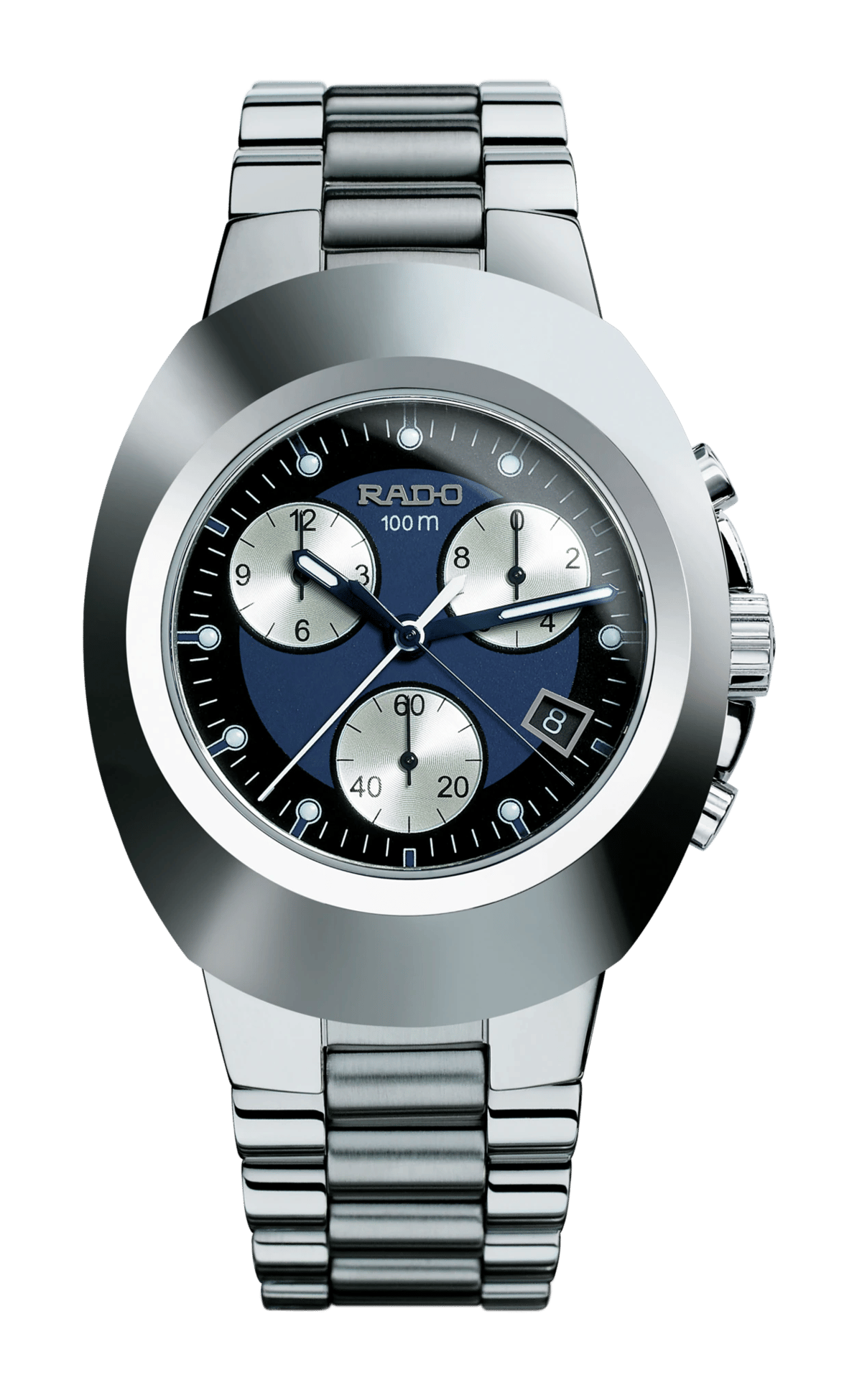
The Rado Original Chronograph is the kind of watch that makes sense the moment you stop treating every purchase as an asset. It is a Swiss-made quartz chronograph with a stainless steel case, sapphire crystal, 100 m water resistance and a leather strap, wrapped in a design language that borrows from Rado's mid-century archives. The reference reviewed here is R12637153, a black-dial model that sits in the entry-luxury zone where buyers care about finish, legibility and brand story more than movement hierarchy.
That positioning matters. Rado has spent decades building a reputation around durable materials, especially ceramic, and the Original line is a softer heritage play. It is not a Captain Cook diver and it is not a HyperChrome sports chrono. It is a dress-sport chronograph with a quartz heart, and that combination tells you almost everything about its market: easy to wear, easy to service, hard to flip.
Brand Context
Rado was founded in 1917 in Lengnau, Switzerland, originally as Schlup and Co. The brand adopted the Rado name in the 1950s and later became known for scratch-resistant cases, ceramic bracelets and design-forward materials. The Original collection channels that history without pretending to be a limited-edition reissue. For a young collector, Rado is an interesting second-tier Swiss brand: it has real watchmaking history, a clear design identity and a collector community around the Captain Cook, but it does not command the resale premiums of Rolex, Omega or even Tudor.
The Original Chronograph fits into that story as an accessible entry point. It offers Swiss assembly, sapphire crystal and a chronograph complication at a price that undercuts most automatic Swiss chronographs. The trade-off is the movement and the secondary market.
Movement and Specs
The watch uses a Swiss quartz chronograph movement. Rado does not make a collector-grade mechanical argument here, and the caliber is not publicly specified in the same way as an in-house automatic. That is fine at this price, but it sets expectations. The movement is battery-powered, with a typical battery life of roughly two to three years, and the quartz oscillator runs at 32,768 Hz. There is no COSC certification and no in-house claim. A date display and chronograph function are the practical complications.
The case is stainless steel, the crystal is sapphire, and water resistance is rated to 100 m. The watch is listed at 42 mm in diameter. The strap is leather with a pin buckle. The dial has luminous hands and markers, though the lume type is not specified by Rado. In practice, this is a chronograph for daily wear, not a lume-first tool watch.
Dial and Case
The black dial is the right choice for this reference. It gives the chronograph subdials contrast and keeps the watch from looking overly formal. The layout is legible, with the chronograph registers and date display doing their jobs without clutter. The stainless steel case has the sort of finishing you expect at this price: polished surfaces mixed with brushed areas, but not the hand-finished sharpness of a much more expensive watch. The sapphire crystal is a genuine advantage in daily use, and 100 m water resistance means you do not have to baby it.
The leather strap suits the heritage brief better than a steel bracelet would. It makes the watch feel dressier and more vintage, and it keeps the weight down. The pin buckle is basic, but it works. If you prefer a bracelet, you will need to source one separately or look at another reference in the line.
Wrist Feel
At 42 mm, the Original Chronograph wears on the modern side of heritage. It is not a small vintage reissue, and collectors who have moved toward 38-39 mm cases will notice the extra presence. The quartz movement keeps the watch light, and the leather strap helps it sit close to the wrist. The pin buckle is simple and traditional; there is no micro-adjust or quick-release convenience. The chronograph layout is legible, and the black dial gives it enough contrast to work with a jacket or a casual shirt.
The balance is good for a daily watch. It does not feel top-heavy, and the strap softens the case on the wrist. It is the sort of watch you can put on in the morning and forget about, which is exactly what a quartz chronograph should deliver. It will not give you the mechanical theatre of an automatic chronograph, but it also will not punish you with service bills or winding routines.
Accuracy
Quartz accuracy is a different discipline from mechanical accuracy. Expect the watch to stay within roughly plus or minus 15 seconds per month in normal use. There is no positional variation to obsess over, and no break-in period. Battery replacement is the main ownership event. If the chronograph module fails, service is best handled by Rado or a qualified watchmaker rather than a general battery kiosk. For a collector used to mechanical watches, the accuracy is excellent but emotionally neutral.
Occasions
This is a daily-wear chronograph first. It works with smart casual, office attire and weekend clothes. The leather strap gives it enough formality for a dressier dinner, and 100 m water resistance means it can handle rain and handwashing without drama. It is not a dive watch and should not be treated as one. For travel, the date and chronograph are useful, though a GMT would be more practical. Think of it as a versatile dress-sport piece rather than a specialist tool.
Wrist Presence
3/5. The 42 mm case and chronograph dial have enough visual interest to register across a table, but the watch does not dominate a room. It lacks the wrist gravity of a Speedmaster or a steel sports chrono with a waiting list. That is not a criticism; it is a different brief. The Original Chronograph is meant to look good and tell the time without demanding attention.
Reference Variants
The primary reference reviewed here is R12637153, with a black dial and leather strap. Rado has offered other Original Chronograph dial and strap combinations over the years, but collectors should verify the exact reference with the caseback and papers rather than relying on catalog images. The black-dial leather-strap version is the most straightforward expression of the line: understated, versatile and easy to pair.
Family and Brand Alternatives
Within the Rado family, the Original Automatic and Original Quartz models are the closest siblings. The Captain Cook is the collector favorite, but it is a different category: a dive watch with stronger heritage and better resale. The HyperChrome and True lines offer more contemporary ceramic design. The DiaMaster and Integral are dressier or more architectural. If you want a Rado with investment potential, the Captain Cook is the obvious place to look. If you want a Rado chronograph to wear, the Original Chronograph makes more sense.
Competition
The Tissot PRS 516 Chronograph offers retro motorsport cues at a lower entry price, though it lacks the Rado design identity. The Longines Conquest Classic Chronograph is a more polished automatic option with stronger secondary-market liquidity. The TAG Heuer Formula 1 Chronograph is sportier, has better brand recognition and usually resells faster. The Hamilton Jazzmaster Chronograph is a dress-sport automatic alternative with broader collector appeal. The Certina DS Podium Chronograph is a value Swiss quartz chrono with a similar daily-wear brief. None of these watches is a direct substitute, but together they show how crowded the sub-$2,000 chronograph space is.
Ownership Economics
The Original Chronograph is cheap to own by luxury-watch standards. Battery replacement is a routine cost, and there is no automatic movement to service every five to seven years. Insurance is modest, and the watch does not require a safe. The main financial risk is depreciation. If you buy at retail and sell a year later, you should expect to lose a meaningful percentage. If you buy pre-owned at the right price, the depreciation has already happened, and the cost of ownership becomes mostly battery changes and strap wear.
That makes the pre-owned market the sensible entry point. A clean example with box and papers is not hard to find, and the difference between retail and pre-owned is large enough to change the value calculation. The watch is not rare, so there is no urgency. Take your time, compare examples and buy on condition rather than on the promise of future value.
Collector Context
Rado collectors tend to focus on the Captain Cook, vintage pieces and ceramic models. The Original Chronograph is not a cult watch, and it is unlikely to become one. That is not a reason to avoid it. It is a reason to buy it for what it is: a well-priced Swiss chronograph with a heritage-inspired look. Young collectors who want one nice watch for daily wear can do worse. Collectors who want a portfolio piece should look elsewhere.
The quartz movement is the dividing line. Some collectors dismiss quartz entirely, while others appreciate the low maintenance and accuracy. If you are in the second group, the Original Chronograph is a reasonable choice. If you are in the first, you will always feel like something is missing.
Buying Pre-Owned
Check the chronograph functions carefully. Start, stop and reset the chronograph several times, and make sure the hands return to zero. Ask when the battery was last changed, and check for any signs of leakage or corrosion around the caseback. Inspect the crystal for scratches, the case for dents and the leather strap for wear. Original box and papers add value, but on a watch like this they are a nice-to-have rather than a deal-breaker. A recent service or battery change is more important than a complete set.
Investment Value
The Original Chronograph is not an investment watch. The MSRP is around $1,200, and current retail sits near $1,300 depending on the retailer and promotion. Pre-owned examples typically trade between $450 and $900, with condition, box and papers moving the number. The trend is depreciating. Quartz chronographs from second-tier brands rarely appreciate, and Rado's collector demand is concentrated in the Captain Cook and vintage pieces. There is no major auction history for this reference. The hold recommendation is simple: buy pre-owned if you like the look, wear it, and do not expect the resale value to hold.
That does not make it a bad watch. It makes it a consumer purchase rather than a portfolio purchase. The value is in the wearing. If you pay $600 for a clean example, you are getting a Swiss-made chronograph with sapphire crystal and 100 m water resistance for less than many microbrand autos. If you pay full retail, you are paying for the initial owner experience and warranty.
Service
Service is straightforward by quartz standards. Battery replacement is a routine task, and a full module service is rarely needed unless the chronograph stops resetting or the movement suffers water damage. Rado or a qualified watchmaker can handle it. The watch is not authorized-only in the way a high-end mechanical piece might be, but avoid letting an unqualified battery changer open the case. The gasket and water resistance should be checked whenever the battery is replaced.
Verdict
The Rado Original Chronograph R12637153 is a charming heritage-inspired quartz chronograph that makes sense as an affordable daily wear. It has the right ingredients for a young collector: Swiss origin, sapphire crystal, 100 m water resistance, a usable chronograph and a design that does not try too hard. It is not a collector-grade asset, and its resale is soft. Buy it for design and utility, not for the vault. If you want a Rado with investment upside, save for a Captain Cook. If you want a good-looking chronograph to wear without thinking about service costs, this is a sensible pre-owned pick.