The Aesthetic Arbitrage: Why the Toccata Heritage Matters
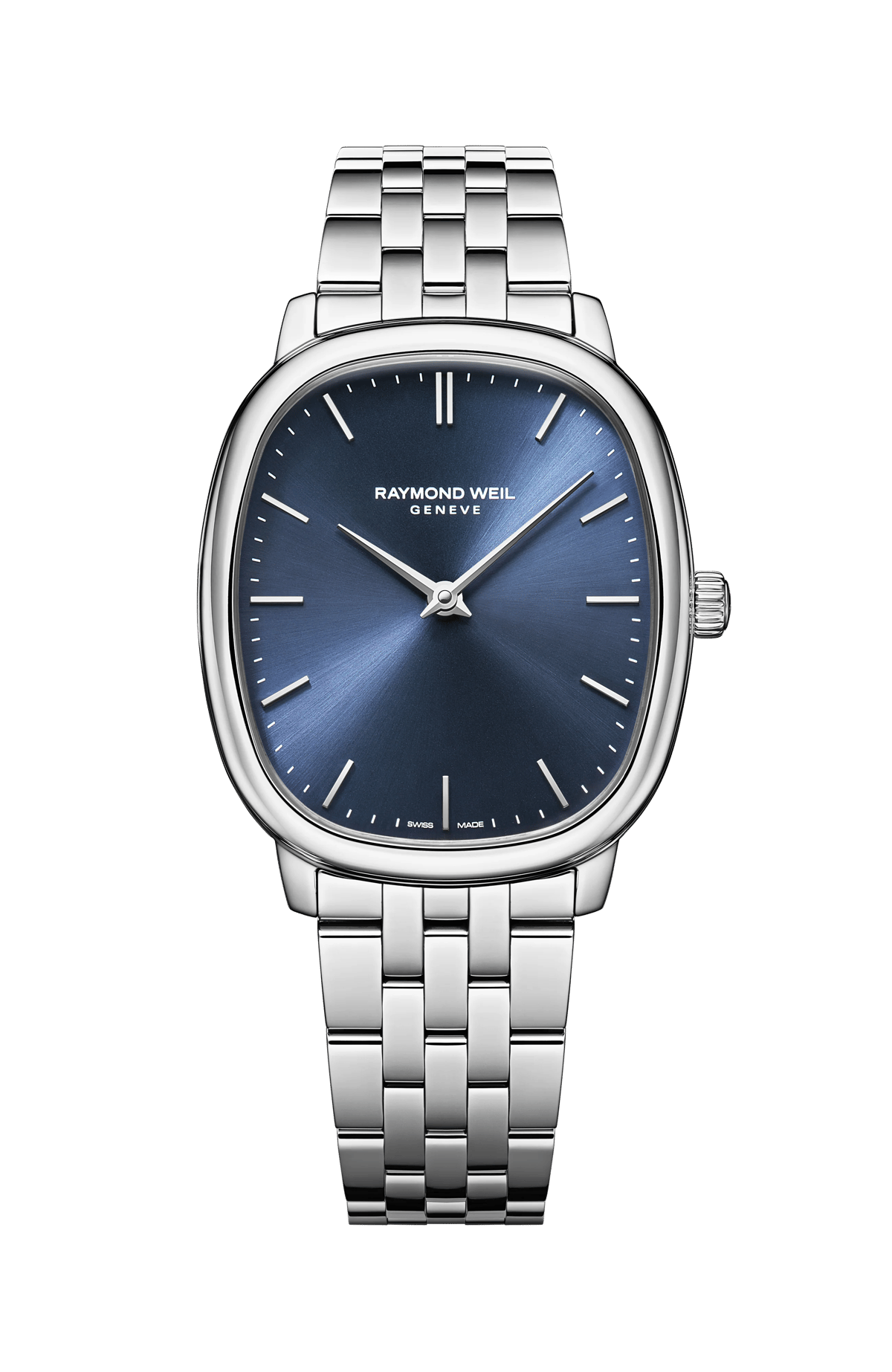
In the world of high-stakes finance and luxury collecting, we often talk about 'arbitrage'—the simultaneous purchase and sale of an asset to profit from a difference in the price. In horology, 'aesthetic arbitrage' is the act of acquiring a timepiece that possesses the visual cues and social signaling of a high-tier luxury item at a fraction of the market price. The Raymond Weil Toccata Heritage (ref. 2280-STC-64001) is perhaps the most refined example of this strategy currently available on the market.
For the sophisticated young collector, the Toccata isn't about movement complexity or 'in-house' bragging rights. It’s about the silhouette. With its 39mm steel case and sunray grey dial punctuated by crisp Roman numerals, it mirrors the design language of the great houses of Geneva. When you’re at a high-net-worth networking event, this watch doesn't scream for attention like a two-tone Submariner; instead, it whispers of a calculated, understated taste.
The Independent Edge
One cannot discuss Raymond Weil without touching upon their independence. In an industry dominated by the Swatch Group, Richemont, and LVMH, Raymond Weil remains family-owned. There is a certain 'indie' credibility associated with this. You aren't just buying a product from a corporate conglomerate; you're buying into a lineage that survived the Quartz Crisis by being nimble and design-focused. The Toccata Heritage is the distillation of that survival—a watch that prioritizes the 'look' because, in the world of luxury, the look is the primary currency.
The Quartz Conundrum: A Market-Driven Perspective
Purists will scoff at the quartz movement. They will talk about 'soul' and 'mechanical heartbeat.' But let’s look at the data. For a daily-wear dress watch, quartz offers a level of 'grab-and-go' liquidity that mechanical watches lack. If you are rotating between five different pieces, the last thing you want to do on a Monday morning is wind and set a watch. The Toccata is always ready. Furthermore, the use of a quartz caliber allows for a sub-8mm case thickness. To get that same thinness in a mechanical watch, you’d be looking at a Piaget Altiplano or a Jaeger-LeCoultre Master Ultra Thin—watches that cost ten to twenty times more than the Toccata.
Wrist Presence and Social Signaling
The 2280-STC-64001 features a grey sunray dial that is remarkably dynamic. In low light, it appears almost charcoal, blending into the shadows of a dark suit. Under the bright lights of a boardroom, the sunray finish catches the glare, highlighting the applied Roman numerals. It is a masterclass in restraint. The 39mm sizing is a nod to the modern preference for slightly larger dress watches, moving away from the 34-36mm vintage standard while remaining firmly in the 'elegant' category.
Investment Analysis: Hold vs. Flip
Let’s be blunt: you are not going to retire on the appreciation of a Raymond Weil Toccata. From a resale perspective, these watches follow the standard depreciation curve of luxury goods. You buy it for $900, and if you try to flip it next week, you’re looking at $500. However, the 'Investment Value' here isn't in the capital gains—it's in the 'Cost Per Wear.' Over a five-year horizon, the Toccata Heritage provides an immense amount of social utility for a very low total cost of ownership. It is a 'Hold' for your professional wardrobe, a reliable companion for the first decade of your career.
The Final Verdict
The Raymond Weil Toccata Heritage 2280-STC-64001 is a strategic acquisition. It is for the man who understands that style is a tool, and that you don't always need to spend $20,000 to look like you belong in the room. It is clean, it is Swiss, and it is undeniably tasteful. If you can get past the lack of a ticking balance wheel, you’ll find a watch that delivers more 'quiet luxury' per dollar than almost anything else in the sub-$1,000 market. It’s the ultimate starter piece for the collector who knows where they’re going, but isn’t in a rush to prove it to everyone else.