Roger Dubuis Excalibur The Kabuto Legacy Review
The Roger Dubuis Excalibur The Kabuto Legacy, reference RDDBEX1139, is a watch built around a very specific idea: high horology as cultural sculpture. Roger Dubuis has never been shy about skeletonization, but the Kabuto Legacy pushes the Excalibur language toward a narrative object. The samurai helmet motif is not a subtle dial detail. It is the reason the watch exists, and it will determine whether a collector bonds with it or walks away.
That makes this a different kind of review. We are not evaluating a everyday luxury watch against safe benchmarks. We are evaluating a limited-edition skeleton tourbillon for collectors who already understand the Roger Dubuis codes and want to know whether the Kabuto Legacy has enough substance beneath the theatre. The short answer is yes, provided the buyer is honest about what they are buying: a scarce, design-led tourbillon with narrow but real collector appeal, not a liquid alternative to a Patek Philippe or Audemars Piguet.
The Kabuto Legacy in the Roger Dubuis Story
Roger Dubuis was founded in Geneva in 1995 and became part of Richemont in 2008. Its modern identity is built on expressive skeletonization, bold Excalibur case architecture, and high-complication movements finished to Geneva Seal standards. The brand is not trying to be everything to everyone. It is trying to be unmistakable.
The Kabuto Legacy fits that brief. The samurai helmet theme gives the Excalibur a Japanese cultural reference that is immediately legible but also polarizing. Some collectors will see craftsmanship and storytelling. Others will see a novelty motif that narrows the resale audience. Both readings are valid, and that tension is exactly what makes limited-edition Roger Dubuis pieces interesting. They are not consensus watches. They are conviction watches.
Within the Excalibur family, the Kabuto Legacy sits near the artistic end of the spectrum. It is not the pure motorsport-inspired Excalibur Spider, nor is it a conventional round-dial luxury watch. It is a piece that assumes the owner wants the watch to be noticed. That assumption is either the point or the problem, depending on the collector.
Movement and Architecture
The Kabuto Legacy is powered by the Roger Dubuis Calibre RD512SQ, a hand-wound skeleton tourbillon with a 72-hour power reserve and a frequency of 21,600 vph. It is an in-house movement, and it carries the Geneva Seal, which matters more here than any marketing claim about performance. The Geneva Seal is about finishing, assembly, and movement architecture, and it gives collectors a concrete standard by which to judge the watch.
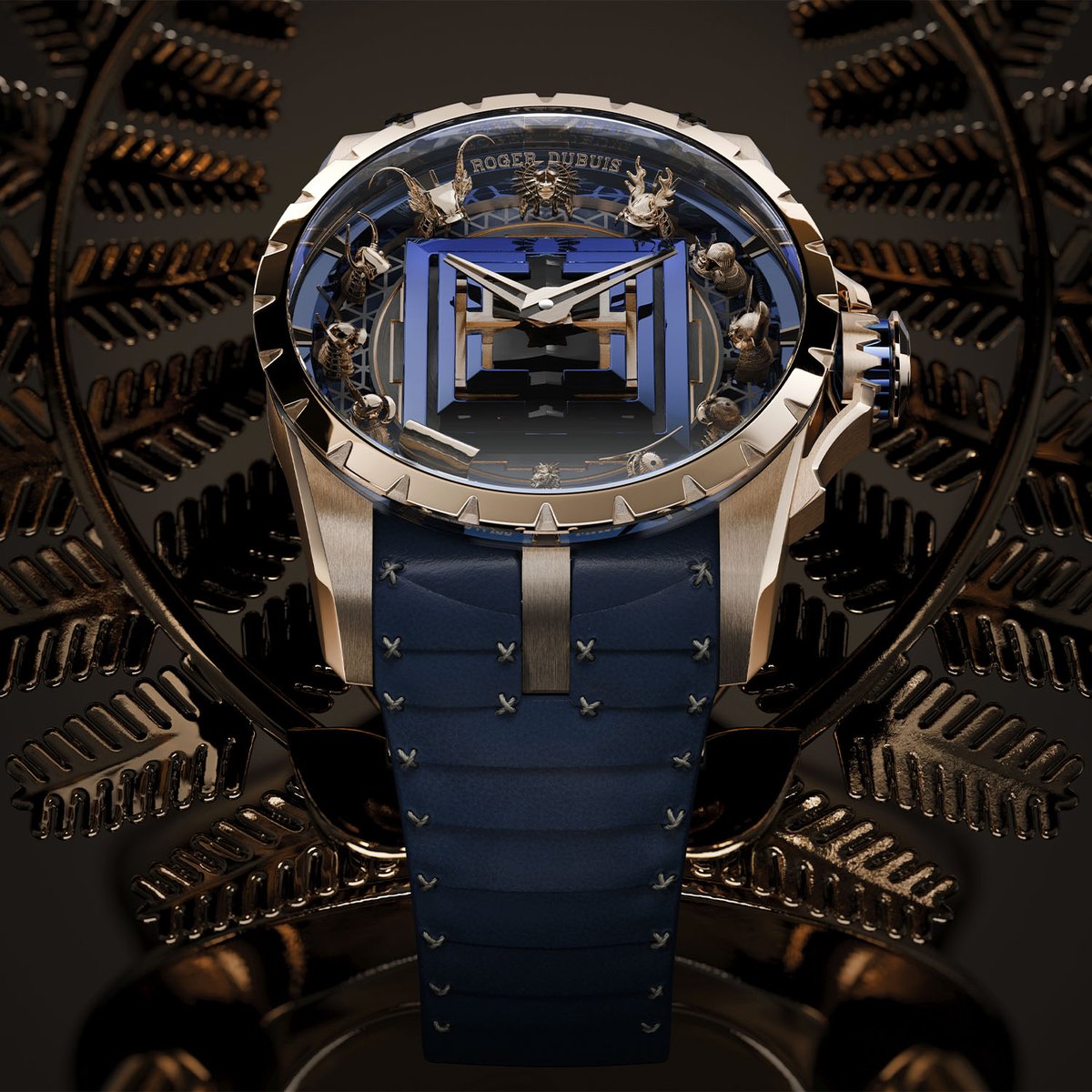
The movement is not hidden. It is the dial, or at least the structural skeleton around which the Kabuto motif is built. The openworked bridges and the tourbillon cage are meant to be read as design elements. This is not a watch where the movement disappears beneath a traditional dial. It is a watch where the movement and the artwork compete for attention, and the best examples manage that tension with restraint.
Because the watch is not COSC-certified, buyers should not approach it as a chronometric instrument first. The tourbillon is a high-horology complication, not a guarantee of daily accuracy. Real-world performance should be verified with a timegrapher, especially on the secondary market. Service history matters, and the movement should be handled by Roger Dubuis authorized service rather than a general watchmaker.
Case, Dial, and Wearability
The case is titanium, which is the right material choice for a watch with this much visual mass. The Excalibur silhouette is familiar to Roger Dubuis collectors: architectural, assertive, and designed to sit apart from conventional dress watches. The Kabuto Legacy does not try to soften that silhouette. It leans into it.
The dial is where the watch becomes divisive. The Kabuto helmet motif is not a small emblem at six o'clock. It is a central part of the composition, and it changes the way the eye reads the skeleton movement. Collectors who want pure mechanical transparency may find the motif intrusive. Collectors who want a narrative piece will find it compelling. There is no neutral position here.
The watch is fitted with a rubber strap and a deployant clasp. That combination makes sense for a modern Excalibur. It keeps the watch from feeling overly formal and gives it a slightly more athletic, contemporary attitude. The strap also helps manage the wearing experience, because the case is designed to be a statement. This is not a watch that disappears under a cuff. It is a watch that announces itself.
Wrist feel is good for a statement piece, but it is not a universal fit. The Excalibur case has real presence, and the openworked dial makes the watch feel even more substantial visually. Collectors with smaller wrists should try it before committing. Collectors with larger wrists will find it natural. The Kabuto Legacy is comfortable in the way a well-executed sculptural object can be comfortable, but it is not a subtle daily wearer.
Accuracy and Ownership
Day-to-day accuracy should be understood in context. The RD512SQ is a high-horology hand-wound tourbillon with Geneva Seal finishing, but it is not COSC-certified. The tourbillon is there for craft and visual drama, not because the owner needs chronometer-grade timekeeping in a boardroom. Expect a well-regulated mechanical movement, but verify performance before purchase.
Ownership is straightforward if the collector accepts the ritual. The watch is manually wound, so it requires interaction. That is part of the appeal for some buyers and a friction point for others. The 72-hour power reserve gives reasonable flexibility, but this is not a watch you leave in a drawer for weeks and expect to pick up and wear without setting.
Service should be handled through Roger Dubuis authorized channels. Skeleton tourbillons are not the kind of movement you hand to a local watchmaker for a routine overhaul. Service costs should be budgeted before purchase, and any secondary-market example should come with documentation and a clear service history. The watch is expensive to own correctly, and that should be part of the investment thesis.
Market and Investment Case
The Kabuto Legacy is not a broad-market asset. Its resale profile is defined by a narrow buyer pool: collectors who want a Roger Dubuis tourbillon, who respond to the Kabuto motif, and who are comfortable with a watch that does not look like anything else in the safe. That is a small group, but it is a real group.
Public pricing data for this reference is limited. Exact MSRP and retail availability vary by market, and most transactions happen privately rather than through public auction. That means price discovery is opaque. Buyers should not assume that a limited edition automatically means strong appreciation. Roger Dubuis limited editions can be highly collectible, but they can also be illiquid. The trend here is best described as stable rather than appreciating. The watch holds value if it is bought well and matched to the right collector. It is not a short-term flip.
The hold-versus-sell judgment is straightforward. If you acquired the watch at or below original retail and the Kabuto design genuinely fits your collection, hold it. If you bought it as a speculative trade, you are relying on a very specific buyer to appear at the right time. If you own it and no longer wear it, sell into the collector network rather than the broad market. This is a watch that rewards patience and punishes urgency.
There is no major auction history for this reference. That is not a red flag; it is simply a reflection of how limited-edition Roger Dubuis pieces trade. Most examples move privately between collectors, dealers, and specialist networks. The absence of auction data means buyers should rely on condition, completeness, and provenance rather than a public price chart.
Alternatives and Homages
Collectors considering the Kabuto Legacy should also look at the Audemars Piguet Royal Oak Concept Flying Tourbillon, the Richard Mille RM 27-02 Tourbillon Rafael Nadal, and the Bvlgari Octo Finissimo Tourbillon Skeleton. Each offers a different flavor of openworked high horology. The Royal Oak Concept is more architectural, the Richard Mille is more aggressive and sports-driven, and the Bvlgari is more restrained in its Italian modernism. None of them delivers the specific Kabuto narrative, but they compete for the same collector dollar.
For a thematic, entry-level alternative, the Seiko 5 Sports Samurai is an obvious point of comparison. It shares the samurai-inspired design language, but it is not a horological substitute. It is a fun, accessible watch that scratches a visual itch. It does not compete with the Roger Dubuis on movement, finishing, or collector status, and it should not be treated as one.
Within the Roger Dubuis family, the Excalibur Tourbillon, Excalibur Automatic Skeleton, Excalibur Spider Skeleton, and Excalibur Knights of the Round Table are the natural reference points. The Kabuto Legacy is more culturally specific than most of those pieces, which is both its strength and its limitation.
Verdict
The Roger Dubuis Excalibur The Kabuto Legacy is a collector's object first and a watch second. It rewards buyers who want a Geneva Seal skeleton tourbillon with a specific cultural narrative and genuine wrist presence. It is not a safe blue-chip allocation, but for the right collector it is a memorable, scarce, and deeply characterful piece.
Buy it because you want the Kabuto design, not because you want a liquid asset. Hold it if it fits your collection and was bought at a sensible level. Sell it only when you are ready to accept that the buyer pool is narrow and the market is private. That is the honest investment case for a watch like this, and it is a more useful case than any fantasy about guaranteed appreciation.