Schofield The Dark One Review: A Blacked-Out British Independent
Schofield The Dark One is the kind of watch that makes sense only when you stop judging it by mainstream luxury standards. It is not trying to be a universal daily luxury watch, and it is not priced or produced like a mass-market sports model. It is a small-run British tool watch with a blacked-out case, a deliberately restrained dial, and a movement chosen for serviceability rather than spectacle.
That positioning matters for collectors. The Dark One sits in the independent space where character, small-batch production, and design conviction count for more than catalogue specifications. It is a watch for someone who already understands the usual references and wants something with a different accent.
What The Dark One Is
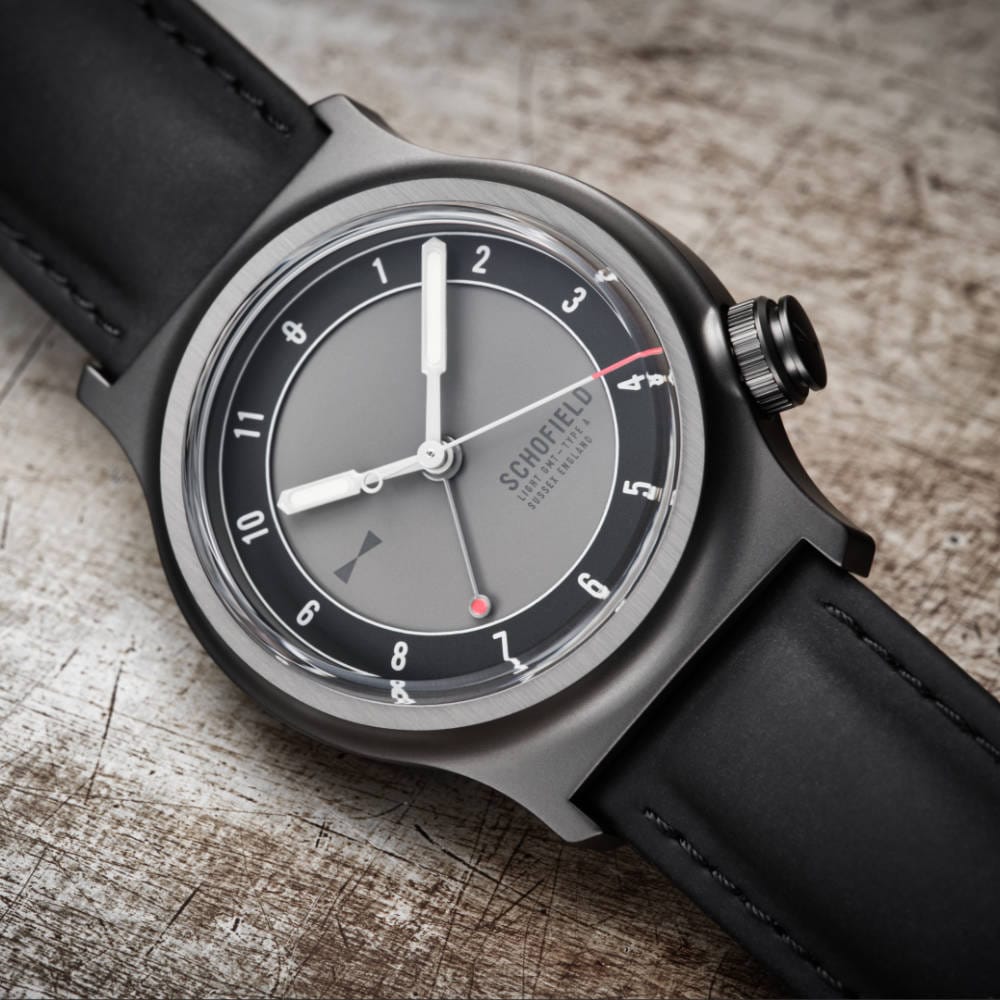
The Dark One is best understood as Schofield's blacked-out tool-watch statement. The case is stainless steel with a blackened finish, the dial is dark, and the overall effect is intentionally muted. This is not a watch that relies on polished surfaces or dramatic colour blocking. Its appeal comes from the way the case, dial, and strap work together as a single utilitarian object.
Schofield is a small British brand, and The Dark One reflects that scale. It is not a watch with a huge public reference catalogue or a deep auction record. It is a limited-run piece that lives in the private-sale and enthusiast market. That makes condition, originality, and documentation more important than broad price-guide tracking.
Brand Context: Schofield's Small-Batch Approach
Schofield Watch Company was founded in the United Kingdom in 2007 by Giles Ellis. The brand built its reputation on legible, graphically strong tool watches such as the Signalman and Beater. Those watches established a design language that is practical rather than precious: clear dials, strong hands, and cases that look prepared for use rather than display.
The Dark One fits that story. It takes the brand's tool-watch instincts and pushes them toward a darker, more limited aesthetic. For collectors, the attraction is not simply that the watch is black. It is that the watch comes from a small maker with a recognisable point of view. In a market full of derivative sports watches, that counts for something.
Movement and Daily Accuracy
The Dark One uses the ETA 2824-2 automatic movement. This is a sensible choice for a tool watch. The 2824-2 is widely known, widely serviced, and supported by a large network of independent watchmakers. It offers approximately 38 hours of power reserve and runs at 28,800 vibrations per hour. It is not chronometer-certified in this application, and Schofield does not position The Dark One as a precision instrument in the laboratory sense.
In real-world use, a healthy example should deliver normal Swiss automatic accuracy. Buyers should expect something in the range of roughly ten to fifteen seconds per day, depending on wear habits and regulation. That is acceptable for a watch of this type. More importantly, the movement is robust and easy to maintain. For a small independent watch, that serviceability is a genuine advantage.
The movement is not the reason to buy The Dark One. The reason to buy it is the overall package. But the movement is the reason the watch can be worn without anxiety. A collector can enjoy the independent design without worrying that every service will become a logistical ordeal.
Case, Crystal, Lume, and Strap
The case is blackened stainless steel, which gives The Dark One its defining visual character. The finish reduces shine and makes the watch read as a tool rather than jewellery. That is exactly the point. This is not a watch for someone who wants a bright wrist presence. It is a watch for someone who wants a purposeful object that becomes noticeable only on closer inspection.
The crystal is sapphire, which is the right choice for a watch intended for regular wear. Sapphire offers good scratch resistance and keeps the dial clear over time. The watch is fitted with Super-LumiNova, which is appropriate for a tool-watch design. The lume is not the primary story here, but it supports the practical brief.
The standard presentation is a leather strap with a pin buckle. That suits the watch's field-tool character. A leather strap softens the blacked-out case and makes the watch easy to wear casually. Collectors should confirm strap originality and condition, because on a limited-run independent, original equipment matters to the completeness of the package.
Wrist Feel and Presence
The Dark One wears like a deliberate tool watch. The blackened case visually compresses the watch on the wrist, which helps it avoid the loud, oversized presence that some independent sports watches have. On the leather strap, it feels balanced and practical. It is not a delicate watch, but it is also not a watch that demands attention through polish or shine.
This is a casual-wear piece. It works with denim, field jackets, and weekend clothing. It is not a formal watch, and it is not intended to slide under a tight dress cuff. The reward is a watch that feels honest and usable. The blacked-out finish gives it a strong wrist presence for collectors who like the stealth-tool aesthetic, but it will not impress anyone looking for traditional luxury cues.
What It Does Well and Where It Compromises
The Dark One does several things well. It offers a distinct British independent identity. It uses a proven automatic movement. It has a coherent blacked-out design rather than a random collection of dark finishes. It is easy to wear casually, and it is serviceable by a broad range of watchmakers because of the ETA base.
The compromises are equally clear. The blackened case finish can show wear over time, and any damage to the coating is harder to repair than a standard steel case. The brand is small, so resale liquidity is limited and public pricing is sparse. The watch is not a formal piece. And because it is a limited-run independent, original parts and documentation matter more than they would on a mass-produced sports watch.
Collecting, Resale, and Hold-Versus-Sell
The Dark One should be treated as a collector piece rather than a liquid investment. Schofield has a devoted following, but the brand does not have the auction depth or secondary-market volume of larger luxury names. Pricing is therefore private-sale dependent. Buyers should expect to pay based on condition, completeness, and the seller's motivation rather than a widely published market range.
That does not make the watch a bad purchase. It makes it a different kind of purchase. If you want a watch that can be flipped quickly, this is not the right choice. If you want a small-run British tool watch with proven automatic serviceability and a clear design identity, it makes sense. The hold recommendation is simple: buy for use and enthusiasm, not for short-term appreciation. Keep the original strap, documents, and any service records, because those details matter when the time comes to sell.
There is no major auction history to cite. That is normal for a small independent limited-run model. The absence of auction data should not be read as a negative; it simply means the market is private and enthusiast-led. Collectors should focus on the individual example rather than waiting for a public price benchmark that may never appear.
Alternatives and Homages
Collectors considering The Dark One may also look at German tool watches such as the Sinn U1 and Damasko DA36. Both offer function-first design and strong engineering credibility. The Bremont S300 is a British alternative with more commercial visibility and stronger resale liquidity, though it has a different design brief.
For buyers who want the blacked-out tool-watch look at a lower price, the Seiko 5 Sports SRPD79 offers an automatic movement and a similar visual mood for a fraction of the cost. The Timex Expedition North Field Post Solar is another practical option for a blacked-out field watch. These are not substitutes for the Schofield ownership experience, but they show how much of the aesthetic can be achieved at lower price points.
Service and Ownership
Service is a meaningful part of the ownership case. The ETA 2824-2 is widely supported, so routine maintenance should not be difficult. Schofield can service the watch, and independent watchmakers can handle the movement. The caveat is case parts and original components. Those remain brand-dependent on a small-run watch, which is another reason to buy a complete, well-documented example.
Final Verdict
Schofield The Dark One is a niche watch with a clear brief. It delivers blacked-out British tool-watch character, a dependable Swiss automatic, and small-run exclusivity. It is not the obvious choice for a first luxury watch or a speculative investment, but for collectors who value independent design and practical ownership, it has real appeal.
The right buyer will appreciate the watch for what it is: a usable, limited-run object with a distinct point of view. The wrong buyer will wonder why it does not have the resale liquidity or polish of a mainstream sports watch. That is the nature of independent collecting. Buy the example, not the story, and The Dark One makes sense on its own terms.