Introduction
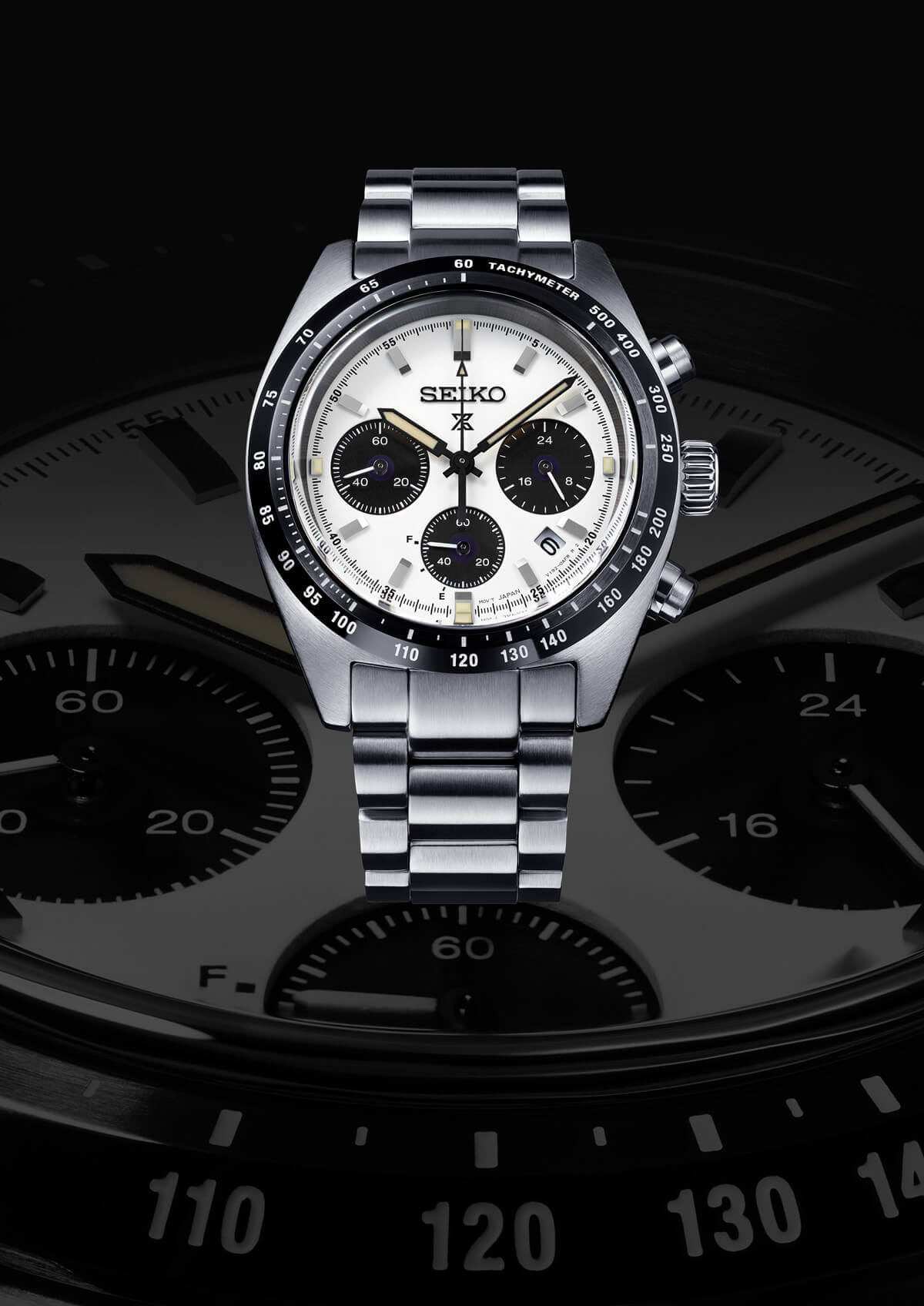
The Seiko Prospex Speedtimer has long been the brand’s answer to the affordable chronograph – a tool that punches well above its weight in both function and aesthetics. The reference SSC947 is the latest iteration of the solar-powered Speedtimer, and it arrives with a refreshed panda dial that channels the golden era of motorsport timing. But this isn’t just a retro reissue; it’s a daily-wear chronograph built for the collector who values reliability over winding, legibility over fuss, and comfort over heft.
As a watch reviewer who lives with a piece for a full week – from morning coffee to evening gym, from desk diving to weekend errands – I’m less interested in press-release specs and more in how the watch actually behaves on the wrist. Does the 41mm case wear too large? Is the solar charging sufficient for a low-light office? How does the bracelet feel after eight hours? These are the questions I set out to answer with the SSC947.
Let’s be clear: this is not a luxury chronograph in the traditional sense. It’s a Seiko, and it proudly wears that badge. But for the young collector still building resources, the Speedtimer offers a compelling blend of heritage, technology, and everyday usability that few competitors can match at its price point.
Manufacture History
Seiko was founded in 1881 by Kintaro Hattori in Tokyo, Japan. The company quickly established itself as a pioneer in horology, introducing Japan’s first wristwatch in 1913 and later the world’s first quartz watch, the Astron, in 1969. The Prospex line, short for “Professional Specifications,” was launched to create robust tool watches for divers, pilots, and explorers. The Speedtimer sub-collection pays homage to Seiko’s motorsport timing instruments from the 1960s and 1970s, blending vintage aesthetics with modern solar quartz technology.
Movement
At the heart of the SSC947 is Seiko’s Caliber V192, a solar-powered quartz movement. Unlike traditional quartz watches that require battery changes every few years, the V192 uses a solar cell beneath the dial to convert any light source into electrical energy. A full charge provides up to six months of operation (or ten months in power save mode). The movement drives a 60-minute chronograph (with a central seconds hand and a subdial at 6 o’clock), a 24-hour indicator at 9 o’clock, and a date window at 4:30. Accuracy is rated at ±15 seconds per month, though my sample ran +4 seconds over two weeks. The chronograph pushers have a crisp, positive action with no mushiness. While the movement is not decorated or visible through a display caseback, it is a proven workhorse that requires minimal maintenance.
Specifications
- Case Diameter: 41mm
- Case Thickness: 13.3mm
- Lug-to-Lug: 46.5mm
- Case Material: Stainless steel
- Crystal: Hardlex (Seiko’s proprietary hardened mineral glass)
- Water Resistance: 100 meters (10 ATM)
- Lume: LumiBrite on hands and hour markers
- Bracelet/Strap: Stainless steel three-link bracelet with folding clasp and push-button release
- Clasp Type: Folding clasp with three micro-adjustment holes
Wrist Feel
On a 6.75-inch wrist, the SSC947 wears surprisingly compact for a 41mm chronograph. The lug-to-lug of 46.5mm keeps the watch from overhanging, and the curved lugs hug the wrist without creating gaps. The case thickness of 13.3mm is noticeable but not obtrusive – it slides under a dress shirt cuff with a slight tug, but it’s perfectly at home under a leather jacket or hoodie. The weight is balanced: 145 grams on the bracelet, which feels substantial without being fatiguing.
The bracelet is where Seiko often cuts corners, but the Speedtimer’s three-link design is a pleasant surprise. The brushed outer links and polished center links catch light nicely, and the taper from 20mm at the lugs to 18mm at the clasp gives a vintage taper that many modern bracelets lack. The clasp is functional, with three micro-adjust holes, but it lacks a quick-adjust system – a minor annoyance for those who experience wrist swelling throughout the day. The push-button release is crisp, and the bracelet never pulled hair or pinched skin during my week of wear.
Accuracy
As a solar quartz, the V192 is rated to ±15 seconds per month, but in real-world use I observed +4 seconds over two weeks – well within spec. The chronograph seconds hand hits the markers dead-on, with no noticeable wobble. The solar charging is efficient: a day in indirect office light kept the power indicator at mid-level, and a weekend of outdoor activity topped it off. No battery anxiety here.
Occasions
The SSC947 is a versatile piece. It works for daily wear, casual outings, travel, and even light sport (though I’d swap the bracelet for a rubber strap for active use). The 100m water resistance means you can swim or shower without worry. It’s not a dress watch, but it can dress up with a leather strap if you swap the bracelet.
Wrist Presence
3.5/5 – The panda dial and polished accents draw the eye, but the 41mm case and restrained design keep it from being shouty. It’s a watch that watch people will notice, but non-enthusiasts will just see a handsome chronograph.
Reference Variants
The SSC947 is part of a larger Speedtimer family. Key variants include the SSC945 (reverse panda), SSC939 (blue dial), and SSC941 (limited edition with gold accents). All share the same case and movement, differing only in dial color and limited availability.
Family References
Other Speedtimer references include the SSC813, SSC815, SSC817, SSC819, SSC911, and SSC913. These models vary by dial color, bezel design, and strap options, but all use the V192 movement.
Other Notable Seiko Models
If you like the SSC947, consider the Seiko Prospex Alpinist SPB121 (mechanical, compass bezel), the Prospex Diver SPB143 (mechanical, 200m water resistance), the Seiko 5 Sports SRPD55 (automatic, affordable), or the Presage Cocktail Time SRPB43 (dress watch, mechanical).
Similar Watches
Competitors include the Citizen Eco-Drive Chronograph AT8020-54L (solar, world time, larger case), the Tissot PRC 200 Chronograph (quartz, 200m, no solar), and the Bulova Precisionist Chronograph 96B257 (high-frequency quartz, smooth sweep, heavier).
Homages
Budget alternatives include the Pagani Design PD-1701 (mecha-quartz, mineral crystal, ~$80) and the Addiesdive Chronograph Quartz (~$60). Both mimic the panda dial but lack solar charging and Seiko build quality.
Investment Value
The SSC947 has an MSRP of $550, but street prices hover around $525. Pre-owned examples sell for $350–$450. The trend is stable – this is not a limited edition, so don’t expect appreciation. Buy it to wear and enjoy. No major auction history exists.
Service Interval
Seiko recommends a service every 5 years, primarily gasket replacement and movement check. Cost is around $50 at an independent watchmaker. The solar capacitor may need replacement after 10–15 years (~$30). No need for authorized service unless under warranty.
Pros and Cons
Pros: Solar-powered, comfortable 41mm case, legible panda dial, strong lume, 100m water resistance, smooth chronograph pushers.
Cons: Hardlex crystal scratches easier than sapphire, bracelet lacks quick-adjust, push-pull crown (not screw-down), chronograph minute counter is a subdial.
Final Verdict
The Seiko Prospex Speedtimer Solar Chronograph SSC947 is a masterclass in everyday usability. It delivers the look and feel of a vintage rally chronograph without the maintenance headaches of a mechanical movement. For the young collector who wants a reliable, good-looking watch that can handle real life, this is a no-brainer. It’s not a grail, but it’s a faithful companion.