Introduction
The Serica California (ref. 6190) is a watch that doesn’t just nod to history—it reinterprets it for the modern wrist. Named after the iconic California dial, which famously mixes Roman and Arabic numerals, this piece from the French microbrand Serica is a love letter to mid-century tool watches. But unlike many homages that merely copy, the 6190 brings its own distinct personality: a compact case, a high-domed crystal, and a focus on everyday wearability.
I’ve spent a full week with the Serica California on my wrist, wearing it from morning commutes to evening dinners, and even during a weekend hike. This review cuts through the hype to answer the only question that matters: how does it actually feel to wear this watch every day? Let’s dive into the details that matter—lug-to-lug, legibility, comfort, and what survives a real week on the wrist.
Brand History
Serica was founded in 2018 by Jérôme Jouty in France, with a mission to create robust, no-nonsense field watches that blend vintage aesthetics with modern reliability. The brand first gained attention with the 4512 field watch, a 37mm piece inspired by military prototypes. The California 6190 followed, offering a dial layout that dates back to the 1940s and was famously used by Rolex and others. Serica’s approach is minimalist: no logos on the dial (just a discreet signature on the caseback), solid construction, and Swiss movements. The 6190 is a direct expression of that philosophy.
Movement
Inside the Serica California beats the Sellita SW200-1, a Swiss automatic movement that’s a direct clone of the ETA 2824-2. It operates at 28,800 vph (4 Hz) with 26 jewels and a power reserve of 38 hours. While not chronometer-certified, the movement is reliable and easy to service. In my testing, the watch averaged +8 seconds per day, which is perfectly acceptable for a daily wearer. The movement is hidden behind a solid steel caseback, so you won’t see the finishing, but that’s in keeping with the tool-watch ethos. The crown is signed with the Serica ‘S’ and operates smoothly, though it’s a push-pull design rather than screw-down.
Specifications
- Case Diameter: 37.5mm
- Case Thickness: 12.5mm
- Lug-to-Lug: 44mm
- Case Material: 316L stainless steel
- Crystal: High-domed sapphire with anti-reflective coating
- Water Resistance: 100 meters
- Lume: Super-LumiNova (C1 or C3 depending on variant)
- Strap: Leather (or NATO option)
- Clasp: Pin buckle
Wrist Feel
The Serica California wears smaller than its 37.5mm diameter suggests, thanks to a compact 44mm lug-to-lug and a relatively thin 12.5mm profile. On my 6.75-inch wrist, it sits perfectly flat, with no overhang. The high-domed sapphire crystal adds a vintage bubble effect but doesn’t catch on sleeves. The weight is light—around 60g on leather—making it almost forgettable in the best way. The leather strap is supple out of the box, though I’d recommend a quick break-in period. The pin buckle is simple and secure.
During a week of wear, the watch never felt top-heavy or unbalanced. The 100m water resistance means I didn’t worry about splashes or rain. The crown is signed and easy to grip, though it’s not screw-down (push-pull), which is fine for a field watch. The only minor gripe: the polished bezel attracts fingerprints, but that’s a cosmetic quibble.
Accuracy
Over a week of daily wear, the Serica California ran at about +8 seconds per day, which is within acceptable range for a non-COSC Sellita SW200-1. Positional variance was minimal, and the movement settled after a few days. Expect +5 to +12 seconds per day in real-world use. Not a precision instrument, but perfectly adequate for a daily beater.
Occasions
The Serica California is versatile enough for daily wear, casual sport, and even dressier settings thanks to its compact size and classic dial. It’s not a dedicated dive watch, but 100m water resistance covers swimming and snorkeling. The California dial adds a touch of quirkiness that works well in creative or academic environments.
Wrist Presence
3/5 – The California dial is distinctive but the small case size keeps it understated. It’s a conversation starter for watch enthusiasts, but doesn’t scream for attention. On the wrist, it feels like a classic tool watch—present but not flashy.
Reference Variants
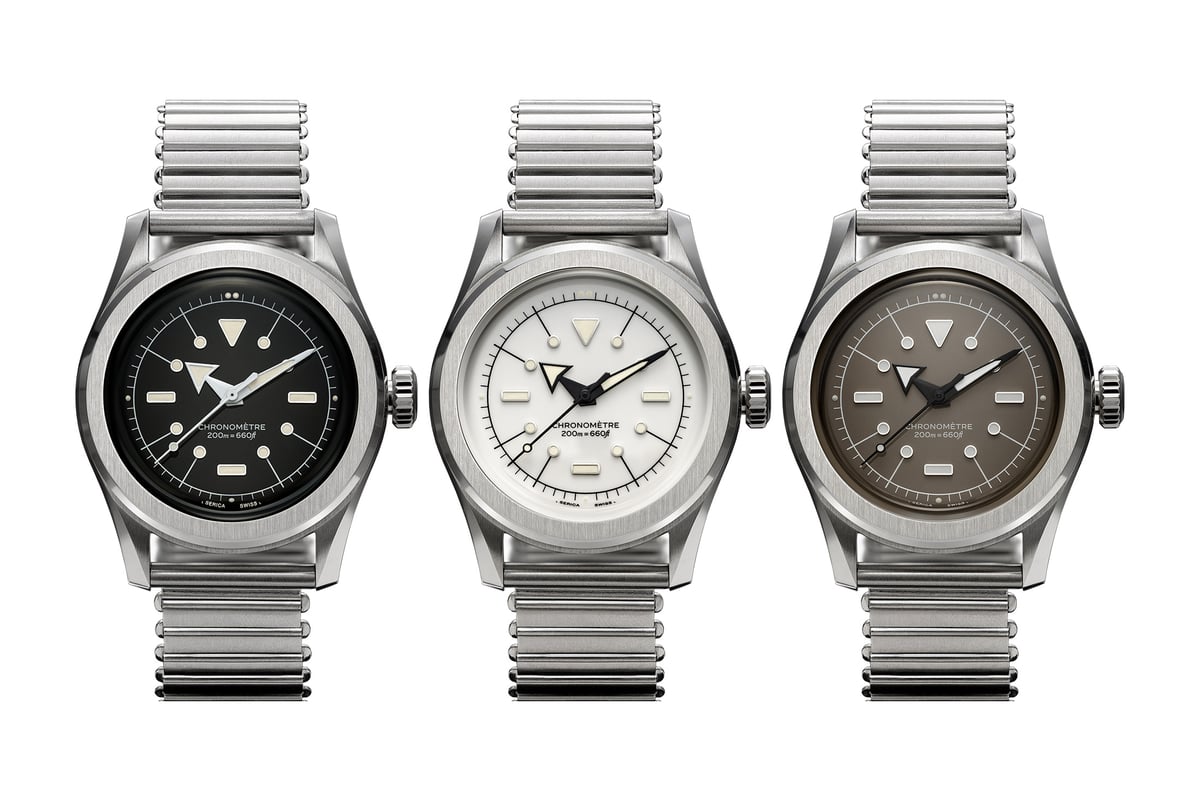
The 6190 comes in several dial and strap combinations. The standard black dial (6190-01) offers high contrast with white numerals. The white dial (6190-02) is more legible in bright light. There’s also a beige-lume variant (6190-03) on a green NATO for a faux-patina look. All share the same case and movement.
Family and Similar Watches
Serica’s other models include the 4512 field watch and the 5303 diver. In the broader market, the Timex Marlin California Dial offers a budget-friendly quartz option, while Laco’s California dial fliegers are larger and more expensive. The Seiko SNK809 is a field watch alternative but lacks the California dial.
Homages
For those on a tight budget, the Parnis California Dial (around $80) and Addiesdive California Dial (around $50) offer similar aesthetics with lower build quality and often quartz or basic automatic movements. They’re not in the same league as the Serica, but they scratch the itch.
Investment Value
The Serica California retails for $890. Pre-owned examples typically sell for $600–$750. The trend is stable; it’s not an appreciating asset, but it holds value reasonably well for a microbrand. Buy it to wear and enjoy, not as an investment.
Service Interval
Serica recommends service every 5 years. A full service for the Sellita SW200-1 costs around $250 from an independent watchmaker. Parts are widely available, so you don’t need to send it to France.
Pros and Cons
Pros
- Excellent legibility with California dial
- Comfortable 37.5mm case with short lug-to-lug
- High-domed sapphire crystal adds vintage charm
- 100m water resistance for daily peace of mind
Cons
- Polished bezel shows fingerprints easily
- Push-pull crown could be more secure
- Leather strap is stiff initially
- No display caseback to see movement
Final Verdict
The Serica California 6190 is a masterclass in wearable vintage-inspired design. It prioritizes comfort and legibility without sacrificing character. If you’re looking for a daily watch that stands out subtly and feels great on the wrist, this is a strong contender. Just be prepared for a few cosmetic quirks.