The anti-hype watch
Every few years the watch world produces a brand that refuses to shout. Serica is that brand for this decade. Founded in Paris in 2019, it arrived with a handful of references, a clear design language, and a stubborn insistence on doing less — compact cases, simple dials, honest movements — at precisely the moment the rest of the industry was busy supersizing everything.
The Serica 6190 M.S.L. Chronometer is the most complete expression of that philosophy so far. It takes the brand's field-watch platform and submits it to COSC chronometer testing, which is a strange and slightly wonderful thing to do to a tool watch in this price bracket. Chronometer certification is normally the preserve of dress watches and dive flagships; here it is applied to a watch designed for people who actually wear their watches — on trains, on trails, under sleeves.
This review is written for collectors who have already done the obvious. If you own the Submariner, the Speedmaster, or the Grand Seiko that ended the argument, the 6190 M.S.L. answers a different question entirely. Not what should I buy next, but what should I actually reach for every morning.
Serica: a short history of a young house
Serica was founded in Paris in 2019 by Jérôme Burgert and Gabriel Vachette, two watch-industry veterans who had spent years inside larger houses and wanted a shorter distance between the designer and the person wearing the watch. That sounds like marketing copy until you handle one of their products. Every decision on a Serica reads like it was made by someone who had to live with the consequences.
The brand built its reputation on compact, hand-wound tool watches with a distinctly French design language — matte finishes, soft case transitions, a refusal to chase the polished-and-bevelled aesthetic that defines Swiss luxury. Their earlier references earned a loyal following among collectors who wanted exactly that: a small, quiet, well-made mechanical watch that did not look like it was trying to impress anyone.
The 6190 line is the brand's field watch, and the M.S.L. Chronometer variant is its most serious statement yet. Moving from an uncertified movement to a COSC-certified one is not a small step for an independent operating at this scale. It means tighter component selection, tighter assembly tolerances, and a testing regime that costs real money. Doing it on a field watch rather than a dress watch tells you exactly who Serica thinks its customer is.
Design: the case for restraint
Serica's design language owes more to mid-century French military and exploration instruments than to Swiss luxury conventions. The case is compact — deliberately so — and finished in a way that prioritises durability over sparkle. There is no mirror polishing to catch the light, no chamfer designed for a wrist shot. Instead there are soft, matte surfaces that look better after a year of wear than they did in the box.
We've deliberately left several figures in the specification table blank rather than guess at them. Serica does not publish every dimension we'd want for a review like this, and inventing a plausible-sounding number would be worse than saying nothing. Confirm current figures with Serica or an authorised retailer before ordering, particularly if you have strong preferences about case size or thickness.
What we can tell you is how it reads in the metal: this is a watch that sits on the small side of the modern spectrum, and it is proud of that. The lugs curve downward rather than outward, the caseback sits flat against the wrist, and the whole assembly feels more considered than its price point has any right to. The crystal is sapphire, the case is stainless steel, and the finishing is honest — nothing pretending to be something it isn't.
The dial: legibility as a design principle
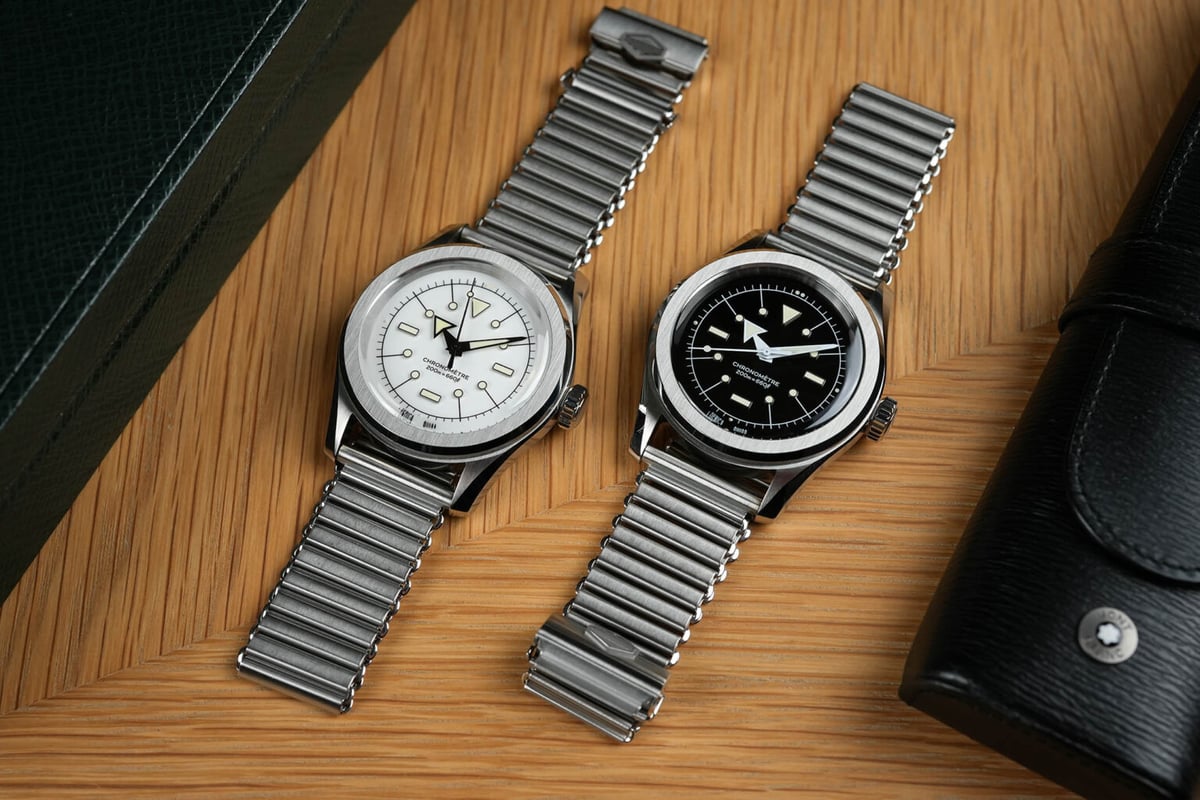
Field watches live or die on their dials, and Serica understands the assignment. The layout is clean and uncluttered, built around high-contrast numerals and hands that can be read at a glance in poor light. The Super-LumiNova application is generous enough to be genuinely useful rather than decorative — an area where many watches at twice the price embarrass themselves.
What elevates the 6190 M.S.L. above generic tool-watch territory is typography. Serica has put real thought into the shapes of the numerals and the spacing between them, and the result is a dial that looks designed rather than assembled. It photographs well, but more importantly it reads well at arm's length in a dim room, which is the only test that matters at 6am.
The overall effect is calm. There is no date window fighting for attention, no unnecessary text, no branding exercise. In an era where dials increasingly look like press releases, the 6190 M.S.L. looks like a tool.
The movement: certification as a promise
Underneath sits a Swiss-made, Soprod-based automatic calibre running at 28,800 vibrations per hour with roughly 44 hours of power reserve, regulated and certified to COSC chronometer standards. It is not an in-house movement, and Serica has never pretended otherwise. At this price, an in-house calibre would be a marketing line rather than a technical advantage.
What matters is what COSC certification actually delivers: a mean daily rate held inside -4 to +6 seconds per day across five positions and three temperatures. That is a guarantee made by an independent testing body, not by a brand's own marketing department, and it is a meaningful step up from the vague 'adjusted in five positions' language that fills most spec sheets.
The architecture is workhorse rather than showpiece. You are not buying hand-finished bridges or a Geneva-striped rotor here; you are buying a serviceable, proven design that any competent watchmaker can look after. For a daily-wear field watch, that is the correct trade. The power reserve is adequate rather than exceptional — enough to get you through a weekend off the wrist if you are disciplined about it, not enough to survive a week in a drawer.
On the wrist
Balance is the story. The caseback sits flat, the lugs curve down rather than out, and the whole watch feels denser and more deliberate than its price suggests. Weight is modest enough that you forget it is there by mid-morning, which is the highest compliment you can pay a daily wearer.
The proportions suit smaller wrists without looking toy-like on larger ones. On a leather strap it reads almost like a dress watch, slipping under a cuff without a fight; on steel it snaps immediately into tool mode. That flexibility is the entire point of owning a watch like this — one object that works with a suit, a T-shirt, and a hiking jacket without ever feeling like a compromise.
Where it differs from the archetypal field watch is in refinement. Hamilton's Khaki Field is charming precisely because it feels a little crude; the Serica feels considered. Case edges are softer, the crown is easier to grip, and the strap changes are less of a wrestling match. These are small things that compound over years of ownership.
Living with the accuracy
Expect a well-regulated example to sit comfortably inside the chronometer window, and expect consistency day to day to matter far more than any single reading. How you wear it, how it rests overnight, and the climate you live in all influence real-world rate. The certificate is a floor, not a promise of perfection — but it is a floor most watches at this price never reach.
The practical upshot is that you can set this watch once a month and stop thinking about it. That is the entire value proposition of chronometer certification in a tool watch, and it is the reason COSC still means something to people who actually use their watches rather than photograph them.
Price, market and value
At an MSRP in the mid-teens of hundreds of dollars and a current retail figure that has crept up modestly with each production run, the 6190 M.S.L. sits in an awkward but fascinating bracket. It is more expensive than the entry-level field watches that dominate the category, and considerably less expensive than the Swiss adventure watches it shadows in design intent.
Pre-owned examples typically trade below retail, which is normal for a young independent without auction history. There is no major auction record to point to, and you should be sceptical of anyone who suggests otherwise. Serica's production is small but not artificially scarce, and the brand does not run hype drops at scale. Buy it to wear.
What protects the value is the brand's coherence. Serica has not diluted its identity with a dozens-strong catalogue or a fashion collaboration strategy. That discipline tends to preserve collector trust over time, even if it does not produce the sort of paper gains that push people toward hyped steel sports watches.
The competition
The obvious comparison is the Hamilton Khaki Field Mechanical, which costs a fraction of the price and delivers a similar brief with more American military heritage and less refinement. The Tudor Ranger is the grown-up alternative, with far more brand gravity and a price to match. CWC's G10 and GS Sapphire models offer the issued-object purity that some collectors prefer to any modern reinterpretation.
What none of them offer is the specific combination the Serica delivers: compact proportions, French design sensibility, independent-brand character, and a COSC certificate. If that combination appeals, there is no direct substitute. If it doesn't, the Hamilton will do 80 percent of the job for 20 percent of the money — and that is a perfectly rational decision.
Service and ownership
Serica services through its own workshop and a small network of partners in Europe. That is fine if you live in France or nearby, less convenient if you are in the Americas or Asia. Budget for a full service on a five-to-seven-year rhythm, confirm current turnaround and pricing directly with the brand, and factor in shipping if you are outside Europe.
The Soprod-based movement is a genuine advantage here: any competent independent watchmaker can service it, which gives you options that an in-house calibre at this price would not. For a watch intended to be worn hard and often, that serviceability matters more than exotic architecture.
The verdict
The Serica 6190 M.S.L. Chronometer is the rare watch that justifies itself without a marketing narrative. It is compact where the industry is bloated, certified where the industry is vague, and quiet where the industry is loud. It rewards knowledge rather than recognition, which makes it a slightly awkward recommendation for anyone shopping for compliments and an excellent one for anyone shopping for a watch.
If you want a daily wearer that will still feel correct in ten years — after the trend cycle has moved on twice and your tastes have sharpened — this is one of the smartest buys in modern horology. It will not turn heads. It will just keep the time, quietly, in French.