Sinn 356 Review: The Pilot Chronograph That Does More Than Fly
There is a particular kind of satisfaction in a watch that refuses to pretend. The Sinn 356 is not a grand complication, not a precious-metal statement, and not a piece designed to impress a dinner party. It is a pilot chronograph built around a proven movement, a legible dial, and a case that has been doing the same job for decades. For young collectors who have moved past the first flush of brand hype, the 356 offers something increasingly rare: a focused instrument with real watchmaking credibility.
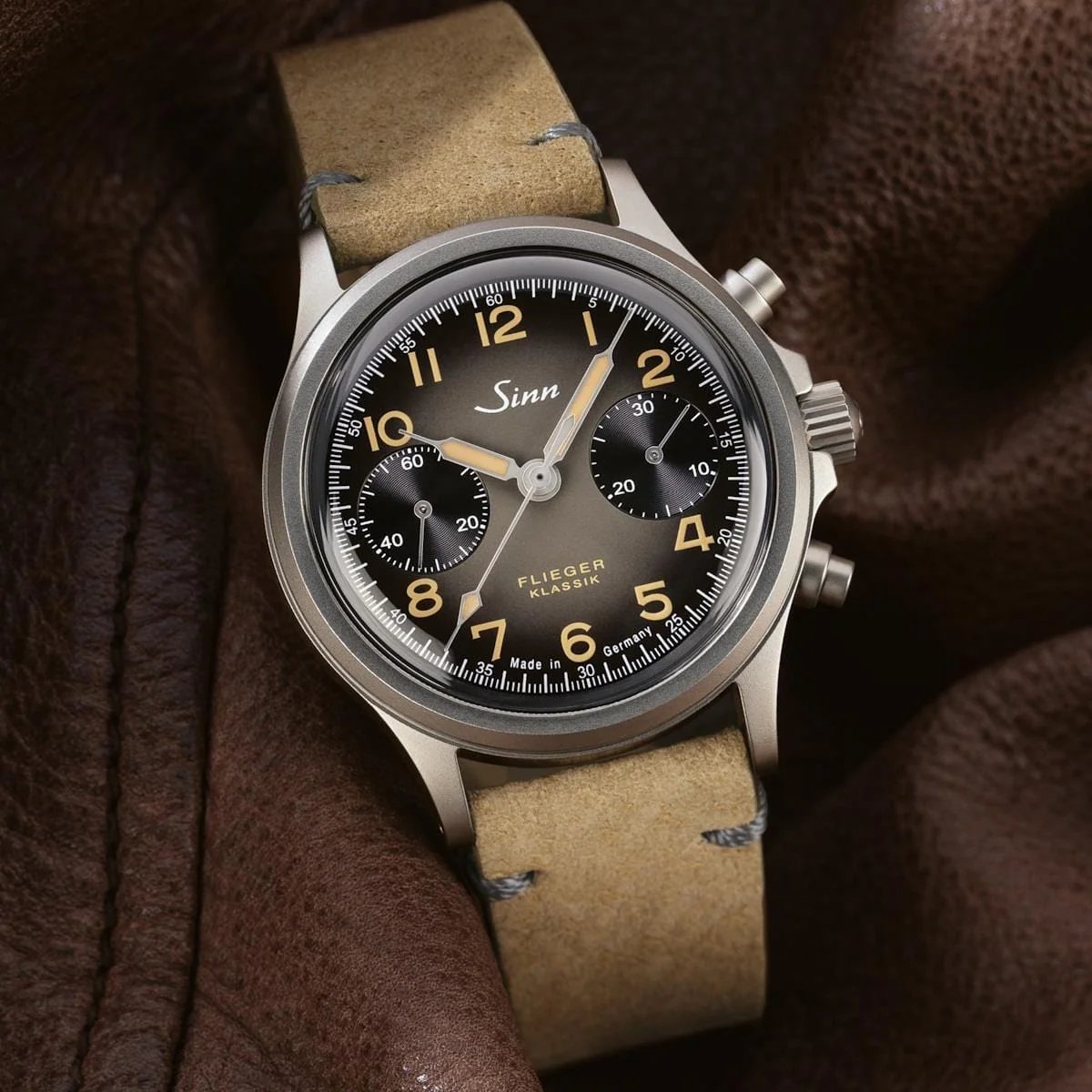
At a time when many chronographs have swollen to 42mm or more, the 356 remains compact. Its 38.5mm stainless steel case is a reminder that legibility and presence do not require bulk. The matte black dial, the syringe-style hands, and the three chronograph registers are arranged with the kind of utilitarian clarity that made the original pilot watches work. This is not a watch that asks to be admired under a loupe, though there is plenty to admire. It asks to be used.
The reference 356 sits at the heart of Sinn's catalog. It is the model that many enthusiasts point to when they want to explain why the Frankfurt brand matters. It is German tool-watch design without the self-consciousness that sometimes accompanies it, and it is priced within reach of a collector who wants a serious chronograph rather than a fashion object. The question is whether the 356 still makes sense in a market crowded with vintage reissues and micro-brand alternatives. The answer, after spending time with the reference, is a clear yes, provided you understand what it is and what it is not.
Manufacture history
Sinn was founded in 1961 by Helmut Sinn, a former pilot and flight instructor who understood what an instrument watch needed to do. The company built its early reputation on cockpit clocks, pilot watches, and chronographs that prioritized readability and robustness over decoration. That DNA is still visible in the 356. It is not a watch that traces its lineage to a royal court or a racing team. It traces its lineage to a cockpit.
The 356 itself is a modern classic within the Sinn line. It takes the traditional pilot chronograph formula, a matte dial, luminous numerals, and a tri-register layout, and packages it in a case that is smaller and more wearable than many of its contemporaries. Over the years Sinn has offered the 356 in several forms, including acrylic and sapphire crystal versions, but the core idea has remained unchanged. The watch is meant to be read at a glance and trusted in daily use. That consistency is part of why the 356 has developed a loyal following among collectors who value function over flash.
Movement and architecture
The Sinn 356 is powered by the Valjoux 7750, one of the most important automatic chronograph movements of the modern era. It is a cam-and-lever design, not a column wheel, and that distinction matters. The 7750 is known for its robustness, serviceability, and relatively affordable maintenance. It is not the most elegant chronograph movement ever made, but it is one of the most dependable. In the 356, it provides a central chronograph seconds hand, a 30-minute counter, a 12-hour counter, and running seconds, along with a date display. The architecture is industrial in the best sense: built to withstand use rather than to win beauty contests.
Sinn receives the movement and regulates it, but the caliber is not in-house and it is not COSC-certified. That is not a criticism. The 7750 has powered chronographs from a wide range of brands for decades, and its reputation is built on real-world performance rather than marketing. The finishing is functional rather than elaborate, which is appropriate for a watch at this price point. What matters is that the movement is proven, parts are available, and a competent watchmaker can service it without drama. For a young collector building a collection around watches that can actually be worn, that is a significant advantage.
Case, dial, and crystal
The 356's stainless steel case is bead-blasted, giving it a matte, tool-like finish that resists showing every fingerprint. At 38.5mm in diameter, it is compact by modern chronograph standards, and that is one of its greatest strengths. The case is not slim, because the 7750 is not a slim movement, but the short lugs and balanced proportions keep it from feeling clumsy. The bezel is simple and unobtrusive, allowing the dial to dominate. Water resistance is rated to 100 meters, which is more than enough for daily life and the occasional swim, though the leather strap and acrylic crystal mean you should not treat it as a dive watch.
The dial is where the 356 earns its keep. It is matte black, with large Arabic numerals and luminous hands that remain legible in low light. The three subdials are arranged in the classic 7750 layout: 30 minutes at 12, 12 hours at 6, and running seconds at 9. The date window is discreetly placed and does not disrupt the symmetry. The base reference 356 uses an acrylic crystal, which is a deliberate choice. Acrylic is warmer, lighter, and easier to polish than sapphire, and it suits the vintage-instrument character of the watch. It will scratch, but a tube of Polywatch will remove most marks in minutes. Collectors who prefer sapphire can look to the 356 Sa variant, which also adds a display caseback.
Wrist feel and presence
On the wrist, the 356 feels like a proper tool watch. The 38.5mm case sits comfortably on medium wrists, and the matte finish keeps it from drawing unwanted attention. The leather strap is supple and broken in quickly, and the pin buckle is simple and secure. The watch has a noticeable thickness, which is inherent to the 7750 architecture, but it does not feel top-heavy. The center of gravity stays close to the wrist, and the short lugs help the case hug the arm rather than overhang it. For a chronograph with this much going on, it is remarkably easy to forget you are wearing it.
Presence is a subjective thing, but the 356 has it in a quiet way. It does not sparkle or catch the light like a polished dress watch, and it does not have the aggressive bulk of a modern sports chronograph. Instead, it has the presence of a well-made instrument. The dial is the focal point, and the matte case recedes into the background. That is exactly what you want from a pilot watch. It looks at home with a t-shirt and jeans, a field jacket, or even a casual blazer. It is not a formal watch, and it does not pretend to be. Its versatility lies in its honesty.
Accuracy and daily performance
Real-world accuracy for the Valjoux 7750 is typically within a range of about minus five to plus ten seconds per day, though individual examples vary. Sinn regulates the movement, but the 356 is not a chronometer, and you should not expect chronometer-level precision. What you can expect is stability. The 7750 is a workhorse, and once it has settled into a routine, it tends to hold its rate well. The chronograph function is crisp and reliable, with a satisfying tactile feel when starting, stopping, and resetting. The date changes cleanly, and the running seconds are smooth enough for daily use.
Service is straightforward. The 7750 is one of the most widely serviced automatic chronograph movements in the world, and independent watchmakers are familiar with it. Sinn recommends service as needed, and many owners go five to seven years between services depending on use. Authorized service is recommended for case parts and crystal replacement, but routine movement service can be handled by a competent independent. This is a watch you can live with, not a delicate object that requires special handling. That matters for a collector who wants to wear a watch rather than store it.
Variants and alternatives
The 356 family includes several variants. The base 356 is the acrylic-crystal model, and it is the purest expression of the original idea. The 356 Sa adds a sapphire crystal and a display caseback, which appeals to collectors who want to see the movement and prefer scratch resistance. There are also limited editions and special dials from time to time, but the core formula remains the same. When shopping, pay attention to the crystal type, the caseback, and the strap or bracelet configuration. The acrylic version is the more characterful choice, while the sapphire version is the more practical daily wearer.
Compared with other pilot chronographs, the 356 stands out for its size and restraint. The IWC Pilot's Watch Chronograph 41 is larger and more luxurious, with a movement that is more elaborately finished. The Omega Speedmaster Reduced is a compact automatic chronograph with a different history and a different feel. The Breitling Navitimer 8 Chronograph offers a more aviation-focused design with a busier dial. The Sinn 356 is the most utilitarian of the group, and that is its appeal. It is a watch for someone who wants the chronograph function, the pilot-watch aesthetic, and the confidence of a proven movement without paying for a luxury logo.
Value and ownership
The Sinn 356 is priced in the same range as many entry-level luxury watches, but it offers something different: a genuine instrument chronograph with a movement that can be serviced anywhere. Current retail prices vary by variant and strap, but the base model sits in the mid-two-thousands in US dollars. Pre-owned examples typically trade between roughly eighteen hundred and twenty-five hundred dollars, depending on condition, age, and accessories. That is a reasonable depreciation curve for a watch that is meant to be worn. It is not an investment piece, and it is unlikely to appreciate dramatically, but it holds value well for a tool watch.
The value proposition is strongest for collectors who plan to wear the watch regularly. If you are looking for a safe-deposit-box asset, there are better choices. If you are looking for a chronograph that can handle daily life, that has a clear design language, and that will not require a second mortgage to service, the 356 is hard to beat. The acrylic crystal is a cost-saving measure, but it is also a philosophical one. It keeps the watch honest. The sapphire variant costs more, but it offers peace of mind. Either way, you are buying a watch that was designed to be used.
Final verdict
The Sinn 356 is a modern classic for good reason. It combines a compact case, a legible pilot dial, and a proven automatic chronograph movement in a package that is both practical and characterful. It is not the most refined watch in its price range, and it is not the most luxurious. It is, however, one of the most honest. For young collectors who want a watch with real utility and a clear design point of view, the 356 deserves a place on the shortlist. It is a chronograph that does more than fly. It works.