By Dr. Hélène Rousseau
There are watches that announce themselves and watches that get on with the job. The Sinn 358 belongs to the second group. It is a pilot chronograph with a matte black dial, a stainless steel case, and a movement that has been trusted by tool-watch buyers for decades. But the question for this review is not whether it looks good in a display case. It is whether it survives a real week on the wrist.
I wore the 358 as a daily watch: desk work, errands, a weekend trip, and enough time in and out of cars to test legibility at a glance. This is not a watch that asks to be babied. It is also not a watch that pretends to be a dress piece. The 358 is the larger sibling of the long-running 356 pilot chronograph, and that extra presence is the first thing you notice. The second thing you notice is how quickly the layout becomes second nature.
The appeal is simple. You get a proven automatic chronograph, a clean pilot-style dial, useful day and date information, and a case that feels built for use rather than ceremony. The caveats are equally clear: this is a chronograph with real wrist presence, the movement is more workhorse than haute horlogerie, and the 358 asks you to accept a tool-watch aesthetic in a category often dominated by polished luxury objects. For the right buyer, that is not a compromise. It is the point.
First impressions and the pilot-chronograph formula
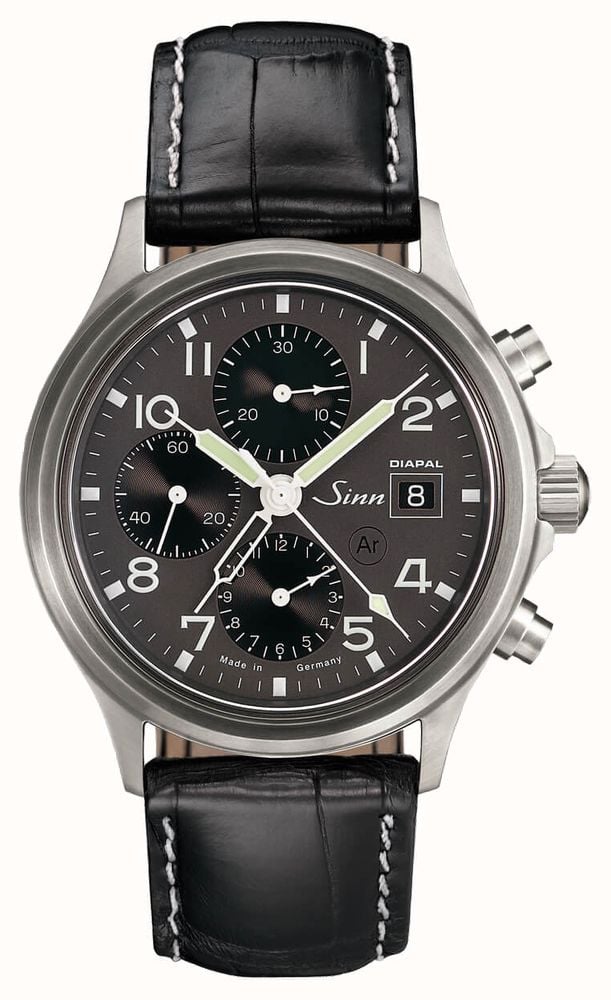
The Sinn 358 does not try to be a chameleon. Its dial is dark, flat in character, and organized around reading time quickly. The chronograph subdials are positioned where the Valjoux 7750 puts them, and the day-date display is a practical addition rather than a decorative flourish. The hands are broad enough to find in low light, and the markers are clean rather than fussy. This is the sort of dial that looks almost plain in photographs and then proves its intelligence on the wrist.
The case is stainless steel, and the overall impression is one of restraint. There are no polished surfaces begging for attention. The 358 reads as a working instrument, which is exactly what Sinn's pilot watches are supposed to be. The sapphire crystal adds a layer of everyday security that older acrylic-crystal pilot watches cannot match, while the 100m water resistance means you do not have to think twice about rain, handwashing, or a sudden downpour.
The chronograph layout is familiar to anyone who has spent time with a 7750-based watch. The subdials provide elapsed minutes and hours, the central seconds hand handles chronograph duties, and the running seconds are displayed separately. It takes a few minutes to internalize, but after that the watch becomes very easy to live with. The pushers are positive and easy to use with a thumb, and the crown is straightforward to operate. Nothing about the 358 feels delicate.
Brand history: why Sinn matters here
Sinn was founded in Frankfurt in 1961 by Helmut Sinn, a former pilot and instrument specialist. That origin matters for the 358. This is not a fashion brand that discovered aviation styling late in the game; Sinn built its reputation on legible, robust watches for people who needed instruments rather than ornaments. Since Lothar Schmidt took over in 1994, the company has pushed further into engineering-led details such as hardened steels, moisture-control systems, and instrument-grade construction.
The 358 sits within that tradition as a larger pilot chronograph in the 356 family. The 356 is the smaller, more classical option, while the 358 gives the same basic idea more wrist presence. This is not a watch that relies on heritage marketing alone. Its credibility comes from the fact that it looks and feels like a tool designed to be used. That is also why it appeals to collectors who already own more polished watches and want something they can wear without thinking about scratches.
Movement: the known quantity
The 358 uses the Valjoux 7750, one of the most familiar automatic chronograph movements in watchmaking. It is not in-house, and it is not COSC-certified in this application. What it is, however, is proven. The 7750 has powered countless chronographs across the price spectrum, and its cam-switching architecture has a reputation for toughness. Parts and service knowledge are widespread, which matters more in a daily-wear tool watch than an exotic finishing package.
In the 358, the movement provides a 44-hour power reserve and a frequency of 28,800 vibrations per hour. The chronograph function has a mechanically positive feel, and the day-date display adds practical utility. The finishing is functional rather than spectacular; you are not buying this watch to stare at an exhibition caseback. You are buying it because the movement is reliable, serviceable, and suited to the watch's purpose. That is the right trade-off in this context.
Specs and real-world usability
The 358 has a 42mm stainless steel case, a sapphire crystal, and 100m water resistance. Those are sensible numbers for a pilot chronograph. The sapphire crystal is a clear advantage for daily wear, and the water resistance is enough for ordinary life without turning the watch into a bulky diver. The dial uses Super-LumiNova for low-light legibility, and the hands and markers are easy to find when the light drops.
The watch is offered on leather or a stainless steel bracelet, with a pin buckle or folding clasp depending on configuration. The steel bracelet is the more practical choice for frequent wear, especially in warmer weather, while leather gives the watch a slightly more vintage pilot feel. Either way, the 358 is not a strap queen that demands constant changes. It is the kind of watch you put on and forget about until you need to read it.
What the specs do not tell you is how the watch feels in use. The chronograph pushers are accessible, the crown is easy to grip, and the dial remains readable even when the chronograph is running. The day-date window is useful for daily life, though it does interrupt the symmetry of the dial. If you prefer a pure three-register look, that is a small price to pay for the convenience. If you like your tool watches to be genuinely useful, it is a welcome addition.
How it wears
The 358 has the kind of wrist presence that comes from being a proper pilot chronograph rather than a slimmed-down lifestyle watch. At 42mm it is not shy, but the matte dial and restrained case finishing keep it from feeling flashy. On the steel bracelet it feels secure and balanced; on leather it becomes warmer and slightly more vintage in character. The chronograph pushers are easy to find without looking, and the crown is usable without feeling oversized.
The important caveat is height. A Valjoux 7750 chronograph is never going to disappear under a tailored cuff, and the 358 does not try to. It sits like a tool on the wrist, which is fine for daily wear and casual shirts but less ideal under a close-fitting suit. If you are sensitive to tall watches, try it before you commit. If you are comfortable with a traditional chronograph profile, the 358 is stable and surprisingly easy to forget about by lunchtime.
The bracelet version is the one I would choose for a real week on the wrist. It balances the case well and makes the watch feel more integrated. The leather version is handsome, but it turns the 358 into a slightly more seasonal watch. Neither is wrong. The right answer depends on whether you want a tool watch that can handle sweat and rain without complaint or a pilot chronograph with a more traditional leather-strap look.
Accuracy and daily timekeeping
The Valjoux 7750 is not COSC-certified in this application, so do not expect chronometer-paper precision. A healthy example should settle into a useful daily range, often within roughly minus five to plus ten seconds per day depending on position, temperature, and how often the chronograph is used. The movement is robust and easy to regulate, and many owners report stable performance over years of wear. The chronograph function itself is mechanical and positive, with a crisp start-stop feel rather than a silky push. This is a watch you set once every few days and then trust for ordinary daily timekeeping.
The practical point is that the 358 is accurate enough for daily life. It is not a watch for someone who wants atomic-clock discipline, but it is also not a watch that will make you late. The day-date function is easy to set, and the crown operation is straightforward. If you wear the watch regularly, the automatic winding keeps it running without fuss. If you rotate it with other watches, a winder or a quick reset before wear is all you need.
Occasions and wrist presence
The 358 is at its best as a daily watch, a travel companion, or a casual sports watch. It works with jeans, chinos, and a field jacket. It can pass in a business-casual office, especially on leather, but it is not a formal dress watch. The chronograph height and the matte tool-watch dial make that clear. If you need one watch for a wedding and a weekend hike, this is not it. If you need one watch for ordinary life with a bit of character, it is very close.
On the wrist, the 358 reads as a serious pilot chronograph without tipping into oversized territory. It has enough dial density to look purposeful and enough restraint to avoid looking like a novelty. The wrist presence score is 4/5. It is not a wall clock, but it is not a subtle dress piece either. That is the balance Sinn has struck here, and it is the right one for the model's brief.
Reference variants and family context
The 358 is closely related to the 356, which is the smaller pilot chronograph in Sinn's lineup. The 356 has a long following among buyers who want the same basic formula in a more compact package. The 358 is for those who want more wrist presence from the same tool-watch idea. The 103 and 144 are other pilot-chronograph references in Sinn's broader family, while the 104, U1, EZM 3, and 6000 show how far the brand's instrument-watch philosophy extends.
Within the 358 line, the main practical choice is between the leather-strap and steel-bracelet configurations. The reference suffixes generally indicate the strap or bracelet fitted at delivery, while the dial and movement remain the same. That makes shopping relatively simple: find a well-kept example with the bracelet you prefer, or budget for a steel bracelet later if you buy on leather. The bracelet is expensive to add afterward, so it is worth considering up front.
Similar watches and homages
If you like the 358 but want to compare, the IWC Pilot's Watch Chronograph 41 is the obvious upscale alternative. It offers a more refined case and a more luxurious ownership experience, but it costs considerably more and loses some of the Sinn's blunt tool-watch honesty. The Damasko DC66 is another German option with a hardened steel case and a similarly utilitarian brief, though its dial is less classical. The Tutima Grand Flieger Chronograph is another pilot-focused chronograph with a comparable German instrument-watch character.
For budget alternatives, the Steinhart Nav B-Chrono 44 borrows the broad flieger chronograph look without matching the Sinn's case technology or movement provenance. The Parnis Pilot Chronograph is a much cheaper visual nod to the formula, but it should be understood as a low-cost alternative rather than a true substitute. Neither will give you the same ownership experience, but they can scratch the visual itch if that is all you need.
Investment value and service
The 358 is not an investment watch in the speculative sense. It is a well-regarded German tool watch with a proven movement, and its value tends to be stable rather than explosive. New retail sits in the low three-thousands, while well-kept pre-owned examples trade for less. That makes the secondary market the smarter entry point for many buyers, especially if you are patient and willing to wait for a complete set.
Service is a routine consideration rather than a red flag. The Valjoux 7750 is familiar to independent chronograph specialists, though authorized service is the safer route for warranty and parts. Sinn's service network is well established. The exact interval and cost depend on the watch's condition and your location, so check with the service center rather than relying on a generic number. The important point is that this is a serviceable, well-supported movement rather than an exotic caliber that requires a specialist hunt.
Pros and cons
The pros are easy to list. The 358 is legible, robust, and honest about what it is. The Valjoux 7750 has a long service history, the day-date and chronograph functions are genuinely useful, and the sapphire crystal and 100m water resistance support real-world use. It is also comfortable on the bracelet and has a strong tool-watch personality that does not feel like costume.
The cons are equally clear. The chronograph height can be noticeable under close cuffs, the movement finishing is functional rather than beautiful, and the watch is not a subtle dress piece. The day-date window breaks the dial symmetry for some purists, and buyers should check the exact dimensions of the specific variant rather than assuming all 358s are identical in every respect. These are not deal-breakers for the right buyer, but they are real considerations.
Final verdict
The Sinn 358 is a pilot chronograph for people who want a watch to do something rather than simply sit in a drawer. It is legible, robust, and honest about its tool-watch roots, and the Valjoux 7750 gives it a dependable heart. Buy it if you want a daily chronograph with genuine character; look elsewhere if you need a slim dress watch or a finely finished movement.
For the sophisticated young collector who already has a dress watch and wants a daily tool with real personality, the 358 makes a strong case. It is not the most refined watch in its price range, and it is not the most collectible. It is, however, the kind of watch that earns wrist time because it does not ask for special treatment. That is a rare quality, and it is exactly why the 358 deserves a place in a considered collection.