Introduction
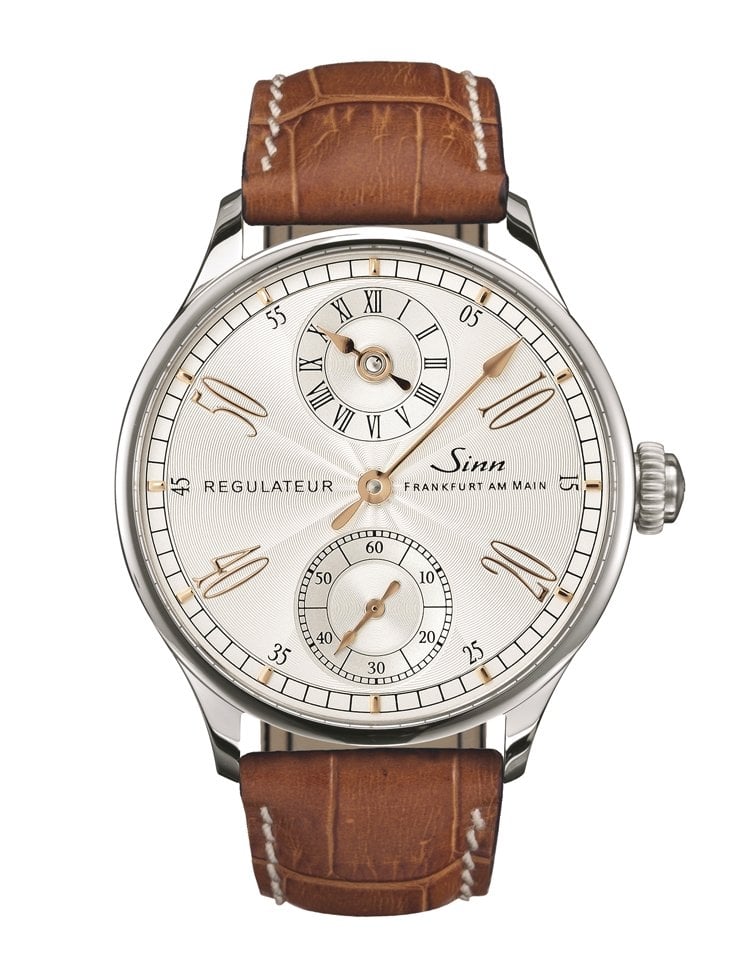
The Sinn 6100 is a watch that doesn’t shout. In an era where oversized, hyper-complicated timepieces dominate the conversation, this 40mm manual-wind dress watch from Frankfurt’s most respected tool-watch maker whispers. It belongs to Sinn’s Klassik line, a collection that strips horology down to its essentials: legibility, reliability, and a certain no-nonsense Teutonic charm. For the young collector who has outgrown the hype cycle and craves something with genuine engineering pedigree, the 6100 is a revelation.
Worn by architects, graphic designers, and the kind of people who appreciate the Bauhaus principle that form follows function, the 6100 is a watch that doesn’t need to be explained. It’s the kind of piece you spot across a room – not because it glitters, but because its proportions are so perfectly judged. It’s a watch for those who know that true luxury is often invisible.
In this review, we’ll dissect every aspect of the Sinn 6100: its movement, case, dial, and how it fits into the modern collector’s landscape. We’ll also look at its investment potential, serviceability, and how it stacks up against its peers. Whether you’re a seasoned collector or a newcomer looking for your first serious watch, the 6100 deserves your attention.
Manufacture History
Sinn was founded in 1961 by Helmut Sinn, a former pilot and flight instructor, in Frankfurt, Germany. The brand initially produced pilot’s chronographs and cockpit instruments, quickly earning a reputation for extreme durability and functional design. Over the decades, Sinn pioneered technologies like Ar-Dehumidifying (to prevent fogging), Tegiment hardening (for scratch resistance), and DIAPAL (oil-free lubrication). The Klassik line, introduced in the 1990s, represents Sinn’s refined side – still built to the same exacting standards, but with a focus on timeless aesthetics rather than tool-watch ruggedness. The 6100 is a prime example: a dress watch that retains Sinn’s engineering DNA.
Movement
At the heart of the Sinn 6100 beats the Sellita SW210-1, a manual-wind movement based on the venerable ETA 7001 architecture. This caliber is a workhorse of the Swiss industry, known for its reliability and ease of service. It operates at 28,800 vph (4 Hz), providing a 42-hour power reserve. The movement features 17 jewels, a Glucydur balance, and a Nivarox hairspring. While not chronometer-certified, Sinn regulates each movement in-house to run within COSC-like tolerances – typically +5 to +10 seconds per day. The finishing is modest but tasteful: perlage on the mainplate, blued screws, and a signed rotor (though it’s a manual wind, so no rotor – the decoration is visible through the sapphire caseback). It’s not haute horlogerie, but it’s honest and robust.
Specifications
- Case Diameter: 40mm
- Case Thickness: 9.3mm
- Lug-to-Lug: 47mm
- Case Material: Stainless steel
- Crystal: Sapphire with anti-reflective coating
- Water Resistance: 100m
- Lume: Super-LumiNova X1 on hands and indices
- Bracelet/Strap: Leather strap (20mm width)
- Clasp: Pin buckle
Wrist Feel
On the wrist, the Sinn 6100 is a masterclass in balance. The 40mm case is modest by modern standards, but the thin profile (just 9.3mm) allows it to slide effortlessly under a dress shirt cuff. The 47mm lug-to-lug ensures it wears flat and secure on most wrists, even those under 6.5 inches. The leather strap is supple from day one, and the pin buckle is low-profile – no sharp edges or bulky hardware.
The weight is ideal: substantial enough to feel present, but light enough to forget you’re wearing it. The crown is easy to grip for winding, and the manual wind action is smooth with a satisfying click. This is a watch that disappears on the wrist in the best possible way – you only notice it when you glance down to check the time, and then you smile.
Accuracy
In real-world use, the Sinn 6100 typically runs within +5 to +10 seconds per day. While not COSC certified, Sinn’s in-house regulation often delivers performance that rivals certified movements. Expect consistent timekeeping with daily winding; if left unwound for 24 hours, the rate may drift slightly as the mainspring unwinds. For most wearers, this is more than adequate for a manual-wind dress watch.
Occasions
The 6100 is a versatile dress watch. It shines at formal events – weddings, galas, business meetings – but its 100m water resistance and subtle lume make it suitable for daily wear, travel, and even casual settings. It’s not a sport watch, but it can handle a splash or a rainy commute. The clean dial works equally well with a suit or a simple white T-shirt.
Wrist Presence
3/5 – The 6100 is intentionally understated. It doesn’t demand attention, but its perfect proportions and clean dial reward close inspection. It’s a watch for the wearer, not the crowd.
Reference Variants
The Sinn 6100 is available in several dial configurations. The standard 6100.1 features a silver matte dial with black hands and indices – the most versatile option. The 6100.2 offers a black matte dial with silver hands for a high-contrast look. A limited edition 6100.3 (white enamel dial) is highly sought after by collectors. All variants share the same case and movement.
Family References
The 6100 is part of Sinn’s Klassik line, which also includes the 6100.1, 6100.2, and 6100.3. There is no direct predecessor; the Klassik line was introduced as a dressier alternative to Sinn’s tool watches.
Other Notable Sinn Models
Sinn’s catalog is dominated by tool watches. The 556 I is a 38.5mm automatic with a clean dial and 200m water resistance – a popular entry point. The 104 St Sa I is a 41mm automatic with a countdown bezel, blending pilot and diver aesthetics. The 103 St Sa is a classic automatic chronograph with a 60-minute bezel. For divers, the U50 SDR offers a 500m water-resistant titanium case with Tegiment hardening.
Similar Watches
If you like the Sinn 6100, consider the Nomos Tangente 38 (manual wind, Bauhaus design, but thinner and more delicate). The Junghans Max Bill Hand-Winding is another German classic with a similar minimalist dial. The Stowa Antea 390 shares the same movement and design philosophy. For a dressier alternative, the Longines Heritage Classic offers a small seconds subdial and a manual wind movement.
Homages
For those on a budget, the Sternglas Naos ($299) offers a quartz-powered Bauhaus look with a similar dial layout. The Laco Augsburg 39 ($450) is a German-made manual wind homage, though larger. The Orient Bambino Small Seconds ($200) is an automatic alternative, but thicker and less refined.
Investment Value
The Sinn 6100 has an MSRP of $1,680. Pre-owned examples typically sell for $1,200–$1,500, making it a stable investment. It is not a hype piece, so don’t expect rapid appreciation. However, its timeless design and Sinn’s reputation ensure it holds value well. Auction history is minimal; when it does appear, it sells near retail. For a long-term hold, the 6100 is a safe bet.
Service Interval
Sinn recommends servicing the 6100 every 5 years. A full service costs approximately $400, and can be performed by any competent watchmaker familiar with the SW210-1 movement. Sinn authorized service centers are available in Germany and the US, but independent servicing is common and cost-effective.
Pros and Cons
Pros: Perfect proportions, high water resistance for a dress watch, sapphire crystal, reliable movement, understated design.
Cons: No date window, manual winding may be inconvenient, limited lume, not COSC certified, average leather strap.
Final Verdict
The Sinn 6100 is a masterclass in restraint. It offers the engineering integrity of a tool watch in a dress watch package, making it a versatile choice for the discerning collector. If you value precision, heritage, and understated elegance over flash, this is one of the best manual-wind dress watches under $2,000.