Speake‑Marin Openworked – A Transparent Look at the Modern Dress Watch
The Openworked from Speake‑Marin is a watch that wears its craftsmanship on its face—literally.
By Vivir··Updated
In this review# Speake‑Marin Openworked – A Transparent Look at the Modern Dress Watch
The Openworked from Speake‑Marin is a watch that wears its craftsmanship on its face—literally. An open‑worked dial, a micro‑rotor that sits flush beneath the sapphire crystal, and a case that harks back to the brand’s iconic Piccadilly silhouette all converge in a piece that is as much a conversation starter as it is a time‑telling instrument. In a market where “open‑worked” has become a buzzword, Speake‑Marin’s execution feels purposeful, yet the watch also raises questions about value, especially given its price tier. Below, we unpack the Openworked’s heritage, design, movement, wearability, and overall worth, aiming for a balanced appraisal that respects the facts at hand.
---
## Heritage — the model's place in the brand's line and its launch context
Speake‑Marin is a boutique Swiss manufacturer that has built a reputation on distinctive case architecture and a willingness to experiment with dial treatment. The Openworked belongs to the “One & Two” family, a line introduced in 2018 that targets the dress‑watch segment. According to the brand’s own catalogue, the One & Two collection is positioned as a tier‑one offering—meaning it sits at the top of Speake‑Marin’s hierarchy in terms of price, materials, and finishing.
The Openworked is essentially a refinement of the Piccadilly case, a shape first unveiled by Speake‑Marin in the early 2010s and refreshed in 2017 under the design direction of Eric Giroud. The Piccadilly case is notable for its slightly rounded shoulders, a thin profile, and a seamless integration of the case back with the front—attributes that give the watch a sleek, almost bezel‑less appearance. By pairing this case with an open‑worked dial, the brand sought to create a piece that is simultaneously minimalist and visually intricate, a duality that aligns with the “dress” category’s demand for understated elegance combined with a hint of personality.
The timing of the Openworked’s release fits a broader industry trend: the late‑2010s saw a surge of interest in “skeleton” or “open‑worked” dials, driven by collectors who wanted to glimpse the inner mechanics without compromising a watch’s structural integrity. Speake‑Marin’s answer is not a full skeleton but a carefully perforated dial that reveals the movement’s architecture while preserving legibility—a design decision that feels both modern and respectful of the brand’s heritage.
---
## Design & Case — case dimensions, materials, dial
### Case
The Openworked is offered in two size options—38 mm and 42 mm—both constructed from either Grade 5 titanium or 18 ct red gold. The titanium version is marketed as “sandblasted,” a finish that softens the metal’s natural sheen and reduces reflections, while the red‑gold variant retains a polished, luxurious luster. Regardless of material, each case features a front and back sapphire crystal treated with an anti‑reflective (AR) coating, ensuring clear visibility under a variety of lighting conditions.
The case thickness is listed at 10.5 mm, which places it comfortably within the “thin dress watch” category. This modest depth contributes to the watch’s ability to sit flush against the wrist, a trait that is especially appreciated under a shirt cuff. Water resistance is modest at 30 meters (approximately 3 atm), sufficient for everyday wear but not intended for aquatic activities.
### Dial
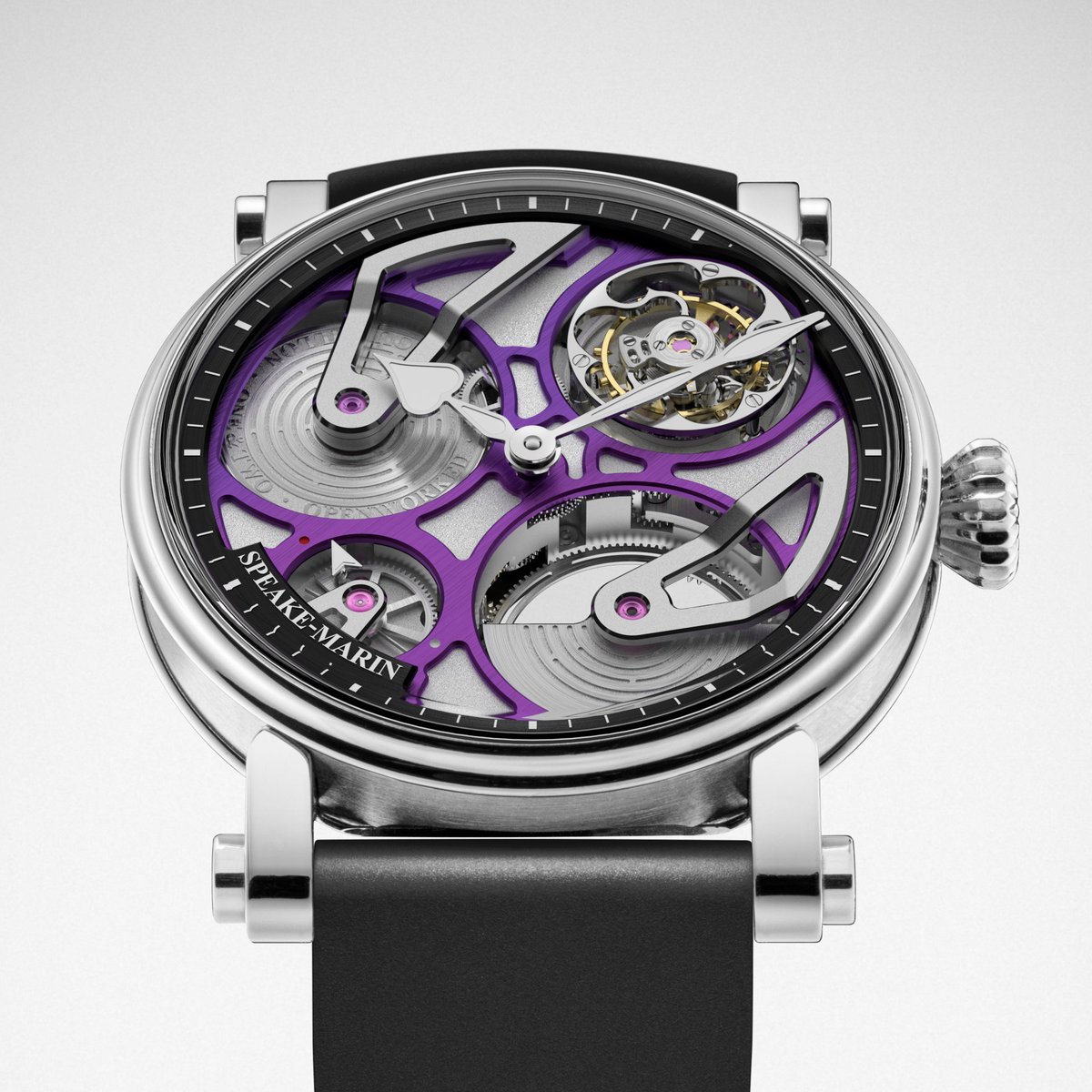
The Openworked’s dial is its most distinctive element. Crafted with an “open‑worked” pattern, the surface is punctured with a lattice of geometric openings that expose the movement beneath. The pattern is finished with a sun‑burst “Geneva stripes” treatment, a nod to classic watch‑making aesthetics that adds a subtle play of light as the wearer moves.
Hands are heart‑shaped and blued from steel, a finishing technique that not only provides a striking visual contrast against the dial’s metallic background but also signals the watchmaker’s attention to detail. The hour, minute, and seconds hands are centrally mounted, while a small seconds sub‑dial sits at the 1:30 position—a placement that maintains visual balance despite the open‑worked background.
Overall, the design language is clean yet intricate. The open‑worked dial invites a closer look, while the Piccadilly case ensures the watch retains a refined silhouette appropriate for formal settings.
---
## Movement & Performance — caliber, power reserve, accuracy
The heart of the Openworked is Speake‑Marin’s in‑house SMA01 automatic calibre, equipped with a fully integrated micro‑rotor. The micro‑rotor design allows the winding mechanism to sit beneath the dial, contributing to the watch’s thin profile and preserving the uninterrupted look of the open‑worked pattern.
Key specifications:
| Parameter | Detail |
|-----------|--------|
| **Calibre** | SMA01 automatic with micro‑rotor |
| **Power reserve** | 52 hours |
| **Finishing** | Sandblasted finish on the movement (as noted in reviews) |
| **Frequency** | Not disclosed in the source material |
| **Accuracy** | No official daily rate published by the brand |
The 52‑hour power reserve is respectable for a modern automatic, offering more than two days of operation without a wrist movement. Reviewers have highlighted the sandblasted finish on the movement as a visual treat when viewed through the dial’s openings, adding to the overall aesthetic appeal.
While the brand has not released an official accuracy specification, the SMA01 is based on proven automatic architecture and is expected to meet the typical standards of Swiss‑made automatic movements (generally within -5 to +10 seconds per day). However, without a published figure, potential buyers should consider that the watch’s primary selling point is its design rather than chronometric precision.
A point of contention raised in user feedback concerns the balance spring assembly. One reviewer noted that the SMA01 incorporates an “ETAchron balance spring,” a component more commonly found in ETA‑based movements. The criticism suggests that the inclusion of a basic balance spring feels out of place in a watch priced in the CHF 22,000–38,000 range, where higher‑grade components might be expected. This observation underscores a tension between the watch’s artistic ambitions and its mechanical pedigree.
---
## On the Wrist — wearability, lug‑to‑lug, comfort notes
### Fit and Comfort
Because the Openworked’s case is relatively thin (10.5 mm) and the materials are lightweight—especially the titanium version—it sits comfortably on the wrist, even under a dress shirt cuff. The integrated micro‑rotor allows the case back to sit flush against the skin, eliminating the protrusion that can occur with traditional rotor designs. Wearers have reported that the watch feels “well‑balanced,” a result of the careful distribution of mass between the movement, case, and dial.
The lugs are seamlessly blended into the case, a hallmark of the Piccadilly design. While exact lug‑to‑lug measurements are not disclosed, the integration creates a clean, uninterrupted line from the case body to the strap, contributing to a sleek aesthetic and reducing the likelihood of snagging on clothing.
### Strap Options
Speake‑Marin supplies the Openworked with high‑quality leather straps in classic black or brown, as well as a stainless‑steel bracelet for those who prefer a metal link. The leather straps complement the dress‑watch intent, offering a soft, flexible feel that adapts to the wearer’s wrist over time. The metal bracelet, while adding a more contemporary vibe, introduces a slight increase in overall weight—particularly on the gold version—yet remains comfortable thanks to the watch’s thin profile.
### Practical Considerations
The 30‑meter water resistance means the watch should be removed before swimming, showering, or any activity involving significant exposure to water. The crown is positioned at 3 o’clock, a conventional placement that is easy to locate and operate. The small seconds sub‑dial at 1:30 is subtly positioned, avoiding interference with the open‑worked pattern while still providing a functional time‑keeping element.
Overall, the Openworked feels like a watch built for daily wear in professional or formal environments. Its modest thickness, comfortable strap options, and balanced weight distribution make it suitable for extended wear without fatigue.
---
## When to Wear — occasion, setting and dress‑code fit
The Openworked is squarely positioned as a dress watch, a categorization confirmed by the brand’s own “One & Two” line description. Its clean lines, modest case size, and elegant dial treatment make it a natural companion for business attire, evening events, and any setting where a refined aesthetic is desired.
### Business & Formal Settings
In a boardroom or at a formal dinner, the watch’s understated yet distinctive dial provides a conversation starter without overwhelming the overall look. The titanium version, with its sandblasted finish, offers a more subdued appearance that pairs well with dark suits and crisp shirts. Conversely, the red‑gold variant adds a touch of luxury, suitable for occasions where a hint of opulence is appreciated—think gala events or high‑profile networking functions.
### Smart‑Casual
Because the Openworked maintains a relatively modest diameter (38 mm or 42 mm) and a thin profile, it can transition to smart‑casual environments. Paired with a blazer and dark denim, it adds a polished edge without appearing out of place. The open‑worked dial, while visually striking, remains tasteful enough not to clash with a less formal wardrobe.
### Limitations
Given its 30‑meter water resistance, the watch should not be worn during sports, swimming, or heavy outdoor activities. Its price point also positions it as a piece that many owners may reserve for special occasions rather than everyday casual wear. Nonetheless, its comfort and durability make it viable for daily use in professional contexts.
---
## Value & Verdict — price‑positioning + final take
### Pricing Landscape
Speake‑Marin offers the Openworked in four primary configurations:
| Material | Size | Price (CHF) |
|----------|------|-------------|
| Titanium | 38 mm | 22,200 |
| Titanium | 42 mm | 22,600 |
| Red Gold | 38 mm | 34,000 |
| Red Gold | 42 mm | 38,700 |
These figures place the Openworked firmly in the high‑end boutique segment. For comparison, a typical Swiss automatic dress watch from a more established luxury brand may range from CHF 8,000 to CHF 15,000, while ultra‑luxury pieces can exceed CHF 50,000. The Openworked’s price, therefore, sits in the middle‑to‑upper tier of boutique offerings.
### Strengths
* **Design originality** – The open‑worked dial combined with the Piccadilly case creates a visual identity that stands out in a crowded market.
* **Thin profile** – At 10.5 mm, the watch is comfortable under cuffs and offers a sleek silhouette.
* **In‑house movement** – While the SMA01 incorporates a basic balance spring, the micro‑rotor and sandblasted finishing demonstrate Speake‑Marin’s commitment to craftsmanship.
* **Material options** – Buyers can choose between lightweight titanium and sumptuous red gold, catering to different aesthetic preferences.
### Weaknesses
* **Component choice vs. price** – The use of an ETAchron balance spring in a watch priced above CHF 22,000 has drawn criticism, suggesting a mismatch between cost and mechanical sophistication.
* **Limited technical data** – The brand does not publish an official accuracy specification, leaving potential buyers without a clear benchmark for chronometric performance.
* **Water resistance** – A modest 30 meters limits the watch’s versatility in everyday life.
* **Potential over‑pricing** – In the boutique segment, comparable models with fully finished in‑house movements and higher water resistance often command similar or lower price points.
### Verdict
The Speake‑Marin Openworked is a watch that excels visually. Its open‑worked dial, refined Piccadilly case, and thoughtful finishing make it an appealing choice for collectors who prioritize aesthetics and brand narrative over pure technical superiority. However, the decision to pair an otherwise high‑end package with a relatively basic balance spring—and the lack of disclosed accuracy data—creates a value tension that discerning buyers will notice.
If you are drawn to the watch’s artistic expression, appreciate the thin, dress‑appropriate profile, and are comfortable with a price that reflects its boutique status, the Openworked can be a rewarding addition to a collection. For those who place a premium on mechanical innovation, higher‑grade components, or broader functional specifications (such as greater water resistance), there may be alternatives that deliver more “bang for the buck.”
In summary, the Openworked stands as a testament to Speake‑Marin’s design ambition. It delivers a striking visual experience and a comfortable wearing experience, but its mechanical compromises and price point mean it will appeal most to enthusiasts who value form as much as function.