Stowa Chrono Black Forest Moon Review
The Stowa Chrono Black Forest Moon is not a watch designed to win a spec-sheet fight. It is a German chronograph with a moonphase, a Black Forest-themed dial, and the kind of direct-to-consumer pricing that makes traditional watch retail look increasingly old-fashioned. For collectors who have already cycled through the usual steel sports watches, that combination is more interesting than another limited-edition colorway on a familiar bracelet.
Stowa’s appeal has always been historical rather than hype-driven. The brand was founded in 1927 by Walter Storz in Hornberg, in Germany’s Black Forest region, and later moved to Pforzheim. It built pilot and marine watches, survived the quartz crisis in its own way, and was acquired by Jörg Schauer in 1999. Today Stowa sells mostly direct to consumers, with a catalog that leans on German watchmaking heritage rather than luxury-group marketing. The Black Forest Moon fits that story neatly: it is a niche product for people who care about mechanical character and brand provenance.
The investment case is secondary. Stowa’s secondary market is thin, and moonphase chronographs are more expensive to service than simple three-handers. But the Black Forest Moon has a legitimate collector argument: special-edition status, a distinctive dial, a hand-wound chronograph movement, and a price structure that avoids traditional retail markup. This review covers the market context, movement, wearability, accuracy, service realities, and hold-versus-sell judgment for serious collectors.
Brand History and Model Context
Stowa is one of those brands that rewards a little historical knowledge. Walter Storz founded the company in 1927 in Hornberg, in the Black Forest, and the name STOWA is derived from his name. The brand later moved to Pforzheim, a historic German watchmaking center, and built a reputation for robust pilot watches and marine chronometers. That history gives Stowa a credibility that many microbrands cannot buy.
The modern Stowa era began when Jörg Schauer took over in 1999. Schauer is a watchmaker and designer with a strong sense of German restraint, and Stowa’s current catalog reflects that: clean dials, vintage proportions, and a refusal to chase trends. The Chrono Black Forest Moon sits within that tradition. It is a chronograph with a moonphase, but it is not a modern luxury statement piece. It is a watch for someone who wants a mechanical object with a specific point of view.
The Black Forest reference is not just marketing. Stowa’s origins are tied to the Black Forest region, and the dial treatment gives the watch a sense of place. That matters in a market where so many watches are designed by committee. The Black Forest Moon is not for everyone, but it is unmistakably a Stowa.
Movement and Mechanical Character
The Black Forest Moon uses a hand-wound Swiss chronograph base, understood to be the Sellita SW510 M family, with a moonphase display. Stowa does not publish extensive finishing details for this reference, so collectors should not expect haute horlogerie decoration. What they should expect is a proven chronograph architecture with a 58-hour power reserve and a 28,800 vph frequency. That is a practical, serviceable specification rather than a boutique manufacture calibre.
The hand-wound format is a major part of the watch’s character. Automatic chronographs are convenient, but they can feel rotor-heavy and less interactive. Winding the Black Forest Moon becomes part of the ownership ritual. The chronograph pushers should feel crisp, and the moonphase display adds a romantic complication that is increasingly rare at accessible price points. This is not a movement that will impress a movement-finishing obsessive, but it is the right movement for a watch at this level.
The lack of COSC certification is worth noting. Stowa does not position this watch as a chronometer, and buyers should expect normal Swiss-base variation. A healthy example should run within roughly -10 to +15 seconds per day in normal wear. The chronograph function can affect amplitude slightly, but it should not turn a well-regulated watch into a erratic timekeeper. Ask for a timegrapher reading before purchase, especially on the secondary market.
Case, Dial, and Wearing Experience
The Black Forest Moon is built around a stainless-steel case, a sapphire crystal, a leather strap, and a pin buckle. Stowa does not publish case dimensions for this reference in the materials reviewed here, so collectors should confirm exact measurements with the brand or seller before buying. What can be said is that the watch follows Stowa’s vintage chronograph language rather than modern oversized proportions. It is designed to sit comfortably under a cuff and to look appropriate with a jacket.
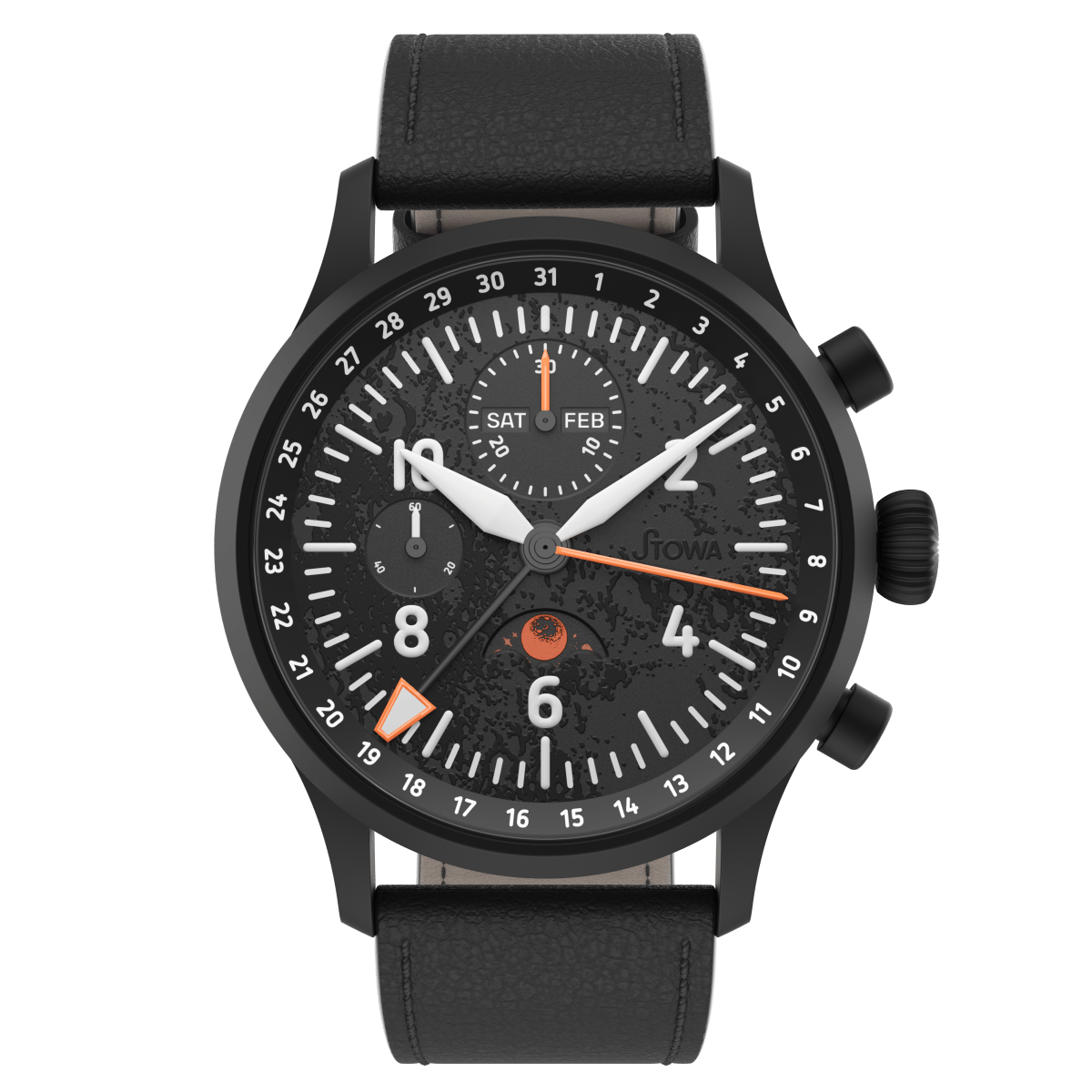
The dial is the emotional center of the watch. The Black Forest green treatment gives it a moody, forest-inspired character that separates it from the usual black-and-white chronograph crowd. The moonphase display adds visual depth, while the chronograph registers keep the dial from feeling empty. Stowa’s design discipline is evident in the legibility: even with multiple displays, the dial does not feel cluttered.
On the wrist, the watch feels balanced and intentional. The hand-wound movement keeps the case from feeling top-heavy, and the leather strap softens the overall presence. It is not a watch that disappears like a thin dress watch, but it is also not a slab that demands constant adjustment. Collectors who prefer compact, vintage-leaning chronographs will likely find it comfortable. Those who want a modern, aggressive wrist presence should look at other options.
The lack of lume is consistent with the watch’s dressy, vintage character. This is not a tool watch for nighttime legibility. It is a mechanical object for daylight enjoyment, best paired with a suit, a sport coat, or a clean casual outfit. The pin buckle keeps the strap profile low and traditional, which fits the overall design brief.
Accuracy and Daily Ownership
Daily accuracy should be judged against the watch’s price and positioning. The Black Forest Moon is not a chronometer, and it does not claim to be. A well-regulated example should deliver acceptable real-world timekeeping, but collectors should not expect quartz-like consistency. Positional variation, temperature, and chronograph use will all affect the rate. The moonphase complication is not a precision timekeeping feature; it is a calendar display that adds mechanical interest.
The bigger ownership consideration is service. Moonphase chronographs are more complex than simple three-hand watches, and not every independent watchmaker will want to tackle the moonphase module. Stowa services directly from Germany, which is a positive for originality and brand support. But collectors outside Europe should factor in shipping, insurance, and turnaround time. The base Swiss chronograph is serviceable, but the moonphase module requires experience. That is not a reason to avoid the watch, but it is a reason to buy a complete example with known service history.
Market Position and Investment Value
Stowa’s direct-to-consumer model is a major part of the value proposition. Buyers are not paying for a multi-layer dealer network, and that generally means more watch for the money. The trade-off is a thinner secondary market. Stowa does not have the brand recognition or liquidity of Omega, Rolex, or even Longines. That means resale is slower and more dependent on finding the right buyer.
The Black Forest Moon’s special-edition status helps. Limited supply and a distinctive dial give it more collector interest than a standard Stowa chronograph. But collectors should not confuse scarcity with liquidity. A watch can be rare and still be difficult to sell quickly. The Black Forest Moon is best treated as a buy-to-wear purchase. If it holds value, that is a bonus. If it does not, the owner still has a distinctive mechanical chronograph with a moonphase.
There is no major auction history for this reference. Pre-owned data is limited, and complete examples should trade close to retail rather than at a significant premium. The trend is best described as stable, with upside dependent on Stowa’s continued brand building and collector appetite for niche German watches. This is not a watch to buy as a short-term flip.
Competition and Alternatives
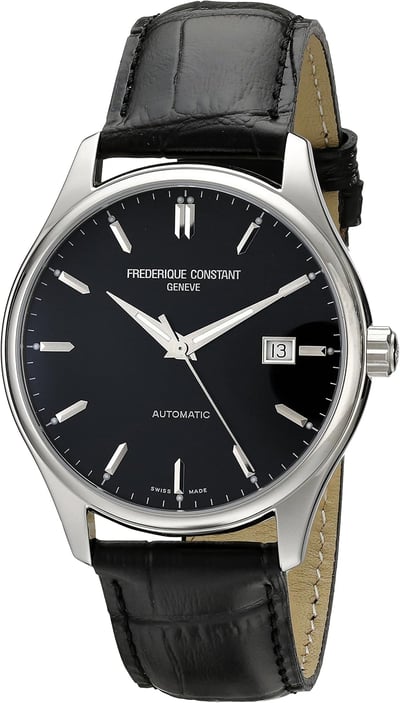
The obvious alternatives are moonphase chronographs from more mainstream brands. The Longines Master Collection Moonphase Chronograph offers broader dealer support and stronger resale liquidity, but it lacks Stowa’s niche appeal and direct-to-consumer pricing. The Frederique Constant Classics Chronograph Moonphase is another dressy option with a more conventional luxury feel. The Oris Artelier Chronograph Moonphase offers a slightly more modern case presence and a different independent-brand story.
None of those watches replicate the Black Forest Moon’s specific combination of German heritage, hand-wound chronograph character, and forest-themed dial. That is the point. The Stowa is not trying to be a universal choice. It is a watch for collectors who value distinctiveness over liquidity.
There are no direct homages worth recommending at this level. Affordable moonphase chronographs exist, but they do not deliver the same mechanical credibility or brand history. Buyers looking for a cheap alternative should understand that they are buying a different product category.
Pros and Cons
The strengths are clear: a distinctive dial, a moonphase complication, a hand-wound chronograph movement, and Stowa’s direct-to-consumer value. The watch has character that is difficult to find in mainstream chronographs, and its special-edition status gives it collector relevance.
The weaknesses are equally clear: thin secondary-market liquidity, no COSC certification, and service complexity. The Black Forest Moon is not a watch for someone who wants a single do-everything piece. It is a watch for someone who already has the basics covered and wants something with a specific personality.
Final Verdict
The Stowa Chrono Black Forest Moon is a collector’s watch in the best sense. It is specific, mechanical, and unwilling to chase every market trend. The hand-wound moonphase chronograph movement gives it real ownership appeal, and the Black Forest-themed dial gives it a sense of place that most watches lack.
Buy it because you want a distinctive German chronograph with moonphase romance. Do not buy it because you expect steel-sports-watch liquidity. For the right collector, the Black Forest Moon is a satisfying addition that rewards wear rather than speculation.