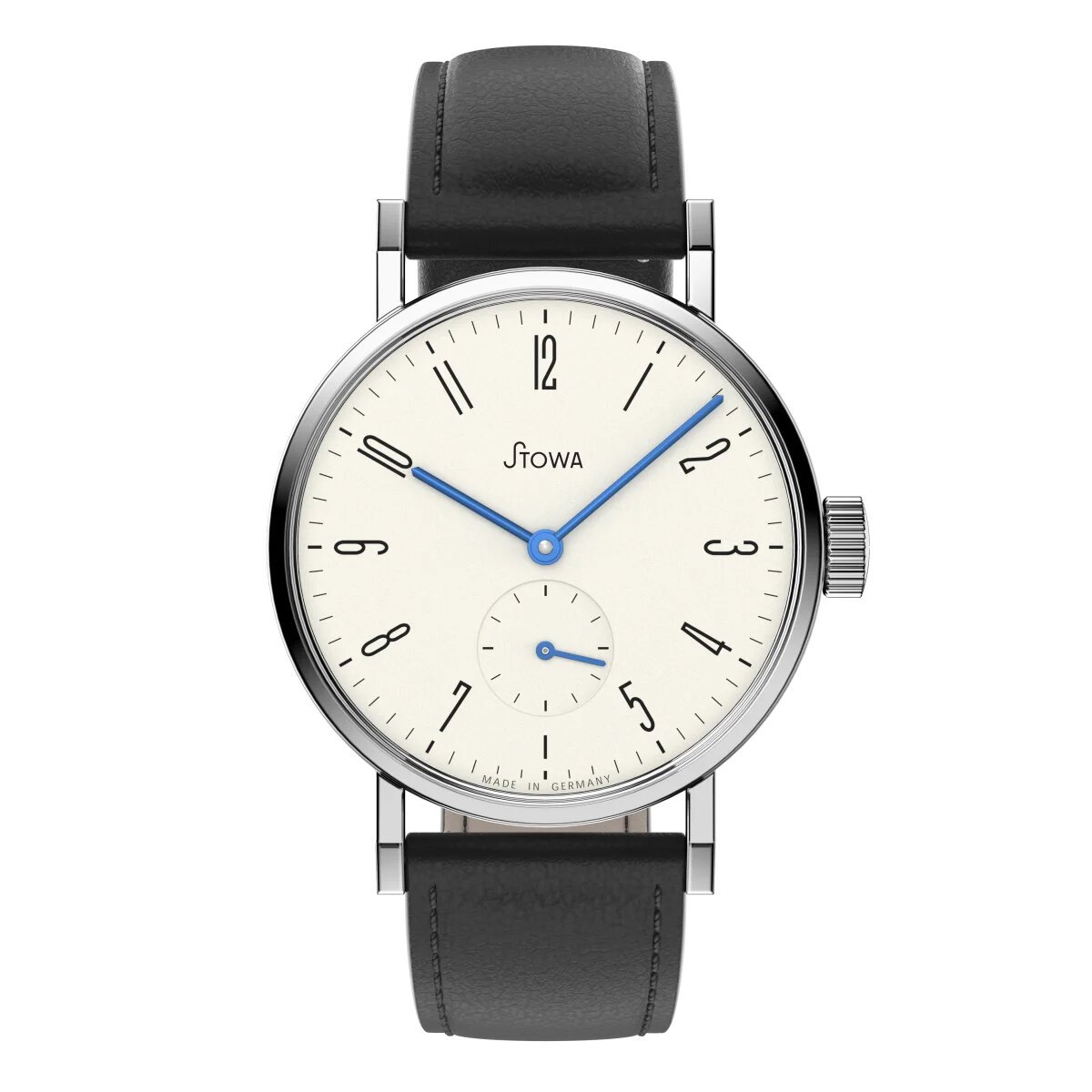
The Architectural Purity of the Stowa Marine Classic 36 KS
In the hierarchy of horological complications, the 'Small Seconds' (Kleine Sekunde) occupies a space of quiet dignity. It lacks the kinetic frenzy of a chronograph or the celestial romance of a moonphase, yet it provides a rhythmic pulse that is essential to the identity of the marine chronometer. The Stowa Marine Classic 36 KS, specifically reference MAR01-10-L, is an exercise in bringing this naval tradition to the wrist without the cumbersome bulk typically associated with maritime instruments.
A Lineage of Observation
To understand the Marine Classic 36 KS, one must first look back to the pocket watches of the early 20th century. These were the 'Beobachtungsuhren' or observation watches, used by officers to synchronize time across a fleet. The requirements were absolute: legibility, precision, and reliability. Stowa was one of the few manufacturers entrusted with this task. Today, the 36 KS retains the high-contrast white dial and bold Arabic numerals that were once matters of life and death on the high seas.
The transition from a 50mm+ pocket watch to a 36mm wrist watch is a journey fraught with the risk of losing character. However, Stowa has navigated this by maintaining the 'all-dial' aesthetic. By minimizing the bezel, the watch preserves the expansive feel of a deck watch while adhering to the ergonomics required by the modern, sophisticated collector. It is a design that feels both ancient and contemporary—a hallmark of true functionalism.
The Peseux 7001: A Caliber of Thinness
At the heart of the MAR01-10-L is the ETA/Peseux 7001. This manual-wind movement, introduced in the 1970s, remains one of the most respected thin calibers in the industry. Measuring a mere 2.5mm in height, it is the engine that allows the Marine Classic 36 to maintain its svelte 9.2mm profile. The choice of a manual-wind caliber over an automatic is a deliberate nod to the ritual of horology; the act of winding the watch each morning connects the wearer to the mechanical heart of the piece.
Technically, the 7001 is a 17-jewel movement beating at 21,600 vibrations per hour. While it is not a high-beat movement, its stability is legendary. Stowa does not settle for a basic execution; through the sapphire caseback, one can observe the 'Top' grade finishing. The bridges are adorned with Geneva stripes that catch the light with a subtle iridescence, and the screws are thermally blued to match the hands on the flip side. The sunburst finish on the winding wheels provides a textural contrast that speaks to the German obsession with detail.
The Dial: A Study in High-Polish Lacquer
The dial of the Marine Classic 36 KS is often mistaken for enamel, and for good reason. Stowa utilizes a high-polished lacquered finish that achieves a similar depth and 'wet' look without the inherent brittleness of fired vitreous enamel. This surface serves as the perfect canvas for the stark black Arabic numerals. The typography is crisp, with the 'railroad' minute track providing a structural border that grounds the entire composition.
The small seconds sub-dial at 6 o'clock is slightly recessed, adding a layer of three-dimensionality to the otherwise flat surface. This subtle 'step' in the dial is a detail that many brands at this price point would overlook, yet it is essential for breaking up the visual plane. The absence of a date window on this reference ensures perfect symmetry, a feature highly prized by purists.
The Alchemy of Blue Steel
Perhaps the most captivating element of the MAR01-10-L is the handset. These are not painted or chemically treated to appear blue; they are genuine thermally blued steel. The process involves heating the steel hands to approximately 290-300 degrees Celsius until a specific oxide layer forms, creating a deep, cornflower blue that shifts in tone depending on the angle of the light. In low light, they appear almost black; in direct sunlight, they glow with an electric intensity. This is a traditional technique that requires precision and patience, and its inclusion here is a significant value add.
Case Geometry and Ergonomics
The case of the Marine Classic 36 is crafted from 316L stainless steel with a uniform high-polish finish. The lugs are elegantly tapered and curve downward, allowing the watch to hug the wrist. With a lug-to-lug measurement of 44.6mm, it occupies the wrist with authority without overhanging. The crown is slightly oversized, a vestigial trait from the era when deck watches needed to be wound with gloves, but here it serves to make the manual winding process a tactile joy.
Water resistance is rated at 50 meters. While some might desire the 100m rating found on more robust sports watches, it is important to remember the mission of this piece. It is a watch for the boardroom, the gallery, and the evening social—not the scuba excursion. The 50m rating provides more than enough security for the occasional splash or rainstorm.
The Vivir Verdict
The Stowa Marine Classic 36 KS is a rare example of a watch that does not try to be everything to everyone. It does not chase trends, nor does it yield to the pressure of increasing case sizes. Instead, it offers a distilled version of horological history. For the collector who appreciates the nuances of movement architecture and the heritage of German naval timekeeping, the MAR01-10-L is an essential acquisition. It is a watch that rewards the patient observer, revealing its quality through the quiet click of the winding gears and the shifting blue of its hands.