Introduction
In the crowded field of vintage-inspired dress watches, the Stowa Partitio stands apart not through loud design gestures but through quiet conviction. It is a watch that understands its own history—a sector dial, a hand-wound movement, a stainless steel case—and executes those elements with a precision that feels both modern and deeply rooted. For the young collector who has moved past the entry-level hype and is looking for a watch with genuine horological integrity, the Partitio is a compelling proposition.
Stowa is not a brand that seeks the spotlight. It operates from a small workshop in Germany, producing watches in limited batches with a focus on legibility, proportion, and mechanical honesty. The Partitio, with its clean sector dial and ETA 2801-2 hand-wound caliber, is perhaps the purest expression of that philosophy. It is not a status symbol, nor is it an investment piece. It is a watch for people who love watches—people who appreciate the tactile ritual of winding, the crispness of a well-printed dial, and the satisfaction of a movement that does exactly what it was designed to do.
This review will examine the Partitio in detail: its movement architecture, its finishing, its wrist presence, and its place in the market. We will also consider its value proposition and whether it deserves a spot in your collection. Spoiler: it does.
Manufacture History
Stowa was founded in 1927 by Walter Storz in Pforzheim, Germany—a city historically known for its jewelry and watchmaking industry. The brand quickly established a reputation for precise, legible pilot watches and marine chronometers, and it was among the first to produce watches for the German air force in the 1930s. After World War II, Stowa continued to produce timepieces, but like many German watchmakers, it faced challenges during the quartz crisis.
In 1996, the brand was revived by Jörg Schauer, a watchmaker and designer who had already made a name for himself with his own eponymous brand. Under Schauer's stewardship, Stowa returned to its roots: small-batch production, classic designs, and a focus on mechanical movements. The Partitio, introduced in the 2010s, is a direct descendant of the brand's mid-century dress watches. It takes its name from the Latin word partitio, meaning division—a reference to the sector dial that divides the face into distinct zones for hours, minutes, and seconds. It is a watch that honors the past without being a slave to it.
The brand's current lineup is a tightly curated collection of pilot, marine, and dress watches. Each model is built around a specific historical archetype, but none are mere replicas. Stowa's approach is to take the best elements of vintage design—legibility, proportion, and mechanical simplicity—and refine them for modern use. The Partitio is a perfect example of this philosophy: it looks like a watch from the 1930s, but it is built with modern materials and a reliable Swiss movement.
Movement and Architecture
The Partitio is powered by the ETA 2801-2, a hand-wound mechanical caliber that has been a staple of the Swiss watch industry for decades. It is a simple, robust movement: 17 jewels, a frequency of 28,800 vibrations per hour, and a power reserve of approximately 42 hours. It features central hours, minutes, and seconds, with no date or other complications. The movement is not in-house, nor is it COSC-certified, but that is precisely the point. The ETA 2801-2 is a known quantity—easy to service, reliable, and accurate enough for daily wear.
Through the sapphire caseback, you can see the movement's architecture. It is not heavily decorated; you will find basic Geneva stripes on the bridges and blued screws, but this is not haute horlogerie finishing. What you do get is a clear view of the escapement, the balance wheel, and the winding mechanism—a mechanical honesty that is increasingly rare at this price point. The hand-wound ritual is part of the appeal: every morning, you wind the crown, feel the resistance, and connect with the watch in a way that an automatic movement cannot replicate. The crown is appropriately sized and easy to grip, and the winding action is smooth.
The ETA 2801-2 is a derivative of the ETA 2801, which itself is a manual-wind version of the ubiquitous ETA 2824-2 automatic. This lineage means that parts are plentiful, and any watchmaker familiar with Swiss movements can service it. The movement's architecture is straightforward: a single barrel, a gear train, and a lever escapement. There is no date mechanism to add complexity or potential failure points. The result is a movement that is both reliable and easy to maintain—a crucial consideration for a watch that is meant to be worn daily.
Case, Dial, and Specifications
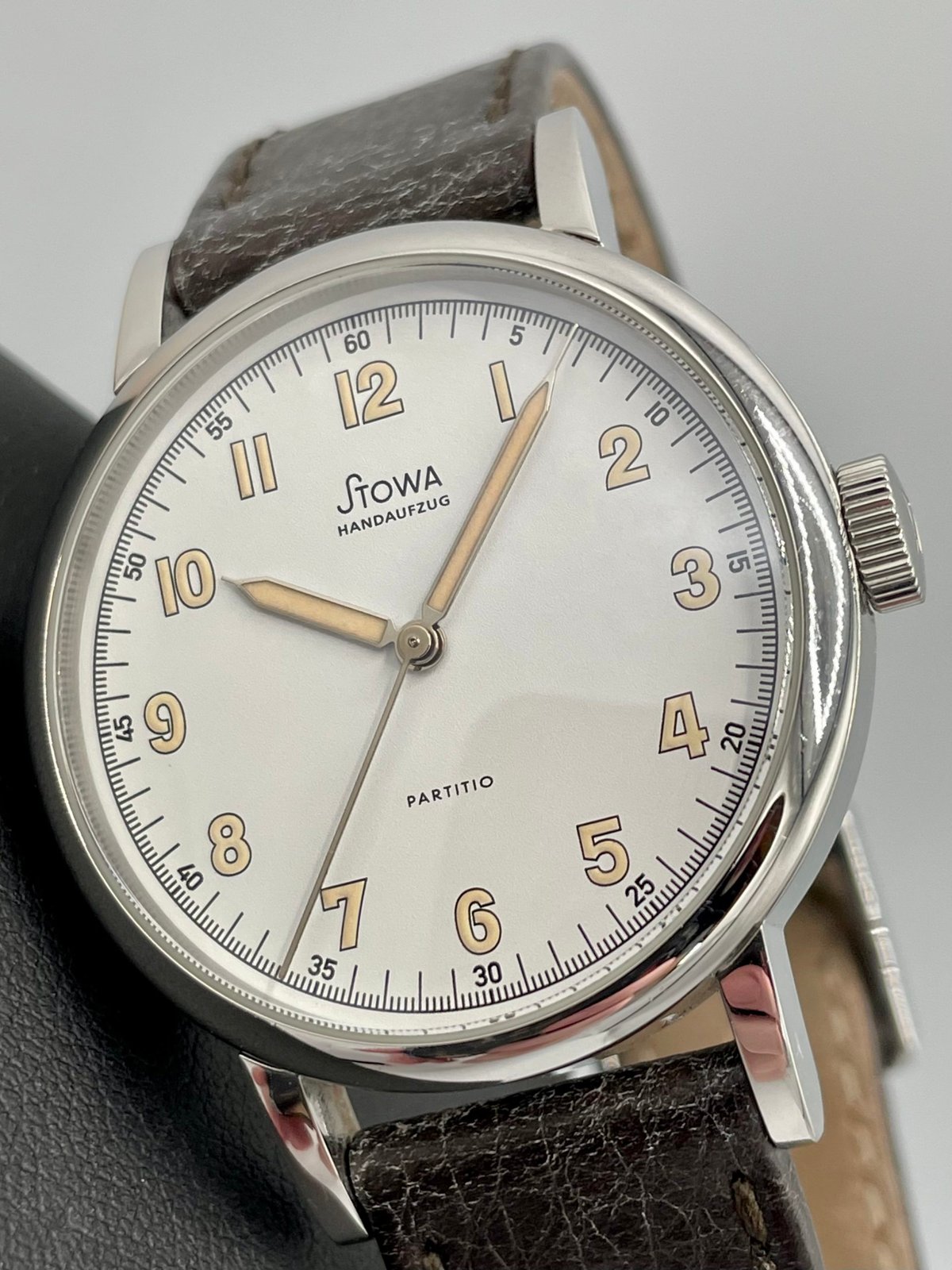
The Partitio is housed in a 40mm stainless steel case. It is a classic size that wears well on a variety of wrists, neither oversized nor undersized. The case features a polished bezel and lugs, with a subtle step that adds visual interest without being flashy. The lugs are elegantly curved, and the overall profile is slender enough to slip under a shirt cuff. The watch is water-resistant to 50 meters, which is sufficient for daily wear but not for swimming. The crystal is sapphire, and the caseback is also sapphire, allowing you to enjoy the movement.
The dial is the Partitio's defining feature. It is a sector dial, meaning the surface is divided into concentric zones: an inner circle for the hours, an outer ring for the minutes, and a small track for the seconds. The layout is clean and highly legible. The Arabic numerals are applied and faceted, catching the light as you move your wrist. The hour and minute hands are leaf-shaped, while the seconds hand is a slender red needle—a subtle pop of color that enlivens the monochrome palette. The minute track is a fine railway design, and the printing is crisp. There is no lume, which is appropriate for a dress watch; this is not a watch for reading in the dark.
The sector dial is a historically significant design. It originated in the 1930s as a way to improve legibility on pocket watches and early wristwatches. By dividing the dial into distinct zones, the wearer could quickly read the time without confusion. The Partitio's dial is a faithful interpretation of this concept, but it is not a slavish copy. The proportions are modern, the printing is sharper, and the applied numerals add a touch of luxury that vintage sector dials often lacked. The result is a dial that feels both nostalgic and contemporary.
The Partitio comes on a leather strap with a pin buckle. The strap is supple and comfortable from the first wear, and the pin buckle is simple and secure. The watch is also available with a black dial, which offers a more contemporary look, and in a smaller 36mm case for those who prefer a more vintage proportion.
Wrist Feel and Presence
On the wrist, the Partitio feels balanced and unobtrusive. The 40mm case is large enough to have presence but not so large that it overwhelms the wrist. The watch is lightweight, and the curved lugs ensure that it sits close to the skin. The leather strap conforms quickly, and the pin buckle is easy to operate. I found myself forgetting I was wearing it, which is the highest compliment for a daily dress watch.
The dial is a joy to look at. The sector layout draws the eye inward, and the red seconds hand adds a touch of dynamism. The applied numerals catch the light in a way that printed numerals cannot, and the overall effect is one of quiet refinement. The Partitio does not shout for attention, but it rewards close inspection. It has a wrist presence that is best described as 'confident understatement.' On a scale of 1 to 5, I would give it a 4—it is not a statement piece, but it has a distinct character that sets it apart from generic dress watches.
The watch is comfortable for all-day wear. The strap is soft, and the caseback sits flat against the wrist. The crown does not dig into the back of the hand, and the lugs are angled to follow the curve of the wrist. For a watch of this size, the balance is excellent. It feels substantial without being heavy, and the polished case adds a touch of elegance that makes it suitable for formal occasions.
Accuracy and Daily Wear
The ETA 2801-2 is a known performer. In my time with the Partitio, the watch ran within +8 seconds per day, which is well within the expected range for a non-certified movement. Stowa regulates each watch before it leaves the workshop, and most owners report similar results. If you are someone who demands chronometer-level accuracy, you may need to have the watch regulated by a watchmaker, but for everyday wear, the Partitio is more than adequate.
The hand-wound movement requires daily winding, which is a ritual that many collectors enjoy. The power reserve of 42 hours means that if you forget to wind it one morning, it will still be running the next day. The lack of a date is a deliberate choice—it keeps the dial clean and reduces the complexity of the movement. For a dress watch, this is the right decision. The winding action is smooth, and the crown is easy to grip. There is a satisfying click as you wind it, and the resistance builds gradually as the mainspring tightens.
In terms of daily wear, the Partitio is a reliable companion. It is not a watch that you need to baby. The sapphire crystal is scratch-resistant, and the stainless steel case can handle the occasional knock. The 50-meter water resistance means you can wear it in the rain or while washing your hands, but you should not swim with it. The leather strap will show wear over time, but that is part of the charm. A well-worn leather strap adds character to a watch like this.
Occasions and Versatility
The Partitio is primarily a dress watch, but it is versatile enough for daily wear. It pairs beautifully with a suit, but it also looks at home with a sweater and jeans. It is not a sports watch, and its 50-meter water resistance means you should not swim with it. But for the office, dinner, travel, and formal events, it is an excellent choice. The leather strap can be swapped for a NATO or a different leather strap to change the look, but the stock strap is already very good.
For travel, the Partitio is a great companion. It is lightweight, legible, and not ostentatious. It will not attract unwanted attention, but it will look elegant in any setting. The lack of a date means you do not have to worry about setting it when you cross time zones, and the hand-wound movement means you can wind it on the go without a watch winder.
Reference Variants
Stowa offers the Partitio in several configurations. The core model is the Partitio 40 with a white/silver sector dial and a hand-wound movement. There is also a black dial version, which gives the watch a more modern, slightly sporty feel. For those with smaller wrists, the Partitio 36 offers the same design in a more compact case. All variants share the same ETA 2801-2 movement and sapphire crystal.
The white dial version is the most classic. The silver-white surface has a subtle sunburst finish that catches the light, and the black printed elements provide excellent contrast. The black dial version is more contemporary, with white numerals and hands. It has a slightly more aggressive look, but it is still very much a dress watch. The 36mm version is perfect for those who prefer a vintage-sized watch. It retains all the details of the larger model, but the smaller case gives it a more understated presence.
Family References and Brand Siblings
Within the Stowa family, the Partitio sits alongside the Antea, the Marine, and the Flieger. The Antea is the Bauhaus-inspired model with a small seconds subdial; the Marine is a classic deck watch; and the Flieger is a pilot watch. Each has its own character, but they share the same commitment to legibility and mechanical integrity. If you like the Partitio but want something with a small seconds, the Antea 390 is worth considering. If you want a more rugged everyday watch, the Flieger Classic 40 is a great alternative.
The Antea 390 is perhaps the closest sibling. It has a similar hand-wound movement (though it uses a Peseux 7001 with small seconds), and it shares the same minimalist German design ethos. The Marine 40 is more nautical, with a roman numeral dial and a small seconds subdial. The Flieger Classic 40 is a pilot watch with a matte black dial and luminous hands. Each of these watches offers a different flavor of Stowa's core philosophy, but the Partitio is the most dressy and the most directly connected to the brand's mid-century heritage.
Similar Watches and Homages
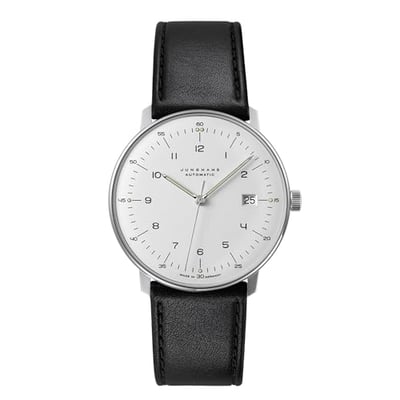
In the world of sector-dial dress watches, there are several alternatives. The Nomos Tangente 38 is a German hand-wound watch with a similar aesthetic, but it uses an in-house movement and costs significantly more. The Junghans Max Bill Handaufzug is another Bauhaus-inspired manual-wind watch with a comparable vintage feel. The Hamilton Intra-Matic 38 offers a sector dial at a lower price point, though its automatic movement and slightly larger case give it a different character.
For those seeking a more affordable homage, the Seiko Presage Cocktail Time and the Orient Bambino offer vintage-inspired dials at a fraction of the price. The Timex Marlin Hand-Wound is a charming retro piece that captures some of the Partitio's spirit. None of these match the Partitio's combination of German construction and Swiss hand-wound movement, but they are worth considering if your budget is tighter.
The Nomos Tangente 38 is the most direct competitor. It is also German, also hand-wound, and also has a clean, legible dial. However, the Tangente uses an in-house Nomos Alpha movement, which is beautifully finished and offers a longer power reserve. The Tangente is more expensive, but it is a more serious horological object. The Partitio, by contrast, is a more accessible entry point into German watchmaking. The Junghans Max Bill is another alternative, but it has a more organic, rounded design that appeals to a different aesthetic. The Hamilton Intra-Matic is a good choice if you want a sector dial with an automatic movement and a slightly more sporty feel.
Investment Value and Service
The Stowa Partitio is not an investment piece. It is a watch to be worn and enjoyed, not flipped for profit. The current retail price is around $1,050, and pre-owned examples typically trade between $600 and $800. The market for Stowa watches is stable but niche; they hold value reasonably well among enthusiasts, but they do not appreciate like limited-edition Rolexes. If you buy a Partitio, buy it because you love it, not because you expect to make money.
Service is straightforward. The ETA 2801-2 is a common movement, and any competent watchmaker can service it. Stowa also offers service through its own workshop. There is no need to send the watch to Switzerland, which keeps costs down. The watch is built to last, and with regular maintenance, it will run for decades.
In terms of value, the Partitio is excellent. For around $1,000, you get a German-made case, a Swiss hand-wound movement, a sapphire crystal, and a beautifully finished dial. Comparable watches from Nomos or Junghans cost more, and while they may offer in-house movements or more brand prestige, the Partitio holds its own. It is a watch that punches above its weight class.
Final Verdict
The Stowa Partitio is a watch that earns its place in a collection through merit, not marketing. It offers a beautiful sector dial, a proven hand-wound movement, and a level of finishing that is honest and appropriate for its price. It is not the most famous watch you can buy, but it is one of the most satisfying. For the discerning young collector who values substance over flash, the Partitio is an excellent choice. It is a watch that will age gracefully, and one that you will enjoy winding every morning.
If you are looking for a dress watch that is a little different from the usual suspects, the Partitio deserves a serious look. It is a watch that rewards knowledge and appreciation, and it is a testament to Stowa's commitment to traditional watchmaking. In a world of disposable fashion watches, the Partitio is a breath of fresh air.
Pros and Cons
Pros: Clean, legible sector dial; proven ETA 2801-2 hand-wound movement; excellent value for a German-made watch; comfortable on the wrist; sapphire crystal and caseback.
Cons: No lume; limited brand recognition outside enthusiast circles; no date (if you need one); strap options are basic.