The MoonSwatch Phenomenon: A Market-Driven Post-Mortem
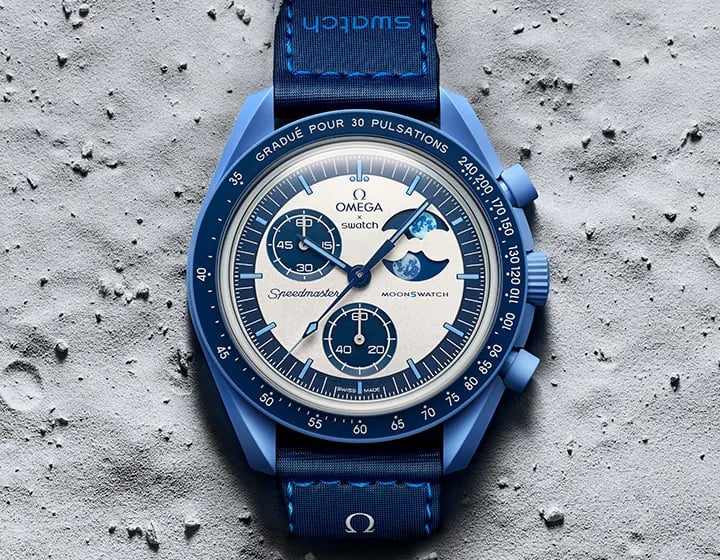
In the spring of 2022, the watch industry witnessed a disruption that defied traditional luxury logic. The Swatch x Omega MoonSwatch was not just a product launch; it was a psychological operation on the global collector base. By taking the Omega Speedmaster—a watch that retails for upwards of $7,000—and translating its DNA into a $260 'Bioceramic' vessel, the Swatch Group effectively gamified horology. From an investment perspective, the initial frenzy was a textbook example of supply-chain-induced scarcity meeting a high-demand heritage IP.
Two years later, the landscape has matured. The 'flipping' window has largely closed for the core eleven models, but the MoonSwatch remains a pivotal case study in brand equity. For the young collector, the MoonSwatch represents an entry point. For the seasoned analyst, it represents a high-volume liquidity play that tests the boundaries of what constitutes a 'luxury' item.
Construction and Materiality: The Bioceramic Reality
The term 'Bioceramic' was a stroke of marketing genius. It sounds high-tech, sustainable, and premium. In reality, it is a composite material consisting of two-thirds ceramic and one-third bio-sourced plastic derived from castor oil. While it offers a matte finish that mimics the look of high-end ceramic watches like the Omega 'Dark Side of the Moon,' the tactile feedback is undeniably plastic-adjacent. It is incredibly light, which is a benefit for comfort but a detriment to perceived value.
The crystal is another area where the MoonSwatch stays true to its roots at the expense of modern durability. It utilizes acrylic (hesalite-style) rather than sapphire. While this is historically accurate to the Moonwatch worn by astronauts, it means the watch will pick up scuffs and scratches from even minor contact with sleeves or desks. Swatch stores offer free polishing for these crystals, but for a collector concerned with 'mint' condition, the maintenance is constant.
The Movement: Disposable Horology?
Under the hood, the MoonSwatch is powered by a standard ETA quartz chronograph movement. It is reliable, accurate, and functional. However, the critical point for a serious buyer is that the case is ultrasonic-welded. This means the watch is essentially a sealed unit. Apart from the battery hatch, there is no way to access the movement for repairs. If the chronograph hand misaligns or the gear train fails outside of the warranty period, the watch is effectively a paperweight. This 'disposable' nature is the antithesis of traditional Swiss watchmaking, where longevity is a core tenet of value.
Market Analysis: The High-Demand References
Not all MoonSwatches are created equal in the secondary market. As an analyst, I track the 'liquidity delta' between models.
- Mission to the Moon (SO33M100): The 'safe' bet. It maintains the highest volume of trades because it most closely resembles the 310.30.42.50.01.001. Its resale value has stabilized at roughly 10-15% above MSRP in the unworn market.
- Mission to Mercury (SO33M101): Often preferred by 'serious' collectors for its darker, more sophisticated palette. It frequently commands a higher premium than the 'Moon' model due to its perceived versatility.
- Mission to Neptune (SO33N100): The outlier. Early production was halted due to a chemical instability in the blue pigment. This created a supply vacuum that sent prices soaring to $1,000+. Even with the re-release, it remains the 'blue-chip' of the original eleven.
- Mission to the Moonphase (Snoopy): The latest hype driver. By adding a moonphase complication and the beloved Snoopy character, Swatch has reignited the 'waitlist' culture. These references (Full Moon and New Moon) currently hold the highest resale premiums, often trading at 50-80% above retail.
Investment Verdict: Hold, Sell, or Avoid?
If you are holding a standard 'Mission to Mars' or 'Mission to the Sun' in hopes of a future auction windfall, my advice is to sell. These models are in constant production and the market is saturated. The supply has finally caught up with the demand, and the 'FOMO' (Fear Of Missing Out) premium has evaporated.
However, if you own a 'Neptune' or a 'Moonshine Gold' limited edition (produced only on full moon dates), there is a case for holding. These variants have a capped or throttled supply that makes them more resilient to market downturns. They represent the 'collectible' tier of the MoonSwatch ecosystem.
Final Thoughts for the Sophisticated Collector
The MoonSwatch is a triumph of design and a failure of traditional horological 'substance.' It is a watch that looks like a $7,000 icon but feels like a $20 toy. Yet, its importance cannot be overstated. It brought millions of new eyes to the Omega Speedmaster and revitalized the Swatch brand. For a discerning buyer, the MoonSwatch is a 'fun' addition—a weekend watch that carries the weight of history without the weight of a stainless steel bracelet. Buy it for what it is: a brilliant, colorful, and temporary slice of watch history.