The High-Stakes Entry: TAG Heuer’s Play for the Deep
In the luxury watch world, there is a distinct difference between a 'lifestyle' diver and a 'saturation' diver. Most of what you see on the wrists of the elite at the Monaco Grand Prix are lifestyle divers—watches that look great with a linen suit but would likely complain if they ever saw more than three meters of salt water. The TAG Heuer Aquaracer Professional 1000 Superdiver (ref. WBP5A8A.BF0619), however, is a different animal entirely. This is a watch designed for the abyss, built to withstand the crushing pressures of 1,000 meters, and engineered with a level of technical sophistication that puts the rest of the Aquaracer line to shame.
For the sophisticated collector, the Superdiver represents a pivotal moment for TAG Heuer. For years, the brand was criticized for relying too heavily on off-the-shelf movements and steel cases that felt a bit too 'entry-level' for the serious horologist. The WBP5A8A.BF0619 is the antidote to that criticism. By utilizing Grade 5 titanium and partnering with Kenissi for a manufacture movement, TAG Heuer has created a piece that can stand toe-to-toe with the heavy hitters of the industry. It’s a flex, but a calculated one—aimed squarely at the buyer who understands the value of material science and mechanical integrity.
Material Excellence: The Grade 5 Titanium Advantage
When you’re dealing with a watch that has a 45mm diameter and a thickness of over 15mm, material choice isn't just an aesthetic preference—it’s a necessity. If the Superdiver were made of traditional 316L stainless steel, it would feel like wearing a boat anchor. Instead, TAG Heuer opted for Grade 5 titanium. Unlike the more common Grade 2 titanium used in entry-level pieces (which is commercially pure and can look a bit dull), Grade 5 is an alloy that can be polished to a mirror shine while remaining significantly harder and more scratch-resistant.
The result is a watch that has the presence of a giant but the weight of a much smaller piece. On the wrist, the Superdiver feels purposeful. The brushed finish of the titanium gives it a tactical, tool-like appearance that is perfectly complemented by the polished chamfers on the lugs. This is the kind of detail that collectors look for—the interplay of light and shadow that separates a mass-market product from a luxury item. The titanium also extends to the bracelet and the folding clasp, which features a superb micro-adjustment system. In the world of high-end diving watches, comfort is the ultimate luxury, and the Superdiver delivers it in spades.
The Kenissi Connection: Calibre TH30-00
Perhaps the most significant aspect of the WBP5A8A.BF0619 is what’s ticking inside. For a long time, TAG Heuer’s reliance on Sellita-based movements was a hurdle for collectors looking to justify a $6,000+ price point. The introduction of the Calibre TH30-00 changes the narrative completely. This movement is produced by Kenissi, the high-end manufacture partially owned by Tudor and Chanel. This is the same industrial DNA you find in the Tudor Pelagos and Black Bay lines, known for their 'tractor-like' reliability and chronometric precision.
The TH30-00 offers a 70-hour power reserve, meaning you can take it off on Friday evening and it will still be ticking perfectly on Monday morning—a feature often referred to as 'weekend-proof.' But more importantly, it is COSC-certified. This isn't just a marketing badge; it’s a guarantee that the watch has been tested by the Contrôle Officiel Suisse des Chronomètres to perform within strict tolerances. For the investor, a manufacture movement from a reputable source like Kenissi adds a layer of 'intrinsic value' that standard movements simply cannot match. It signals that TAG Heuer is serious about its horological future, which in turn helps stabilize long-term resale values.
Design and Aesthetics: The Orange and Black ISO-Standard
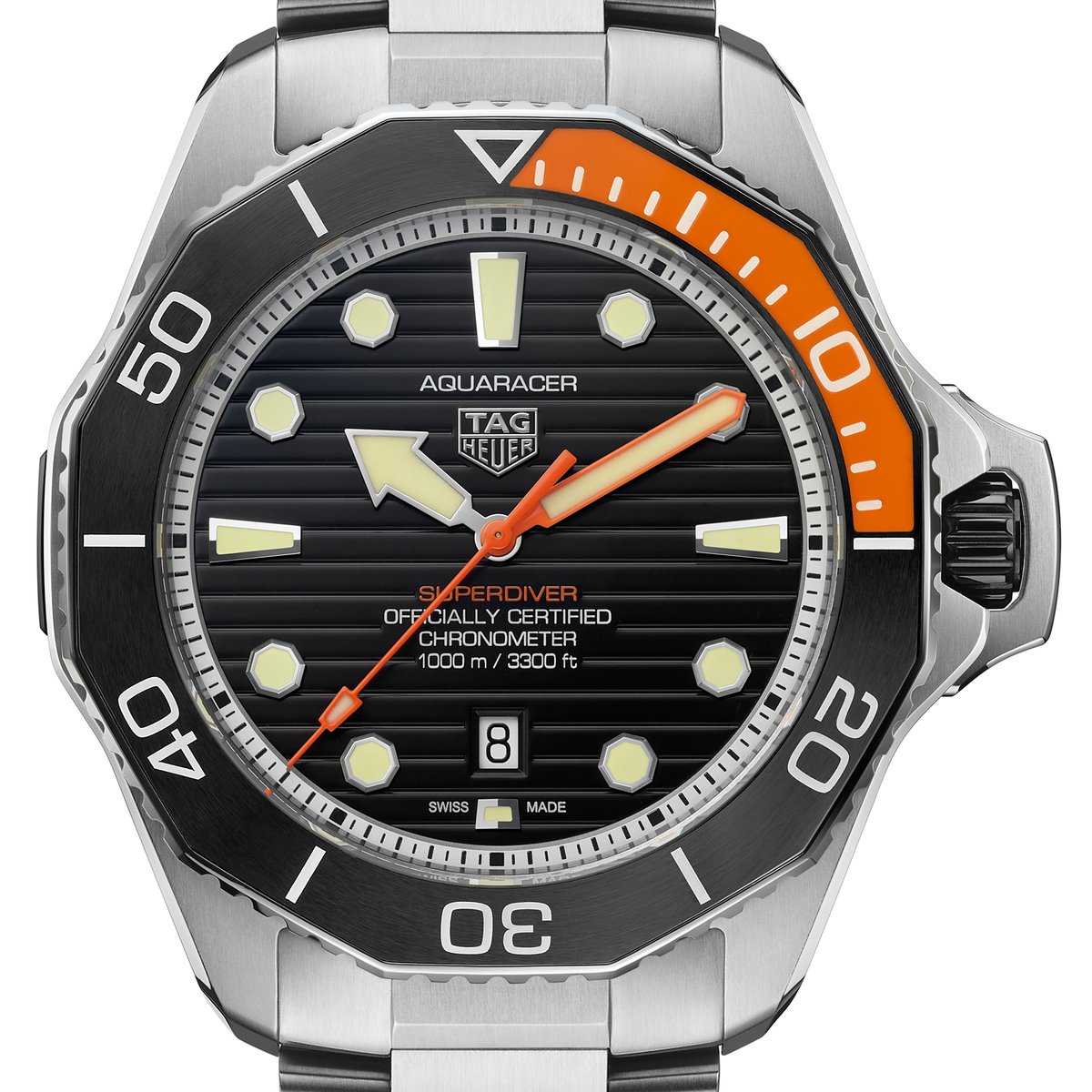
Visually, the Superdiver is a masterclass in functional design. The black sunray dial is deep and legible, featuring the signature horizontal lines of the Aquaracer family. However, it’s the use of orange that really sets this reference apart. The first 15 minutes of the ceramic bezel are finished in a bright orange, as is the minute hand and the 'Superdiver' text on the dial. In the world of professional diving, orange is the last color to remain visible at depth, and its inclusion here is a nod to the watch’s ISO 6425:2018 certification.
One of the most distinctive features is the crown protector at 3 o'clock. It’s a beefy, bridge-like structure that ensures the crown cannot be accidentally unscrewed or damaged during a dive. While some might find it bulky, it adds to the 'over-engineered' charm of the watch. At 10 o'clock, you’ll find the helium escape valve, finished in black DLC. This is a crucial feature for saturation divers, allowing helium atoms to escape the watch during decompression so the crystal doesn't pop off. Even if you never plan on spending weeks in a pressurized habitat, knowing your watch *could* do it is part of the appeal of owning a Superdiver.
Market Analysis: Hold vs. Flip
From an investment perspective, the TAG Heuer Superdiver occupies an interesting niche. Modern TAG Heuers typically do not see the explosive appreciation that we see with limited-edition Patek Philippes or steel Rolexes. However, the Superdiver is not a typical TAG Heuer. Because of its high entry price and technical specs, it is produced in lower volumes than the standard Aquaracer models. This scarcity, combined with the desirability of the Kenissi movement, makes it a much stronger 'hold' than its predecessors.
If you are buying at MSRP ($6,650), you should be prepared for an initial dip in value. On the secondary market, these pieces are currently trading in the $4,500 to $5,200 range. This is the 'sweet spot' for the savvy collector. Buying a mint-condition Superdiver at $4,800 is a fantastic move. You are getting a Grade 5 titanium, 1000m-rated, COSC-certified manufacture watch for less than the price of a steel Tudor Chronograph. In terms of 'spec-for-dollar' value, the Superdiver is currently one of the best-kept secrets in the luxury market.
The Competition: Superdiver vs. The World
When you’re looking at the Superdiver, you’re inevitably going to compare it to the Rolex Sea-Dweller and the Omega Planet Ocean Ultra Deep. The Sea-Dweller 126600 is, of course, the icon, but it will cost you nearly triple the price of a pre-owned Superdiver on the secondary market. Does it offer triple the performance? Objectively, no. The Omega Ultra Deep is another fantastic contender, but it is a much thicker, heavier watch that can feel cumbersome for daily wear.
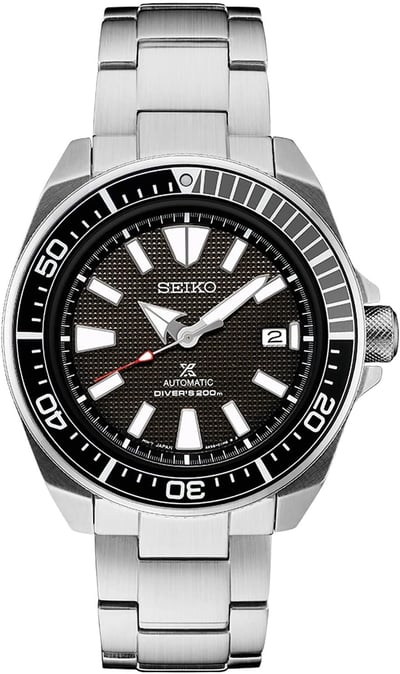
The Superdiver hits the 'Goldilocks' zone. It has more brand prestige and a better movement than a Seiko Prospex, but it’s more affordable and arguably more wearable than the extreme divers from Rolex and Omega. It’s the watch for the collector who wants the technical bragging rights without the 'hype-beast' baggage that comes with the more obvious choices.
Final Verdict: The High-End Beater
Every serious collection needs a 'beater'—a watch that is high-end enough to be respected by peers but rugged enough to actually be used. The TAG Heuer Aquaracer Professional 1000 Superdiver is the ultimate high-end beater. It’s a watch that says you know your movements, you appreciate advanced metallurgy, and you aren't afraid to go against the grain of the 'Rolex-only' crowd.
Whether you’re actually diving to 1,000 meters or just diving into a business meeting in Manhattan, the WBP5A8A.BF0619 delivers a level of wrist presence and technical satisfaction that is hard to beat at its price point. It is a bold, unapologetic statement of intent from TAG Heuer, and a piece that deserves a spot in any diversified luxury portfolio.