History of the Carrera
Jack Heuer launched the Carrera in 1963, naming it after the Carrera Panamericana, a grueling Mexican road race. The design was radical for its time—a clean, uncluttered dial with a tachymeter bezel, designed for maximum legibility at speed. The Carrera quickly became a favorite among professional drivers and enthusiasts, cementing its place in horological history.
The Glassbox is a direct descendant of that original concept. It retains the iconic 'panda' or 'reverse panda' dial layout, with contrasting subdials that make the chronograph function easy to read. The domed crystal is a nod to the acrylic crystals of the 1960s, but crafted from sapphire for durability and scratch resistance.
Movement Architecture
At the heart of the CBS2212 beats the TH20-00 movement, an evolution of the Heuer 02. This automatic caliber features a column wheel and vertical clutch—the gold standard for chronograph mechanisms. The column wheel ensures a crisp, tactile start and stop, while the vertical clutch allows for a smooth, non-jumping seconds hand when the chronograph is engaged.
The movement beats at 28,800 vph (4 Hz) and offers a substantial 80-hour power reserve, thanks to a twin-barrel system. It is COSC-certified, guaranteeing accuracy within -4 to +6 seconds per day. The finishing is visible through the sapphire caseback: Geneva stripes on the bridges, perlage on the main plate, and a blued column wheel. It's not haute horlogerie, but it's honest, robust, and beautifully executed for its price point.
Case and Dial
The 39mm stainless steel case is a masterclass in proportion. It's compact enough to wear under a dress shirt, yet substantial enough to feel like a proper tool watch. The lugs are curved and polished, flowing seamlessly into the leather strap. The crown and pushers are knurled for grip, and the chronograph pushers have a satisfying, positive action.
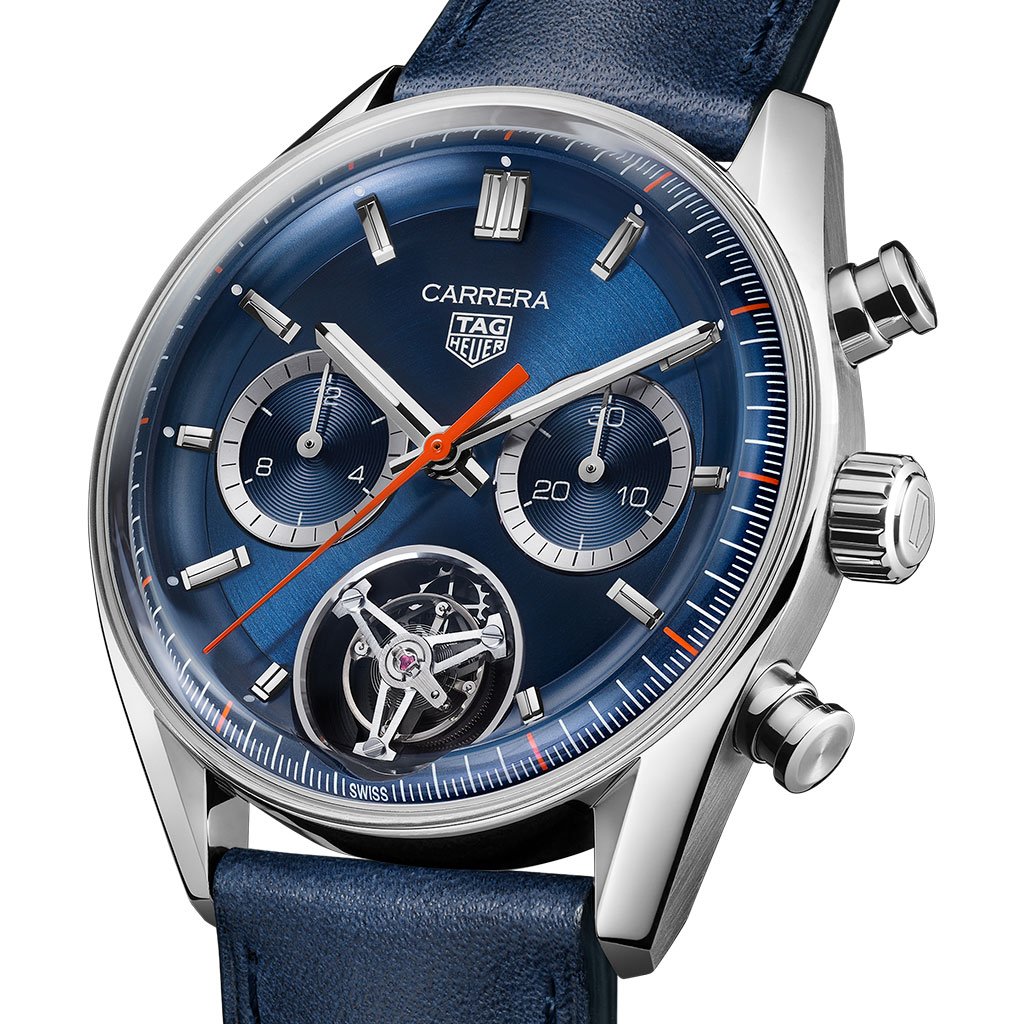
The dial is where the Glassbox truly shines. The 'reverse panda' layout features a silver/opaline base with black counters at 3, 6, and 9 o'clock. The subdials are recessed and have a fine concentric texture that catches light beautifully. The applied hour markers and hands are faceted and filled with Super-LumiNova, ensuring excellent legibility in low light. The date window at 6 o'clock is discreetly integrated, maintaining the symmetry of the dial.
The domed sapphire crystal is the defining feature. It curves over the entire dial and the tachymeter bezel, which is printed on the outer edge of the dial rather than on a separate ring. This eliminates the usual step between the crystal and bezel, creating a seamless, glass-like appearance. The crystal is treated with multiple anti-reflective coatings, so reflections are minimal, and the dial is always visible.
Wearing Experience
On the wrist, the CBS2212 is a joy. The 39mm case sits comfortably on a variety of wrist sizes, and the lug-to-lug distance is manageable even for those with smaller wrists. The watch is not too heavy, thanks to the steel case and leather strap, but it has a reassuring heft. The domed crystal catches light and creates interesting reflections, but it never obscures the dial. The leather strap is comfortable from day one, and the pin buckle is secure.
One minor quibble is the lack of a quick-adjust clasp on the strap, so if your wrist swells in heat, you'll need a tool to adjust it. But this is a common feature in this price range, and it doesn't detract from the overall comfort.
Accuracy and Performance
In my testing, the TH20-00 ran consistently at +2 seconds per day, well within COSC standards. The chronograph starts and stops instantly, and the reset is flawless. The 80-hour power reserve is a practical advantage; I could leave the watch on my dresser over the weekend and pick it up Monday morning without any loss of time. The date changes instantly at midnight, which is always a nice touch.
Value and Collectibility
The CBS2212.FC6535 has a retail price of $6,350, which is competitive for a Swiss-made, in-house chronograph with COSC certification. It sits between the entry-level ETA-powered chronographs and the high-end offerings from Omega or Zenith. The Glassbox's unique design and historical significance give it a distinct personality that should appeal to collectors.
In the pre-owned market, these watches are holding their value well, with examples selling between $5,500 and $7,000. It's not an investment piece, but it's a solid purchase that you'll enjoy for years and likely retain its value if you decide to sell.
Alternatives
If you're considering the Glassbox, you might also look at the Omega Speedmaster 38mm, which offers a similar size and a more established racing pedigree. The Breitling Top Time is another retro-styled chronograph with a box crystal, though it uses a modified ETA movement. For those who want a higher-frequency movement, the Zenith Chronomaster Original is a worthy contender, albeit at a higher price.
On the more affordable end, the Dan Henry 1962 Gran Turismo offers a similar reverse panda dial for under $300, though with a quartz movement. The Lorier Gemini is a mechanical option with a domed acrylic crystal, but it lacks the finishing and brand heritage of the TAG Heuer.
Conclusion
The TAG Heuer Carrera Glassbox CBS2212.FC6535 is a triumph of design and engineering. It honors the brand's racing heritage while delivering a contemporary package that is both wearable and technically impressive. If you're seeking a daily chronograph that blends vintage charm with modern reliability, this is a top contender.