The Genesis of the Summiteer
The field watch is a study in necessity. Born from the trenches of the Great War and refined on the peaks of the Himalayas, its requirements are simple: legibility, reliability, and resilience. Traska’s entry into this storied category, the Summiteer 38 (ref. 2196), does not attempt to reinvent the wheel. Instead, it applies modern metallurgical science and precise manufacturing to a classic silhouette, resulting in a timepiece that feels both familiar and technologically superior.
Metallurgy and Resilience: The 1200HV Advantage
Perhaps the most significant technical achievement of the Summiteer is its proprietary hardening treatment. While standard 316L stainless steel has a Vickers hardness of approximately 200, Traska subjects their cases and bracelets to a heat-treatment process that raises the surface hardness to roughly 1200HV. This is not a mere coating that can flake or peel; it is a diffusion process that alters the surface of the steel itself.
For the collector, this translates to a watch that maintains its 'showroom' finish long after others have succumbed to the 'desk diving' scratches of daily life. In my testing, the Summiteer 38 resisted abrasions from stainless steel surfaces and stone with remarkable ease. This technical choice reflects a reverence for the watch as an enduring tool, ensuring that the aesthetic integrity of the piece is preserved through years of use.
Movement Architecture: The Choice of the Miyota 9039
The heart of the reference 2196 is the Miyota 9039. Within the horological community, Japanese movements are often unfairly overshadowed by their Swiss counterparts. However, the 9000-series from Citizen’s movement manufacture is a formidable competitor to the ETA 2824 or Sellita SW200. Operating at 28,800 vibrations per hour (4Hz), it provides the smooth sweep of the seconds hand that collectors demand.
The specific choice of the 9039 is crucial. Unlike the 9015, which includes a date complication, the 9039 is a true 'no-date' caliber. This allows for a thinner movement height and, more importantly for the user experience, eliminates the 'phantom' crown position. When you pull the crown to the first notch, you are immediately engaging the time-setting mechanism. This level of intentionality in movement selection is what separates serious horological editors' favorites from mass-market microbrands.
Dial Geometry and Legibility
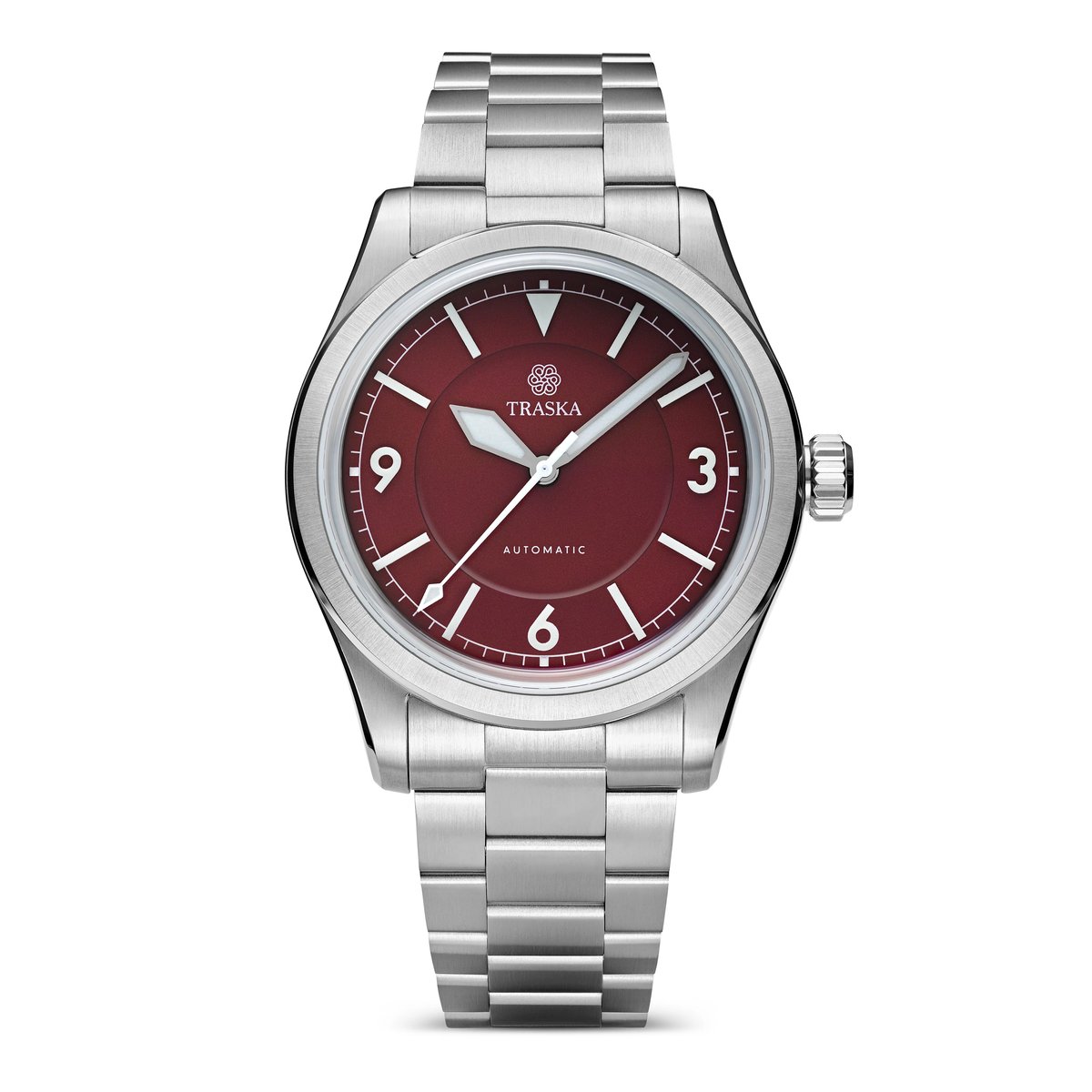
The dial of the Summiteer 38 is a masterclass in balance. It utilizes the classic 3-6-9 layout, a design choice that provides instant orientation. The indices are applied rather than printed, adding a layer of depth and light-play to the matte dial surface. Each marker is filled with BGW9 Super-LumiNova, which glows a crisp blue in low-light conditions.
The handset is diamond-cut and polished, with a length that is perfectly proportioned to the minute track. The seconds hand features a luminescent 'lollipop' tip, a nod to vintage maritime and field watches that ensures the watch is functioning even in total darkness. The absence of a date window preserves the symmetry of the dial, emphasizing the watch's role as a pure time-telling instrument.
Case Geometry and Ergonomics
At 38.5mm in diameter and only 10mm thick, the Summiteer 38 occupies the 'Goldilocks' zone of watch dimensions. The lug-to-lug distance of 46mm ensures that the watch fits a wide variety of wrist sizes without overhang. The case finishing is a combination of radial brushing on the lugs and high-polish chamfers along the flanks, providing a visual contrast that highlights the case's slim profile.
The screw-down crown is appropriately sized—large enough to operate with ease but small enough not to dig into the back of the hand. It contributes to the 100 meters of water resistance, making the Summiteer a capable companion for swimming or light diving, further cementing its status as a GADA watch.
The Bracelet: A Study in Comfort
Traska has invested significant effort into their bracelet design. The reference 2196 features a fully brushed three-link bracelet that tapers from 20mm at the lugs to 16mm at the clasp. The links are held together by screws rather than friction pins, a detail that collectors appreciate for both security and ease of adjustment. The articulation of the links is exceptionally fluid, preventing the 'hair-pulling' often associated with lower-end steel bracelets.
The clasp is a standard folding unit with four holes of micro-adjustment. While some may clamor for a tool-less 'on-the-fly' adjustment system, the current clasp is remarkably slim, keeping the overall bulk of the watch to a minimum. The integration between the end links and the case is seamless, with no unsightly gaps or lateral play.
Comparative Analysis: The Field Watch Landscape
When placed alongside the Rolex Explorer or the Tudor Ranger, the Traska Summiteer 38 holds its own not by attempting to mimic their heritage, but by offering a modern technical alternative. While the Explorer 124270 is a masterpiece of luxury horology, its high-polish surfaces are scratch magnets. The Summiteer, with its 1200HV hardening, invites the wearer to use it as it was intended: without fear of damage.
Compared to other microbrands like Christopher Ward or Lorier, Traska leans more heavily into the 'tool' aspect of the tool watch. Where Lorier uses acrylic crystals for vintage charm, Traska uses box sapphire for modern durability. Where Christopher Ward leans into Swiss-made prestige, Traska focuses on the functional benefits of Japanese engineering and proprietary case treatments.
Final Verdict
The Traska Summiteer 38 reference 2196 is a watch for the discerning collector who values technical specifications over brand recognition. It is a quiet achiever—a watch that does not shout for attention but rewards the wearer with its precision, comfort, and incredible resilience. For those seeking a daily wearer that can withstand the rigors of an active lifestyle while maintaining a sophisticated aesthetic, the Summiteer 38 is, quite simply, without peer in its price bracket. It is a testament to the fact that in modern horology, true luxury is found in the details of construction and the longevity of the object.