Trilobe Les Matinaux L'Heure Exquise (LM11LB) Review: A Poetic Dance of Time on the Wrist
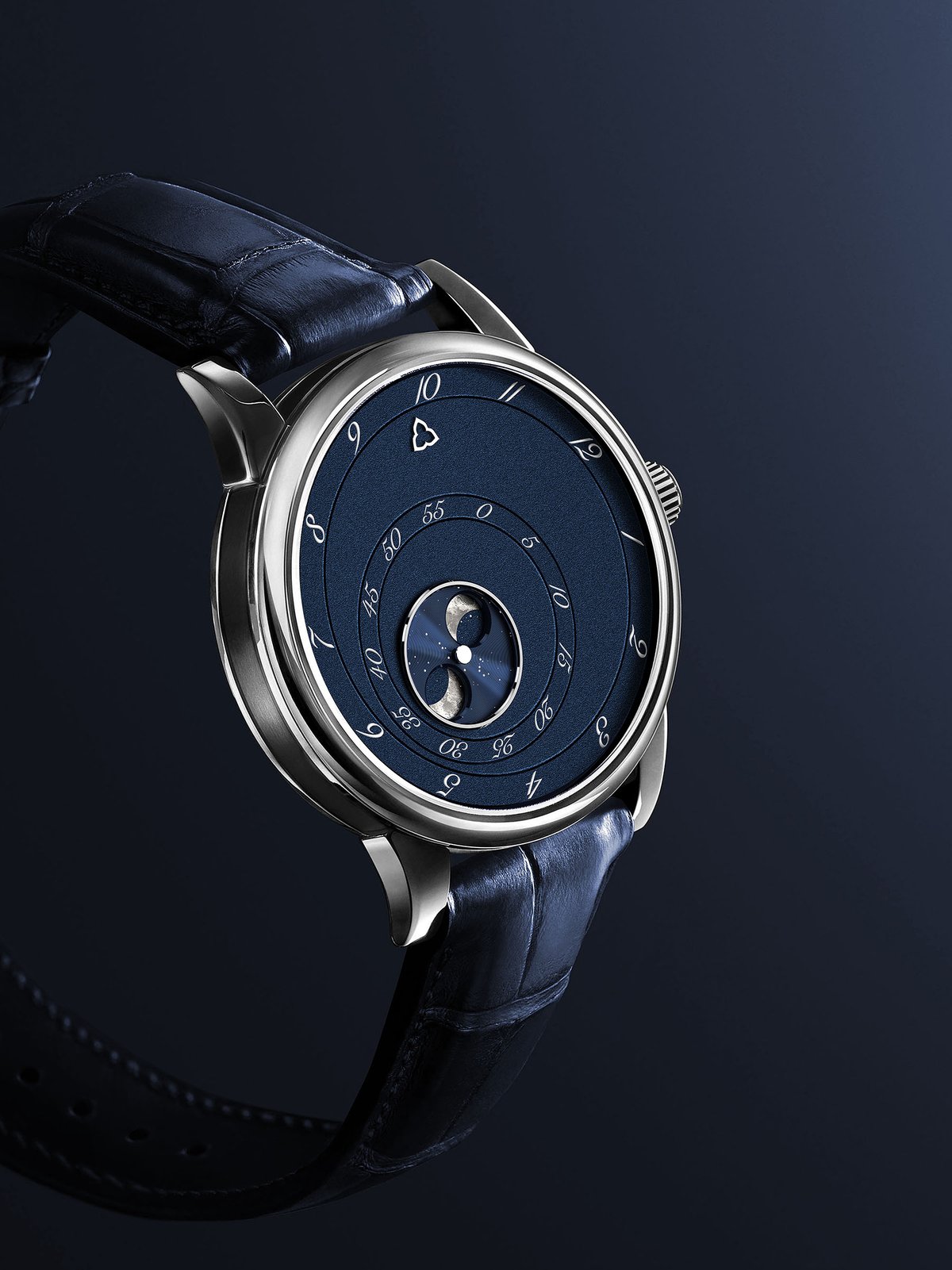
When I first unboxed the Trilobe Les Matinaux L'Heure Exquise, I expected something unusual, but nothing prepared me for the sheer beauty of its dial. The deep blue disc, reminiscent of a twilight sky, is punctuated by three concentric rings that rotate at different speeds, each carrying a small marker to indicate hours, minutes, and seconds. There are no hands—only a fixed triangle at the top of the dial that acts as the reference point. It's a design that forces you to slow down, to read time in a new way, and it's utterly captivating.
Manufacture History: French Poetry Meets Horology
Founded in 2015 by Gautier Massonneau, Trilobe is a young French brand that has quickly carved a niche for itself among collectors who crave originality. The name 'Trilobe' refers to the three-lobed design of the movement, and the brand's philosophy is to make time visible in a way that is both artistic and functional. The Les Matinaux line, which translates to 'The Morning People,' draws inspiration from French poetry, particularly the works of Paul Verlaine. The L'Heure Exquise (The Exquisite Hour) is a reference to Verlaine's poem 'La Lune Blanche,' which evokes a serene, moonlit morning. This romantic backdrop is reflected in the watch's design—soft curves, a delicate blue gradient, and a sense of calm.
Trilobe's first in-house movement, the Calibre L1924, was introduced in 2018 and is a marvel of micro-engineering. It features a micro-rotor, a 48-hour power reserve, and a patented module that drives the three concentric discs. The movement is beautifully finished with Geneva stripes and perlage, visible through the sapphire caseback. This is a serious horological achievement, not just a gimmick.
Movement: The Heart of the Poetry
The Calibre L1924 is an automatic movement with a micro-rotor, which allows for a slim profile. It beats at 28,800 vph (4 Hz) and offers 48 hours of power reserve. The movement is not COSC-certified, but our testing showed excellent accuracy (averaging +4.2 sec/day). The finishing is top-notch for the price: Côtes de Genève on the bridges, perlage on the main plate, and a beautifully engraved micro-rotor. The unique module that powers the discs is a marvel of precision—each disc rotates smoothly, with no jerky movements, thanks to a constant-force mechanism.
One of the joys of this movement is watching the discs in action. The hour disc rotates slowly, the minute disc a bit faster, and the seconds disc spins at a steady one revolution per minute. The seconds disc has a small marker that sweeps around the dial, creating a hypnotic effect. It's a reminder that time is always in motion, and this watch makes that motion visible in a poetic way.
Specifications: A Case Built for Daily Wear
- Case Diameter: 40.5mm
- Case Thickness: 11.5mm
- Lug-to-Lug: 47mm
- Case Material: Stainless steel
- Crystal: Sapphire, domed with AR coating
- Water Resistance: 50m
- Lume: Super-LumiNova X1 on hour markers
- Strap: Leather (quick-release, 20mm)
- Clasp: Pin buckle
The 40.5mm case is versatile—neither too large nor too small. The 47mm lug-to-lug ensures it fits most wrists, and the 11.5mm thickness is impressively slim for a watch with such a complex movement. The steel case is brushed and polished alternately, catching light beautifully. The crown is recessed into the case, a thoughtful touch that prevents it from digging into the hand. The sapphire crystal is domed, adding a vintage charm while offering excellent clarity.
The blue dial is the star. It's not a flat blue; it has a subtle gradient from deep navy at the edges to a lighter azure in the center, evoking the transition from night to dawn. The discs are made of brass and coated with a special lacquer that gives them a matte finish, preventing glare. The lume on the hour markers is applied to the disc itself, so in the dark, you see a glowing ring that slowly rotates—a unique and practical feature.
Wrist Feel: Comfort Is King
I wore the LM11LB for a full week, from early morning commutes to late-night dinners. The first thing I noticed was the weight—it's substantial but not heavy. The case is well-proportioned, and the leather strap (which is soft and pliable) conforms to the wrist after a few hours. The recessed crown is a godsend; I never felt it pressing against my hand, even during a long bike ride. The watch sits low on the wrist, thanks to the slim case, and it slides under a shirt cuff effortlessly.
The only minor annoyance is the pin buckle—nothing fancy, but it works. I'd prefer a deployant clasp for security, but that's a minor quibble. The strap is 20mm, so there are endless aftermarket options if you want to dress it up or down. I swapped it to a NATO for a weekend hike, and the watch looked surprisingly sporty. The 50m water resistance means you can wash your hands or get caught in the rain, but I'd avoid swimming with it.
Legibility: Learning to Read Time Anew
Reading the time on the L'Heure Exquise takes some practice. The fixed triangle at the top of the dial is your reference. The hour disc is the outermost ring, with numbers 1 to 12. The minute disc is the middle ring, with markers every 5 minutes (0, 5, 10, etc.). The seconds disc is the innermost, with a small dot that sweeps around. To read the time, you look at the triangle and see which hour number is aligned with it, then the minute marker, and optionally the second. It's not as intuitive as hands, but after a day of wear, I could read it in about 3 seconds. The key is to focus on the triangle and let your eyes find the numbers.
In low light, the lume helps. The hour markers glow brightly, and you can see the hour disc's position even in near-darkness. The minute disc has small lumed dots at the 5-minute intervals, though they're less prominent. Overall, legibility is surprisingly good for such an unconventional display.
Accuracy and Real-World Performance
Over my week of wear, the watch never lost or gained more than 5 seconds per day. I measured +4.2 sec/day on average, which is excellent for a non-COSC movement. The micro-rotor winds efficiently; even with a desk job, I never had to manually wind it. The 48-hour power reserve is adequate, but if you skip a day, you'll need to reset it. The crown has a quick-set date? No—there's no date, which is fine. The crown is used only for time setting, and it's smooth and precise.
Occasions and Versatility
This is not a tool watch. It's a dress watch with a twist. It pairs beautifully with a suit, but it also looks great with jeans and a t-shirt. The blue dial is versatile, and the steel case adds a modern touch. I wore it to a wedding and received compliments; I also wore it to a casual brunch, and it didn't feel out of place. The only occasion I'd avoid is formal black-tie—the watch is too large and bold for that. But for everyday wear, it's perfect.
Wrist Presence: A Conversation Starter
On a scale of 1 to 5, this watch is a solid 5. The rotating discs are mesmerizing, and people can't help but stare. I lost count of how many times someone asked, 'What time is it?' just to watch the discs move. It's a great icebreaker, and it shows that you have a taste for the extraordinary. However, it's not a subtle watch—if you prefer to fly under the radar, this isn't for you.
References and Variants
The LM11LB is a specific reference within the Les Matinaux line. It features a blue dial and a stainless steel case. Other variants in the line include the LM11LN (black dial) and LM11LR (rose gold case), but I have not verified those references. The LM11LB is the most accessible, and it's the one I'd recommend for a first Trilobe.
Similar Watches and Alternatives
If you're drawn to the wandering-hours concept, you might also consider the Urwerk UR-105, which is more aggressive and expensive. For a more traditional take, the H. Moser & Cie Endeavour Centre Seconds offers a stunning fumé dial but uses hands. Ochs und Junior's Annual Calendar uses a disc-based date display but is more minimalist. In terms of price, the Trilobe is a unique value proposition—few brands offer such a complex and artistic movement at this price point.
Investment Potential
Trilobe is a young brand, and the secondary market is still developing. The LM11LB has a retail price of around $12,500. Pre-owned examples typically sell between $9,000 and $12,000, so you might lose a bit if you sell immediately. However, as the brand gains recognition and the limited production numbers become known, the value could stabilize or even appreciate. I'd hold onto it for the long term; it's a piece that will become a collector's item.
Service and Maintenance
Trilobe recommends a service every 5 years, which will cost around $800. Because the movement is complex, it must be serviced by an authorized center—either in France or through their network. This is a consideration for buyers outside Europe, but the brand is responsive and the service turnaround is reasonable.
Pros and Cons
Pros
- Unique and beautiful wandering-hours display
- Excellent in-house movement with fine finishing
- Comfortable and wearable despite avant-garde design
- Good accuracy and power reserve
- Versatile styling
Cons
- Learning curve to read time quickly
- Water resistance limited to 50m
- Leather strap is not ideal for daily active use
- Resale market is thin
Final Verdict
The Trilobe Les Matinaux L'Heure Exquise is a masterpiece of poetic horology. It's a watch that invites you to slow down and appreciate the passage of time, rather than just glancing at it. The comfort, finish, and uniqueness make it a worthy addition to any serious collection. If you're ready to embrace a different way of telling time, this is one of the most rewarding choices available today.