The Glashütte Advantage: Why Tutima Matters in a Crowded Market
When we talk about German watchmaking, the conversation usually begins and ends with A. Lange & Söhne or Glashütte Original. But for the collector who understands the nuances of the market, Tutima represents the pragmatic entry point into this prestigious Saxon enclave. The Grand Flieger Airport Ref. 6106-01 isn't just a watch; it's a statement of independence. In an era where conglomerates control the narrative, Tutima remains a family-owned entity that takes its 'Made in Glashütte' seal seriously.
From an investment perspective, Tutima is what we call a 'value floor' brand. Unlike the speculative bubbles we see in stainless steel sports watches from Switzerland, Tutima’s pricing is grounded in manufacturing reality. You are paying for the sapphire, the ceramic, the regulation, and the history—not just a marketing budget. For the young collector, this is a 'safe' buy. It’s the kind of watch that signals you’ve graduated from the entry-level department store brands but aren't yet ready to play the games required to secure a GMT-Master II.
Aesthetic Analysis: Ceramic, Steel, and the Art of the Pilot Watch
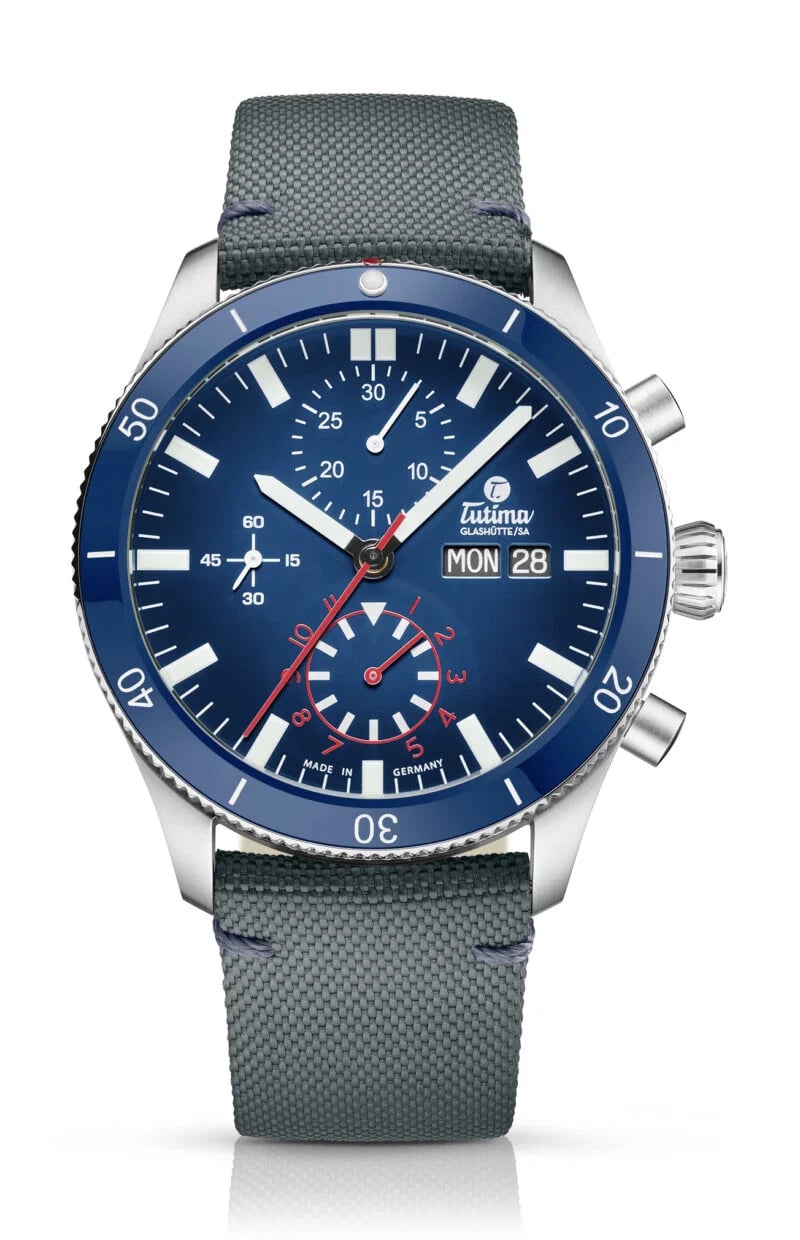
The first thing that strikes you about the 6106-01 is the bezel. Most pilot watches opt for a simple steel or coin-edge bezel. Tutima has elevated the Grand Flieger by incorporating a bidirectional rotating ceramic bezel. This isn't just about scratch resistance; it’s about the play of light. The high-gloss finish of the ceramic contrasts beautifully with the brushed stainless steel case, giving the watch a multi-dimensional look that captures the eye without being 'blingy.'
The dial is a masterclass in legibility. The dégradé effect—fading from a deep grey in the center to a rich black at the edges—provides a backdrop that makes the Super-LumiNova coated hands and numerals pop. It’s a functional tool that happens to look like a piece of modern industrial design. The inclusion of both day and date complications at the 3 o'clock position adds a level of daily utility that many 'purist' pilot watches lack. For the frequent traveler or the busy professional, knowing the day of the week is more than a convenience; it’s a necessity.
The Movement: Reliable Saxon Engineering
Inside the 43mm case beats the Tutima Caliber 330. Purists might scoff at the Sellita SW220-1 base, but let’s look at the data. In the sub-$3,000 category, an in-house movement is often a liability rather than an asset. In-house movements in this price bracket are frequently more expensive to service and less reliable than a tried-and-true Sellita. Tutima’s decision to use a high-grade Sellita base and then modify and regulate it in Glashütte is a win for the consumer.
The movement features a 38-hour power reserve, which, admittedly, is on the lower side for 2024 standards. However, given that this is designed as a daily wearer, the automatic winding system keeps it topped off effortlessly. The custom Tutima rotor, visible through the sapphire caseback, features a gold seal that adds a touch of Glashütte flair to an otherwise utilitarian movement. It’s a reminder that even in their tool watches, Tutima doesn't cut corners on the finishing.
Market Dynamics: Hold, Flip, or Daily Drive?
Let’s talk numbers. The MSRP for the 6106-01 sits around $2,500. On the secondary market, you can find mint examples for anywhere between $1,400 and $1,800. This 30-40% initial depreciation is standard for most luxury watches outside of the 'Unicorn' brands. However, once a Tutima hits that $1,500 mark, it stays there. The floor is incredibly solid.
For the 'trust-fund-baby' collector, this is the perfect 'beater' watch. It’s the watch you take on a ski trip to Gstaad or a sailing trip in the Hamptons. It has 200 meters of water resistance—a rarity for a pilot watch—meaning you don't have to baby it. From a portfolio perspective, the Tutima is a 'Hold.' It’s a watch that provides high emotional dividends (the joy of wearing it) while maintaining a predictable resale value should you decide to trade up in a few years.
The Competitive Landscape: Tutima vs. The World
How does it stack up against the competition? If you’re looking at IWC, you’re looking at $5,000+ for a Mark XX. Is the IWC 'better'? It has a more prestigious name and an in-house movement with a longer power reserve, but is it twice as good? From a build quality and 'wrist-feel' perspective, the Tutima is shockingly close.
Then there is Sinn. The Sinn 104 is the elephant in the room. It’s cheaper and has a cult following. However, the Tutima feels more 'luxury.' The finishing on the Grand Flieger case and the integration of the ceramic bezel give it a level of refinement that the Sinn lacks. Sinn is a tool; Tutima is an instrument. There is a subtle but distinct difference in the way these two German brands approach watchmaking, and the Grand Flieger sits firmly in the more sophisticated camp.
Final Thoughts: Why You Should Buy the 6106-01
The Tutima Grand Flieger Airport Ref. 6106-01 is a watch for the confident collector. It’s for the person who doesn't need a crown on their dial to feel successful. It offers a unique blend of Glashütte heritage, modern material science, and rugged utility. In a market that is increasingly defined by scarcity and speculation, the Grand Flieger is a refreshing reminder of what watchmaking should be: high-quality, fairly priced, and built to last a lifetime.
Whether you’re just starting your collection or looking for a robust addition to a multi-million dollar safe, the Tutima deserves your attention. It’s a sleeper hit that won't stay under the radar forever. Buy it for the history, keep it for the quality, and wear it because you know something the rest of the hype-beasts don't.