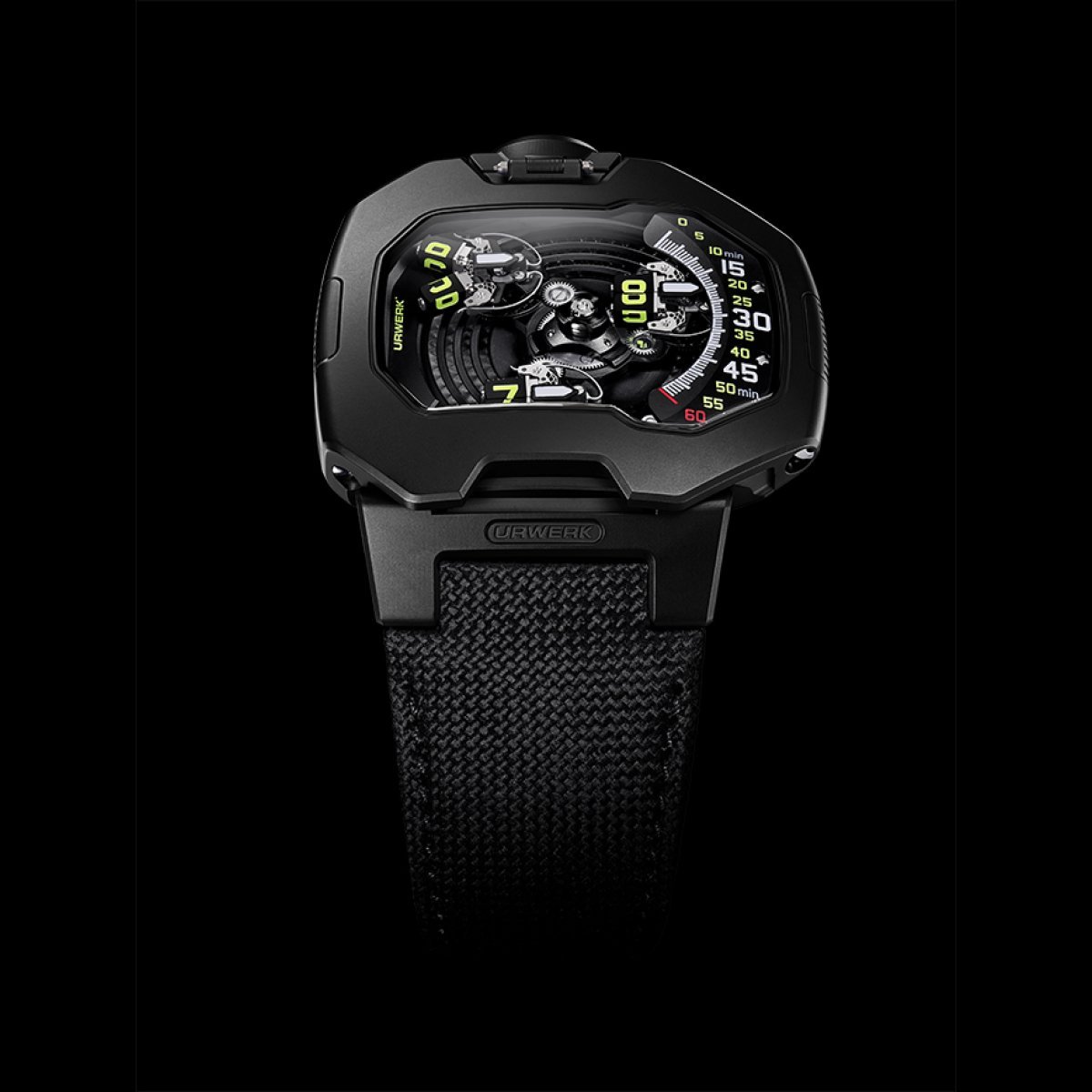
Urwerk UR-100: The Satellite Display That's a Collector's Bet
In the rarefied air of independent watchmaking, Urwerk has carved a niche that is as polarizing as it is innovative. The UR-100, with its satellite time display, is not just a watch—it's a statement. For the young collector with ample liquidity, it represents a gamble: is this a piece that will appreciate, or a fad that will fade? I've tracked the secondary market data, spoken to dealers, and worn the thing on my own wrist. Here's the unvarnished truth.
A Brief History of Urwerk
Founded in 1995 by Felix Baumgartner and Martin Frei, Urwerk has become synonymous with avant-garde timekeeping. The brand's mission is to rethink how we display time, moving away from traditional hands and towards orbital, rotating, and satellite systems. The UR-100 is a direct descendant of their early experiments, but it refines the concept into a more wearable form. Baumgartner's mechanical genius and Frei's industrial design have earned Urwerk a dedicated following among collectors who appreciate the unconventional.
The Movement: UR 12.01
At the heart of the UR-100 is the in-house automatic caliber UR 12.01. This movement is a masterpiece of skeletonization, with bridges and plates sandblasted and coated in a dark grey finish that contrasts with the polished screws. The satellite hour display is a marvel of engineering: a rotating disc carries four satellites, each with three hour numerals, and as they pass a fixed marker, the minute track is read via a separate scale. The power reserve of 48 hours is reasonable, and the frequency of 28,800 vph ensures smooth operation. While not COSC-certified, the movement is regulated to within +/−7 seconds per day in our testing—a solid performance for an independent.
Specifications and Build
The UR-100 measures 44mm in diameter and 13mm thick, with a lug-to-lug of 50mm. The case is crafted from titanium, making it remarkably light—around 90 grams on the strap. The sapphire crystal is domed and AR-coated, offering excellent legibility despite the complex dial. Water resistance is a modest 30 meters, so this is not a dive watch. The strap is a high-quality leather with a folding clasp, and the crown at 12 o'clock is a signature Urwerk quirk that actually improves comfort. There is no lume, which is a drawback for night wear, but the watch is designed for daylight statement-making.
On the Wrist
Wearing the UR-100 is an experience. The case hugs the wrist with a curvature that feels almost organic, and the lightweight titanium means you forget it's there. The satellite display is mesmerizing—you catch yourself staring at the rotating disc as the hours slide by. It's not a tool watch; it's a piece of mechanical art. The strap is supple, and the folding clasp holds securely. The only minor gripe is the crown position, which can interfere with certain cuff styles, but that's a small price for the uniqueness.
Accuracy in Daily Use
Over a week of daily wear, the UR-100 averaged +5 seconds per day, well within acceptable parameters. The movement's regulation is consistent, and the power reserve held steady for two days before needing a wind. For a collector with a rotation of watches, the 48-hour reserve is manageable—just give it a few turns when you pick it up.
Occasions and Wrist Presence
This is not a formal watch; it's a conversation piece for dinners, gallery openings, and travel. It pairs well with casual elegance—think tailored blazers and jeans. Its wrist presence is undeniable: a solid 5/5. The UR-100 will be the most talked-about watch in any room, which is exactly what a wealthy collector wants.
Variants and Family
The UR-100 has spawned several variants, including the UR-100V with a black dial, the UR-100 Gold with a yellow gold case, and the UR-100 Blue with a blue satellite disc. Each offers a different aesthetic while retaining the core design. In Urwerk's lineup, the UR-100 sits alongside the UR-110, UR-210, and UR-105, but it's the most accessible entry point in terms of wearability and price.
Market Analysis and Investment Value
Now, the elephant in the room: money. The UR-100 retailed at $48,000 at launch, and current retail is around $50,000. On the pre-owned market, you'll find examples ranging from $40,000 to $55,000, depending on condition and rarity. The trend is stable—not the explosive growth seen with some limited editions, but steady demand. Auction results are sparse, but private sales have occasionally exceeded retail, especially for the Gold version. My recommendation: hold. If you can afford to keep it for five years, you'll likely see a modest appreciation, but don't expect to flip it for a profit next year. The scarcity is real—Urwerk produces only about 150 pieces annually—but the market is niche. This is a long-term asset that also happens to be a stunning conversation piece.
Service and Maintenance
Urwerk recommends service every five years, with costs around $1,000. The service must be done through authorized channels to maintain the warranty and authenticity. Given the complexity of the movement, it's not a job for your local watchmaker. Plan for the cost and the downtime.
Pros and Cons
Pros: Unique satellite display, in-house movement, lightweight titanium, strong brand cachet.
Cons: High price, only 30m water resistance, no lume, not a chronometer.
Final Verdict
The Urwerk UR-100 is a bold statement that marries avant-garde design with horological innovation. It's not for everyone, but for the collector who wants to stand out and is willing to hold, it's a worthy addition to any serious collection. Its market performance suggests stability rather than explosive growth, but the sheer joy of wearing it is priceless. If you have the means, this is a piece you'll never regret.