Every decade gets rediscovered on a schedule, and the 1920s are currently on their fourth or fifth lap. Fashion has been borrowing from the decade for a century because it never fails: the geometry is clean, the ornament is expensive, and the whole thing photographs beautifully in black and white. But there is a difference between a brand borrowing a font and a brand borrowing a worldview. Vacheron Constantin's Roaring Twenties is the second kind.
This matters because the market has shifted underneath everyone's feet. The young collectors who came up on steel sports watches — the GMTs, the Nautilus-adjacent grails, the limited drops that sold out in ninety seconds — have started buying dress pieces. Not because they got old, but because the obvious stuff got expensive and the obvious stuff got boring. A small gold watch on a leather strap now says something a steel chronograph can't: that you've stopped needing to announce yourself.
Vacheron Constantin, founded in Geneva in 1755 and the oldest continuously operating watch manufacturer in the city, has been positioned for exactly this shift for years. The Overseas line gets the headlines and the waitlists. The Patrimony and Traditionnelle lines get the loyalists. But it's the heritage pieces — the ones that treat the archive as a living thing rather than a marketing asset — that tell you what the maison actually believes. And the Roaring Twenties is the most confident statement of that belief in recent memory.
The Decade That Refuses to Die
Let's get the cultural argument out of the way first, because it's load-bearing.
The 1920s as a design era is not really about nostalgia. It's about a specific set of propositions: that ornament can be rigorous, that geometry can be warm, that a small object can hold a large amount of intention. Art Deco was the first design movement to fully absorb the idea that the machine age didn't have to mean the ugliness of the machine. Everything from the Chrysler Building to the Cartier Tank to the Orient Express dining cars came out of that same conviction.
Watchmaking got there early. Geneva's workshops in the 1920s were producing cushion cases, rectangular cases, tonneau cases, dials with stepped numerals and sector tracks and hand-turned guilloché so fine it reads as texture rather than pattern. It was an era when a watch was a piece of jewellery that happened to tell the time, and the best of them were designed by people who understood that a wrist is a curved surface and an eye is a lazy one.
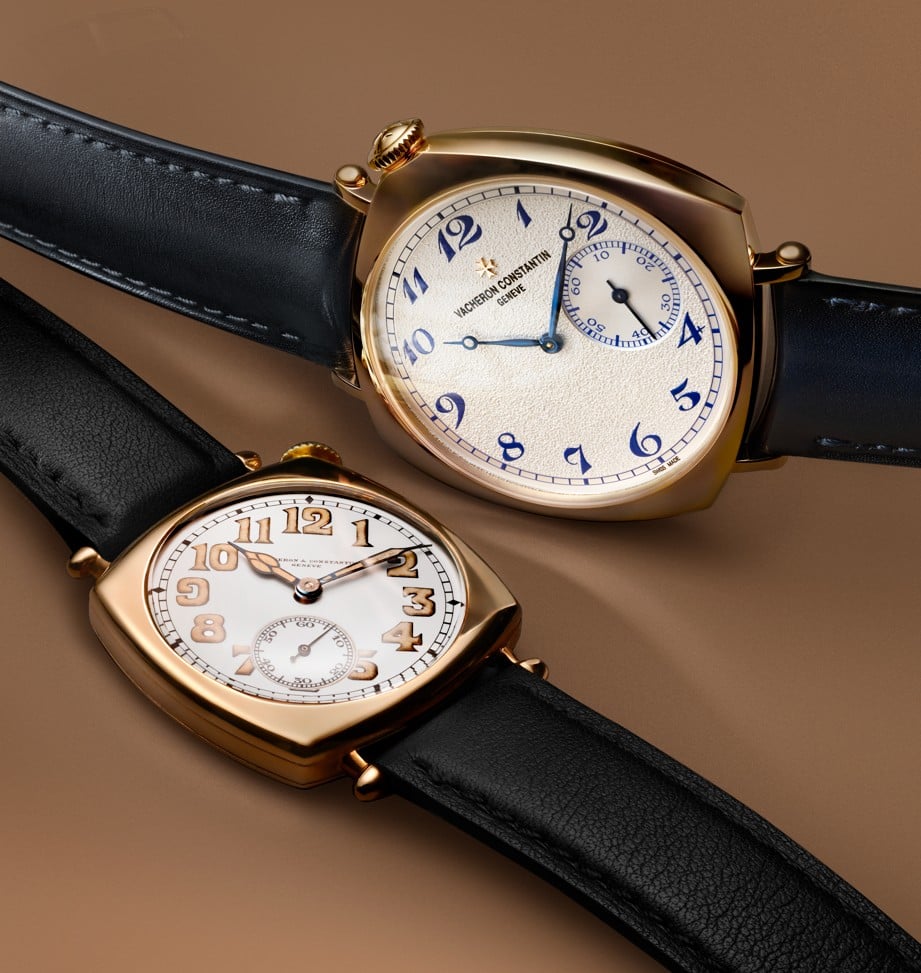
The Roaring Twenties takes that brief seriously. The case is gold — available in the warmer pink tone and the cooler white — and the design language is architectural rather than decorative, which is the harder trick. There are guilloché dials that are turned by hand, which is a process that has essentially one failure mode and roughly forty ways to reach it. The numerals and markers are geometric, not literal, so the dial reads as a composition rather than a diagram.
What it does not do is costume drama. There are no tassels here, no faux-vintage lume, no artificially aged leather. Vacheron has resisted the temptation to make a 1920s watch look like it's been in a drawer for a century. It's a 1920s idea executed with 2020s precision, and that's the only version of this exercise that ages well.
First Contact: What It Actually Looks Like
There's a moment with a watch like this when it moves from object to presence. It happens when the light hits the guilloché at an angle and all that hand-turned texture resolves into a single shifting plane, and then disappears again. Photographs flatten it. On the wrist, in a restaurant, under a low warm light, it's genuinely alive.
The gold case is finished with the maison's usual discipline — polished surfaces that are actually polished, brushed surfaces that are actually brushed, and a transition between the two that doesn't feel like a compromise. The sapphire crystal is subtly domed, which is the right call for a heritage piece and the wrong one for anything that wants to look modern. It softens the dial rather than presenting it behind glass, and it's the kind of decision that costs money and earns nothing on a spec sheet.
There's no lume, and there shouldn't be. A watch like this is designed for candlelight and boardrooms, not for a night dive. The moment you start adding Super-LumiNova to a guilloché dress dial, you've made two watches and ruined both.
The Engine Room
The Roaring Twenties is powered by Vacheron Constantin's Calibre 4400 AS — a hand-wound, in-house movement that has become the maison's de facto heritage engine. It's the correct choice for reasons that have nothing to do with numbers.
First: the architecture. The 4400 AS is designed to be slim, which means it doesn't force a compromise in the case profile. A dress watch with an automatic movement and a rotor on top is a dress watch with a bulge on its back, and Vacheron clearly understood that the silhouette is the product here.
Second: the finishing. The calibre carries the Hallmark of Geneva, the independent certification that predates COSC entirely and covers not just timekeeping but the execution of every visible surface. Bridges are hand-bevelled. The Côtes de Genève are applied evenly and with restraint. The small seconds runs on its own train, which is the correct way to do it and the more expensive one.
Third: the ritual. This is a hand-wound watch with a 65-hour power reserve running at 28,800 vibrations per hour. Sixty-five hours is the sweet spot — long enough that a Friday-night wind carries you through the weekend, short enough that the watch still asks something of you. There's a whole generation of collectors who've never wound a watch daily, and there's a smaller, quieter group who've discovered they like it. Winding a hand-wound calibre each morning is a small, mechanical, unrepeatable act. It's the difference between owning a watch and wearing one.
Is it COSC-certified? No. The Hallmark of Geneva is a different and arguably more demanding standard, and Vacheron has never chased chronometer certificates for its dress pieces. You're buying finishing and consistency, not a certificate you can frame.
On the Wrist
Here's the thing nobody tells you about dress watches: most of them wear badly. They're either too large and slide around, or too small and look borrowed, or too thick and catch on the cuff, or too light and feel like a prop. The Roaring Twenties avoids all four failure modes, and the reason is that Vacheron treated the wrist as a design constraint rather than an afterthought.
The case sits flat and centred. The crown doesn't dig. The strap does a great deal of the work here — Vacheron's alligator is supple from day one, which matters more than the spec sheet suggests, because a stiff strap on a light dress watch makes the whole thing feel like a rental tuxedo. The pin buckle is the old-fashioned choice and the correct one: a deployant clasp would add bulk and a mechanical flourish to a watch that wants neither.
It disappears under a cuff. That sounds like faint praise and it is precisely the point — a dress watch that announces itself from under a shirt sleeve has misread the room. Then you reach for a glass, the cuff rides up, and the dial gets its moment. That's the whole choreography, and it works.
Accuracy and Daily Life
At this level, accuracy is a solved problem and the conversation should be about consistency instead. A Geneva-hallmarked hand-wound calibre should hold within roughly -1 to +4 seconds a day, and in practice these movements tend to be more consistent than that band implies. Expect a couple of seconds of variance once it's broken in, and expect that variance to stay stable rather than wander.
The real variable is you. A hand-wound watch only keeps good time if it's kept wound, and 65 hours of reserve means a Friday-night wind carries you through Sunday without ceremony. If you're the kind of person who takes a watch off and forgets it exists until Wednesday, this piece will ask more of you than an automatic would. Some collectors find that friction annoying. Others find it's the only part of watch ownership that still feels like a relationship rather than a transaction.
Where It Belongs
Formal and dress are the obvious answers. This is a watch for weddings, board meetings, gallery openings, and the kind of dinner where the menu doesn't have prices on it. It works with a suit, it works with a rollneck, and it works with the specific kind of unstructured jacket that people who work in design buy and people who work in finance copy.
Daily wear is more viable than you'd think, provided your daily doesn't involve a gym. The lack of lume and the leather strap are the limits — this is not a swimming watch, and it's not a hiking watch, and it's not a watch you take to a music festival. But for an office, a studio, a restaurant, a plane, it's entirely at home.
Travel is where I'd hesitate. Not because of the watch, but because gold plus airports plus unfamiliar cities is a combination that has never once worked out well for anyone.
The Family and the Competition
Within Vacheron's own catalogue, the Roaring Twenties sits in the orbit of the Historiques line — the American 1921, the Cornes de Vache 1955, the Triple Calendrier 1942. Those are all archival reissues in the strict sense; the Roaring Twenties is more of a thematic interpretation, which makes it the looser, more contemporary object in the group. If you love the American 1921's cushion geometry but want something rounder and more formal, this is the natural next conversation.
Outside the maison, the competition is real and it's stiff. The Cartier Tank Louis Cartier owns the Deco dress category on cultural capital alone, and it does so at a lower price. The Jaeger-LeCoultre Reverso Tribute Monoface offers a different geometry and a stronger everyday story. The Patek Philippe Calatrava 6119 is the benchmark every round gold dress watch is measured against, and pretending otherwise is dishonest. The A. Lange & Söhne Saxonia Thin answers the same question with German restraint rather than Genevan ornament.
What the Vacheron offers against all of them is the combination: hand-guilloché dial, Hallmark-of-Geneva movement, and a production volume low enough that you will almost certainly never see another one on the same wrist. That last point sounds trivial and isn't. In a market where exclusivity is mostly a marketing claim, actual scarcity is a different product.
The Money Question
Vacheron Constantin does not publish a list price for this piece. That's a deliberate choice and a frustrating one, and it puts the buyer in the position of negotiating against a maison with considerably more information than they have.
What I can tell you is what the price buys. It buys hand-turned guilloché, which is a dying craft and priced accordingly. It buys a Hallmark-of-Geneva movement finished to a standard that rewards a loupe. It buys a gold case made in numbers small enough that the tooling cost is amortised across a very short run. None of that is cheap, and none of it shows up in a comparison table next to a Calatrava.
The secondary market, meanwhile, is essentially silent. Too few examples have traded publicly to build a price index, which means two things: you can't easily benchmark what you should pay, and you can't easily exit if you change your mind. Limited-production Vacheron dress pieces historically hold value rather than build it. They don't crater, and they don't moon. If you're buying this expecting a 2021-style run-up, you're going to be disappointed and you're going to blame the watch for something that was never promised.
There's also no meaningful auction history to point to. The model is too recent and too rarely offered at public sale. That's not a red flag — it's just an honest statement that the market hasn't formed an opinion yet, and anyone who tells you otherwise is selling something.
Ownership Math
Vacheron Constantin doesn't publish a service interval for this reference, and you shouldn't treat a number from a forum as gospel. What's true across the board is that Hallmark-of-Geneva hand-wound calibres should go back to the maison or to a factory-trained watchmaker. Independent servicing is possible, but it narrows your options at resale, and on a watch with this little secondary liquidity, optionality is worth protecting.
The practical advice: budget for servicing as a cost of ownership rather than an emergency, and treat the watch as a twenty-year object rather than a five-year one. That's the correct frame for anything hand-finished.
The Verdict
The Roaring Twenties is Vacheron Constantin doing what Vacheron Constantin does best: making a watch that looks like it was designed by someone with taste rather than someone with a spreadsheet. It is not a value proposition. It is not a flipping opportunity. It is not going to win an argument with a Calatrava on paper, because it wasn't built to.
What it is, is one of the more persuasive dress pieces Geneva has produced this decade — a watch that rewards a closer look, that asks a small daily ritual of its owner, and that will still look correct in thirty years because it was never trying to look correct in the first place. If you've already done the steel-sports lap and you're ready for something quieter, this is the conversation worth having.