Victorinox Dive Master 500 Review: A 500-Metre Workhorse Without the Markup
The Victorinox Dive Master 500 sits in an odd but appealing corner of the dive-watch market. It is a Swiss-made, 500-metre-rated tool watch from a company best known for pocket knives, and it was pitched at people who wanted serious water resistance without paying serious dive-watch money. That combination made it a quiet favourite among divers and practical collectors while it was in production, and it remains one of the more honest values on the pre-owned market today.
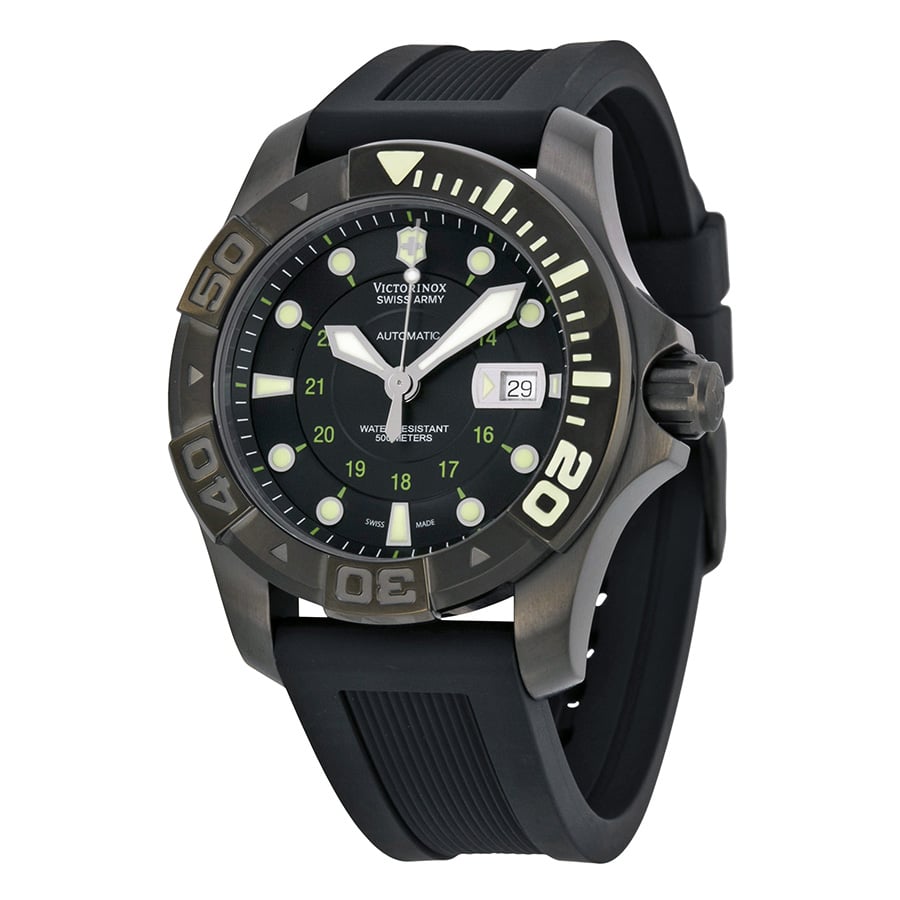
The '500' in the name is not decoration. It denotes a 500-metre depth rating, which puts the watch in professional territory and far beyond anything most owners will ever need. Around that rating Victorinox built a straightforward, legible, over-engineered package: a steel case, a sapphire crystal, a unidirectional bezel, and — in the version that matters most — a Swiss automatic movement from ETA.
This review focuses on the automatic Dive Master 500, the variant that has aged best. We will look at how it actually wears, what the movement is like to live with, where the value sits today, and whether it deserves a place in a young collector's rotation.
Why the Dive Master 500 Still Matters
Most dive watches sold today are desk divers. That is not a criticism — a 300-metre rating is more than enough for swimming, and the styling is the point for many buyers. But the Dive Master 500 was built at a moment when Victorinox was trying to prove something. The brand had spent years being treated as a knife company that also made watches, and the Dive Master line was its attempt to be taken seriously as a sports-watch maker.
The result is a watch that over-delivers on specification relative to its price. A 500-metre rating usually comes with a premium badge and a premium service bill. Here it comes with a workmanlike case, a reliable movement, and a price that has always sat well below the Swiss luxury mainstream. For a collector who cares more about capability than cachet, that is an attractive combination.
It is also a watch with a clear point of view. The bezel is easy to grip, the dial is built for reading at a glance, and nothing about the design is trying to be jewellery. That consistency is why the model has held a small but loyal following even after being discontinued.
A Knife Maker's Take on the Dive Watch
Victorinox was founded in 1884 in Ibach, in the Swiss canton of Schwyz, by Karl Elsener. The company's breakthrough came with the Swiss Army Knife, and for most of the twentieth century it was a cutlery and pocket-tool house rather than a watchmaker. Victorinox entered watches in the late 1980s, and the line was later consolidated under the Victorinox Swiss Army name before reverting to Victorinox.
The Dive Master family arrived in the mid-2000s, when the brand was building out a credible sports-watch range alongside the Air Boss and Alliance lines. The Dive Master 500 was the flagship of that push — a statement that Victorinox could build a genuine 500-metre diver rather than a fashion piece with a rotating bezel. That heritage matters less than the execution, but it explains why the watch feels more purposeful than the brand's other sports models.
Case, Bezel, and Crystal
The case is stainless steel, and it is finished in the brushed, slightly industrial style that suits a tool watch. There is nothing delicate about it. The lugs are sturdy, the crown is protected by substantial guards, and the whole assembly feels built to take a knock. The crystal is sapphire, which is the right call at this price and rating; it shrugs off the scratches that would haze an acrylic or mineral crystal within a season.
The bezel is the part you notice first. It is unidirectional, as a dive bezel should be, with a grip that works with wet fingers or gloves. The action is positive without being stiff, and the markings are easy to align. This is one of those details that separates a real dive watch from a dive-styled one: the bezel is designed to be used, not just admired.
Water resistance is rated to 500 metres, and the watch is fitted with a screw-down crown. In practice that means you never think about water. Swimming, showering, sailing, getting caught in a downpour — none of it requires a second thought. The caseback is solid, which keeps the profile comfortable and the depth rating credible.
The Movement: ETA 2892-A2
The automatic Dive Master 500 runs on the ETA 2892-A2, one of the most respected workhorse calibres in Swiss watchmaking. It is a thin, robust movement with a 42-hour power reserve, a frequency of 28,800 vibrations per hour, and 21 jewels. It is not decorated for display, and it is not certified by COSC, but it is the kind of movement that watchmakers like because it is reliable, accurate enough, and easy to service.
That last point matters more than it might seem. The 2892-A2 is found in watches across the price spectrum, which means parts are available and almost any competent watchmaker has seen one before. You are not dependent on a single brand's service centre to keep the watch running. For a tool watch that you intend to actually use, that is a real advantage.
The movement is also thin enough that it does not force the case into absurd proportions. The Dive Master 500 is a substantial watch, but it is not a brick, and part of the credit goes to the calibre inside.
On the Wrist: What a Week Actually Feels Like
On the wrist, the Dive Master 500 feels like what it is: a serious dive watch. The case has real presence and heft, and the bezel sits proud enough to grip easily. It is not a watch that disappears under a cuff, but the weight is well distributed and the caseback sits flat, so it stays comfortable through a full day of wear. The crown guards do their job without digging into the back of the hand, and the bracelet — when fitted — is solid and rattle-free.
The flip side is that this is not a discreet watch. It reads large on smaller wrists and it will not slide under a tight dress shirt. For daily wear, a rubber strap transforms it: the watch suddenly feels lighter and more balanced, and the 500-metre rating means you never think twice about water. It is at its best as a one-watch tool rather than a dress piece.
Over a week of mixed wear — desk work, a couple of swims, a weekend of chores — the watch never became annoying. That is a higher compliment than it sounds. Many dive watches are comfortable for an hour and irritating by evening; this one settles in and stays put. The only recurring friction is the height of the bezel, which catches on a shirt cuff more than a slimmer watch would.
Dial, Legibility, and Lume
The dial is where the Dive Master 500 earns its keep. The markers are large and unambiguous, the hands are broad and easy to distinguish, and there is no clutter. The date window is present but modest, and it does not disrupt the symmetry of the dial. At a glance — which is the only way you should need to read a dive watch — the time is obvious.
Lume is applied generously and is of the Super-LumiNova variety. It charges quickly in daylight and remains readable through the night, which is the practical standard. The bezel markings are lumed as well, so the elapsed-time function works in the dark. This is not a watch that asks you to squint.
Legibility is one of those specifications that never appears on a spec sheet but determines whether you actually enjoy wearing a watch. The Dive Master 500 gets it right. The contrast is strong, the hands are the correct length, and the dial does not rely on flashy finishing to be readable. It is a working dial, and it looks like one.
Strap and Bracelet
The steel bracelet is well made for the price. Links are solid, the clasp is a folding type with some adjustment, and there is no rattle when you shake your wrist. It is not a luxury bracelet — the finishing is simple and the tolerances are good rather than exceptional — but it does the job and it looks appropriate on the watch.
For actual water use, the rubber strap is the better pairing. It dries quickly, it does not scratch, and it makes the watch feel noticeably lighter. If you plan to swim or dive regularly, budget for a rubber strap from the start. It changes the character of the watch from 'heavy tool' to 'wearable tool', and the Dive Master 500 is at its best in the latter mode.
Aftermarket options are plentiful, which is another advantage of a discontinued tool watch. A simple NATO or a quality rubber strap can be fitted without fuss, and neither will undermine the watch's purpose. This is not a watch that demands an expensive strap to look right.
Accuracy and Day-to-Day Running
In practice the ETA 2892-A2 is a dependable runner. Expect roughly plus or minus ten seconds a day in normal use, with well-regulated examples doing noticeably better and neglected ones drifting more. Positional variation is modest, and the movement is not especially sensitive to daily knocks. There is no COSC certification here, so treat the rate as a good working tolerance rather than a guarantee.
For most owners, that is more than enough. The Dive Master 500 is not a watch you set against a radio signal every morning; it is a watch you wear and trust. If you need chronometric precision, there are other watches for that. If you need a watch that keeps good time and does not demand attention, this one qualifies.
Ownership: Service, Parts, and Value
The 2892-A2 is one of the easiest automatic movements to live with. A routine service every five years or so is sensible, and the cost is typically modest compared with in-house calibres. Any competent watchmaker can handle it; authorized Victorinox service is an option but not a requirement. That flexibility keeps long-term ownership cheap and low-stress.
On the market, the Dive Master 500 is a value play rather than an investment. It was never a hype piece, and it is unlikely to become one. Pre-owned examples trade at a fraction of the original retail price, which means the buyer gets a Swiss automatic diver with a genuine 500-metre rating for less than many entry-level dive watches cost new. The trade-off is that resale will never flatter you. Buy it to wear.
Parts availability is the one caveat. Because the model is discontinued, model-specific components such as bezel inserts and hands can be harder to source than movement parts. That is worth knowing before you buy a rough example, but it is not a reason to avoid a good one.
What to Check Before Buying Used
Start with the bezel. It should rotate cleanly in one direction with no grinding, and it should align precisely at twelve. Check the crown action — it should screw down smoothly and the threads should not feel chewed. Look at the lugs for signs of over-polishing, which can soften the case's lines and hint at a hard life. On the bracelet, check for stretch and for a clasp that still snaps shut firmly.
Ask about service history. A recently serviced 2892-A2 is worth a premium over an unknown one, because a service will cost a meaningful fraction of the watch's value. Finally, confirm the depth rating has not been compromised by a rough caseback or a replacement crown. A dive watch is only as good as its seals.
How It Compares
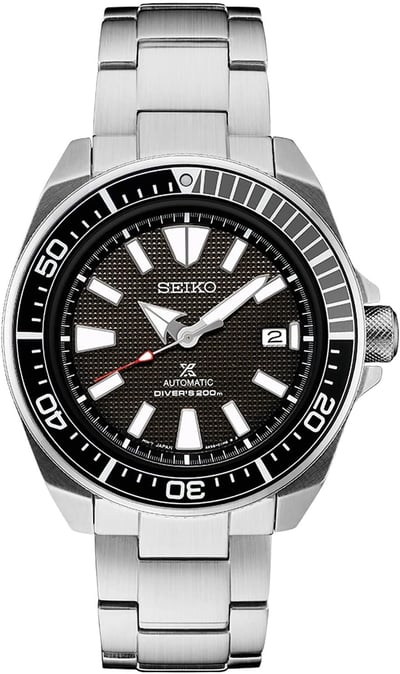
Against the Oris Aquis Date, the Victorinox gives up some case finishing and brand prestige but matches or beats it on water resistance and price. Against the Longines HydroConquest, it loses heritage and dial refinement but offers a more single-minded tool-watch character. Against the Seiko Prospex 'Sumo', it trades Japanese in-house engineering for Swiss parts commonality and a higher depth rating. And against the Christopher Ward C60 Trident Pro 600, it is the older, more utilitarian option — less refined, but arguably more honest.
None of those comparisons is a knockout. The Dive Master 500 is not the best dive watch in its bracket at any single thing. What it offers is a coherent package: real depth capability, a proven movement, a legible dial, and a price that leaves room for a strap collection. For a first serious dive watch, that is a persuasive mix.
Who Should Buy It
This watch suits the collector who wants one good tool watch and does not need it to signal anything. It suits the swimmer or diver who wants a real depth rating without a luxury service bill. It suits the buyer who values a proven movement over an in-house story. It is less suited to someone who wants a dressy watch, a status piece, or a safe investment — the Dive Master 500 is none of those things, and it does not pretend to be.
If you already own a heritage diver and want a beater with genuine capability, this is a natural addition. If you are building a first collection and want something that will survive real use, it is a sensible starting point. The only real requirement is that you are comfortable with a watch that looks like a tool rather than a jewel.
Verdict
The Victorinox Dive Master 500 is the kind of watch the industry makes less often now: a genuinely over-engineered tool with no pretence of luxury. It wears with authority, survives real water, and runs on a movement any watchmaker can service. The finishing is industrial rather than refined, and it will never be a status symbol, but that is rather the point.
If you want a Swiss automatic diver with real depth capability and do not need a heritage badge on the dial, it is one of the smartest buys in its bracket. Wear it hard, service it occasionally, and it will outlast the trend cycle that made it unfashionable in the first place.