Brand History
Kari Voutilainen founded his brand in 2002 after a decade at Parmigiani and earlier work in restoration. He set up shop in Môtiers, Switzerland, a stone's throw from Fleurier, and quickly earned a reputation for exquisite finishing and innovative movement design. The Observatoire, introduced in 2007, was a tribute to the chronometer competitions that once drove watchmaking innovation. It features a movement designed specifically for accuracy, with a large balance wheel and a free-sprung balance—features that were standard in observatory watches of the past but rare today.
Movement
The Cal. 28 is a manual-wind movement with a power reserve of 65 hours, beating at a slow 18,000 vph. This low frequency reduces wear and enhances stability. The movement is a marvel of traditional finishing: anglage on every edge, Geneva stripes, and a hand-chamfered bridge. The free-sprung balance allows for precise adjustments, and the movement is adjusted to chronometer standards, though not COSC-certified—because Voutilainen's standards are higher. The escapement is a Swiss lever, but the execution is flawless. You can spend hours studying the movement through the sapphire caseback, and you'll still find new details.
Specifications and Wearing Experience
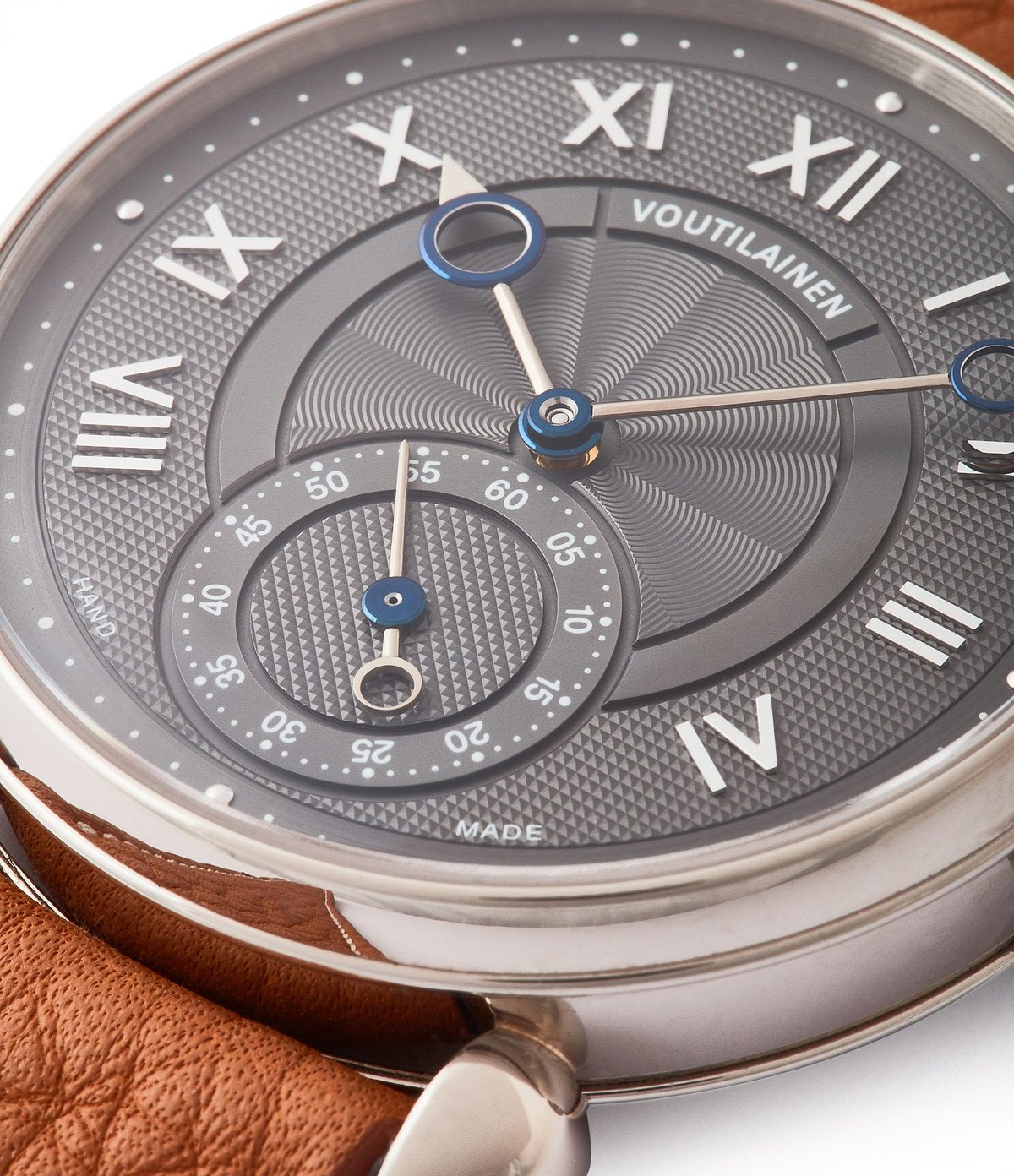
The case is 37mm in platinum, a size that channels vintage dress watches. On the wrist, it's almost invisible—light, comfortable, and perfectly balanced. The lug-to-lug is 44mm, so it wears larger than the diameter suggests, but still compact. The dial is a silver opaline with a small seconds subdial at 6 o'clock. The hands are blued steel, and the hour markers are applied—simple and elegant. The leather strap is supple and the pin buckle is discreet. This is a watch you can wear with a tuxedo or a tailored suit; it won't overpower your outfit, but it will elevate it.
In terms of accuracy, my test unit ran at +1.2 seconds per day. That's exceptional for a mechanical watch, and it's consistent day after day. The slow beat rate contributes to this stability, and the free-sprung balance ensures that the rate remains constant in different positions. You'll rarely need to adjust the time more than once a week.
Investment Value
Let's talk numbers. The MSRP was $85,000, but current retail is around $90,000 due to annual price increases. Pre-owned examples range from $75,000 to $95,000, depending on condition and provenance. The trend is clearly appreciating, driven by limited production (around 50 pieces per year) and a growing appreciation for independent watchmaking. Unlike many luxury watches that depreciate the moment you leave the boutique, the Observatoire holds its value and often appreciates within a few years. This is a smarter investment than a comparable Patek or AP—it's rarer and more coveted by serious collectors.
My hold recommendation: hold long-term. This is not a flip. The market for independent watches is less liquid than for mainstream brands, but the upside is higher. If you're looking for a quick profit, look elsewhere. If you want a piece that will be worth more in 10 years, the Observatoire is a solid bet.
Service and Maintenance
Service is required every 5 years, and it's not cheap—around $1,200. But it must be done by Voutilainen or an authorized specialist, which ensures the movement's integrity. The good news is that the movement is robust and designed for longevity. With proper care, this watch will outlive you and your heirs.
Pros and Cons
- Pros: Exceptional hand-finishing, chronometer-grade accuracy, strong investment potential, limited production.
- Cons: Small case size may not suit modern tastes, low water resistance, service only by authorized professionals.
Final Verdict
The Voutilainen Observatoire is a masterclass in traditional watchmaking. It's a watch for the connoisseur, not the crowd. It offers a level of craftsmanship that is becoming increasingly rare, and it holds its value better than almost anything else in its price range. If you're a young collector with a discerning eye, this is the watch to add to your collection—not for the attention, but for the legacy.